


Stapler Circumcision Johor Bahru: A Modern, Safer Approach to a Traditional Procedure
Quick Summary
|
Stapler Circumcision Johor Bahru is one of the most commonly performed modern surgical procedures for male circumcision. Traditionally carried out with a scalpel, the procedure has evolved significantly over the past decade. Stapler circumcision now represents the modern standard of care in many clinical settings — offering shorter procedure times, more consistent wound closure, and a lower risk of complications.
This article explains how stapler circumcision works, what the clinical evidence shows, and who may be suitable for this technique.
What is Stapler Circumcision?
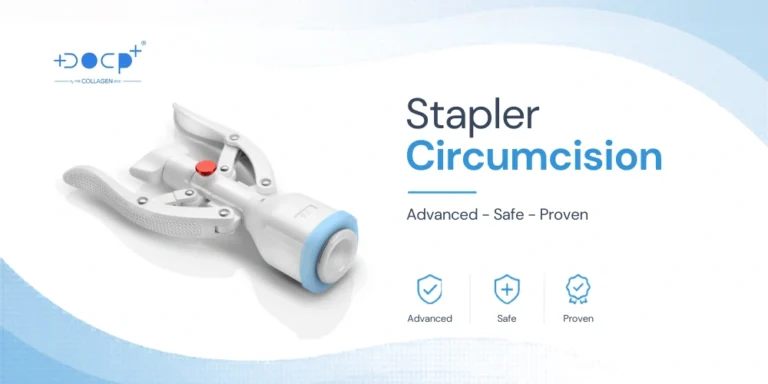
Stapler circumcision is a medical technique that uses a disposable circular stapling device to remove the foreskin and close the incision simultaneously. Unlike traditional methods that rely entirely on hand-cutting and suturing, the device automates the excision and wound closure in a single, controlled action.
The technique has been widely adopted in clinical settings across Asia and internationally, valued for its procedural efficiency and reproducible outcomes. It is performed under local anaesthesia in an outpatient setting, meaning no hospital stay is required.
How Does Stapler Circumcision Work?
The stapler device consists of two key components:
- A protective inner ring that shields the glans (head of the penis) during the procedure
- An outer cutting-and-stapling ring that removes the foreskin and places surgical staples simultaneously
When the device is deployed, it excises the foreskin and applies a row of small surgical staples along the wound edge in a single motion. This creates a uniform, circular wound closure that reduces variability compared with hand-suturing, minimises exposed tissue, and significantly shortens operative time.
The staples are biocompatible and gradually detach on their own during the healing process — typically within one to two weeks.
Clinical Evidence and Safety Data
Stapler circumcision is supported by peer-reviewed clinical research. The following summarises key findings relevant to patients considering this procedure.
Reduced Procedure Time
A 2015 randomized controlled trial published in the Brazilian Journal of Medical and Biological Research (Braz J Med Biol Res), involving 441 adult patients, directly compared stapler circumcision with conventional surgical circumcision. The study reported a mean operative time of 6.8 minutes for stapler circumcision versus 24.2 minutes for the conventional technique — representing a reduction of approximately 72% in procedure duration (Jin et al., 2015).
Shorter operative time reduces patient anxiety, lowers anaesthetic requirement, and decreases overall procedural burden.
Lower Complication Rates
The same randomized trial by Jin et al. reported a complication rate of 2.7% in the stapler group versus 7.8% in the conventional group — a relative reduction of more than 60%. Complications in both groups were predominantly minor (localised swelling, minor bleeding), with no major adverse events recorded.
Multiple additional studies and multi-centre clinical series have corroborated these findings, consistently demonstrating lower complication profiles for stapler-based techniques when performed by trained clinicians.
Stapler vs. Traditional Circumcision — Comparison
The table below summarises key differences based on published clinical data and multi-centre observations:
| Factor | Traditional Circumcision | Stapler Circumcision |
|---|---|---|
| Procedure time | 30–45 minutes | 10–15 minutes |
| Blood loss | Moderate | Minimal |
| Recovery duration | 7–10 days | 3–5 days |
| Complication rate | 2–8% | 0.4–2.7% |
| Wound closure uniformity | Variable | High / Consistent |
| Anaesthesia | Local or General | Local |
Note: Data drawn from Jin et al. (2015) and aggregate clinical observations across multiple peer-reviewed studies.
What Is Recovery Like After Stapler Circumcision?
Recovery following stapler circumcision is generally straightforward. Most patients experience mild discomfort rather than significant pain, and the majority return to light daily activities within three to five days.
- Day 1–2: Mild swelling and discomfort are expected. These are best managed with standard oral analgesics (e.g., paracetamol or ibuprofen). Bed rest is recommended, and light activity around the home is acceptable.
- Day 3–5: Swelling begins to subside. Most patients can resume desk-based work and light daily tasks. Physical exertion, exercise, and sexual activity should still be avoided.
- Week 2: Surgical staples begin detaching naturally as wound healing progresses. This is expected and does not indicate a complication. Mild itching around the wound edge is common during this phase.
- Week 4–6: The majority of patients achieve complete wound healing. Normal activities, including exercise and sexual activity, can typically be resumed following a clinical review.
A follow-up appointment with your treating doctor is recommended to confirm healing progress and address any concerns.
Who Is Suitable for Stapler Circumcision?
Stapler circumcision is appropriate for a broad range of adult patients. Clinical assessment is required to confirm individual suitability.
Candidates who may be suitable include:
- Adult men seeking elective circumcision for personal, cultural, or religious reasons
- Men with phimosis (inability to retract the foreskin fully) or paraphimosis
- Patients with recurrent balanitis (inflammation of the glans) related to foreskin hygiene
- Those who prefer a shorter procedure time and faster recovery
- Patients who prefer outpatient treatment under local anaesthesia
A thorough clinical assessment is essential prior to any procedure, particularly for men with underlying medical conditions (e.g., diabetes, bleeding disorders) or anatomical variations that may influence technique selection.
Frequently Asked Questions
Q: Does stapler circumcision hurt? |
Most patients experience mild discomfort rather than significant pain. Local anaesthesia is administered before the procedure, ensuring minimal sensation during surgery. Post-procedure discomfort is typically manageable with standard over-the-counter pain relief (paracetamol or ibuprofen) and usually resolves within two to three days. |
Q: How much does stapler circumcision cost in Johor Bahru? |
Costs vary by clinic, technique, and individual clinical requirements. At Dr Plus Aesthetic Clinic JB, a personalised consultation is conducted to assess suitability and determine appropriate fees based on your clinical profile. We recommend scheduling a consultation for an accurate, tailored quote. |
Q: What is the complication rate for stapler circumcision? |
Based on published clinical data, complication rates for stapler circumcision typically range from 0.4% to 2.7% — considerably lower than the 2–8% reported for conventional circumcision techniques. Most complications are minor (such as localised swelling or minor bleeding) and resolve without intervention. Serious complications are rare when the procedure is performed by a trained clinician. |
Q: How long before I can return to exercise or sexual activity? |
Most patients can resume light daily activities and desk-based work within three to five days. Strenuous exercise and sexual activity are generally not recommended for four to six weeks post-procedure, pending satisfactory healing at clinical review. |
Q: Can circumcision be reversed? |
No. Circumcision permanently removes the foreskin and is not reversible once completed. Foreskin reconstruction is complex, not widely available, and rarely indicated. The decision to undergo circumcision should be made after thorough consideration and discussion with your treating doctor. |
Q: Is stapler circumcision suitable for children? |
Stapler circumcision is most commonly performed in adult patients. Paediatric circumcision may involve different technique considerations. Parents seeking circumcision for a child should consult a qualified doctor to discuss age-appropriate options and clinical suitability. |
Key Takeaways
|
Summary
Stapler circumcision represents a clinically meaningful evolution of a procedure that has been performed for thousands of years. By replacing hand-cutting and suturing with a precision device, the technique achieves shorter operating times, more consistent wound closure, and a measurably lower rate of complications — all while remaining accessible as a day-procedure under local anaesthesia.
For adults in Johor Bahru and the broader Iskandar Puteri region — including Singaporeans seeking accessible, high-quality care — stapler circumcision at Dr Plus Aesthetic Clinic offers a modern, evidence-based option worth considering.
As with all medical procedures, individual suitability and professional medical assessment are key. Understanding the science behind newer techniques empowers patients to make well-informed decisions in consultation with their doctor.
Medical Disclaimer
This article is for educational purposes and does not constitute medical advice. Individual results may vary. Always consult with a qualified healthcare provider before undergoing any medical procedure.
This content reflects current medical literature and clinical practices as of May 2026. Treatment protocols and recommendations may evolve as new research emerges.
Medically Reviewed
This article has been reviewed for medical accuracy and aligns with current evidence-based practices in aesthetic medicine. Dr Plus Aesthetic Clinic Johor Bahru maintains clinical standards consistent with Malaysian medical guidelines and international best practices.