

Many people associate collagen loss with aging in the forties or fifties. In reality, collagen decline begins much earlier than most expect. The goal is not to create fear about aging, but to build awareness so that skin health can be managed proactively rather than reactively.
Understanding when collagen loss starts and how it affects the skin allows for better long-term decisions instead of chasing trends later.

What is collagen and why does it matter for skin?
Collagen is a structural protein that keeps the skin firm, smooth, and resilient. It plays a key role in skin texture, elasticity, and overall skin quality.
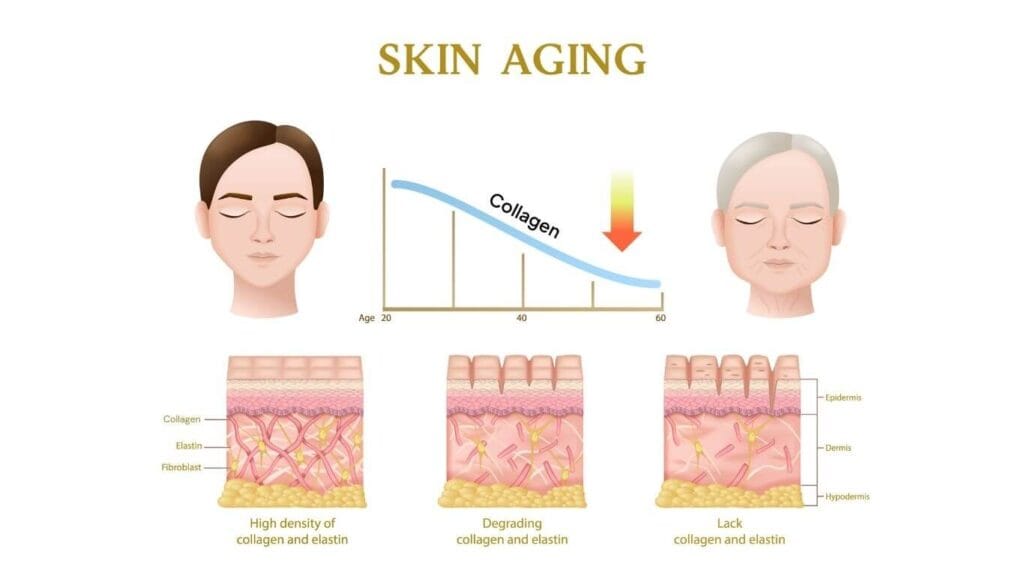
Collagen acts like the internal framework of the skin. When collagen levels are healthy, the skin appears plump, firm, and reflective. When collagen gradually decreases, the skin slowly loses its structure. This change is subtle at first but becomes more noticeable over time.
At what age does collagen naturally start to decline?
Natural collagen production usually begins to decline in the mid to late twenties, with gradual loss continuing as age increases.
This does not mean that the skin suddenly looks older at twenty-five. The changes are slow and often invisible in the beginning. However, the biological process of collagen breakdown does start earlier than most people realise. Over years, this gradual decline contributes to fine lines, reduced firmness, and changes in skin texture.
Why do some people notice collagen loss earlier than others?
Lifestyle factors such as sun exposure, stress, poor sleep, smoking, diet, and genetics can accelerate collagen breakdown and make signs appear earlier.
Two people of the same age can have very different skin quality. Long-term sun exposure, chronic stress, lack of sleep, and inconsistent skincare habits all contribute to faster collagen degradation. Genetics also plays a role. This explains why some individuals notice skin changes in their late twenties while others only see changes much later.
What are the early signs of collagen loss?
Early signs may include skin that looks less firm, fine lines, reduced glow, enlarged pores, and slower skin recovery.
These changes are often subtle. Skin may start to look less bouncy, makeup may not sit as smoothly, and the overall glow may appear reduced. These are not dramatic signs of ageing, but they are often the first signals that collagen support is declining.
Awareness at this stage is helpful, not alarming.
Is collagen loss only a concern after 30 or 40?
Collagen loss is not an on-off issue. It begins gradually in the twenties and becomes more noticeable over time, which makes early awareness more effective than late reaction.
Waiting until visible ageing appears often leads to frustration. Skin health works best when supported consistently over time. The earlier someone understands their skin changes, the more options they have to maintain long-term skin quality rather than trying to reverse advanced changes later.
Can lifestyle habits slow down collagen decline?
Healthy habits such as sun protection, good sleep, balanced nutrition, stress control, and gentle skincare can help protect existing collagen and support skin health.
Sun protection remains one of the most important protective habits. Consistent sleep, managing stress, avoiding smoking, and maintaining a balanced diet also support the skin environment. These habits do not stop aging, but they significantly influence how quickly collagen declines.
Skincare supports the skin barrier and surface health. It works best when combined with realistic expectations and consistent care.
When should someone consider professional advice about collagen health?
Professional advice may be helpful when skin changes become noticeable, when prevention is a priority, or when there is uncertainty about what the skin actually needs.
A proper assessment helps distinguish between surface-level concerns and deeper structural changes. This prevents unnecessary spending on unsuitable products and avoids overtreatment. Understanding the skin should always come before choosing any intervention.
Final thoughts
Collagen loss is a natural biological process, not something to fear. The key is awareness, consistency, and informed care. Skin health is built over years, not weeks. Those who understand their skin earlier tend to make calmer, smarter decisions over time.
Healthy skin is not about stopping aging. It is about supporting the skin intelligently at every stage.