
DrPlus Skin Education · Acne Scars
CO₂ Laser vs RF Microneedling for Acne Scars
Two of the most common acne scar treatments — and they work in genuinely different ways. Here is how to think about them.
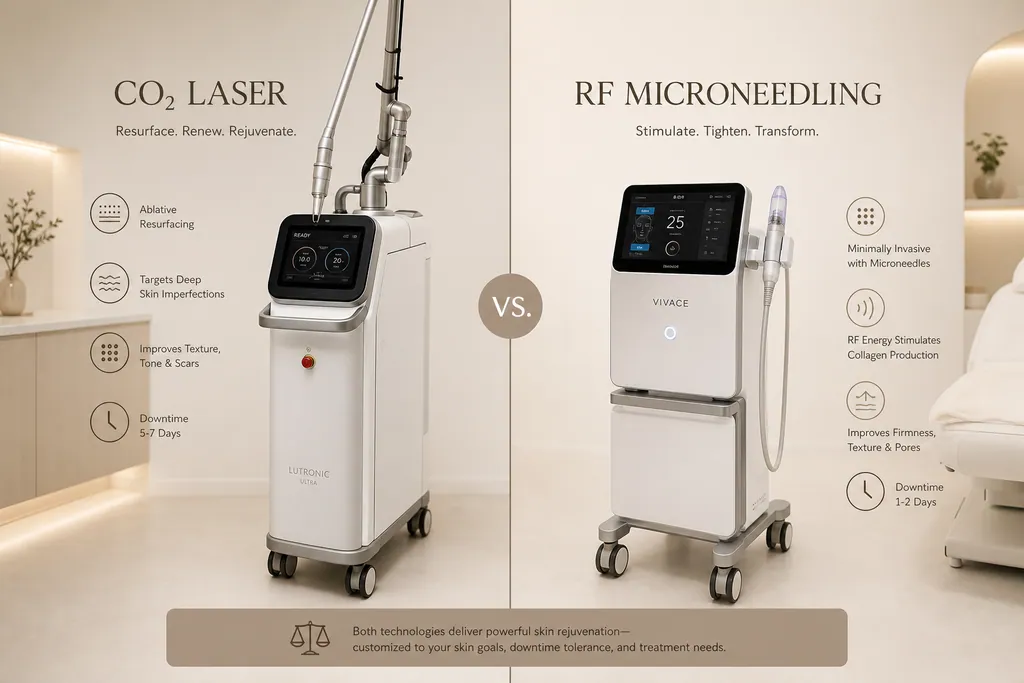
Why acne scars need different treatment approaches
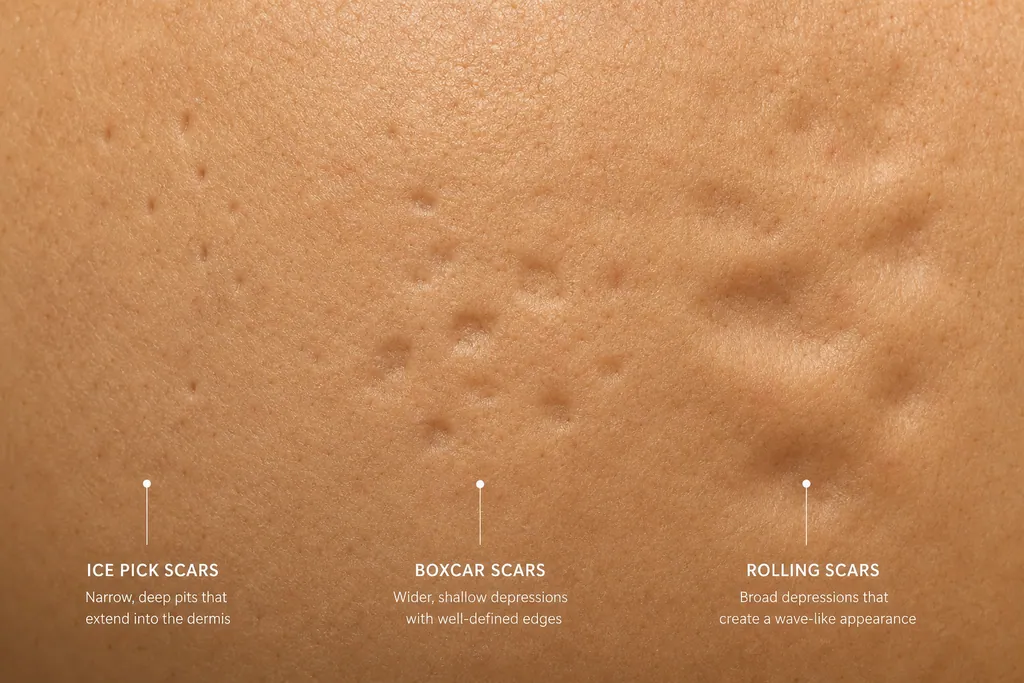
Acne scars are not all the same. Ice pick, boxcar, rolling and post-inflammatory marks each behave differently in healing, so a single device rarely addresses everything well.
When patients ask 'CO₂ laser vs RF microneedling', the honest answer usually starts with: 'which scar types do you mostly have, and what is your skin telling us at assessment?'
How CO₂ laser works
CO₂ laser is an ablative fractional treatment. In simple terms, the laser creates microscopic columns of injury through the upper skin layers. Each column is surrounded by intact tissue, which speeds healing.
As the skin repairs the columns, new collagen forms. This combination of surface resurfacing and deeper collagen response is what makes CO₂ laser useful for boxcar scars and broader textural irregularity.
Mechanism
Ablative
Removes microscopic columns of tissue to trigger remodelling.
Mechanism
Fractional
Surrounding skin stays intact, so healing is faster than full-field resurfacing.
Mechanism
Surface + depth
Resurfaces the top layers while stimulating collagen below.
How RF microneedling works
RF microneedling combines two tools: fine needles that create controlled microchannels into the skin, and radiofrequency energy delivered through the tips of those needles into the dermis.
Because the energy is delivered at depth rather than fully through the surface, the upper skin layers experience less heat. That makes RF microneedling friendlier for many skin tones and a useful tool for collagen response in the deeper dermis.
Mechanism
Depth delivery
Energy is delivered at the dermis via insulated needle tips.
Mechanism
Skin-tone friendly
Less surface heat means a more controlled risk profile for darker skin tones.
Mechanism
Collagen response
Targets the structural layer where atrophic scars are anchored.
Key differences between CO₂ laser and RF microneedling
These devices do different work. CO₂ laser is stronger on the surface; RF microneedling reaches lower with less surface impact. That changes who they may suit and how the recovery feels.
— Comparison
CO₂ Laser vs RF Microneedling — at a glance
| Aspect | CO₂ Laser | RF Microneedling |
|---|---|---|
| Primary mechanism | Ablative fractional resurfacing | Radiofrequency delivered at the dermis via needles |
| Where the energy lands | Upper skin layers + collagen response below | Mostly at the dermis with controlled surface impact |
| Best-suited scar types | Boxcar scars, surface textural irregularity | Mixed scar types, deeper collagen support |
| Typical downtime | Several days of redness and peeling | Usually 1–3 days of mild redness |
| Skin tone considerations | Careful planning needed for darker tones | Often friendlier for a broader skin-tone range |
| Combination role | Often sequenced after structural release | Often used to maintain collagen between sessions |
Primary mechanism
- CO₂ Laser
- Ablative fractional resurfacing
- RF Microneedling
- Radiofrequency delivered at the dermis via needles
Where the energy lands
- CO₂ Laser
- Upper skin layers + collagen response below
- RF Microneedling
- Mostly at the dermis with controlled surface impact
Best-suited scar types
- CO₂ Laser
- Boxcar scars, surface textural irregularity
- RF Microneedling
- Mixed scar types, deeper collagen support
Typical downtime
- CO₂ Laser
- Several days of redness and peeling
- RF Microneedling
- Usually 1–3 days of mild redness
Skin tone considerations
- CO₂ Laser
- Careful planning needed for darker tones
- RF Microneedling
- Often friendlier for a broader skin-tone range
Combination role
- CO₂ Laser
- Often sequenced after structural release
- RF Microneedling
- Often used to maintain collagen between sessions
Which treatment may suit which concern
There is no universally 'better' option. Boxcar scars with a defined edge may benefit from CO₂ laser; deep tethered rolling scars often need release first. Mixed profiles may benefit from a planned sequence that uses both.
Your doctor will weigh scar type, skin condition, skin tone, lifestyle and downtime tolerance before recommending which to start with, or whether a different treatment is more appropriate.
— Relative downtime
How they compare on recovery
CO₂ Laser
Higher
Several days of redness/peel
RF Microneedling
Light
Typically 1–3 days mild redness
Recovery profiles vary by skin, settings and aftercare. Your doctor will share what is realistic for your case.
Can treatments be combined?
Often yes. A common pattern is to use subcision for structural release first, layer in RF microneedling for ongoing collagen support, and reserve CO₂ laser for targeted surface work on boxcar scars and texture.
Combination plans are sequenced over months, not stacked in a single visit. Spacing allows each treatment to do its job and the skin barrier to recover.
Consultation and recovery expectations
A scar consultation typically includes mapping which scar types are dominant, a discussion of skin tone considerations, and a realistic conversation about downtime and the number of sessions likely to be needed.
Aftercare matters as much as the treatment itself. Following sun-protection, wound-care and skincare guidance tends to materially affect both healing and the visible result.
— Frequently asked
Common questions
These are four distinct tools that work at different depths and through different mechanisms. CO₂ laser is ablative resurfacing — strongest on surface irregularity and boxcar scars. RF microneedling (also called MNRF) delivers radiofrequency energy at the dermis via needles — more skin-tone-friendly with less surface impact. Dermaroller is a basic mechanical microneedling device; it creates microchannels but without the radiofrequency component, making it less precise for deeper atrophic scars. PRP (platelet-rich plasma) is sometimes used as an adjunct to stimulate healing and growth factors but is not typically a standalone treatment for structural acne scars. The right starting point depends on your scar type, depth, skin tone and downtime tolerance — a doctor-led assessment is the appropriate way to map this.
CO₂ laser is more impactful at the surface; RF microneedling is more focused at the dermis. 'Stronger' depends on what you are trying to achieve — they do different jobs.
Both can be appropriate when device choice and settings are matched to your skin type. RF microneedling is often considered a friendlier starting point for some skin tones because the energy is delivered at depth rather than through the surface.
Often yes. Combination plans that sequence different modalities over several months are common — your doctor will explain why a particular order may suit your case.
Atrophic scar treatment is typically a series of sessions. The exact number depends on scar type and severity, your skin's response, and the combination chosen — your doctor will share a realistic range at consultation.
CO₂ laser usually involves several days of redness, peeling and strict sun protection. RF microneedling commonly has 1–3 days of mild redness. Specifics depend on the depth and settings used.
— Related treatments
Continue with the relevant DrPlus treatment pages
Each page goes deeper into mechanism, suitability and recovery — your final plan is confirmed at consultation.
Primary money page
Acne Scar Treatment Hub
Doctor-led category overview combining all scar treatment pathways.
acne scar treatment in Johor BahruSupporting
Acne Scar Treatment in Singapore
How a doctor distinguishes boxcar scars from a mixed pattern before planning treatment.
Singapore acne scar assessment for boxcar and mixed scarsSupporting
CO₂ Laser
Fractional resurfacing detail page — mechanism, suitability and recovery.
CO₂ laser for acne scarsSupporting
RF Microneedling
Energy-at-depth treatment that is often more skin-tone-friendly.
RF microneedling for acne scarsSupporting
Subcision
Often the first step before surface treatments for rolling scars.
subcision for tethered rolling scars— Continue reading
 Acne Scars
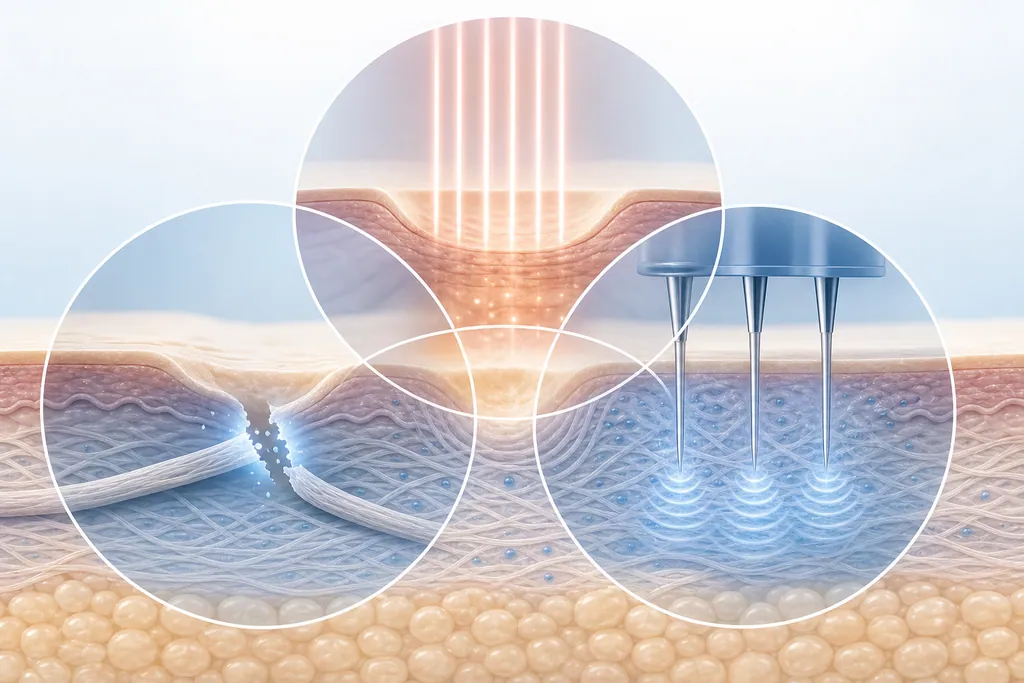
Why Combination Treatment Is Often Needed for Acne Scars
Most people have more than one scar type, and each behaves differently. That is why a single treatment rarely does the whole job.
 Acne Scars
Types of Acne Scars: Ice Pick, Boxcar, Rolling and Pitted Scars
Atrophic acne scars come in distinct shapes — and the shape often determines what treatment may actually help.
 Acne Scars
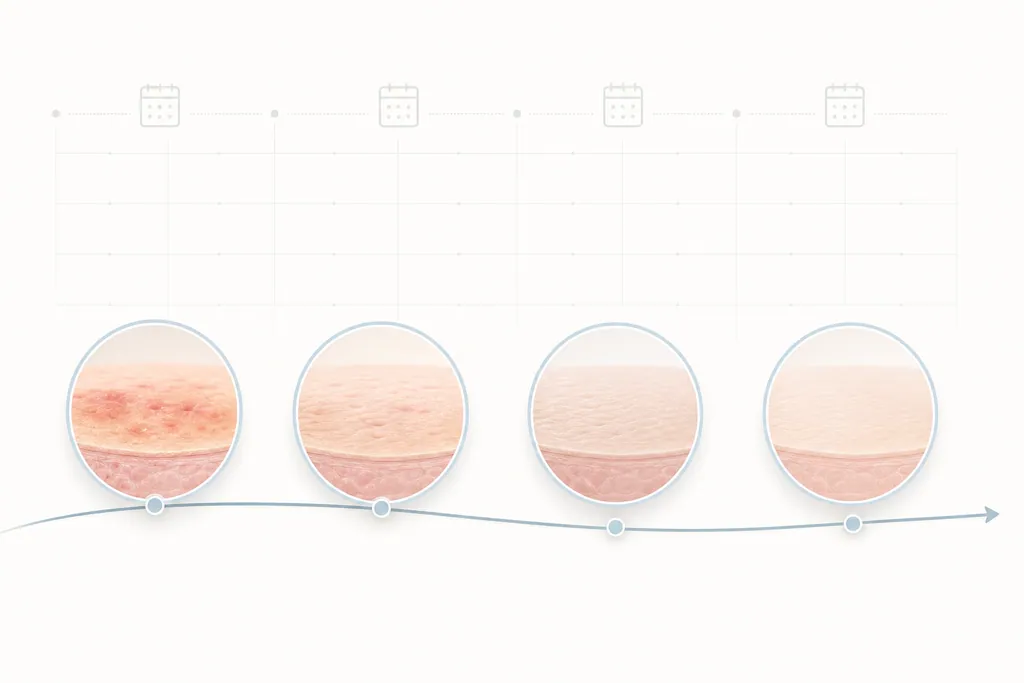
Acne Scar Treatment Recovery: What to Expect Week by Week
Recovery worries put many people off treatment. Here is an honest, practical timeline for what healing usually looks like.