

Acne & Acne Scars · Surface Renewal
Chemical Peel Treatment in Singapore & Johor Bahru for Acne Marks, Pigmentation & Dull Skin
Dark marks, uneven tone, and dullness don't define you. A doctor-selected chemical peel — glycolic, salicylic, TCA, or a combination matched to your skin — reveals the brighter, clearer version of your skin, steadily, session by session. Doctor-led in Johor Bahru, welcoming patients from Singapore and across Malaysia.
- Suitable for
- Acne marks, pigmentation and dull, uneven tone
- Downtime
- Light to moderate — depends on peel depth
- Usually with
- A staged series, sometimes alongside laser or microneedling
- Performed by
- Dr Kenneth














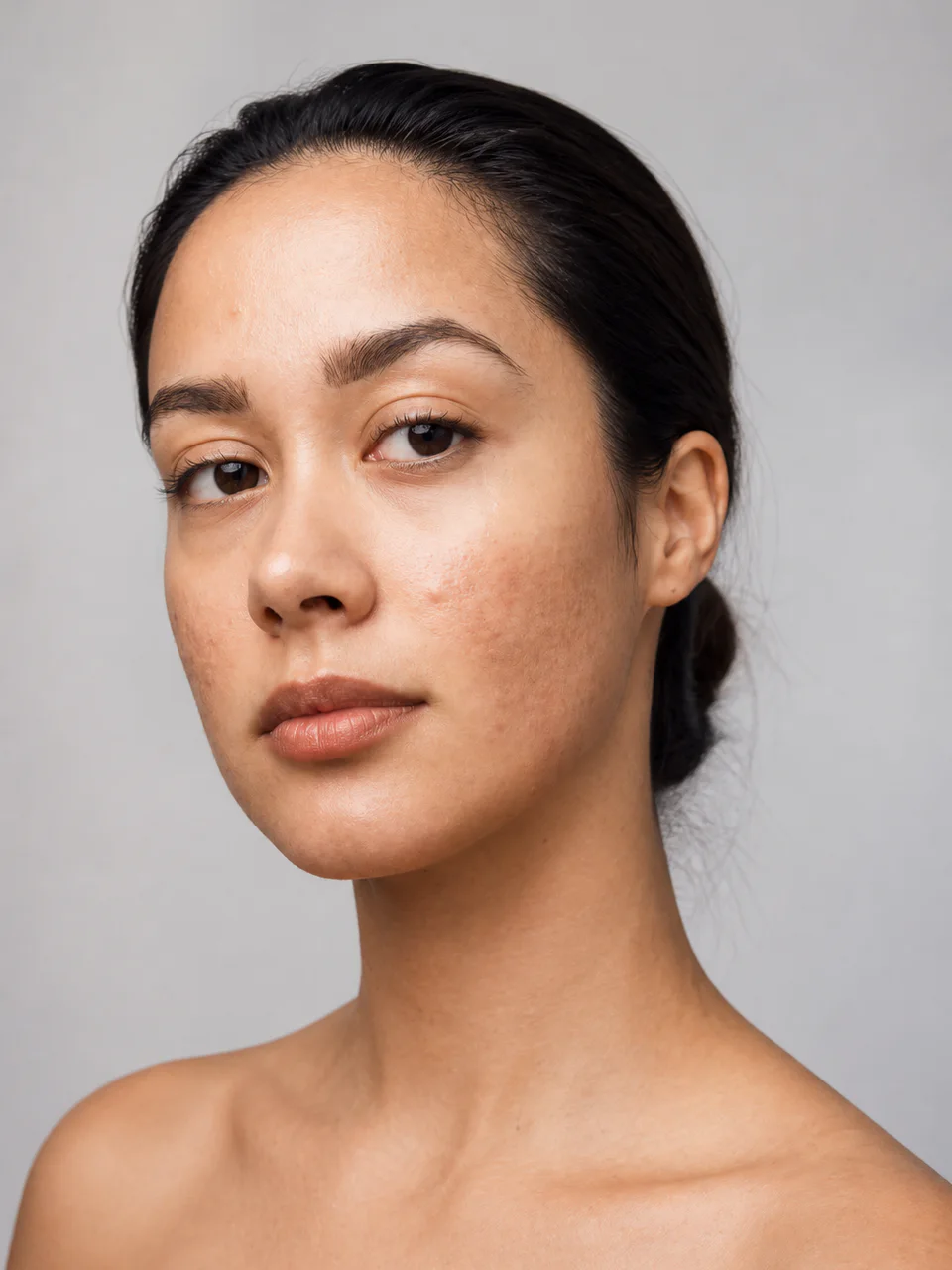
From dull to luminous.
Each session peels back what's been dimming your skin — revealing the clarity and brightness that was always there. The version of your skin that makes you feel put-together without makeup.
- Dark marks fade into a more even, confident tone
- Surface texture refines — skin feels fresher each week
- Clarity builds cumulatively, like compounding progress
- Gentle enough to fit alongside other treatments in your plan
— How chemical peels work
A simple way to picture the mechanism
Chemical peels are often misunderstood. Here is a simplified view of what happens at the skin surface during and after the treatment.
- Stage 01
Acid application
A medical-grade acid solution is applied to the skin surface. The type and strength is chosen based on your skin tone, concern, and sensitivity.
- Stage 02
Controlled exfoliation
The acid loosens the bonds holding dead and damaged outer skin cells, lifting them away and helping to unclog pores and even tone.
- Stage 03
Surface renewal
As the treated layers shed, fresher skin beneath is revealed. Repeated sessions gradually improve clarity, pigmentation, and texture.
This is a simplified illustration. Your doctor will select acid type and strength based on your skin tone, concern, and sensitivity before any peel is applied.
— How it works
The treatment process
Peel selection
Your doctor chooses the acid type — glycolic, salicylic, lactic, TCA, or a blend — and strength suited to your skin tone, sensitivity, and concern.
Controlled exfoliation
The peel removes outer layers of dead skin, which may help unclog pores and even tone.
Series & home care
A course of peels with consistent home skincare often supports longer-term clarity.
— Suitability
Who Chemical Peel suits — and who it doesn't
Chemical peels are better suited for acne marks, pigmentation, congestion, and surface renewal — not deep scar release.
Often suitable for
- Post-inflammatory hyperpigmentation (red or brown acne marks)
- Dullness and uneven tone after breakouts
- Congestion and acne-prone surface texture
- Mild superficial unevenness
- Maintenance after subcision, RF microneedling, or CO₂ laser
Usually not the right choice for
- Deep pitted or boxcar scars as a standalone
- Rolling or tethered scars (these need structural release)
- Patients expecting deep scar correction from a surface treatment
For deeper scars, treatments such as subcision, RF microneedling, or CO₂ laser may be more appropriate. Peels work best when paired with the right procedure, or used to maintain results once deeper scarring has been addressed.
— Recovery
What to expect after Chemical Peel
Recovery varies by individual, treatment intensity, and aftercare adherence. This is a general guide — your doctor will provide specific instructions.
Day 1–2
Mild redness or tightness depending on peel strength. Some warmth is normal.
Day 3–7
Flaking or peeling as skin renews. Avoid picking. Gentle cleanser and SPF daily.
Week 1–2
Brighter, smoother-looking skin emerges as peeling resolves.
Ongoing
Pigmentation and congestion improve progressively with planned sessions. Maintenance keeps results stable.
Your doctor will provide a tailored aftercare guide. If you have questions about downtime or planning around an event, ask during your consultation.
— Your plan
How your plan is built
No two plans are identical, because no two presentations are. What your Chemical Peel plan involves — and what it costs — is set by clinical findings at assessment, not by a menu.
Assessment comes first. The doctor examines your concern in person — type, severity, and skin response all change what is appropriate.
The plan is sized by clinical need. Number of sessions, spacing between them, and whether treatments are combined are set by what the assessment finds — never by a predetermined package.
You see the plan and its cost before anything is booked. Take it home, think it over — there is no obligation to proceed on the day.
You leave the assessment knowing the plan and what it costs — nothing left to guess at home.
— Your doctor and where you're treated
One doctor, in a real clinic — not a treatment menu

Dr Kenneth Lee
Aesthetic Physician · DrPlus Aesthetics Clinic
- MBBCh · Cardiff University · UK
- GDipFP Dermatology · NUS · Singapore
- Aesthetic Medicine · AAAM · USA
- LCP Certified · Malaysia

Dr Plus Aesthetic Clinic Johor Bahru
B0223, Jalan Eko Botani 3, Taman Eko Botani
79100 Iskandar Puteri, Johor, Malaysia
Your assessment is with the doctor directly — not a consultant, not a sales room.
— Honest expectations
Risks and realistic expectations
No medical treatment is risk-free, and honest expectations matter more than impressive promises. Here is what a realistic course looks like.
What results realistically look like
- Results build gradually and vary by individual — skin type, severity, and how your body responds all shape the outcome.
- Some concerns need more than one session, and some need maintenance. If that applies to you, the doctor will say so at assessment — before you commit.
- If Chemical Peel is unlikely to reach the result you have in mind, you will be told that plainly. An honest "this won't get you there" protects you more than an optimistic plan.
Risks, plainly stated
- Temporary redness, swelling, or sensitivity in the treated area is common and expected — the downtime section above describes the usual course.
- Less common reactions exist for every procedure. The doctor walks through the ones relevant to you at consultation, before any treatment is scheduled.
If something doesn't feel right afterwards
If anything doesn't look or feel right after treatment, contact the clinic — describe what you're seeing and the team will advise whether it is an expected part of recovery or needs the doctor to review it.
— FAQ
Chemical Peel FAQ
DrPlus Aesthetic Clinic is located at B0223, Jalan Eko Botani 3, Taman Eko Botani, 79100 Iskandar Puteri, Johor — in Johor Bahru, Malaysia. We offer doctor-led chemical peel treatments for acne marks, post-inflammatory pigmentation, and uneven skin tone. We welcome patients from across Johor Bahru and Singapore — the clinic is roughly 20–30 minutes from the Tuas Second Link. You can book directly online or send a WhatsApp enquiry for a convenient appointment time.
Yes. Doctor-selected peels are also available at our Singapore clinics — SBF Center in Tanjong Pagar and The Flow Mall at East Coast — see our Singapore chemical peel page for details. Many patients still combine peel sessions with regular JB trips: our Johor Bahru clinic is roughly 20–30 minutes from the Tuas Second Link, and because superficial peels need little downtime, most patients drive home the same day.
Our chemical peel treatments are focused on the face — primarily for post-inflammatory acne marks, pigmentation, and surface tone. If you are specifically looking for a back or body peel — for example for back acne (bacne) — please contact the clinic directly so we can advise whether this is available and suitable for your concern.
Peels are usually grouped by depth. Superficial (light) peels — glycolic, salicylic, lactic, or mandelic acid — exfoliate the outer layer with minimal downtime and suit marks, congestion, and dullness. Medium-depth peels such as TCA reach further for more established pigmentation and texture, with more visible peeling. Deep peels (phenol) are intensive medical procedures used far less commonly. At DrPlus, your doctor selects the type and strength for your skin tone and concern — depth is a clinical decision, not a menu choice.
TCA (trichloroacetic acid) is a medium-depth peeling agent used for more established pigmentation, sun damage, and uneven texture. In very focused high concentrations it is also used for the TCA CROSS technique on ice pick acne scars. TCA involves more visible peeling and structured aftercare than superficial peels, and correct concentration selection for Asian skin tones is essential — this is a doctor-administered treatment, not a home peel.
Glycolic acid is a water-soluble AHA that exfoliates the skin surface — well suited to dullness, uneven tone, and mild pigmentation. Salicylic acid is an oil-soluble BHA that penetrates into pores, making it the usual choice for congested, oily, or acne-prone skin. Many treatment courses alternate or combine them (for example a Jessner-style blend). Your doctor selects based on your skin type and what your skin is doing at the time.
Yes — pigmentation is one of the most common reasons for a peel course. Peels lift pigmented surface cells and speed cell turnover, which gradually fades post-inflammatory hyperpigmentation, dark spots, and uneven tone. Deeper or hormonally driven pigment such as melasma usually needs a combined plan — pigment-safe peels, topicals, and sometimes pico laser. Your doctor will confirm the pigment type first, because the wrong peel can worsen some pigmentation.
Peels brighten by removing dull, pigmented surface layers and encouraging fresh cell turnover — skin typically looks clearer and more even after a course. They restore your skin's natural tone rather than bleaching beyond it, and results depend on consistency and daily sun protection. For overall brightening goals, peels are often planned alongside other tone-evening treatments after a doctor's assessment.
Yes — underarm peels using controlled acid strengths are a common part of underarm brightening plans, often combined with laser toning. The skin there is thinner and friction-prone, so this is an area where professional peel selection matters. See our underarm whitening service in Johor Bahru for the full doctor-led approach.
Keep skincare gentle for several days: a mild cleanser, a bland moisturiser, and strict daily SPF. Do not pick or peel flaking skin — this is the most common cause of post-peel marks. Avoid strong actives (retinoids, exfoliating acids), heat, saunas, and intense exercise for the first days as advised. Your doctor provides written aftercare matched to the peel depth used.
Home peeling products are limited to low acid concentrations for safety, so their effect is mild maintenance at best. Clinic peels use medical-grade concentrations with correct skin preparation, neutralisation, and depth control — which is what produces visible change, and also why they should be doctor-administered. Strong acids used at home are a common cause of burns and post-inflammatory pigmentation, especially in Asian skin tones.
We do not publish prices because peel plans are personalised — the peel type, the number of sessions in your course, and whether peels are combined with other treatments all affect the quote. After your skin assessment you receive a personalised, written quote with no obligation to proceed. WhatsApp us and we can explain what a course would involve for your skin.
Superficial peels mainly address marks and texture on the surface. Deeper atrophic scars often require laser, subcision, or microneedling. Your doctor will explain what is realistic for your skin.
Intervals of 2–4 weeks are common for a series, depending on peel type and skin tolerance.
Yes, when performed with appropriate peel selection and preparation. Your doctor will tailor the protocol to reduce pigmentation risk.
Chemical peels are effective for post-inflammatory pigmentation (red or brown marks) and mild surface irregularity. They are not the primary treatment for pitted or tethered acne scars — those typically need subcision, RF microneedling, or CO₂ laser.
Chemical peels are generally most effective for post-acne pigmentation, congestion, and mild surface texture. For structural scar improvement or significant texture change, energy-based treatments are more appropriate. Your doctor may use peels as part of a broader plan.
A series of 4–6 peels spaced 2–4 weeks apart is typical. Maintenance sessions may continue afterwards. Your doctor will adjust based on skin response and goals.
Yes. Chemical peels are commonly used on Asian skin types with appropriate acid selection and concentration. Your doctor will assess your skin tone and sensitivity to reduce the risk of post-inflammatory hyperpigmentation.
Superficial peels typically cause 1–3 days of redness and light flaking. Deeper peels involve more visible peeling. Your doctor will specify what to expect based on the peel selected for your skin.
— Request a Consultation
Take the first step toward smoother skin
Your future skin starts with a private assessment — scar type, skin tone, and what's realistic for you. No pressure, just a clear path forward.
- Doctor-led assessment and recommendations
- Reviewed personally — not auto-routed
- Discreet handling of sensitive concerns
- Reply typically within one business day
— Related treatments
Other treatments sometimes used alongside Chemical Peel
CO₂ Laser
For deep texture and boxcar scars, CO₂ laser may be more appropriate.
Learn about CO₂ LaserSubcision
For rolling or tethered scars, subcision may be needed.
Learn about SubcisionPigmentation Treatment
For melasma, dark spots, and stubborn pigment, see the full pigmentation pathway.
Learn about Pigmentation TreatmentUnderarm Whitening
Underarm peels are part of the doctor-led underarm brightening programme.
Learn about Underarm Whitening— Skin Education
Related Skin Education
Doctor-led guides written to help you understand your options before consultation. Each article links back to the relevant treatment pages.
Types of Chemical Peels: Depths, Acids and What Each Treats
Chemical peel, derma peel, skin peel — the names vary, but every peel sits somewhere on a depth scale. A doctor explains the depths, the acids, and how the right one is chosen.
TCA Peel Guide: Depth, Frosting, Downtime and Who It Suits
TCA is the workhorse of medium-depth peels — powerful enough to shift established pigment and texture, and demanding enough to require a doctor's judgement at every step.
Chemical Peels for Pigmentation: What Responds — and What Needs Care
Peels can fade some pigmentation beautifully and make other kinds worse. The difference is the pigment type — which is why assessment comes before acid.
Glycolic Acid Peels: How They Work and What They Actually Treat
Glycolic acid is the smallest, most-studied AHA — a reliable first peel for dullness, uneven tone and early texture. Here is how it works and what to expect in the chair.
Chemical Peel Aftercare: Day by Day, and What Not to Do
The days after a peel decide a surprising share of the result. A doctor's guide to what to do, what to avoid, and which changes are normal versus worth a call.
Chemical Peel Price in Malaysia: What Actually Drives the Cost
Peel prices vary widely because peels themselves vary widely. A doctor explains the factors that move the number — and why the cheapest strong peel is the one to avoid.
At-Home vs Professional Chemical Peels: A Doctor's Honest View
Home acids and clinic peels are not competitors — they are different tools with different limits. The danger lives in the gap between them, where DIY strong peels go wrong.
Chemical Peels for Acne Scars: A Medical Education Guide
Chemical peels are often misunderstood as a scar 'cure'. In reality they are precise surface-renewal tools — powerful for tone and texture, limited for deep structure. Here is exactly what they can and cannot do.
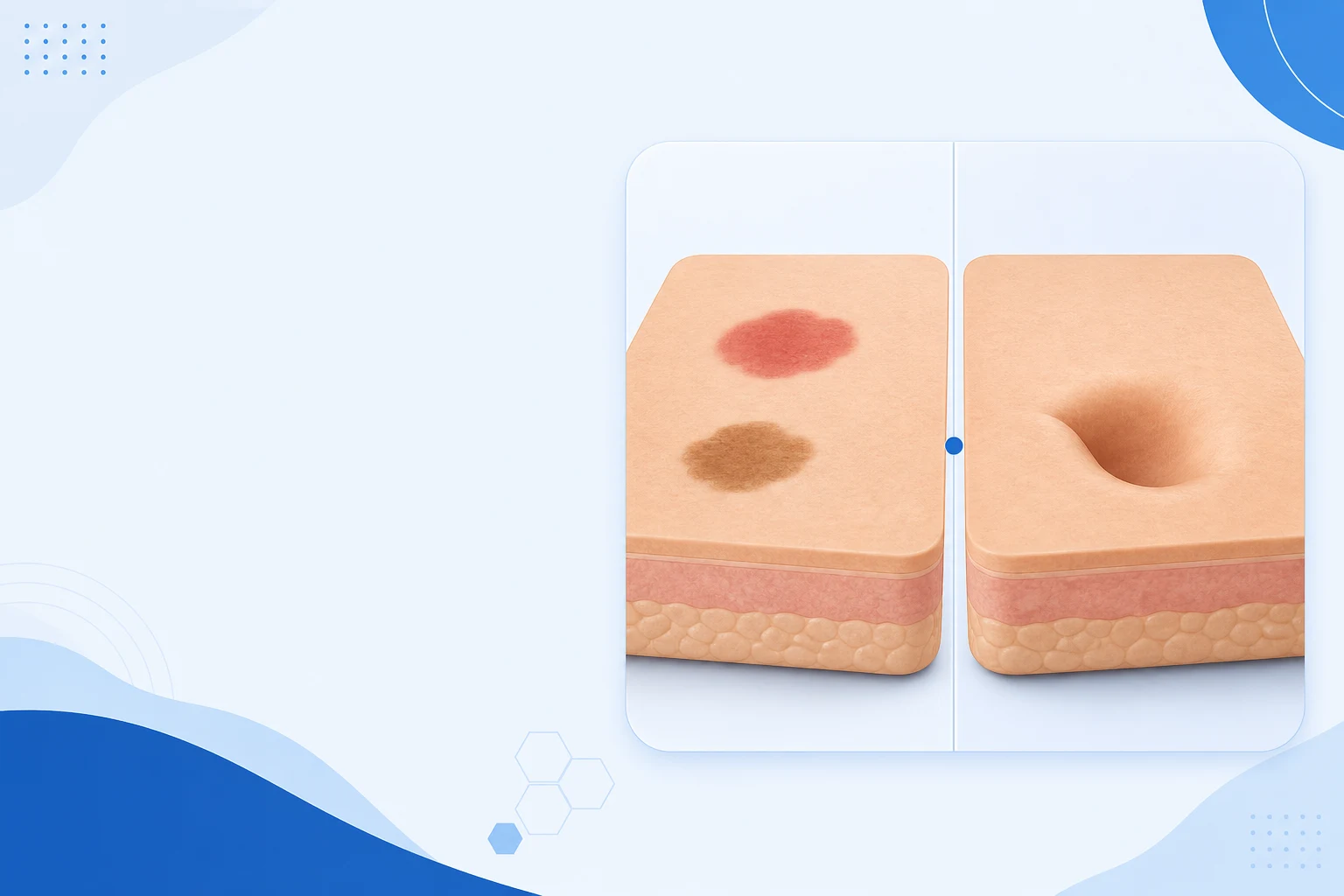 Acne Scars
Acne Marks vs Acne Scars: How to Tell the Difference
The most useful question before treating 'acne scars' is whether they are scars at all. Marks fade; scars are contour. Telling them apart changes everything.
The quiet trust of those we care for.
The most considered medical experience I have had. Results that feel like myself, only quieter.
Dr Kenneth's restraint is rare. I trust him completely with the long-term care of my skin.
Everything about the clinic — the light, the silence, the precision — feels deliberate.
A QUICKER SCROLL
Clinic life, in short clips
Take a breather from the detail — swipe through Facebook and TikTok moments from DrPlus, then continue when you're ready to book.