
DrPlus Skin Education · Acne Scar Science
Acne Scar Treatment Comparison: CO₂ Laser, RF Microneedling, Subcision & Peels
There is no single 'best' acne scar treatment — only the right tool for a specific scar at a specific depth. This guide compares the four main options on the dimensions that actually decide outcomes.
On this page
- Quick answer
- A framework: depth decides the tool
- Key terms used in this comparison
- Fractional CO₂ laser: resurfacing the dermis
- RF microneedling: dermal heat, surface spared
- Subcision: releasing what holds a scar down
- Chemical peels: working at the surface
- Downtime and recovery, compared
- PIH risk and skin tone
- Matching treatments to scar types
- Why combination treatment usually wins
- When to consider a medical consultation
- Summary
Quick answer
There is no universally 'best' acne scar treatment. Each of the four main options — chemical peels, fractional CO₂ laser, radiofrequency (RF) microneedling and subcision — solves a different mechanical problem at a different depth in the skin. The right choice depends on your scar types, your skin tone, how much downtime you can take, and how the scars are distributed across your face.
In practice, most people with established acne scarring have a mixture of scar types, and the best plans combine two or more methods in sequence. This guide compares the options honestly on the dimensions that change the result, so you can have a sharper conversation at your consultation.
A framework: depth decides the tool
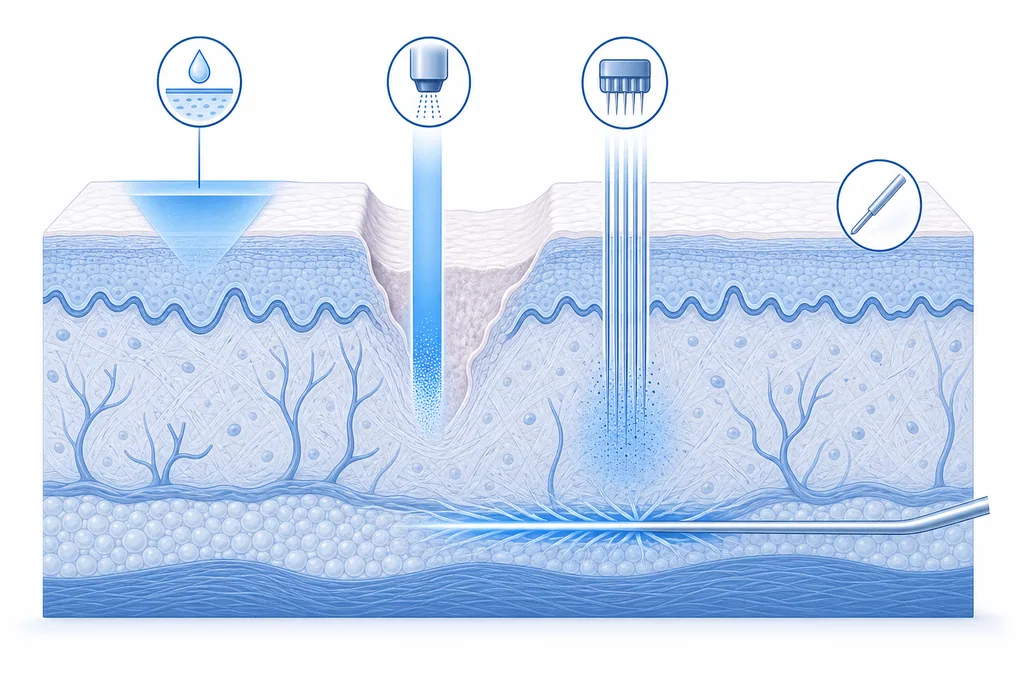
The simplest way to make sense of the options is to ask one question: how deep is the problem? Surface discolouration and very shallow irregularity sit near the top of the skin. Texture and the sharp walls of boxcar scars sit deeper, in the upper-to-mid dermis. Tethered rolling scars are pulled from bands sitting deepest of all, below the scar itself.
Each treatment has a characteristic working depth. Match the depth of the tool to the depth of the problem and the logic of every recommendation becomes clear — including why a surface peel will never lift a tethered scar, and why subcision alone leaves surface texture untouched.
— Comparison
The four options at a glance
| Treatment | Works mainly in | Best suited to |
|---|---|---|
| Chemical peel | Epidermis / very superficial dermis | Surface tone, post-inflammatory marks, mild roughness |
| Fractional CO₂ laser | Epidermis into the dermis (columns) | Overall texture, boxcar walls, shallower scars |
| RF microneedling | Dermis (surface preserved) | Texture and scars where pigment protection matters |
| Subcision | Beneath the scar (fibrous bands) | Tethered rolling scars and bound-down depressions |
Chemical peel
- Works mainly in
- Epidermis / very superficial dermis
- Best suited to
- Surface tone, post-inflammatory marks, mild roughness
Fractional CO₂ laser
- Works mainly in
- Epidermis into the dermis (columns)
- Best suited to
- Overall texture, boxcar walls, shallower scars
RF microneedling
- Works mainly in
- Dermis (surface preserved)
- Best suited to
- Texture and scars where pigment protection matters
Subcision
- Works mainly in
- Beneath the scar (fibrous bands)
- Best suited to
- Tethered rolling scars and bound-down depressions
Key terms used in this comparison
Fractional CO₂ laser: resurfacing the dermis
Fractional CO₂ laser is an ablative resurfacing treatment. It fires energy in a grid of microscopic columns that vaporise narrow channels of tissue down into the dermis while leaving the skin between them intact. The injured columns trigger a wound-healing response, and the surrounding healthy skin speeds re-healing — a principle called fractional photothermolysis.
Because it both removes surface tissue and heats the dermis to stimulate collagen, CO₂ laser is powerful for overall texture, for softening the defined walls of boxcar scars, and for refining shallower scarring. The trade-off is the most visible downtime of the four options and, in deeper skin tones, a higher PIH risk that has to be actively managed with conservative settings and aftercare.
— Mechanism
Fractional vs fully ablative resurfacing
Fractional CO₂
Only narrow columns are treated. The untouched skin between them acts as a reservoir of healthy cells, so recovery is faster.
Fully ablative (older approach)
The whole surface is removed in one pass. Results can be strong, but downtime and risk are higher — a key reason fractional delivery became standard.
Simplified illustration. The depth, density and energy of treatment columns are set by your doctor based on scar depth and skin type.
RF microneedling: dermal heat, surface spared
RF microneedling takes a different route to a similar destination. Fine needles pass through the epidermis and deliver radiofrequency energy as controlled heat directly into the dermis. That heat injures collagen in a targeted way and switches on fibroblasts to remodel it — but because the energy is concentrated at the needle tips in the dermis, the surface (and its pigment cells) is largely spared.
This epidermis-preserving quality is exactly why RF microneedling is so widely used for deeper, melanin-rich Asian skin: less surface disruption tends to mean a lower risk of post-inflammatory hyperpigmentation than fully ablative resurfacing. It excels at texture and dermal remodeling, though it does not vaporise surface tissue the way CO₂ laser does, so the two are often complementary rather than interchangeable.
Subcision: releasing what holds a scar down
Subcision solves a problem the other three cannot touch. Rolling scars are not simply missing tissue — they are actively pulled down by fibrous bands tethering the surface to deeper layers. No amount of surface resurfacing will lift a scar that is anchored from below. Subcision passes a needle or blunt cannula under the scar and severs those bands, freeing the surface to rise back toward its natural level.
Releasing the tether also creates a small, controlled space that fills and organises with new collagen, adding support beneath the formerly depressed area. This is why subcision is frequently paired with a collagen-stimulating treatment in the following weeks — the release creates the opportunity, and the collagen work consolidates it.
— Mechanism
Tethered surface, before and after release
Tethered
Fibrous bands beneath the skin pull the surface downward, creating the rolling depression.
After release
Once the bands are released, the skin can sit closer to its natural level. Collagen support is often added in the following weeks.
Chemical peels: working at the surface
Chemical peels apply a controlled acid to remove the outermost skin in a measured way, prompting fresher, more even skin to replace it. Superficial peels (using agents such as glycolic or salicylic acid) refresh tone, help post-inflammatory marks and smooth mild roughness. Medium-depth peels (such as TCA) reach a little deeper and can contribute to texture work.
Peels are valuable supporting players rather than a structural fix for deep scars: they act at or near the surface, so they cannot rebuild a collapsed dermal scaffold. In deeper skin tones, peel depth and selection have to be cautious, because over-aggressive peeling is a classic trigger for hyperpigmentation. Used appropriately, they refine the canvas the deeper treatments are working on.
Downtime and recovery, compared
Recovery is often the deciding practical factor, because it determines how a treatment fits around work and life. Broadly, the more a treatment disrupts the surface, the longer the visible downtime — but also, often, the more resurfacing it achieves per session. The chart below shows the typical relative intensity; your actual experience depends on the settings used and how aggressively the treatment is dialled in.
— Relative downtime
How they compare on recovery
Superficial chemical peel
Minimal
Mild flaking and pinkness for a few days; usually the lightest recovery.
RF microneedling
Light
Redness and small marks for a few days; surface largely intact speeds recovery.
Subcision
Moderate
Bruising and swelling for several days to a couple of weeks as the area settles.
Fractional CO₂ laser
Higher
Redness, swelling and peeling — the most visible downtime of the group.
Recovery profiles vary by skin, settings and aftercare. Your doctor will share what is realistic for your case.
PIH risk and skin tone
For deeper Asian skin tones, the risk of post-inflammatory hyperpigmentation is often the single most important variable — more important than squeezing out maximum resurfacing in one session. Treatments that heat or remove the surface more aggressively carry more risk of provoking the pigment cells, so the strategy shifts toward gentler, staged energy and rigorous sun protection.
This is not a reason to avoid effective treatments; it is a reason to choose settings and sequencing carefully. It also explains why epidermis-sparing options like RF microneedling, and conservative laser parameters, feature heavily in plans for Fitzpatrick III–V skin. An assessment that takes your skin tone seriously is part of safe care, not an optional extra.
Matching treatments to scar types
Pulling it together: the treatment is chosen to fit the scar, not the other way around. Boxcar scars with defined walls respond to resurfacing; rolling scars need their tethers released first; narrow ice pick scars need focal, depth-first techniques because broad resurfacing cannot reach their base. The matrix below summarises the typical fit — always individualised at assessment.
— Suitability matrix
Common fits for atrophic scar types
A teaching guide, not a prescription. Your doctor will confirm what is appropriate for your skin at consultation.
| Scar type | CO₂ Laser | Subcision | RF Microneedling | Chemical Peel |
|---|---|---|---|---|
| Ice pick | ||||
| Boxcar | ||||
| Rolling | ||||
| Pitted / marks |
Why combination treatment usually wins
Because almost every scarred face carries more than one scar type, the most effective plans layer methods to cover the full range. A common logic is: release tethered rolling scars with subcision, rebuild and refine texture with a collagen-stimulating treatment such as RF microneedling or CO₂ laser, address focal ice pick scars with a targeted technique, and support surface tone with peels. Sessions are spaced to respect the months-long collagen remodeling cycle.
This is also why comparing single treatments as if one must 'beat' the others can mislead. The honest framing is sequencing — which tools, in which order, spaced how — rather than a single champion. A doctor-led plan maps that sequence to your specific mix of scars and your skin's tolerance.
— Pathway
A typical combination logic
- 1
Assess & calm
Map scar types and skin tone, and settle any active acne first so new scars and pigment are not being created mid-plan.
- 2
Release
Free tethered rolling scars with subcision so the surface can rise — something resurfacing alone cannot achieve.
- 3
Remodel
Stimulate collagen and refine texture with RF microneedling and/or fractional CO₂ laser over a planned series.
- 4
Refine & maintain
Use peels and focal techniques to polish surface tone and treat residual ice pick scars; review over months.
- 1
Assess & calm
Map scar types and skin tone, and settle any active acne first so new scars and pigment are not being created mid-plan.
- 2
Release
Free tethered rolling scars with subcision so the surface can rise — something resurfacing alone cannot achieve.
- 3
Remodel
Stimulate collagen and refine texture with RF microneedling and/or fractional CO₂ laser over a planned series.
- 4
Refine & maintain
Use peels and focal techniques to polish surface tone and treat residual ice pick scars; review over months.
When to consider a medical consultation
If you are comparing treatments online, you have already reached the point where a tailored assessment will save time and money. The combinations above only work when matched to your actual scars and skin — which cannot be done reliably from a photo or a self-diagnosis.
A DrPlus consultation in Johor Bahru assesses your scar mix and skin tone, explains which methods are suitable, and sequences a realistic plan at your pace — with honest expectations and no pressure to commit on the day.
Summary
Chemical peels, fractional CO₂ laser, RF microneedling and subcision are not competitors so much as specialists, each working at a different depth on a different mechanical problem. Peels refine the surface; CO₂ laser resurfaces and remodels; RF microneedling remodels the dermis while protecting pigment; subcision releases what holds rolling scars down.
Because most faces carry several scar types, the strongest, most realistic results come from combining and sequencing these tools — weighed against downtime, skin tone and PIH risk. There is no guaranteed cure and no single best treatment, only the right plan for your particular skin, built at a proper assessment.
— Frequently asked
Common questions
There is no single best treatment. The right choice depends on your scar types, skin tone and downtime tolerance. Most established scarring responds best to a combination of methods sequenced over time rather than any one procedure.
They suit different needs. CO₂ laser resurfaces more aggressively and is strong for texture and boxcar walls; RF microneedling remodels the dermis while sparing the surface, which can mean lower pigmentation risk in deeper skin. They are often combined rather than ranked.
No. Peels work at or near the surface, so they refine tone and very shallow texture but cannot rebuild the deep collagen loss behind depressed scars. They are best used as a supporting treatment within a broader plan.
Rolling scars are tethered down by fibrous bands beneath them. Laser resurfaces the surface but cannot release those bands, so a tethered scar will not lift from laser alone. Subcision frees the tether so the surface can rise.
It varies with scar severity and the methods used, but multiple sessions spaced over months are typical because collagen remodels slowly. A doctor will give you a realistic range for your specific plan at assessment.
Generally superficial chemical peels and RF microneedling have the lightest visible recovery, while fractional CO₂ laser has the most. Actual downtime depends on the settings used and how aggressively each treatment is performed.
— Related treatments
Continue with the relevant DrPlus treatment pages
Each page goes deeper into mechanism, suitability and recovery — your final plan is confirmed at consultation.
Primary money page
Acne Scar Treatment Hub
Doctor-led hub where your scar mix is assessed and a combined plan is mapped.
acne scar treatment in Johor BahruSupporting
CO₂ Laser
Ablative resurfacing for texture, boxcar walls and shallower scars.
fractional CO₂ laser for acne scarsSupporting
RF Microneedling
Dermal collagen remodeling with the surface preserved — gentler on pigment.
RF microneedling for acne scarsSupporting
Subcision
Releases the fibrous bands tethering rolling scars from below.
subcision for rolling scarsSupporting
Chemical Peel
Surface refinement and post-inflammatory marks as part of a plan.
chemical peel for surface tone— Continue reading
 Acne Scars
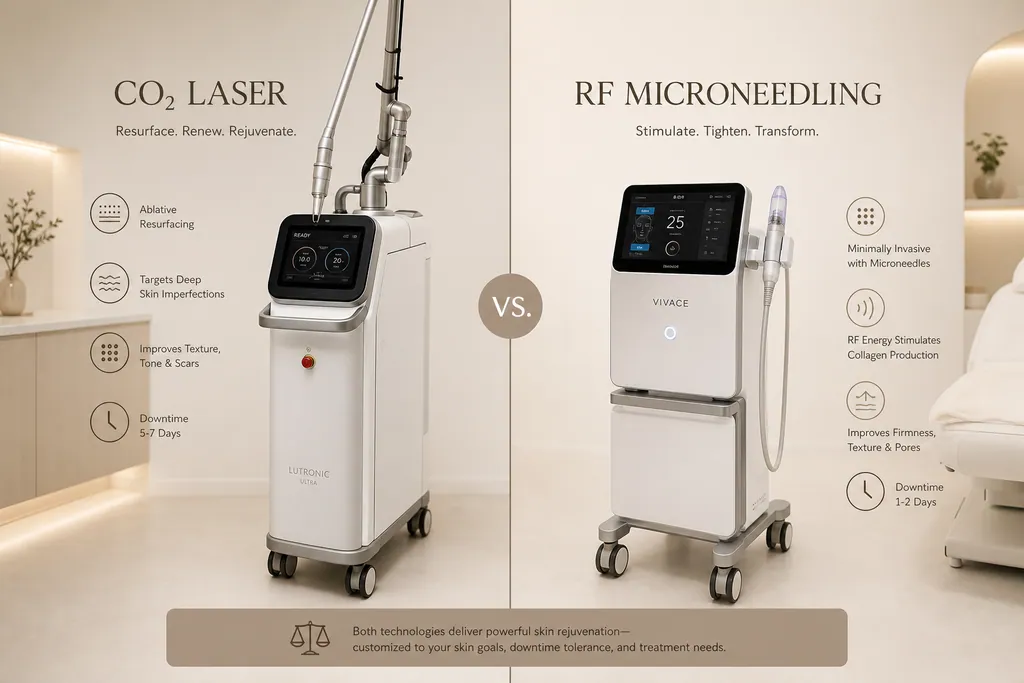
CO₂ Laser vs RF Microneedling for Acne Scars
Two of the most common acne scar treatments — and they work in genuinely different ways. Here is how to think about them.
 Acne Scars
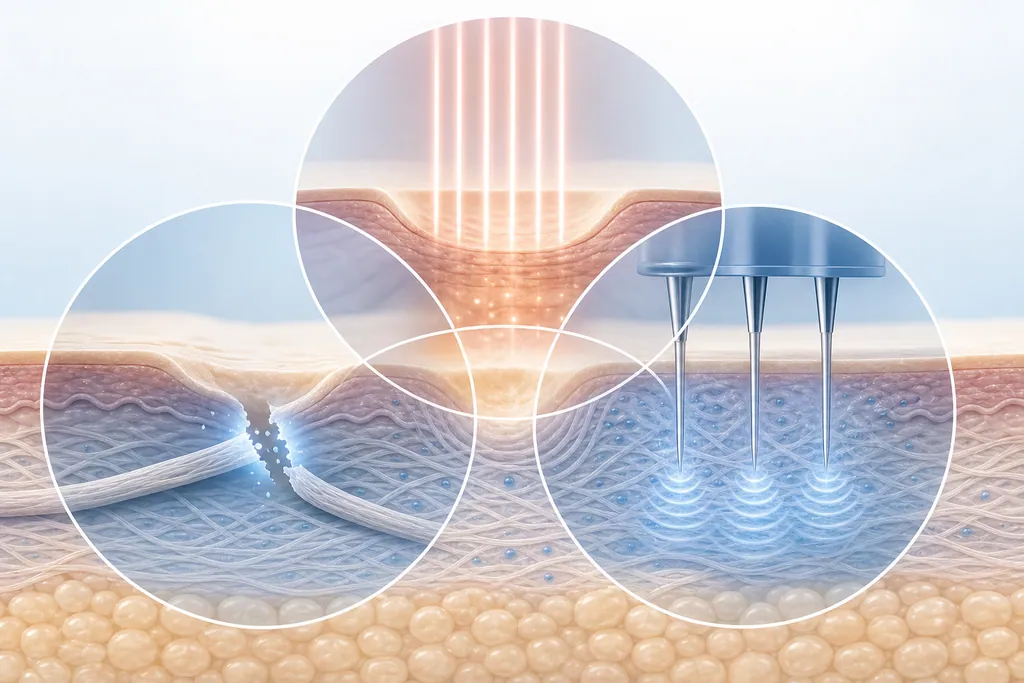
Why Combination Treatment Is Often Needed for Acne Scars
Most people have more than one scar type, and each behaves differently. That is why a single treatment rarely does the whole job.
 Acne Scar Science
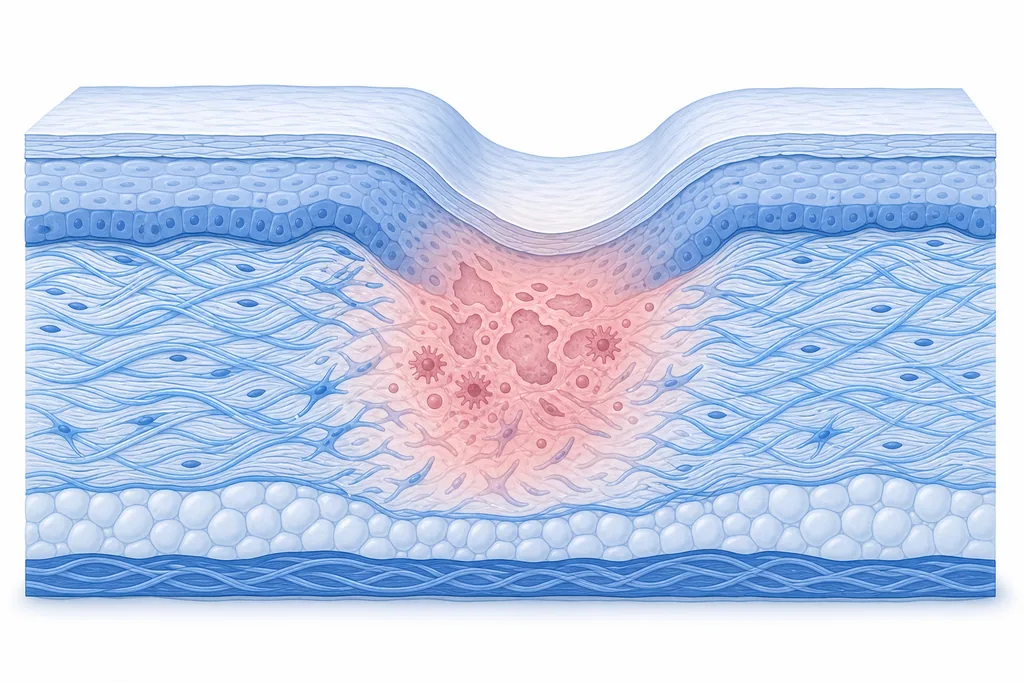
The Complete Science of Acne Scarring
Acne scars are not a surface problem. They are the visible record of how inflammation reshaped the collagen scaffold beneath your skin. Understand that, and every treatment decision starts to make sense.