

Acne & Acne Scars · Scar Release
Subcision Treatment for Rolling Acne Scars in Singapore & Johor Bahru
Rolling scars that shadow your face in side light — released at the root. Subcision frees the bands pulling each scar down, so your skin can finally sit flatter and smoother. Doctor-performed in Johor Bahru, welcoming patients from Singapore and across Malaysia; send us a photo on WhatsApp and we'll tell you honestly if it would help your scars.
- Suitable for
- Rolling and tethered acne scars
- Downtime
- Several days of mild bruising or swelling
- Usually with
- CO₂ laser or RF microneedling when surface texture remains
- Performed by
- Dr Kenneth
Bruising settles over a few days — if you have an event coming, count back from it.














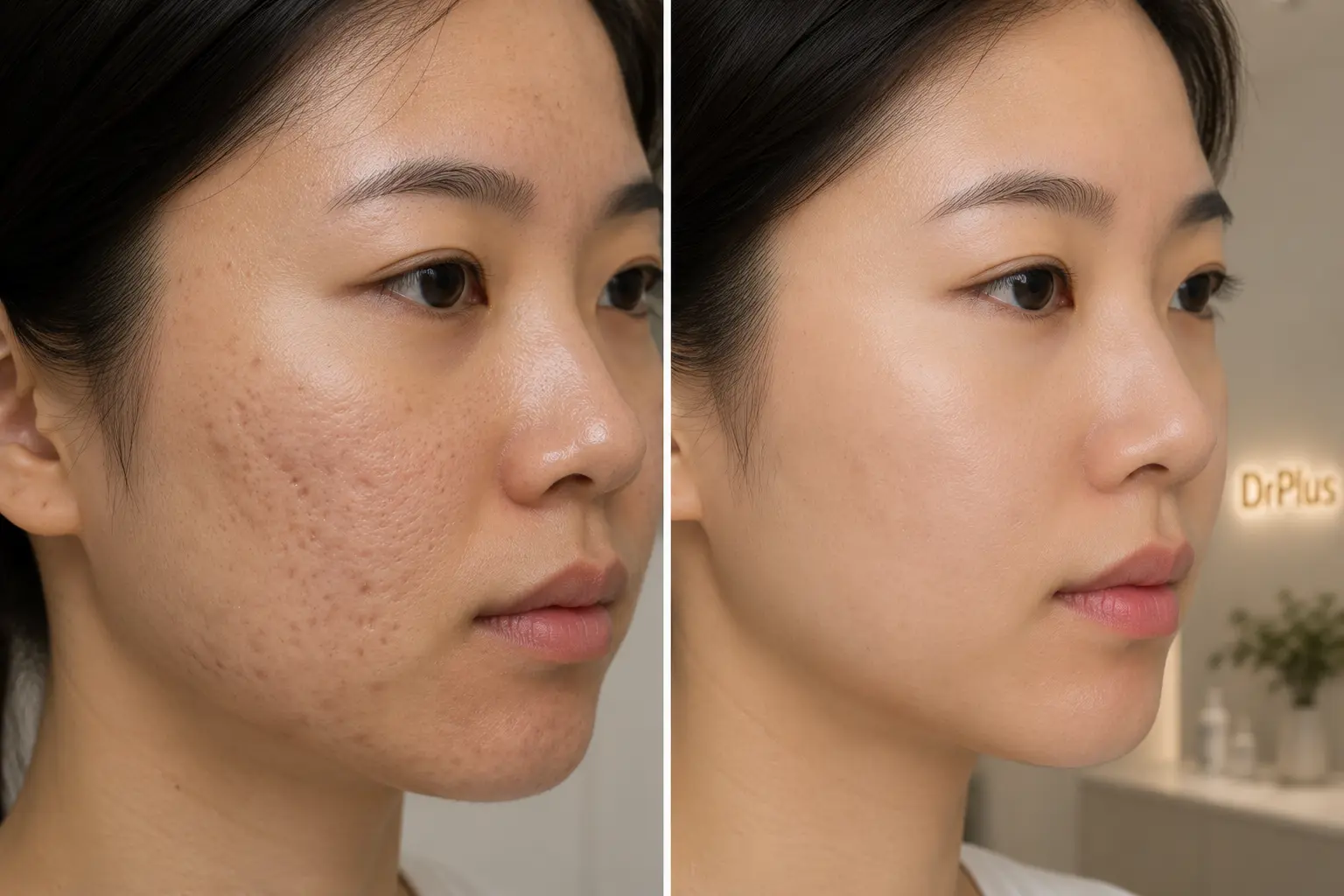
From pulled down to lifted.
Imagine skin that finally sits even — no longer tethered to old damage beneath the surface. Subcision frees the structure so your face can look the way it's supposed to, and confidence returns from the inside out.
- Scars release and skin lifts back to where it belongs
- Creates the foundation for deeper renewal
- Often the turning point in a scar journey
- Performed gently under local anaesthetic in-clinic
— How subcision works
A simple way to picture the mechanism
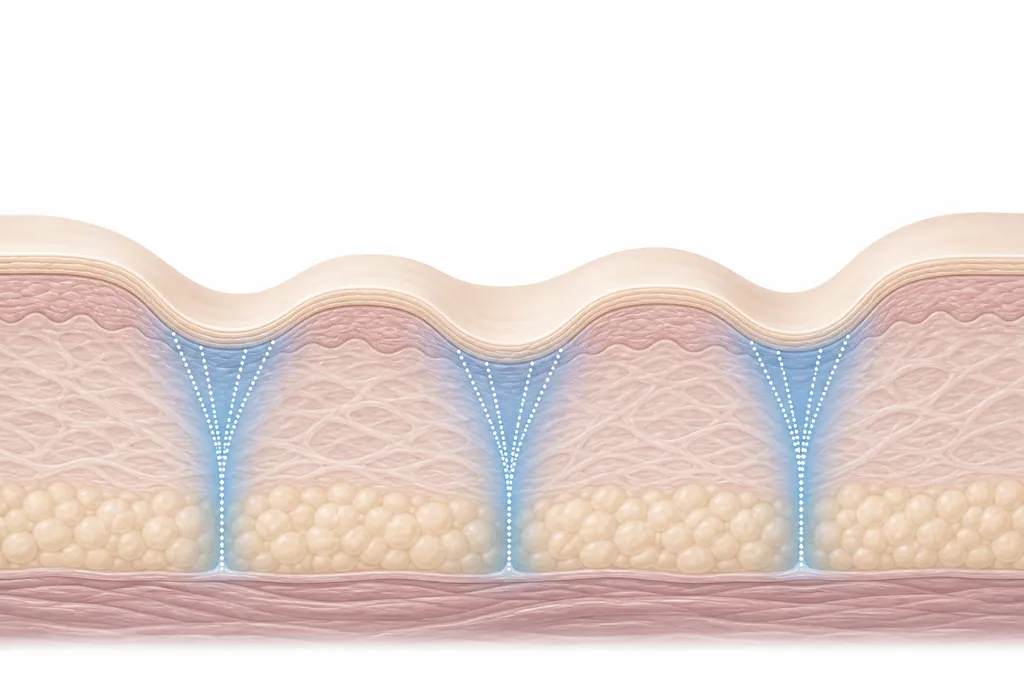
Subcision is hard to picture without a diagram. Here is a simplified view of what happens beneath the skin during and after the procedure.
- Stage 01
Tethered scar
Fibrous bands pull the skin surface downward, forming a depression.
- Stage 02
Subcision release
The doctor releases selected bands beneath the scar with a fine needle or cannula.
- Stage 03
Remodelling support
The area can gradually lift and remodel with healing or combination treatments.
This is a simplified illustration. Your doctor will examine your scar pattern under angled light and explain exactly which areas need release in your case.
— How it works
The treatment process
Scar mapping
Your doctor identifies tethered areas and plans entry points for safe release.
Band release
A fine needle or cannula is used to separate fibrous tissue beneath the scar.
Healing & combination
As tissue heals, the skin may lift slightly. Further sessions or adjunct treatments may be recommended.
— Suitability
Who Subcision suits — and who it doesn't
Some scars are not just surface marks — they are pulled downward by fibrous bands beneath the skin. Subcision is designed for this structural problem.
Often suitable for
- Rolling scars that appear sunken under angled lighting
- Tethered depressions caused by fibrous bands
- Scars that have plateaued with surface-only treatments
- Cases that need structural release before resurfacing or microneedling
Usually not the right choice for
- Surface pigmentation or red/brown post-acne marks
- Texture concerns or enlarged pores without tethering
- Ice pick scars — these typically require different techniques
Subcision works at the structural layer. The lift it creates is usually most visible once paired with collagen-stimulating or resurfacing treatments in the weeks that follow.
— Recovery
What to expect after Subcision
Recovery varies by individual, treatment intensity, and aftercare adherence. This is a general guide — your doctor will provide specific instructions.
Day 1–3
Swelling, tenderness, and bruising are common at treated sites.
Week 1
Bruising gradually reduces. Avoid strenuous activity as directed by your doctor.
Week 2–4
Skin settles. The lifted area begins to integrate. Follow-up may be scheduled.
Month 1–3+
Collagen support improves scar texture over time. Further sessions or adjunct treatments may be planned.
Your doctor will provide a tailored aftercare guide. If you have questions about downtime or planning around an event, ask during your consultation.

— Your plan
How your plan is built
No two plans are identical, because no two presentations are. What your Subcision plan involves — and what it costs — is set by clinical findings at assessment, not by a menu.
Assessment comes first. The doctor examines your concern in person — type, severity, and skin response all change what is appropriate.
The plan is sized by clinical need. Number of sessions, spacing between them, and whether treatments are combined are set by what the assessment finds — never by a predetermined package.
You see the plan and its cost before anything is booked. Take it home, think it over — there is no obligation to proceed on the day.
You leave the assessment knowing the plan and what it costs — nothing left to guess at home.
— Cost factors
What determines subcision cost
We do not publish a standard price because subcision plans differ — the number of scars released, whether treatment is staged over more than one session, and whether it is combined with fillers, RF microneedling, or laser resurfacing all change the fee. After assessment you receive a written, personalised quote with no obligation to proceed.
Quotes are in Malaysian ringgit at our Johor Bahru clinic and Singapore dollars at our Singapore clinics. WhatsApp us first if you want to understand what would shape your quote before you book.
- Number and depth of tethered scars being released
- Whether treatment is staged across sessions
- Whether subcision is combined with fillers, RF microneedling, or laser
- Review and follow-up included in the plan
— Your doctor and where you're treated
One doctor, in a real clinic — not a treatment menu

Dr Kenneth Lee
Aesthetic Physician · DrPlus Aesthetics Clinic
- MBBCh · Cardiff University · UK
- GDipFP Dermatology · NUS · Singapore
- Aesthetic Medicine · AAAM · USA
- LCP Certified · Malaysia

Dr Plus Aesthetic Clinic Johor Bahru
B0223, Jalan Eko Botani 3, Taman Eko Botani
79100 Iskandar Puteri, Johor, Malaysia
Your assessment is with the doctor directly — not a consultant, not a sales room.
— Honest expectations
Risks and realistic expectations
No medical treatment is risk-free, and honest expectations matter more than impressive promises. Here is what a realistic course looks like.
What results realistically look like
- Results build gradually and vary by individual — skin type, severity, and how your body responds all shape the outcome.
- Some concerns need more than one session, and some need maintenance. If that applies to you, the doctor will say so at assessment — before you commit.
- If Subcision is unlikely to reach the result you have in mind, you will be told that plainly. An honest "this won't get you there" protects you more than an optimistic plan.
Risks, plainly stated
- Temporary redness, swelling, or sensitivity in the treated area is common and expected — the downtime section above describes the usual course.
- Less common reactions exist for every procedure. The doctor walks through the ones relevant to you at consultation, before any treatment is scheduled.
If something doesn't feel right afterwards
If anything doesn't look or feel right after treatment, contact the clinic — describe what you're seeing and the team will advise whether it is an expected part of recovery or needs the doctor to review it.
— Where we treat
Subcision in Johor Bahru & Singapore
Johor Bahru
Dr Plus Aesthetic ClinicB0223, Jalan Eko Botani 3Taman Eko Botani79100 Iskandar Puteri, Johor
SBF Center
160 Robinson Road #03-10SBF CenterSingapore 068914
The Flow Mall
66 East Coast Road #03-05The Flow MallSingapore 428778
Novena Medical Centre
10 Sinaran Drive #10-30Novena Medical CentreSingapore 307506
— FAQ
Subcision FAQ
DrPlus Aesthetic Clinic in Iskandar Puteri, Johor Bahru, Malaysia offers doctor-led subcision treatment for rolling and tethered acne scars. Your doctor maps your scars under angled lighting and confirms whether subcision is appropriate before proceeding. We welcome patients from across Johor Bahru and Singapore — our clinic is approximately 30 minutes from the Singapore checkpoint.
Yes — Singapore patients regularly travel to us for subcision. You can start with a consultation at our Singapore clinics — SBF Center in Tanjong Pagar or The Flow Mall at East Coast — or send scar photos over WhatsApp for an initial doctor's opinion. The procedure itself is performed at our Johor Bahru clinic in Iskandar Puteri, roughly 20–30 minutes from the Tuas Second Link. Because bruising for one to two weeks is common after subcision, your doctor will help you time sessions around work and travel.
Subcision is typically performed using a fine hypodermic needle (such as an 18-gauge Nokor needle) or a blunt-tipped cannula. The needle is inserted beneath the scar to cut the fibrous bands that tether the skin surface downward. Your doctor selects the instrument based on scar depth, location, and density. The procedure is performed under local anaesthetic so discomfort is manageable.
Subcision addresses tethering beneath the skin — it physically releases the fibrous bands pulling scars downward. Laser and microneedling primarily target surface texture and collagen. They are often combined for different scar mechanisms in a staged treatment plan.
Some patients need one session; others benefit from repeat treatments spaced weeks apart. Your doctor will advise based on scar depth and response.
Bruising and swelling are common but usually resolve within one to two weeks. Social downtime varies by individual.
Rolling scars that appear deeper under angled or raking light, and scars that seem to be pulled inward, are common indicators. Your doctor will assess tethering at consultation and advise whether subcision is appropriate for your case.
Subcision is primarily for rolling and tethered scars caused by fibrous bands beneath the skin. Ice pick scars have a different structure and usually require other approaches such as punch excision or TCA cross. Your doctor will assess your specific scar types.
Yes. Subcision is a mechanical procedure rather than an energy-based treatment, so pigmentation risk is generally lower than with laser. Your doctor will assess suitability and advise on bruising and healing.
Subcision can significantly improve depressed rolling scars, but complete removal is not always achievable. Depth, chronicity, and skin healing all affect the outcome. Your doctor will give an honest assessment.
Subcision is most often used as the structural release step before or alongside RF microneedling, CO₂ laser, or chemical peels in a staged acne scar plan.
We do not publish prices because subcision is planned per patient — the number of scars, the areas treated, and whether it is combined with RF microneedling or laser all affect the quote. After your scar assessment you receive a personalised, written quote with no obligation to proceed. WhatsApp us and we can explain what your assessment would involve.
Realistic before-and-after change from subcision is a visible softening of rolling scars — depressions sit flatter, and shadows under angled light reduce. It is rarely a single-session transformation: the lift develops as the released skin heals over weeks, and improves further when collagen-stimulating treatments follow. Photos you see online vary enormously in lighting and scar type, which is why we assess your scars in person and tell you honestly what degree of change to expect before you commit.
Expect swelling and firmness at the treated sites straight away — some of this is deliberate (blood collecting under the released scar acts as a natural spacer). Bruising typically develops over the first day or two and settles over one to two weeks. Tenderness is common but usually manageable. Your doctor provides aftercare instructions covering cleansing, activity, and what is normal versus what to report.
Yes — combination is the norm rather than the exception. A typical staged plan uses subcision to release tethered rolling scars, TCA CROSS for any ice pick scars, then CO₂ laser or RF microneedling to remodel surface texture once the structure is released. In selected cases, a small amount of filler after subcision helps hold the released scar up while it heals. Your doctor sequences these by scar type at assessment.

— Request a Consultation
Take the first step toward smoother skin
Your future skin starts with a private assessment — scar type, skin tone, and what's realistic for you. No pressure, just a clear path forward.
- Doctor-led assessment and recommendations
- Reviewed personally — not auto-routed
- Discreet handling of sensitive concerns
- Reply typically within one business day
— Related treatments
Other treatments sometimes used alongside Subcision
CO₂ Laser
After scar release, CO₂ laser may help refine surface texture.
Learn about CO₂ LaserRF Microneedling
RF microneedling may support collagen remodelling after structural release.
Learn about RF MicroneedlingChemical Peel
Chemical peels may help if pigmentation or acne marks are also present.
Learn about Chemical Peel— Skin Education
Related Skin Education
Doctor-led guides written to help you understand your options before consultation. Each article links back to the relevant treatment pages.
Subcision Before and After: What Results Really Look Like
Depressions sit flatter, shadows soften under angled light — but the change is gradual and individual. A doctor describes realistic subcision results in words, not photos.
Subcision Healing and Recovery: A Day-by-Day Guide
Swelling and a bruise are not complications after subcision — they are part of how the treatment works. Here is the honest day-by-day recovery, and the few signs that do need a doctor.
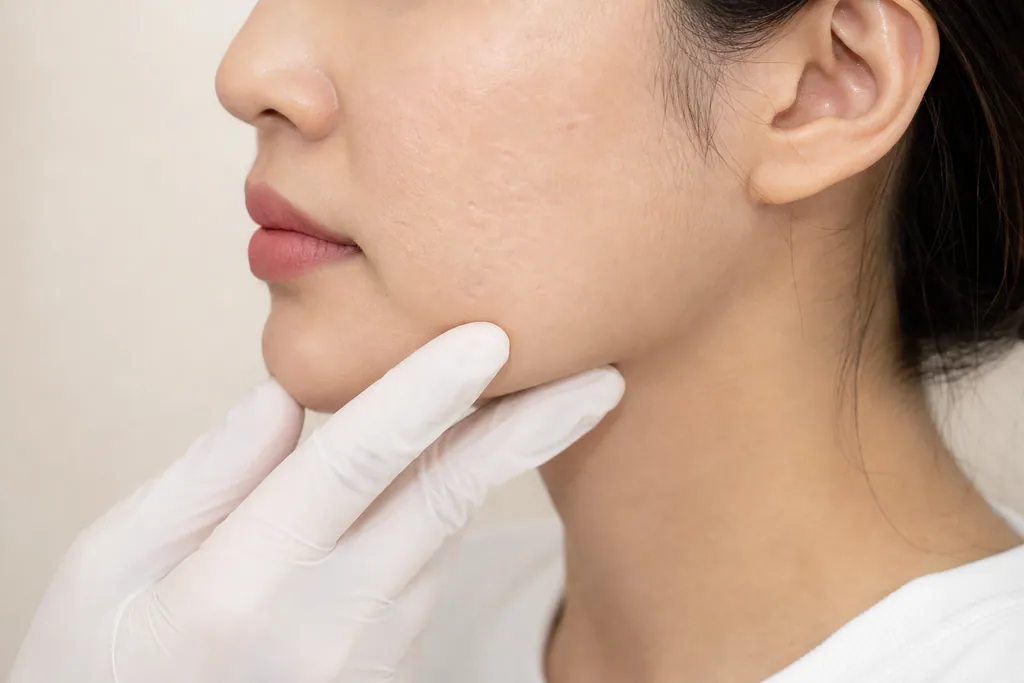 Acne Scars
Subcision for Rolling Acne Scars: What to Know
Rolling scars are tethered from below. Until that tethering is released, surface treatments often do less than expected.
Subcision and TCA CROSS: Why Mixed Scars Need Both
Subcision releases tethered rolling scars; TCA CROSS rebuilds deep ice pick pits. Most scarred faces have both — which is why the honest plan usually combines the two.
Needle vs Cannula Subcision: How a Doctor Chooses
The Nokor needle cuts with precision; the blunt cannula sweeps wide areas with less bruising. Neither is 'better' — the instrument follows the scar map, and the choice is clinical, not cosmetic.
Subcision Cost and Sessions: What Actually Decides Your Quote
Subcision is quoted per assessment, not off a menu — because scar count, technique and session needs vary so much between faces. Here is what actually moves the number.
Subcision with Filler, RF Microneedling or CO₂ Laser: What Follows the Release
Subcision is the structural first step — but what you add afterwards, and when, often decides how much of the lift you keep. A doctor explains the spacer and resurfacing logic.
 Acne Scars
Rolling Acne Scars: Why They Form Beneath the Skin
Rolling scars are pulled down from below by fibrous bands. Until that tethering is released, surface treatments often disappoint.
The quiet trust of those we care for.
The most considered medical experience I have had. Results that feel like myself, only quieter.
Dr Kenneth's restraint is rare. I trust him completely with the long-term care of my skin.
Everything about the clinic — the light, the silence, the precision — feels deliberate.
A QUICKER SCROLL
Clinic life, in short clips
Take a breather from the detail — swipe through Facebook and TikTok moments from DrPlus, then continue when you're ready to book.