
DrPlus Skin Education · Pigmentation
Pico Laser Treatment for Pigmentation: What It Does and Who It May Suit
Pico laser is one of the most discussed pigment treatments — and one of the most over-promised. Here is how to think about it.
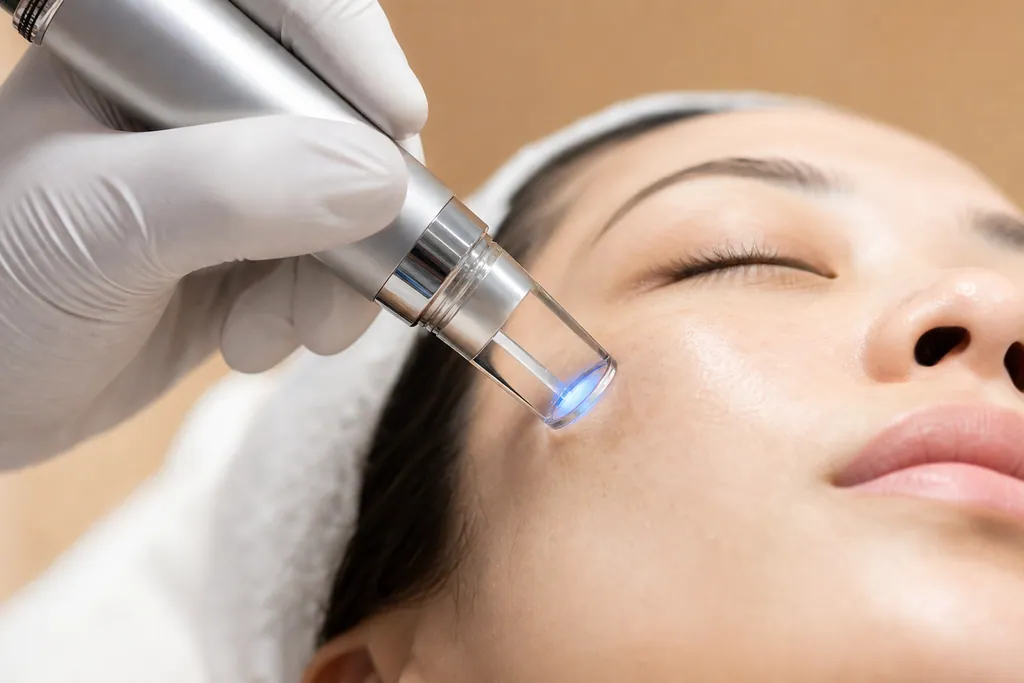
What is pico laser?
Pico laser refers to a class of laser devices that deliver energy in pulses measured in picoseconds — trillionths of a second. The very short pulse duration creates a primarily photoacoustic effect: it shatters pigment particles into smaller fragments without depositing much heat.
Because there is less thermal impact compared with older laser generations, pico laser for pigmentation can be a useful tool — particularly for skin tones where heat-driven post-inflammatory pigmentation is a concern.
Mechanism
Photoacoustic
Pulses shatter pigment particles into smaller fragments via an acoustic shock, with less surface heat.
Mechanism
Picosecond pulse
Energy is delivered in trillionths of a second — extremely short bursts.
Mechanism
Body clears fragments
Shattered pigment is gradually cleared by normal lymphatic and immune processes.
The pigment types pico is asked to treat
"Pigmentation" is not one thing. Freckles are small, genetically driven spots that darken with sun. Sun spots (solar lentigines) are well-defined patches from cumulative sun exposure. Post-inflammatory hyperpigmentation (PIH) is the brown mark left behind after acne or irritation. Melasma is a hormone- and sun-influenced condition that is symmetrical and prone to returning. And many people simply have diffuse, uneven tone.
These behave very differently. This is exactly why diagnosis matters before any laser: the same device used on the wrong pigment can disappoint at best, or provoke pigmentation at worst.
Melasma
Symmetrical patches, often on the cheeks, forehead or upper lip. Strongly hormone- and sun-influenced.
Cautious, lower-intensity protocols are the norm
Sun spots
Flat, well-defined dark marks caused by cumulative sun exposure — most common on face, hands and chest.
Often responsive to pigment lasers with sun discipline
Freckles
Small, lighter brown spots — often genetic. Tend to darken with sun and fade with consistent sun protection.
Gentle approaches when treatment is wanted
How pico laser is used for pigmentation
Pico laser is commonly used for sun-related pigmentation (sun spots, solar lentigines), certain melasma cases, and post-inflammatory pigmentation. It is not the right tool for every pigment type.
Settings, pulse duration, wavelength and treatment intervals are adjusted to the pigment being targeted and the skin tone being treated. This is part of what 'doctor-led' actually means in practice.
What concerns may be assessed
Your doctor will assess pigment type and depth (some pigment sits in the epidermis, some in the dermis), skin tone, hormonal context (especially relevant for melasma), and history of post-inflammatory pigmentation.
This is also the moment to discuss realistic expectations and the role of daily sun protection and supportive skincare in maintaining any progress.
Who may be suitable
Suitability depends on individual assessment. Many people with sun-related pigmentation can be appropriate candidates with well-chosen settings; some melasma patients are appropriate but require a cautious, lower-intensity protocol.
Some pigmentation patterns are better addressed with other treatments. A consultation is the right place to find that out.
What pico laser can and cannot improve
Setting expectations honestly is part of good care. Pico tends to do well with sun-related pigment and overall tone, can help PIH once the underlying inflammation is settled, and must be used cautiously — if at all — for melasma.
Melasma deserves its own careful conversation because of the rebound risk; we cover it in depth in a dedicated guide (see the related guides below).
— Comparison
Pico laser and the common pigment types
| Pigment concern | Typical pico fit |
|---|---|
| Sun spots / solar lentigines | Often responsive with appropriate settings |
| Freckles | Often responsive — sometimes left alone by choice |
| Post-inflammatory pigmentation (PIH) | Can help once inflammation has settled |
| Melasma | Cautious, low-energy only — may rebound; not always suitable |
| Deeper / undiagnosed pigment | Needs medical review first; other tools may suit better |
Sun spots / solar lentigines
- Typical pico fit
- Often responsive with appropriate settings
Freckles
- Typical pico fit
- Often responsive — sometimes left alone by choice
Post-inflammatory pigmentation (PIH)
- Typical pico fit
- Can help once inflammation has settled
Melasma
- Typical pico fit
- Cautious, low-energy only — may rebound; not always suitable
Deeper / undiagnosed pigment
- Typical pico fit
- Needs medical review first; other tools may suit better
Asian skin and the PIH risk
The deeper skin tones common across Malaysia carry a higher risk of post-inflammatory hyperpigmentation (PIH) — the skin responding to heat or inflammation by making more pigment. This is the single biggest reason settings must be matched to your skin tone and why over-aggressive treatment is avoided.
Why sun protection and maintenance matter
Sun exposure is one of the biggest drivers of pigmentation. Without consistent daily broad-spectrum sun protection, any laser progress is at risk of being undone.
Pico laser is generally part of a maintenance picture rather than a one-off fix. Periodic sessions and continued sun discipline are usually how durable results are protected over time.
— Frequently asked
Common questions
Pico laser can be effective for certain types of hyperpigmentation — including sun-induced dark spots, solar lentigines and some post-inflammatory marks. Deeper or hormonally driven hyperpigmentation, such as melasma, requires a more cautious protocol. Your doctor will assess the pigment type and depth to confirm whether pico laser treatment is the right approach for your skin.
It can be, when settings and protocols are matched to your skin tone and pigment type. Inappropriate settings can trigger post-inflammatory pigmentation, which is why doctor-led planning matters.
Pigmentation work is usually a series of sessions spaced several weeks apart. The exact number depends on pigment type, depth and how your skin responds — your doctor will share a realistic estimate at consultation.
Most patients experience minimal downtime. Mild redness or temporary darkening of treated spots can occur and typically settle quickly. Your doctor will share aftercare specific to your treatment.
Pigmentation can recur, especially with ongoing sun exposure or hormonal influences. Pico laser is generally part of a maintenance picture rather than a one-off fix.
Aggressive settings on melasma can trigger rebound pigmentation. When pico laser is used for melasma it is typically with a cautious, low-energy protocol — and not every melasma case is appropriate for laser at all. Our dedicated guide on pico laser for melasma explains this in more detail.
— Related treatments
Continue with the relevant DrPlus treatment pages
Each page goes deeper into mechanism, suitability and recovery — your final plan is confirmed at consultation.
Primary money page
Pico Laser in Johor Bahru
Doctor-led pico, CO₂ and pigmentation laser planning at DrPlus.
pico laser treatment in Johor BahruSupporting
Pigmentation Treatment in Singapore
How doctors account for heat, light, hormones and rebound risk when planning treatment.
melasma and pigmentation assessment in SingaporeSupporting
Pico Laser Sessions
Procedure detail — session planning, suitability and recovery at DrPlus.
pico laser sessions and suitabilitySupporting
Pigmentation Treatment Hub
Category hub covering pigment lasers, peels and supportive care.
pigmentation treatment in Johor Bahru— Continue reading
 Pigmentation
Pico Laser for Melasma: A Cautious, Doctor-Led View
Melasma is the trickiest pigment to treat. Here is a careful, doctor-led view of where pico laser fits — and where it doesn't.
 Pico & Laser
Pico Laser Side Effects: What's Normal and What's Not
Most pico laser side effects are mild and short-lived — but some matter. Here is an honest, doctor-led breakdown.
 Pico & Laser
Pico Laser Downtime & Aftercare: Day by Day
What really happens after pico laser, from the first hours to week four — and an honest answer to 'what can one session do?'.