
DrPlus Skin Education · Acne Scars
Rolling Acne Scars: Why They Form Beneath the Skin
Rolling scars are pulled down from below by fibrous bands. Until that tethering is released, surface treatments often disappoint.
On this page
- Quick answer
- What are rolling acne scars?
- Why rolling scars create uneven skin texture
- What tethering means
- Why lasers alone may not fully release rolling scars
- Subcision for rolling acne scars
- Combining subcision with collagen-stimulating treatments
- Recovery expectations
- Doctor assessment for rolling scars in Johor Bahru
Quick answer
Rolling acne scars are shallow, wave-like depressions caused by fibrous bands that tether the underside of the skin to deeper tissue. These bands pull the surface down, creating an undulating texture.
Because the cause sits beneath the surface, lasers and creams alone often disappoint. Treatment usually begins by releasing the tethering — commonly with subcision — then adds collagen-stimulating treatments. Suitability is confirmed by a doctor assessment in Johor Bahru.
What are rolling acne scars?
Rolling scars are a type of atrophic acne scar that gives the skin a gently undulating, hill-and-valley appearance. Unlike boxcar or ice pick scars, their edges are soft and sloping rather than sharply defined.
They are usually wider than they are deep and are most often seen on the cheeks. In flat, even lighting they can be hard to spot, but they become obvious under angled light when the surface ripples.
Why rolling scars create uneven skin texture
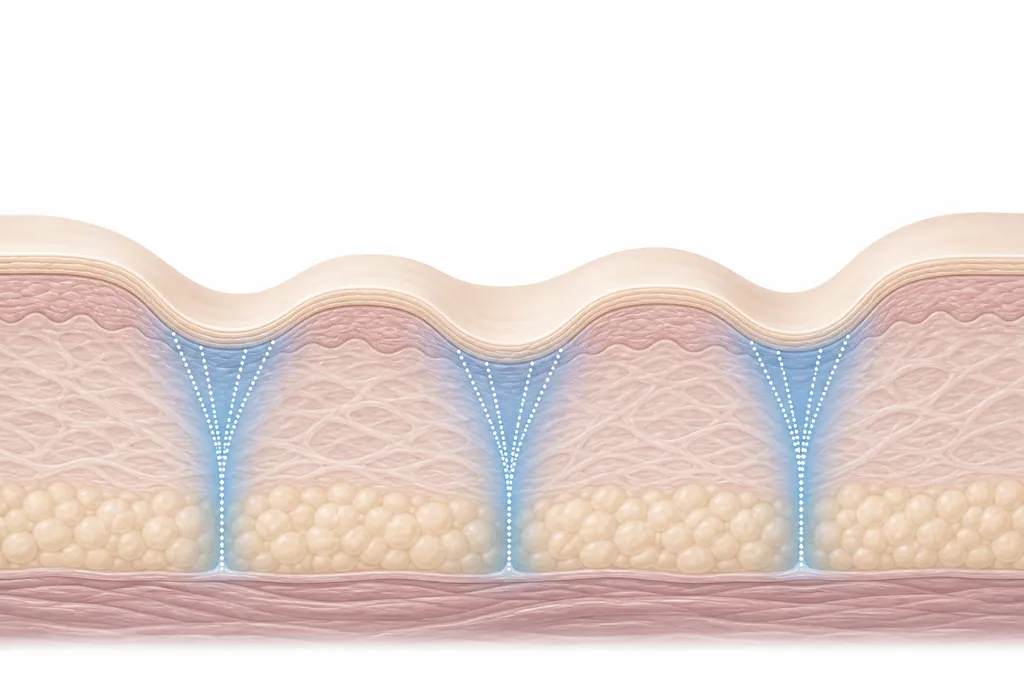
The wave-like texture of rolling scars comes from the surface being pulled down unevenly. Where a fibrous band anchors the skin, the surface dips; the skin between anchors sits higher, creating the rolling effect.
This is why the texture often looks like a soft, rolling landscape rather than discrete craters. It also explains why the scars seem to shift in appearance depending on facial expression and lighting.
What tethering means
During healing from inflammatory acne, bands of fibrous tissue can form between the underside of the skin and the deeper layers below. These bands act like tiny anchors, physically holding the surface down.
Tethering is the defining feature of rolling scars. The visible depression is not just a loss of collagen at the surface — it is the surface being actively pulled downward by tissue underneath.
— Mechanism
Tethered surface, before and after release
Tethered
Fibrous bands beneath the skin pull the surface downward, creating the rolling depression.
After release
Once the bands are released, the skin can sit closer to its natural level. Collagen support is often added in the following weeks.
Why lasers alone may not fully release rolling scars
Resurfacing lasers work on the surface and upper skin. They can improve skin quality and texture, but they do not cut the fibrous bands anchoring a rolling scar from below.
If the tether is left intact, the surface keeps being pulled back down — which is why people sometimes feel surface treatments alone under-deliver on rolling scars. Addressing the structural cause first usually makes later surface work more effective.
Subcision for rolling acne scars
Subcision is a small in-clinic procedure performed under local anaesthesia. A fine instrument is passed under the skin to break the fibrous bands tethering the scar down, allowing the surface to lift toward its natural level.
Releasing the bands also triggers a healing response that can stimulate some collagen in the area. Because it targets the structural cause rather than the surface, subcision is often the first treatment considered for rolling scars.
DrPlus assesses whether subcision is appropriate based on scar type and skin condition — it is generally not performed during active acne flares.
Combining subcision with collagen-stimulating treatments
Releasing the tether is often step one. Many plans add a collagen-stimulating treatment such as RF microneedling a few weeks later, so the lifted skin has structural support holding it up. CO₂ laser may be considered later for any remaining surface texture.
The sequence matters: each treatment is spaced to let the skin recover and respond before the next. Combination plans are tailored to the individual rather than applied as a fixed formula.
— Pathway
A common rolling-scar pathway
- 01
Consultation
Confirm tethering and scar mix; check the skin is settled.
- 02
Subcision
Release fibrous bands so the surface can lift.
- 03
Collagen support
RF microneedling added over the following weeks.
- 04
Surface refinement
Targeted laser for any remaining texture if appropriate.
- 05
Review & maintenance
Assess response and plan periodic touch-ups.
- 01
Consultation
Confirm tethering and scar mix; check the skin is settled.
- 02
Subcision
Release fibrous bands so the surface can lift.
- 03
Collagen support
RF microneedling added over the following weeks.
- 04
Surface refinement
Targeted laser for any remaining texture if appropriate.
- 05
Review & maintenance
Assess response and plan periodic touch-ups.
Recovery expectations
After subcision, mild swelling and bruising are common in the first few days and usually settle within about a week. Some tenderness or firmness in the treated area can follow as it heals — this is part of the normal response.
Recovery from added collagen treatments varies: RF microneedling typically involves one to three days of mild redness. Your doctor will give aftercare guidance tailored to the treatments in your plan. Results develop gradually over months as collagen remodels.
Doctor assessment for rolling scars in Johor Bahru
Because rolling scars are structural, an in-person assessment is the only reliable way to confirm whether tethering is present and whether subcision is appropriate. At DrPlus in Johor Bahru, the consultation maps the scar mix and explains how treatments would be sequenced.
You will leave with a clear plan and realistic expectations — and no pressure to proceed on the day.
— Frequently asked
Common questions
Rolling scars are tethered from below, so treatment usually starts with releasing the bands — commonly subcision — followed by collagen-stimulating treatments. The right combination depends on a doctor assessment of your scar mix.
Laser can improve surface texture but does not release the fibrous bands tethering the scar. Without addressing the tether, results on rolling scars are often limited, which is why a structural step is usually considered first.
Subcision is performed under local anaesthesia, so the procedure itself is generally well tolerated. Brief soreness, tightness or bruising may follow as the area heals.
Mild swelling and bruising are common in the first few days and typically settle within about a week. Your doctor will give a recovery plan personalised to your case.
Treatment aims to release tethering and allow the skin to sit closer to its natural level — improvement is usually meaningful but rarely complete. Realistic expectations are part of a good consultation.
It varies. Some people see useful improvement after one session; many benefit from a planned sequence spaced several weeks apart, often combined with collagen-stimulating treatments.
— Related treatments
Continue with the relevant DrPlus treatment pages
Each page goes deeper into mechanism, suitability and recovery — your final plan is confirmed at consultation.
Primary money page
Acne Scar Treatment Hub
Doctor-led category hub combining subcision with the broader scar treatment toolkit.
acne scar treatment in Johor BahruSupporting
Acne Scar Treatment in Singapore
The Singapore pathway for deciding when tether release should precede surface remodelling.
rolling acne scar treatment assessment in SingaporeSupporting
Subcision
Targeted release of the fibrous bands that tether rolling scars — often the first step.
subcision for rolling acne scarsSupporting
RF Microneedling
Collagen support often added in the weeks following subcision.
RF microneedling for acne scarsSupporting
CO₂ Laser
Surface refinement considered later in a rolling-scar sequence if appropriate.
CO₂ laser for acne scars— Continue reading
 Acne Scars
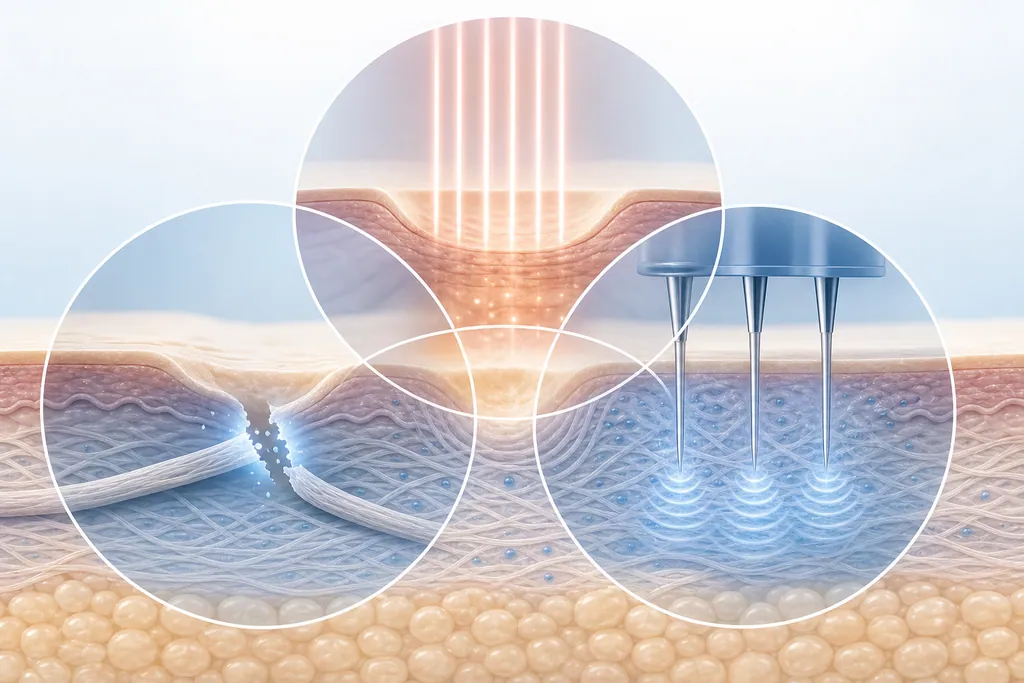
Why Combination Treatment Is Often Needed for Acne Scars
Most people have more than one scar type, and each behaves differently. That is why a single treatment rarely does the whole job.
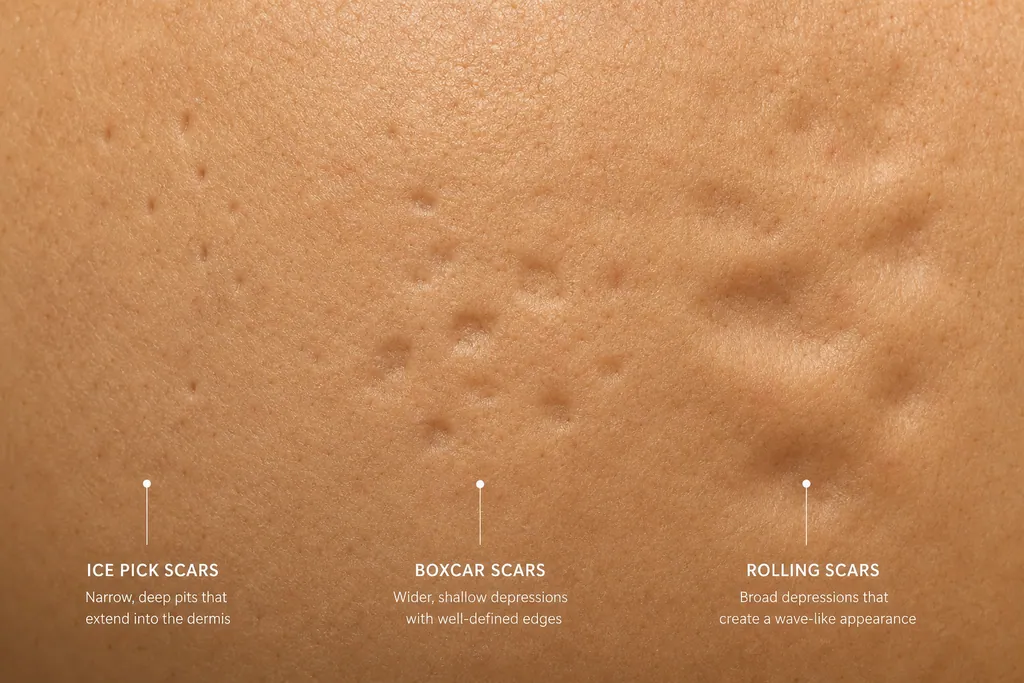 Acne Scars
Types of Acne Scars: Ice Pick, Boxcar, Rolling and Pitted Scars
Atrophic acne scars come in distinct shapes — and the shape often determines what treatment may actually help.
 Acne Scars
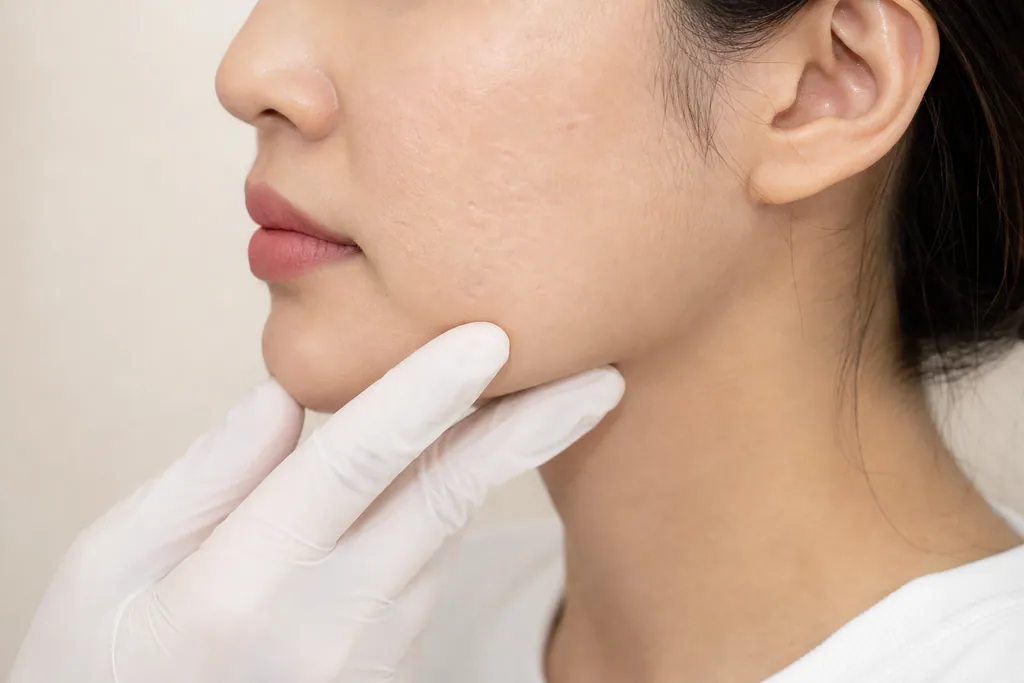
Subcision for Acne Scars: How It Releases Rolling Scars
Rolling scars are tethered from below. Until that tethering is released, surface treatments often do less than expected — which is the job subcision does.