
DrPlus Injectables Education · Choosing
Botox vs Skincare: Can Creams Replace Injections?
'Botox in a bottle' and 'liquid botox' creams are heavily marketed. Here's the honest difference between what topical skincare can do and what anti-wrinkle injections do.
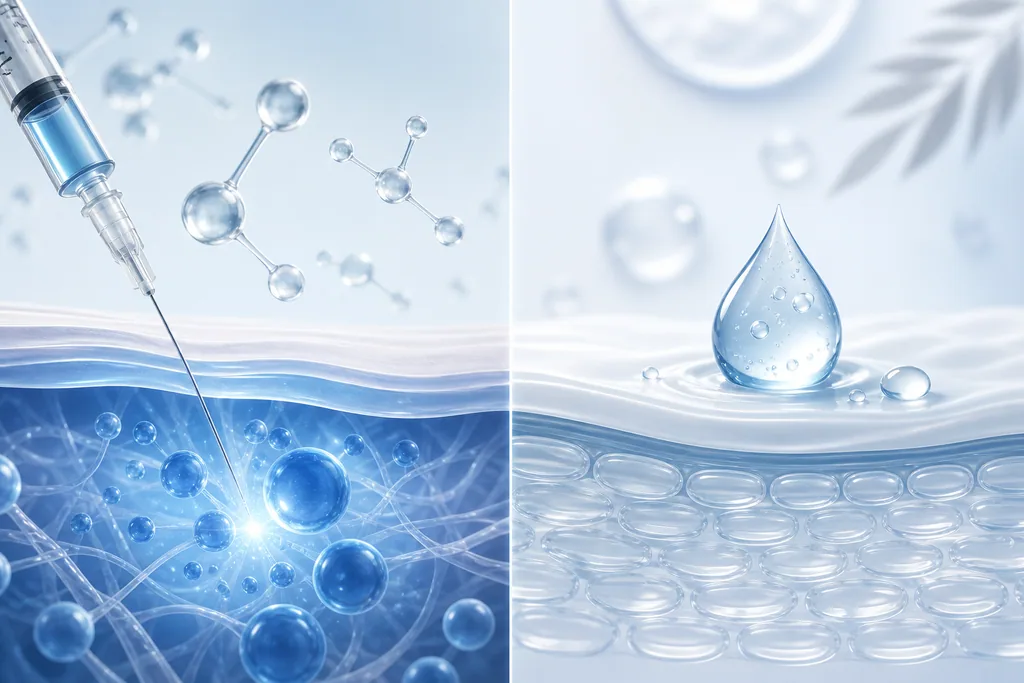
'Botox in a bottle' — what's really being sold
Phrases like 'botox in a bottle' or 'liquid botox' are used to market creams and serums — often containing peptides such as argireline — that claim to mimic anti-wrinkle injections. It's important to be clear: these products are not botulinum toxin, and they don't work the same way. The botulinum toxin used in clinics is a prescription medicine that has to be injected into a muscle; it cannot meaningfully cross the skin from a cream.
What each actually does
Anti-wrinkle injections work below the surface by temporarily relaxing the specific muscles that create movement lines, so those lines soften. Skincare works on and within the skin itself — improving hydration, texture, barrier health and, with proven ingredients used consistently, some fine lines and overall skin quality. They operate at different levels and on different problems.
— Comparison
Injections vs topical skincare — different levels, different jobs
| Aspect | Anti-wrinkle injections | Topical skincare |
|---|---|---|
| Where it acts | The muscle, below the skin | On and within the skin surface |
| Best at | Softening movement (dynamic) lines | Texture, hydration, skin quality |
| Relaxes a muscle? | Yes | No |
| How it's used | Periodic in-clinic treatment | Daily, consistent routine |
Where it acts
- Anti-wrinkle injections
- The muscle, below the skin
- Topical skincare
- On and within the skin surface
Best at
- Anti-wrinkle injections
- Softening movement (dynamic) lines
- Topical skincare
- Texture, hydration, skin quality
Relaxes a muscle?
- Anti-wrinkle injections
- Yes
- Topical skincare
- No
How it's used
- Anti-wrinkle injections
- Periodic in-clinic treatment
- Topical skincare
- Daily, consistent routine
Can good skincare replace injections?
For dynamic lines caused by muscle movement — like frown lines and crow's feet — skincare can't replace what injections do, because no topical relaxes a muscle. What good skincare can do is improve the canvas: smoother, healthier, better-hydrated skin that ages more gracefully and holds results better. So the honest answer is that they're complementary, not a swap.
A sensible, honest approach
Many people get the best long-term result from consistent, evidence-based skincare plus selective treatments where they genuinely help. A doctor can tell you what your concern actually needs — sometimes that's skincare, sometimes a treatment, sometimes both, and sometimes reassurance that you don't need anything yet. Our Botox alternatives guide covers the wider options.
At DrPlus in Johor Bahru, the advice is concern-led and honest — including saying when a cream or a good routine is enough.
— Frequently asked
Common questions
No cream is botulinum toxin or works the same way. 'Botox in a bottle' products (often peptide serums) can support skin quality, but they can't relax a facial muscle, so they don't replace anti-wrinkle injections for movement lines.
Some ingredients can modestly improve the look of fine lines and skin texture with consistent use, but the effect is on the skin surface — not the deep muscle relaxation injections provide. Treat the name as marketing, not medicine.
Often yes — they're complementary. Skincare improves skin quality while injections soften movement lines. A doctor can suggest a sensible combination for your concern and skin.
Good skincare and sun protection support healthier skin over time and may help results last better, but they work differently from injections. A doctor can give you a realistic, honest view for your skin.
— Related treatments
Continue with the relevant DrPlus treatment pages
Each page goes deeper into mechanism, suitability and recovery — your final plan is confirmed at consultation.
— Continue reading
 Injectables
Botox Alternatives: Other Options for Lines & Aging
Anti-wrinkle injections aren't the only option. This guide covers honest alternatives for lines and aging — skincare, energy-based skin treatments and fillers — and when each fits.
 Injectables
How Botox Works — A Plain-English Explanation
Botox doesn't 'freeze your face' or fill anything in. Here's what actually happens at the muscle level, why results take days to appear, and why they fade — explained simply.