
DrPlus Injectables Education · Science
How Botox Works — A Plain-English Explanation
Botox doesn't 'freeze your face' or fill anything in. Here's what actually happens at the muscle level, why results take days to appear, and why they fade — explained simply.
The simple version
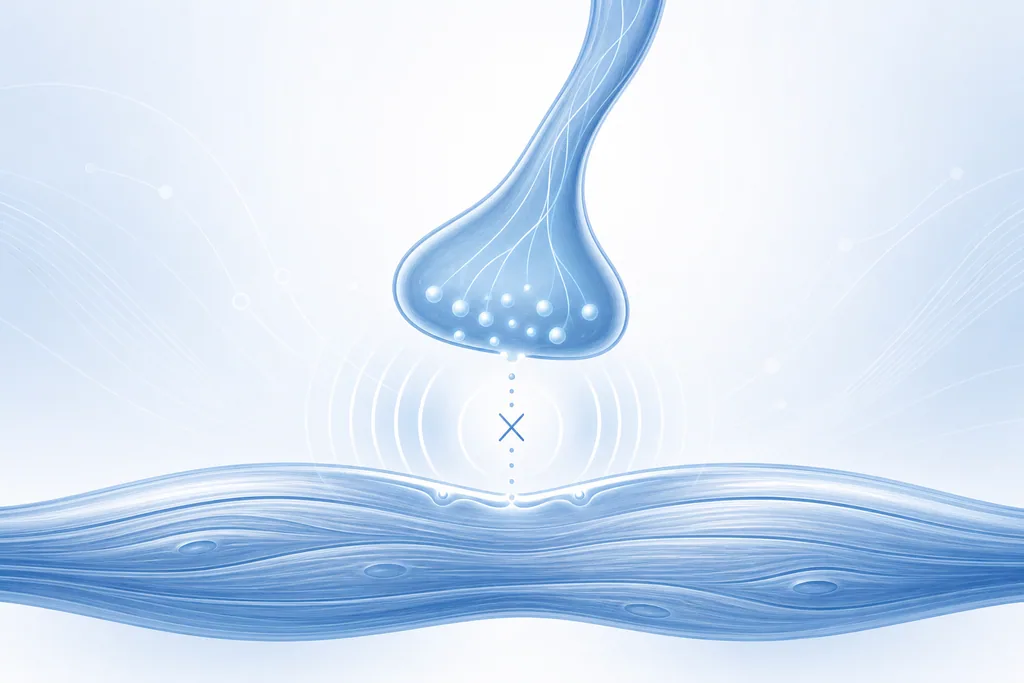
Muscles move because nerves send them a chemical signal to contract. Botulinum toxin temporarily interrupts that signal at the targeted muscle. With the signal muted, the muscle relaxes, and the skin crease it was repeatedly folding — the dynamic line — softens. That's the whole idea: it relaxes the muscle that makes the line, rather than filling the line in.
Mechanism
1. Signal
Normally a nerve releases a messenger that tells the muscle to contract.
Mechanism
2. Pause
Botulinum toxin temporarily blocks that messenger at the targeted muscle.
Mechanism
3. Soften
The relaxed muscle stops creasing the skin, so the line eases.
Why it works on movement lines
There are two broad kinds of facial lines. Dynamic lines appear when you move — frowning, raising the brows, smiling. Static lines are visible even at rest, often after years of the same movement etched the skin. Because Botox works by relaxing movement, it's most effective on dynamic lines, and on static lines that still have a strong movement component.
Deeply etched static lines may only partly improve, and sometimes need a different or combined approach. That's part of what an honest assessment sorts out before treatment.
Why results take days, not minutes
Unlike filler, which adds visible volume immediately, anti-wrinkle results appear gradually. The muscle-relaxing effect typically begins within a few days and continues to build over up to about two weeks. That's normal — it's why doctors review at around two weeks rather than judging the result on day one, and why patience (not a top-up the next day) is the right approach.
— Healing timeline
Typical timeline after treatment
Day 0
Treatment
Small injections placed; you can usually return to normal activities.
Days 2–4
Onset
The relaxing effect begins; lines start to soften.
~2 weeks
Full effect
Result settles; this is when a review and any tweak is sensible.
~3–4 months
Wears off
Effect gradually fades as normal signalling returns; treatment is repeated to maintain.
A general guide only. Individual healing speed varies with skin type, scar depth, aftercare and the treatment used.
Why it's temporary
The block on the nerve signal isn't permanent. Over weeks to months the body restores normal signalling, the muscle resumes its usual movement, and the lines gradually return. This is why treatment is repeated to maintain the effect — and it's also a safety feature, because an unwanted result fades rather than lasting forever. Longevity varies by individual, area and dose.
Why technique matters
Because the effect is local, results depend on placing the right amount in the right muscle. Too little and there's no benefit; too much, or the wrong spot, and you risk an unnatural look or affecting a muscle you didn't intend to. This is the real skill of the treatment — and why it should be assessed and performed by a qualified doctor who understands facial anatomy.
At DrPlus in Johor Bahru, treatment is doctor-led and conservative, aiming for a natural result that still moves.
— Frequently asked
Common questions
It temporarily blocks the nerve signal that tells a targeted muscle to contract. With the muscle relaxed, the dynamic line it was creating softens. It relaxes the muscle making the line — it doesn't fill the line in like a filler does.
Results build gradually, typically beginning within a few days and reaching full effect by around two weeks. That's why a review at about two weeks makes sense, rather than judging the result immediately.
The nerve-signal block is temporary. Over weeks to months the body restores normal signalling and movement returns, so the lines gradually come back. Treatment is repeated to maintain the effect; longevity varies by individual.
It works best on dynamic lines caused by movement. Deeply etched static lines visible at rest may only partly improve and sometimes need a different or combined approach, which an assessment can clarify.
— Related treatments
Continue with the relevant DrPlus treatment pages
Each page goes deeper into mechanism, suitability and recovery — your final plan is confirmed at consultation.
— Continue reading
 Injectables
What Is Botulinum Toxin? The Science Behind Botox
'Botox' is a brand name; the medicine is botulinum toxin. Here's what it actually is, how it became a controlled aesthetic treatment, and why the plan matters far more than the brand on the box.
 Injectables
Botox Results, Duration & Aftercare — What to Expect
When will you see results, how long do they last, and what should you do (and avoid) afterwards? A realistic, no-hype guide to what happens after anti-wrinkle injections.