
DrPlus Skin Education · Acne Scars
Boxcar Acne Scars: What They Are and Treatment Options
Boxcar scars are broad depressions with sharp, defined edges. Their shape explains why creams rarely help — and what may.
On this page
- Quick answer
- What are boxcar acne scars?
- What boxcar scars look like
- Why boxcar scars form
- Shallow vs deep boxcar scars
- Why creams usually cannot fix boxcar scars
- Boxcar vs ice pick vs rolling scars
- Treatment options for boxcar scars
- CO₂ laser for boxcar scars
- RF microneedling for boxcar scars
- Why combination treatment may be needed
- When to see a doctor
Quick answer
Boxcar acne scars are broad, depressed scars with sharply defined edges, caused by collagen loss across a wider area of skin after inflammatory acne. Because the damage sits in the dermis, creams cannot lift the depression.
Treatment usually aims to stimulate collagen and resurface the edges — commonly with CO₂ laser, RF microneedling, or a combination. Shallow boxcar scars tend to improve more readily than deep ones, and suitability depends on an in-person assessment.
What are boxcar acne scars?
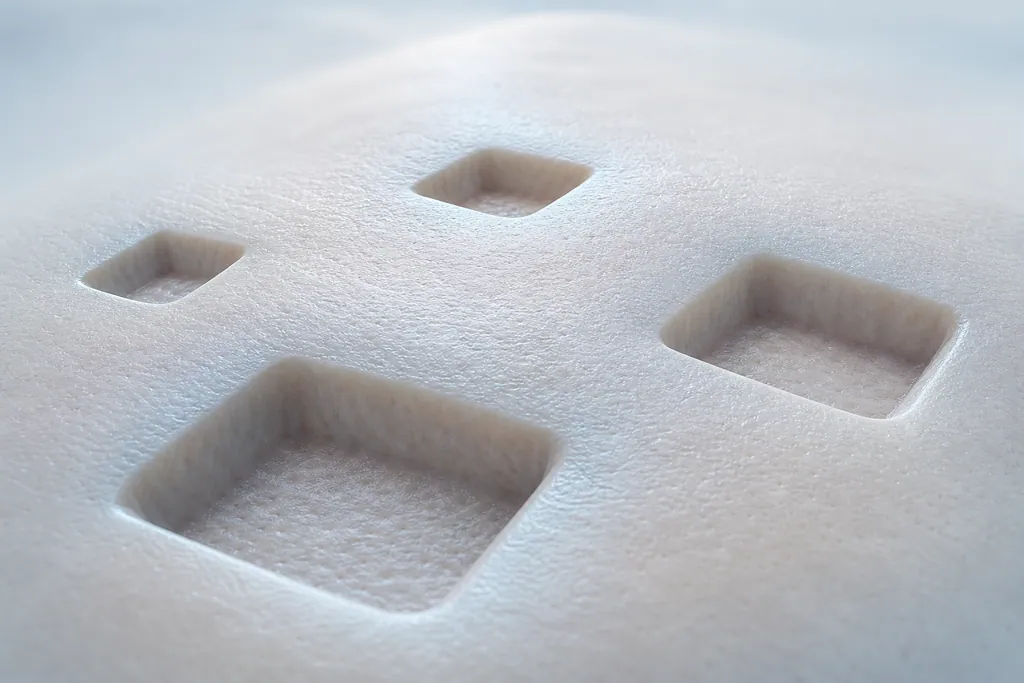
Boxcar scars are a type of atrophic (depressed) acne scar. They are named for their box-like profile: a flat base and steep, well-defined walls, similar in appearance to the scars sometimes left by chickenpox.
They are wider than ice pick scars and more sharply edged than rolling scars. This defined shape is a useful clue at assessment, because it points to collagen loss in a contained area rather than tethering from below.
What boxcar scars look like
Boxcar scars typically appear as round or oval depressions, most often on the cheeks and temples. The edges are crisp enough that the scar can cast a small shadow in angled light, which is why texture often looks worse under overhead lighting.
They range from shallow dips that catch the light to deeper craters with steep walls. Many people notice them most when applying makeup, as product can settle into the defined edges.
Why boxcar scars form
Boxcar scars develop when inflammatory acne destroys collagen across a wider patch of the dermis. As the area heals, the lost collagen is not fully replaced, so the skin surface collapses into a depression with defined edges.
The wider the zone of collagen loss and the deeper it reaches, the more pronounced the boxcar scar tends to be. This is why deeper inflammatory lesions are more likely to leave boxcar scars than mild surface spots.
Shallow vs deep boxcar scars
Boxcar scars are not all the same, and depth strongly influences what treatment may help and how much improvement is realistic.
Shallow boxcar scars sit closer to the surface and often respond well to resurfacing and collagen-stimulating treatments. Deep boxcar scars reach further into the dermis and frequently need a combination approach over several sessions.
— Comparison
Shallow vs deep boxcar scars
| Aspect | Shallow boxcar | Deep boxcar |
|---|---|---|
| Depth | Upper dermis | Mid-to-deep dermis |
| Typical response | Often responds more readily | Usually needs combination treatment |
| Common approach | Resurfacing / collagen stimulation | Layered treatments over several sessions |
| Realistic expectation | Meaningful softening possible | Gradual improvement, rarely complete |
Depth
- Shallow boxcar
- Upper dermis
- Deep boxcar
- Mid-to-deep dermis
Typical response
- Shallow boxcar
- Often responds more readily
- Deep boxcar
- Usually needs combination treatment
Common approach
- Shallow boxcar
- Resurfacing / collagen stimulation
- Deep boxcar
- Layered treatments over several sessions
Realistic expectation
- Shallow boxcar
- Meaningful softening possible
- Deep boxcar
- Gradual improvement, rarely complete
Why creams usually cannot fix boxcar scars
Topical products work mainly on the epidermis — the outermost layer of skin. Boxcar scars are a structural change in the dermis, which sits below the reach of creams and serums.
Good skincare still has a role: it can improve overall skin quality, support the barrier, and help with post-inflammatory marks. But it cannot rebuild the lost collagen that creates the depression, so it rarely changes the boxcar shape itself.
— Where treatments reach
Skin layers, in plain English
- Epidermis: Outer protective layer — pigmentation marks and surface texture live here.
- Dermis: Collagen and elastin layer — where atrophic scars are anchored and where most regenerative treatments work.
- Subcutis: Deeper fat / connective layer — beyond the reach of most aesthetic treatments.
A simplified illustration — actual skin layers are more nuanced. Your doctor will explain what is relevant to your case at consultation.
Boxcar vs ice pick vs rolling scars
Most people with acne scarring have more than one scar type on the same face, and the distinction matters because each type responds to different tools. Boxcar scars are the wide, sharp-edged craters. Ice pick scars are narrow, deep channels — small at the surface but reaching far into the dermis, usually treated with TCA CROSS rather than broad resurfacing. Rolling scars are soft, wave-like undulations tethered from below by fibrous bands, which is why subcision (releasing those bands) usually comes before anything else for them.
This is why 'what is the best acne scar treatment' has no single answer: a face with boxcar, ice pick and rolling scars needs a mapped, sequenced plan — not one device applied to everything. A scar assessment identifies the mix before any treatment is chosen.
— Comparison
The three atrophic scar types at a glance
| Type | Shape | Usual first-line approach |
|---|---|---|
| Boxcar | Wide, flat base, sharp vertical edges | Fractional CO₂ laser / RF microneedling |
| Ice pick | Narrow, deep channel (<2mm wide) | TCA CROSS applied scar by scar |
| Rolling | Broad, soft, wave-like dips | Subcision to release tethering, then resurfacing |
Boxcar
- Shape
- Wide, flat base, sharp vertical edges
- Usual first-line approach
- Fractional CO₂ laser / RF microneedling
Ice pick
- Shape
- Narrow, deep channel (<2mm wide)
- Usual first-line approach
- TCA CROSS applied scar by scar
Rolling
- Shape
- Broad, soft, wave-like dips
- Usual first-line approach
- Subcision to release tethering, then resurfacing
Treatment options for boxcar scars
Because boxcar scars have defined edges and sit in the dermis, treatment usually aims to stimulate new collagen and resurface the edges so the depression looks softer. Several treatments may be considered, often in combination.
The right choice depends on scar depth, skin tone, downtime tolerance and any other concerns — which is why a doctor assessment comes before any plan.
Treatment option
CO₂ Laser
Best for: Defined edges & surface textureFractional ablative resurfacing that softens sharp edges and stimulates collagen across the area.
Learn moreTreatment option
RF Microneedling
Best for: Collagen at depth, mixed tonesRadiofrequency delivered into the dermis to stimulate collagen with a skin-tone-friendly profile.
Learn moreTreatment option
Chemical Peel
Best for: Surface tone & shallow textureControlled exfoliation that can support surface evenness and post-inflammatory marks alongside other treatments.
Learn moreCO₂ laser for boxcar scars
CO₂ laser is often considered for boxcar scars because their defined edges respond well to fractional resurfacing. The laser creates microscopic columns of controlled injury, prompting the skin to rebuild collagen and soften the steep walls of the scar.
It involves several days of redness and peeling, and careful planning is needed for darker skin tones to reduce the risk of post-inflammatory pigmentation. Multiple sessions are usually planned rather than a single treatment.
RF microneedling for boxcar scars
RF microneedling delivers radiofrequency energy into the dermis through fine needles. Because most of the energy lands at depth rather than across the surface, it tends to be gentler on the upper skin and is often a friendlier starting point for a broad range of skin tones.
For boxcar scars it works by stimulating collagen in the floor and walls of the depression. It is frequently combined with other treatments across a planned sequence to address both depth and surface texture.
Why combination treatment may be needed
Deeper boxcar scars, or a mix of scar types, often respond best to a combination of treatments sequenced over months rather than a single device. One treatment may rebuild collagen at depth while another refines the surface.
Combination plans are tailored to the assessment. The aim is gradual, realistic improvement — softening the appearance of scars rather than removing them entirely.
When to see a doctor
If boxcar scars have stayed unchanged for months after acne settled and skincare has not improved the texture, a scar assessment is a reasonable next step. A doctor can confirm scar depth, discuss suitability, and explain what improvement is realistic for your skin.
— Frequently asked
Common questions
Treatment aims to soften and reduce the appearance of boxcar scars rather than remove them entirely. Shallow scars often improve more than deep ones, and results vary between individuals — a doctor will set realistic expectations.
There is no single best treatment for everyone. CO₂ laser and RF microneedling are commonly considered, often in combination. The right choice depends on scar depth, skin tone and downtime tolerance, which is assessed in person.
Boxcar scars themselves are stable once formed, but they can look more noticeable as skin loses collagen with age and the edges become more defined. Sun protection and good skin health help maintain overall skin quality.
'Pitted' is a loose term often used for deeper boxcar or ice pick scars. Boxcar scars specifically have wide, sharply defined edges, which distinguishes them from the narrow channels of ice pick scars.
Atrophic scar treatment is usually a planned series rather than a one-off. The number depends on scar depth, the treatment chosen and how your skin responds — your doctor will share a realistic range at consultation in Johor Bahru.
Skincare can improve overall skin quality and post-inflammatory marks but cannot rebuild the lost collagen that creates the depression. It is best thought of as supportive rather than a treatment for the scar shape itself.
For boxcar scars specifically, the earliest visible change usually comes from treatments that physically alter the scar floor — TCA CROSS on sharply-punched scars or subcision with filler support on broader ones — because the mechanical change shows before collagen remodelling finishes. Resurfacing options such as fractional CO₂ and RF microneedling deliver larger cumulative improvement but need 2–3 months per session for collagen to rebuild. “Fastest” and “best overall” are often different answers, which is why plans are usually sequenced.
Deep, pitted boxcar scars generally need depth-appropriate tools used in combination: subcision if the base is tethered, TCA CROSS for punched-out edges, then fractional CO₂ laser or RF microneedling to rebuild collagen across the area. Single-modality plans tend to under-deliver on deep scars — the honest framing is a staged plan across several sessions, mapped scar-by-scar at assessment.
Yes, with tone-appropriate protocol choices. Darker and tanned Asian skin carries a higher risk of post-inflammatory hyperpigmentation after aggressive resurfacing, so doctors often favour RF microneedling (which heats the dermis while sparing the surface), conservative fractional CO₂ settings, or subcision-led plans. The treatment ladder does not change — the energy settings and sequencing do.
— Related treatments
Continue with the relevant DrPlus treatment pages
Each page goes deeper into mechanism, suitability and recovery — your final plan is confirmed at consultation.
Primary money page
Acne Scar Treatment Hub
Doctor-led category hub covering the full range of scar treatment pathways at DrPlus.
acne scar treatment in Johor BahruSupporting
CO₂ Laser
Fractional resurfacing that softens defined edges and stimulates collagen.
CO₂ laser for boxcar scarsSupporting
RF Microneedling
Energy delivered at the dermis to stimulate collagen across a range of skin tones.
RF microneedling for acne scarsSupporting
Chemical Peel
Supportive exfoliation for surface evenness and post-inflammatory marks.
chemical peel for surface tone— Continue reading
 Acne Scars
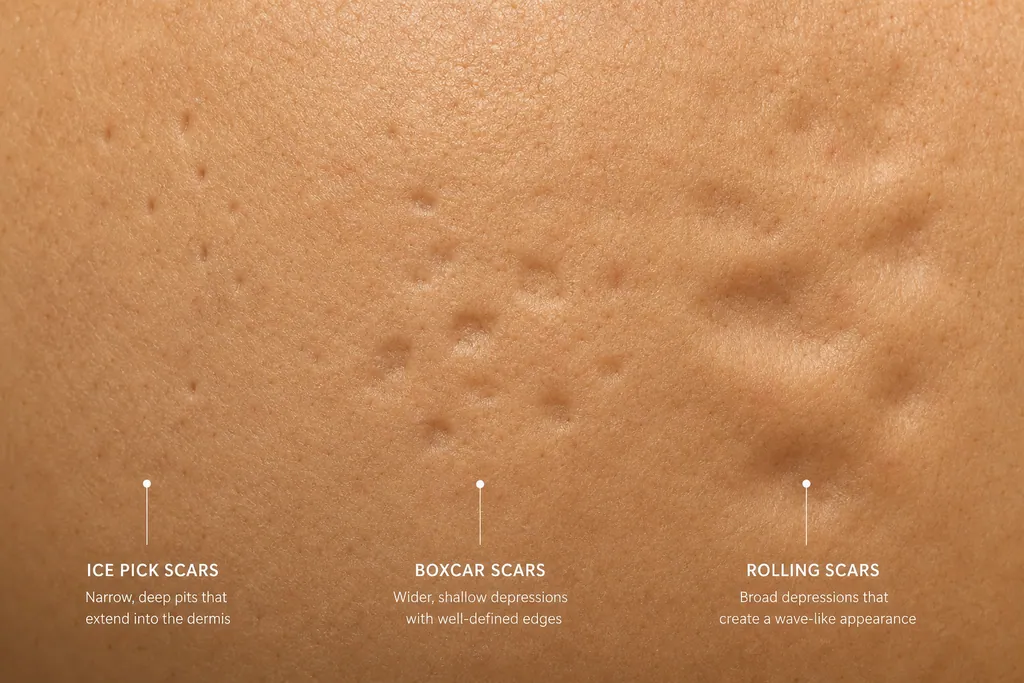
Types of Acne Scars: Ice Pick, Boxcar, Rolling and Pitted Scars
Atrophic acne scars come in distinct shapes — and the shape often determines what treatment may actually help.
 Acne Scars
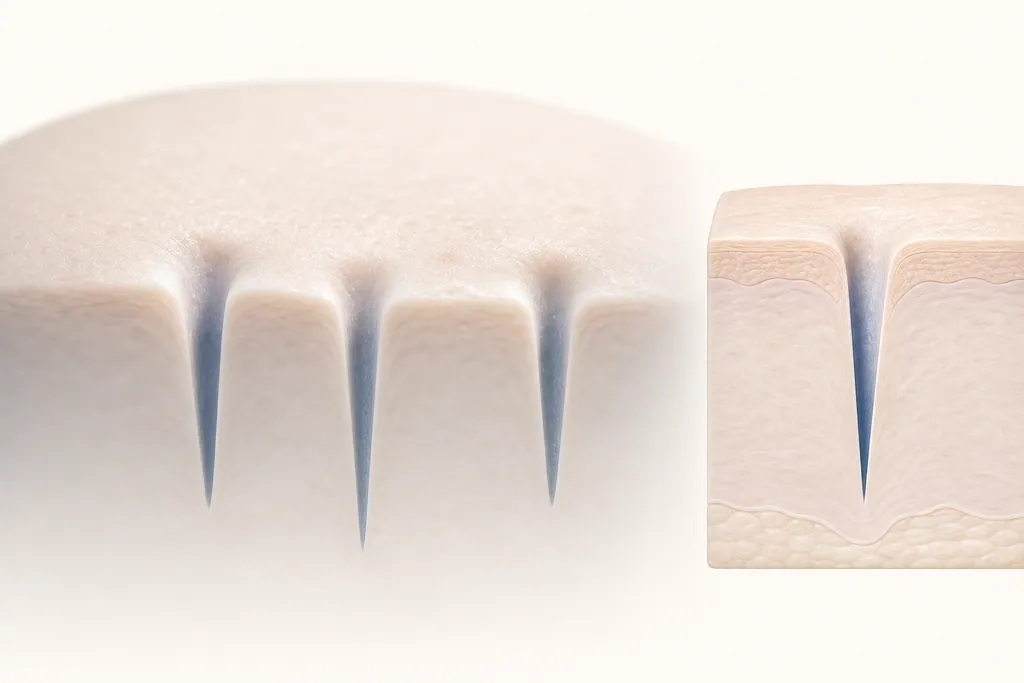
Ice Pick Scars: Why They Are Difficult to Treat
Ice pick scars are narrow and deep — like tiny punctures. Their shape is exactly why broad resurfacing struggles to reach them.
 Acne Scars
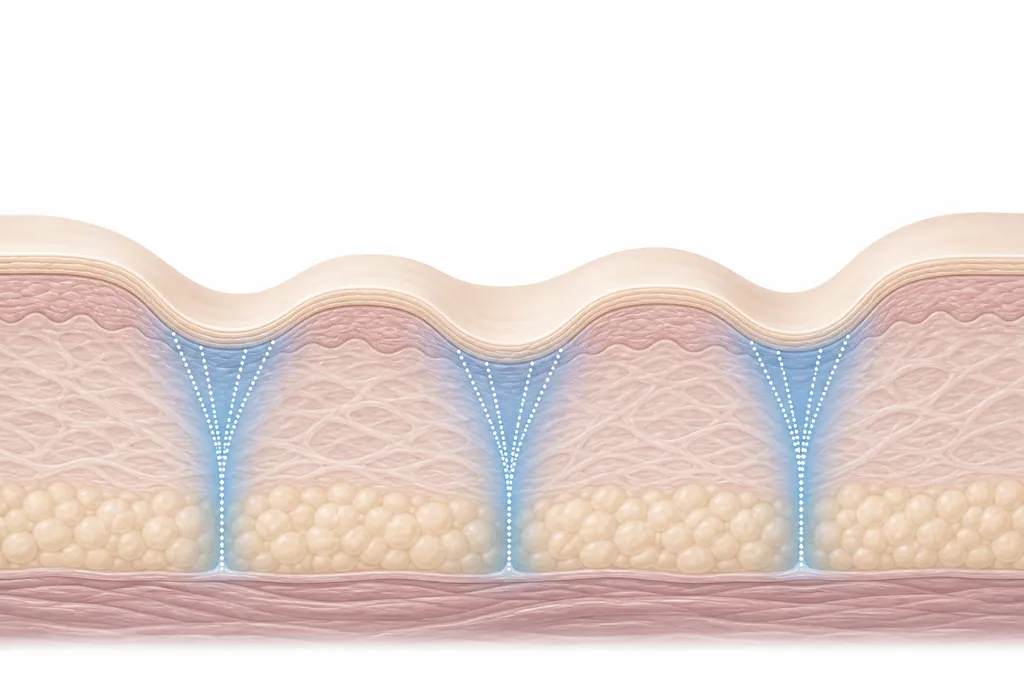
Rolling Acne Scars: Why They Form Beneath the Skin
Rolling scars are pulled down from below by fibrous bands. Until that tethering is released, surface treatments often disappoint.
 Acne Scars
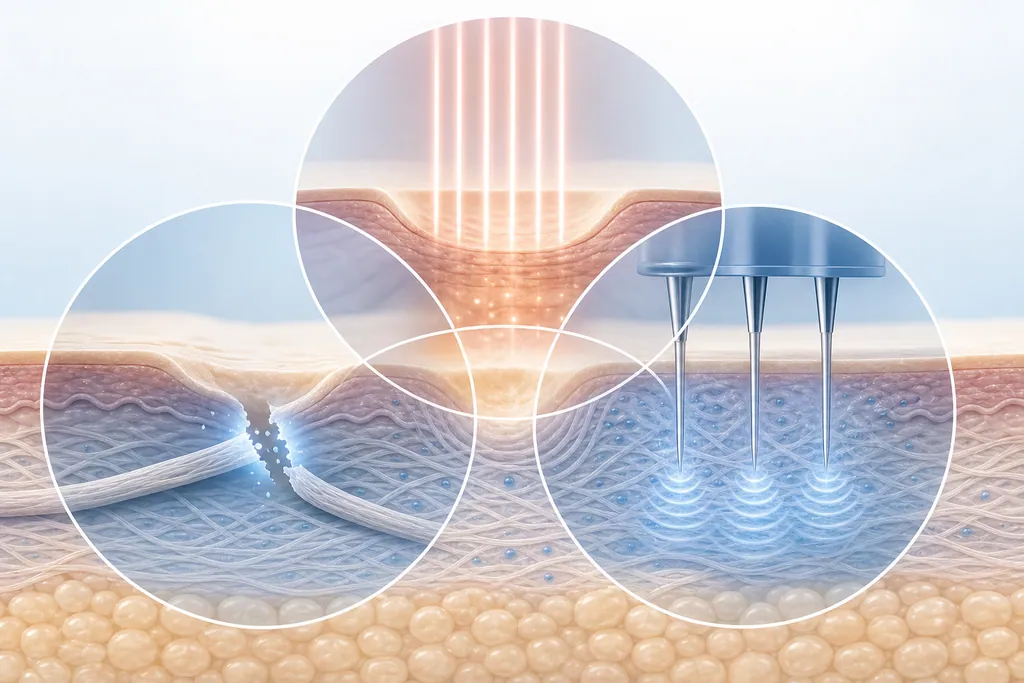
Why Combination Treatment Is Often Needed for Acne Scars
Most people have more than one scar type, and each behaves differently. That is why a single treatment rarely does the whole job.
 Acne Scars
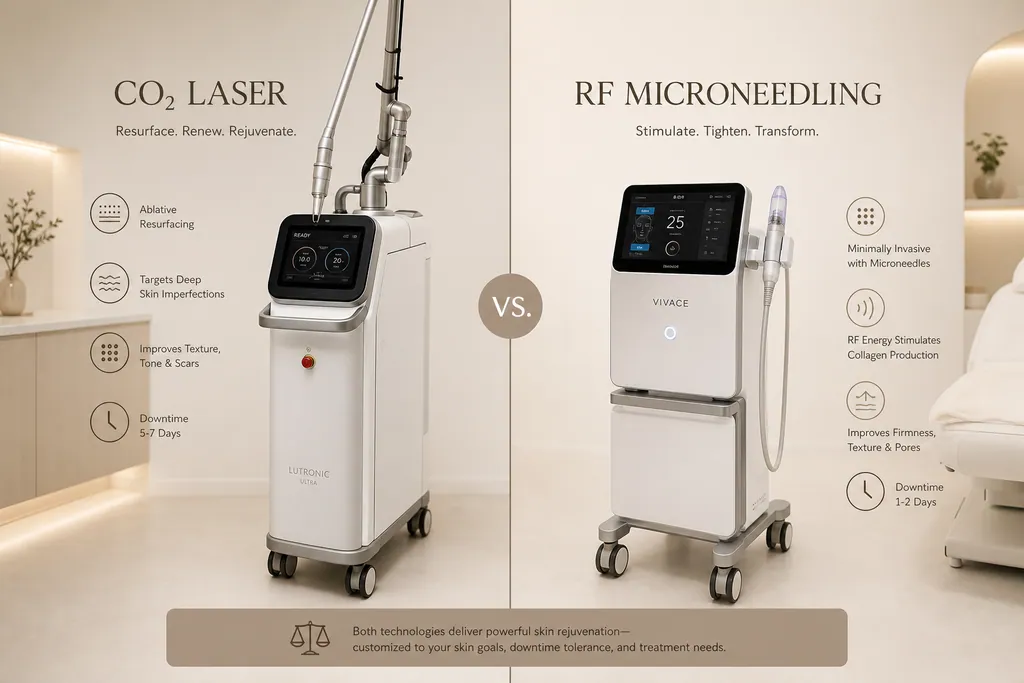
CO₂ Laser vs RF Microneedling for Acne Scars
Two of the most common acne scar treatments — and they work in genuinely different ways. Here is how to think about them.