
DrPlus Skin Education · Chemical Peels
Chemical Peels for Dark Underarms: How They Actually Work
Dark underarms are usually pigment produced by everyday friction, shaving and irritation — which is why controlled peels, not scrubbing, are the clinical answer.
Why underarms darken in the first place
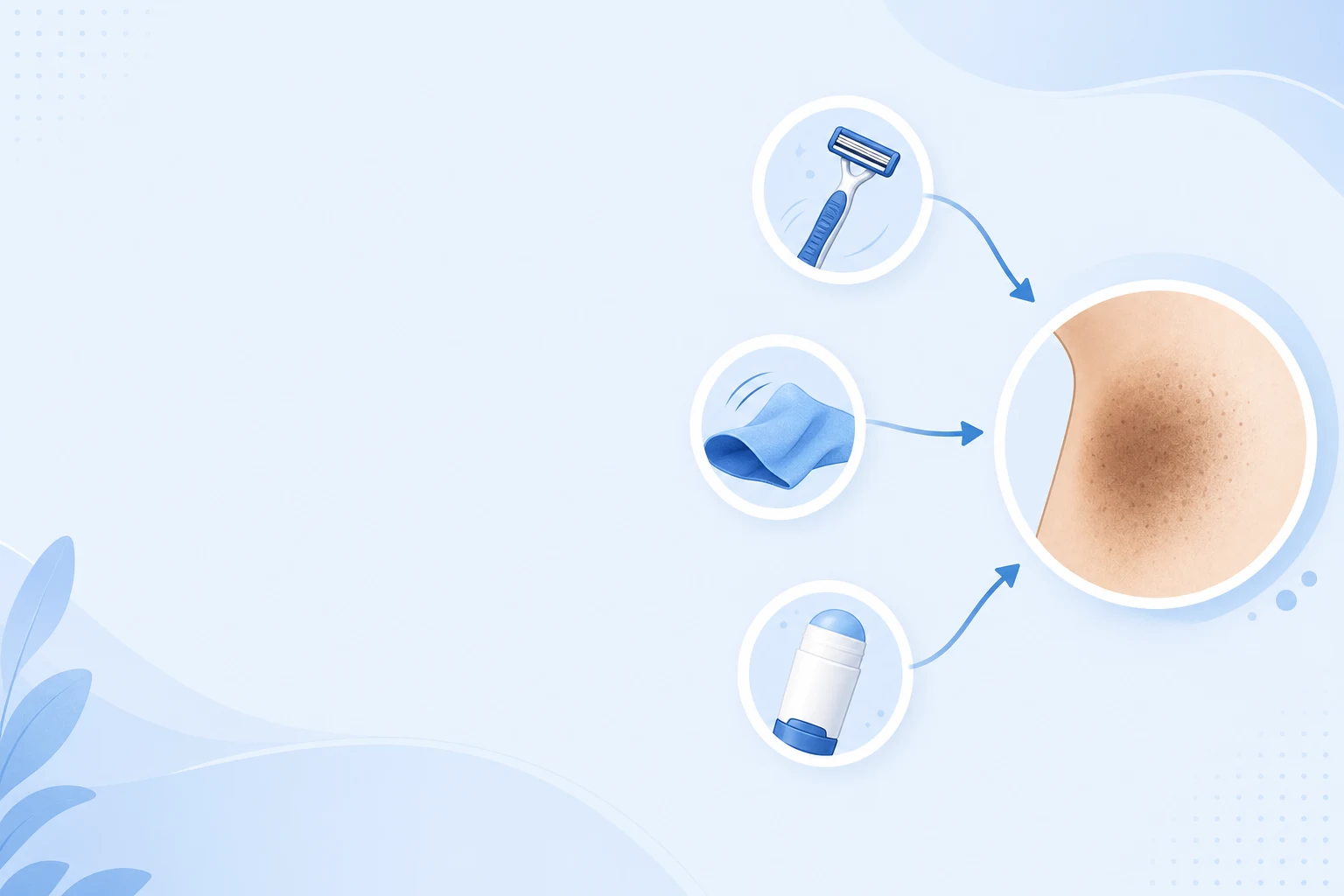
Underarm skin lives a hard life: it is thin, folded against itself, rubbed by clothing thousands of times a day, shaved or plucked regularly, and coated daily in deodorant chemicals. Each of those is a source of low-grade irritation — and irritated skin defends itself by producing melanin. The result is post-inflammatory hyperpigmentation (PIH): a gradual, cumulative darkening that has nothing to do with hygiene.
Shaving and plucking add their own contributions — micro-injuries at the surface plus the shadow of hair regrowing beneath thin skin — and some deodorants and fragrances irritate specific individuals enough to sustain the cycle. Because the causes are ongoing daily habits, darkening tends to slowly deepen for years before people seek treatment.
One important caveat before any cosmetic plan: a velvety, thickened darkening of body folds can be acanthosis nigricans, a skin sign linked to insulin resistance and other medical conditions. It looks superficially similar but needs a medical conversation, not a peel — one of several reasons underarm treatment should start with a doctor's examination.
— Mechanism
How a dark mark forms after inflammation
Inflammation
Acne, heat or a treatment irritates the skin, releasing signalling molecules.
Melanocytes activate
Those signals switch pigment cells into overdrive, over-producing melanin.
Pigment deposited
Excess melanin settles in the skin as a flat dark mark — and in deeper skin can drop into the dermis, where it fades slowly.
PIH is a pigment response, not a structural scar. It often fades over months — but the right care, and avoiding fresh inflammation, speeds recovery and prevents new marks.
How an underarm peel works
The principle is the same as facial peels: a controlled acid application sheds the most pigmented surface layers and accelerates renewal, so the accumulated PIH fades in gradual, cumulative steps across a course of sessions. What changes is the engineering around it — underarm skin is thinner and more occluded than facial skin, so acid choice, strength and contact time are set specifically for the area.
Acids with a track record in body-fold brightening — lactic, mandelic and carefully judged salicylic or TCA-based protocols at conservative strengths — are typical choices, always titrated to how the individual's skin responds. Sessions are short, spaced two to four weeks apart, and each one is reviewed before the next: the fold's response, not a fixed template, sets the pace.
At DrPlus, underarm peels are not a standalone menu item — they run within the underarm-whitening programme, where a doctor sequences peels with the other tools the area often needs. That structure exists because underarm darkening is multi-cause: shedding today's pigment matters, but so does interrupting the friction–irritation cycle that produced it.
Peels plus laser toning: why programmes combine them
Underarm pigment does not all sit at one depth. The surface component — accumulated pigmented cells — responds well to peels. Pigment that has settled deeper responds better to laser toning, where gentle pigment-laser sessions shatter melanin particles for the body to clear. Combining both in one programme covers the full depth range, each tool doing what the other cannot.
A typical programme also addresses causes: switching an irritating deodorant, adjusting hair-removal method (laser hair removal removes both the shaving trauma and the regrowth shadow), and loosening the friction sources where practical. Treating pigment while the causes continue is rowing against the current — the programme works because it does both at once.
— Pathway
Inside an underarm-whitening programme
- 1
Doctor assessment
Confirms the darkening is cosmetic PIH (not a medical sign), maps its depth, and identifies the habits driving it.
- 2
Course of sessions
Underarm peels spaced 2–4 weeks apart, with laser toning layered in for deeper pigment where the doctor judges it useful.
- 3
Break the cycle
Deodorant and hair-removal adjustments plus gentle home care — so the pigment you clear stays cleared.
- 1
Doctor assessment
Confirms the darkening is cosmetic PIH (not a medical sign), maps its depth, and identifies the habits driving it.
- 2
Course of sessions
Underarm peels spaced 2–4 weeks apart, with laser toning layered in for deeper pigment where the doctor judges it useful.
- 3
Break the cycle
Deodorant and hair-removal adjustments plus gentle home care — so the pigment you clear stays cleared.
Realistic expectations for underarm brightening
Underarm PIH built up over years, and it fades in months — gradually and cumulatively across a course, with the first change usually a more even tone rather than a dramatic lightening. Because the skin is body skin, turnover is slower than the face, and patience across the full course matters. The end point is the underarm's natural tone, not paper-white skin: as with all brightening, the goal is clearing excess pigment, not bleaching past baseline.
Aftercare is simple but real: keep the area friction-light for a couple of days after each session, pause depilatory creams and shaving as advised, use the bland moisturiser recommended, and never pick at any flaking. The area is naturally sun-protected, which helps — but heat, tight synthetic sleeves and vigorous scrubbing are this area's equivalent of sun exposure, and they undo progress the same way.
— Frequently asked
Common questions
Yes — underarm darkening is usually accumulated post-inflammatory pigment from friction, shaving and deodorant irritation, and controlled peels shed those pigmented surface layers over a course of sessions. Results are gradual and cumulative, and work best when the programme also addresses the habits causing the darkening. A doctor confirms suitability first.
Most programmes run a course of several sessions spaced two to four weeks apart, with tone evening out progressively rather than in one visit. The exact count depends on how deep and long-standing the pigment is, and whether laser toning is combined. A doctor sets a realistic range at assessment and reviews progress along the way.
Most patients feel warmth and tingling during the short application, and the area may look pink and feel mildly tender for a day or so. Strengths are chosen specifically for the underarm's thinner skin, and each session is titrated to your response — the treatment should never feel like a burn.
Because darkness there is pigment, not dirt. Friction from clothing, shaving trauma and deodorant irritation cause chronic low-grade inflammation, and inflamed skin produces melanin. Scrubbing harder adds friction and makes it worse. If the darkening is velvety and thickened, see a doctor — that pattern can signal a medical condition worth checking.
You will be asked to pause shaving and depilatory creams around each session, since freshly exfoliated skin is more reactive to that trauma. Many patients switch to laser hair removal during the programme — it removes both the repeated shaving injury and the regrowth shadow, which tackles two causes of darkening at once.
— Related treatments
Continue with the relevant DrPlus treatment pages
Each page goes deeper into mechanism, suitability and recovery — your final plan is confirmed at consultation.
Primary money page
Underarm Whitening in Johor Bahru
Where underarm peels are delivered — combined with laser toning and cause control.
the underarm whitening programme at DrPlusSupporting
Chemical Peel Treatment at DrPlus
The peel expertise behind the underarm programme's sessions.
doctor-led chemical peel treatmentSupporting
Pico Laser
The laser component many underarm programmes combine with peels.
laser toning for deeper underarm pigmentSupporting
Book a Consultation
A doctor confirms the cause before any brightening plan begins.
book an underarm assessment— Continue reading
 Underarm Whitening
Dark Underarms: Causes and How to Treat Them
Dark underarms are usually a pigment response to irritation, not poor hygiene. Understanding the cause is the first step to lightening them.
Chemical Peels for Skin Whitening: What They Really Do
"Whitening" peels do not bleach skin — they clear accumulated surface pigment so your natural baseline tone shows through. An honest guide to what that means.