
DrPlus Skin Education · Underarm Whitening
Dark Underarms: Causes and How to Treat Them
Dark underarms are usually a pigment response to irritation, not poor hygiene. Understanding the cause is the first step to lightening them.
Quick answer
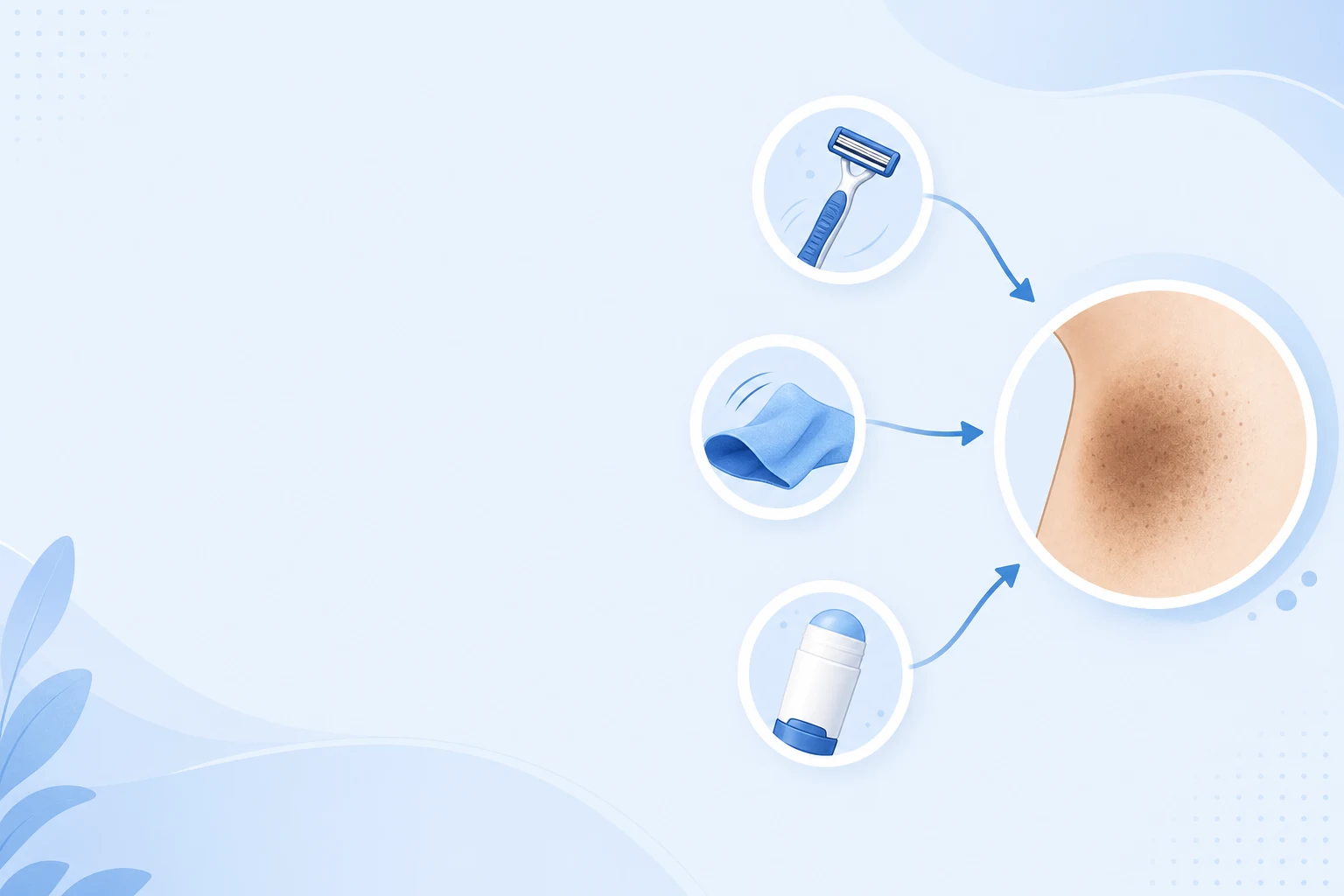
Dark underarms are one of the most common pigmentation complaints, and the most misunderstood — many people assume it means they are not clean. In reality, it is almost always a pigment response to repeated irritation. The skin under the arm is thin and sensitive, and friction, shaving and certain products provoke it into making protective pigment.
That means the route to lighter underarms is not scrubbing harder (which makes it worse) but reducing the irritation and gently treating the pigment. Knowing the cause is what makes the treatment work.
What causes the darkening
The everyday causes overlap. Friction from tight clothing or skin rubbing creates low-grade irritation over time. Frequent or aggressive shaving nicks and inflames the skin, and ingrown hairs add spots of post-inflammatory pigment. Some deodorants and hair-removal creams irritate sensitive skin. And dead-skin build-up can exaggerate how dark the area looks.
Less commonly, darkening across body folds can be a sign of an underlying medical condition (such as one linked to insulin resistance), which is why unusual or sudden changes are worth a check.
Mechanism
Friction
Rubbing from clothing or skin creates chronic low-grade irritation.
Mechanism
Shaving & ingrowns
Nicks, inflammation and ingrown hairs leave post-inflammatory pigment.
Mechanism
Irritating products
Some deodorants and creams inflame thin underarm skin.
Mechanism
Build-up
Dead-skin accumulation makes the area look darker than it is.
It is often post-inflammatory pigment
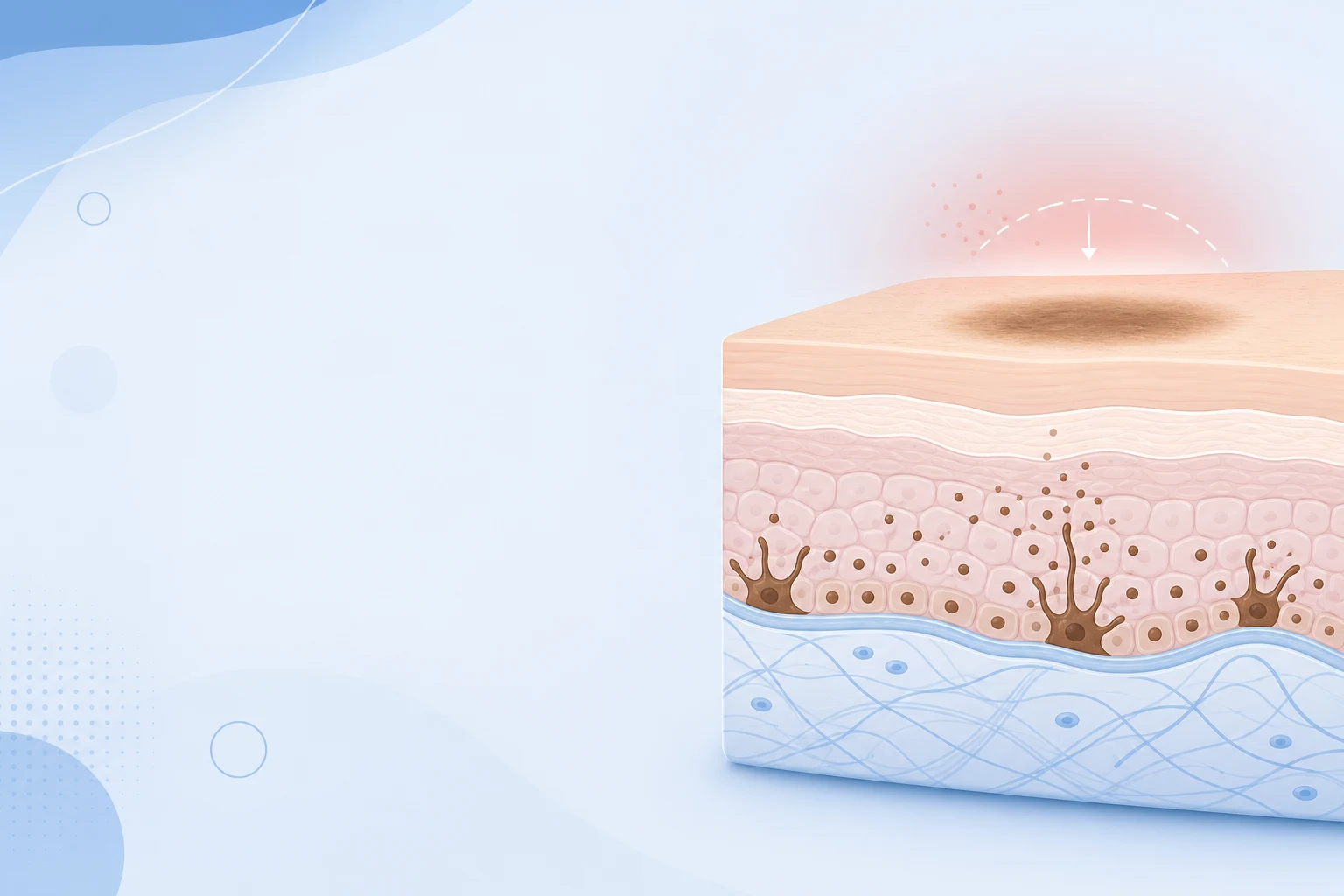
Much underarm darkening is post-inflammatory hyperpigmentation (PIH) — the same mechanism that leaves brown marks after acne. Irritation triggers pigment cells to over-produce melanin, which settles as darkening. In deeper skin tones, this happens more readily and lingers longer.
Recognising it as PIH is useful because it points straight to the fix: stop the inflammation, and treat the pigment gently. Aggressive treatment risks adding more inflammation and more pigment.
— Mechanism
How a dark mark forms after inflammation
Inflammation
Acne, heat or a treatment irritates the skin, releasing signalling molecules.
Melanocytes activate
Those signals switch pigment cells into overdrive, over-producing melanin.
Pigment deposited
Excess melanin settles in the skin as a flat dark mark — and in deeper skin can drop into the dermis, where it fades slowly.
PIH is a pigment response, not a structural scar. It often fades over months — but the right care, and avoiding fresh inflammation, speeds recovery and prevents new marks.
How to lighten them
Start by removing the cause: switch to gentler hair removal, reduce friction, and stop products that irritate. Then layer in gentle pigment care — exfoliating peels to lift surface pigment and build-up, supportive topicals to calm pigment production, and cautious pigment-aware laser for stubborn cases in suitable skin.
Improvement is gradual. The single biggest predictor of lasting results is whether the irritation stops — otherwise the pigment simply returns.
When to see a doctor
See a doctor if home changes have not helped, if shaving leaves persistent marks, or if the darkening appeared suddenly or alongside other symptoms — the last of these warrants ruling out a medical cause. An assessment also ensures any laser is set safely for your skin tone.
At DrPlus in Johor Bahru, underarm pigmentation is assessed cause-first, with gentle, realistic treatment.
— Frequently asked
Common questions
Usually because of a pigment response to irritation — friction, frequent shaving, ingrown hairs or irritating products — often as post-inflammatory hyperpigmentation. It is not a sign of poor hygiene, and scrubbing harder makes it worse.
Remove the cause (gentler hair removal, less friction, non-irritating products) and add gentle pigment care such as exfoliating peels, supportive topicals and cautious laser. Improvement is gradual and depends on stopping the irritation.
Usually not. Most underarm darkening is pigment that can be lightened over time once the irritation stops and gentle treatment is applied, though deeper or long-standing pigment takes longer.
Occasionally, darkening across body folds can be linked to underlying conditions such as insulin resistance. Sudden, widespread or unusual darkening should be assessed by a doctor.
It can contribute. Frequent or aggressive shaving irritates the skin and causes ingrown hairs, both of which trigger post-inflammatory pigment. Gentler hair removal reduces this.
— Related treatments
Continue with the relevant DrPlus treatment pages
Each page goes deeper into mechanism, suitability and recovery — your final plan is confirmed at consultation.
— Continue reading
 Underarm Whitening
Underarm Whitening in Singapore & Johor Bahru: What Actually Works
Dark underarms have several causes, so 'whitening' is really about treating the right one. Here is what works, what does not, and what is realistic.
 Pigmentation
Post-Inflammatory Hyperpigmentation (PIH): Treatment Guide
Those brown marks left after a spot heals are PIH — a pigment problem, not a scar. The good news: it fades, and the right care speeds it up.
 Acne Scars
Acne Marks vs Acne Scars: How to Tell the Difference
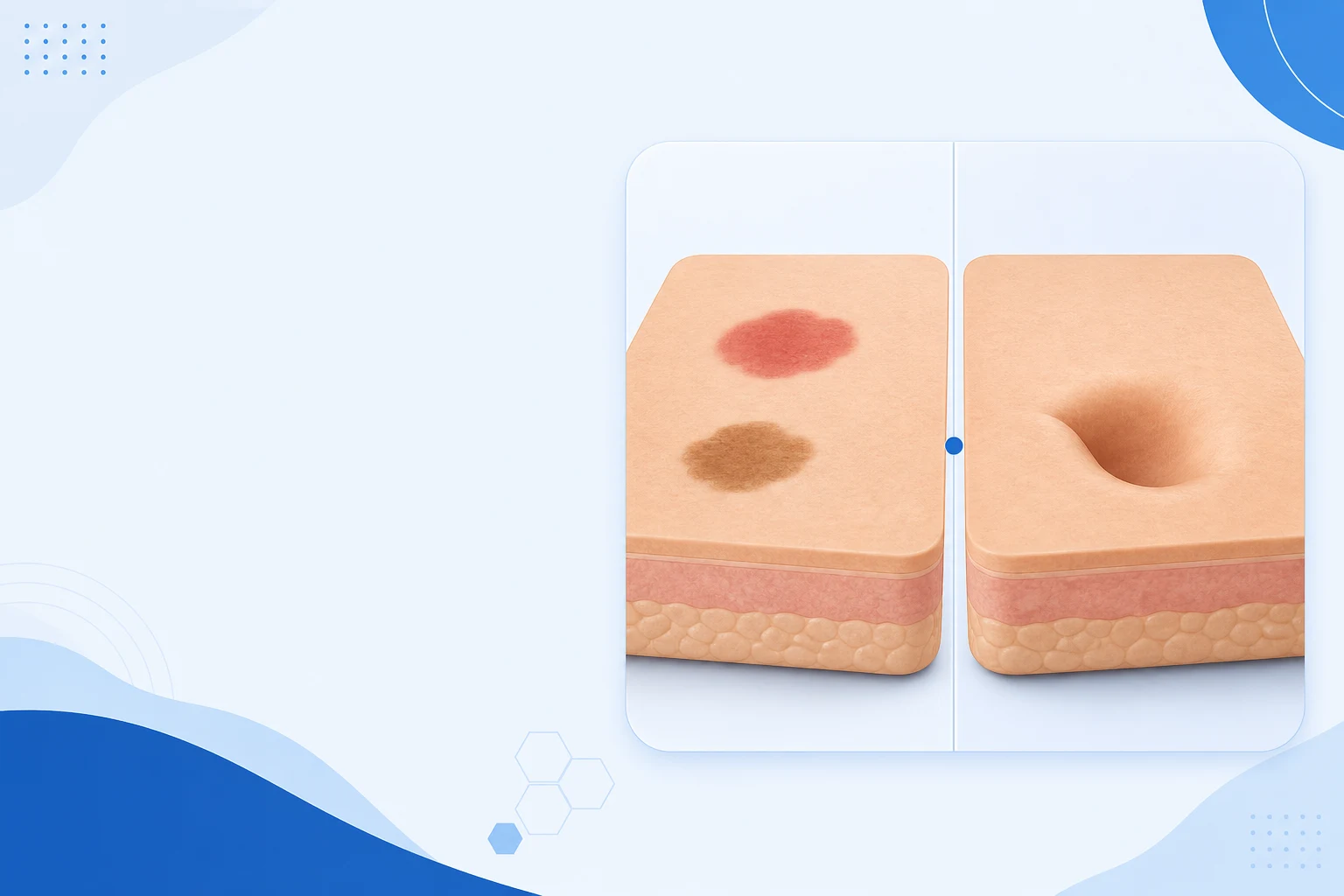
The most useful question before treating 'acne scars' is whether they are scars at all. Marks fade; scars are contour. Telling them apart changes everything.