
DrPlus Skin Education · Chemical Peels
Chemical Peels for Acne Scars: A Medical Education Guide
Chemical peels are often misunderstood as a scar 'cure'. In reality they are precise surface-renewal tools — powerful for tone and texture, limited for deep structure. Here is exactly what they can and cannot do.
Quick answer
A chemical peel applies a carefully chosen acid to the skin for a controlled time, removing the outermost layers in a measured, predictable way. As the treated skin sheds, fresher and more even skin replaces it, and the controlled injury prompts a modest renewal response underneath. The depth the acid reaches determines both how much it can do and how much downtime and risk it carries.
For acne scarring, this makes peels genuinely useful for surface concerns — uneven tone, post-inflammatory marks and mild textural roughness — but limited for the deep structural loss behind true depressed scars. The honest framing is that peels refine the canvas the deeper treatments work on; they are a supporting tool, not a structural rebuild.
How a peel actually works
Skin constantly renews itself, shedding dead surface cells and replacing them from below. A peel accelerates and deepens that process on purpose. The acid breaks the bonds holding surface cells together (and, at greater depth, causes a controlled injury to deeper layers), so the old, irregular surface lifts away and is replaced by newer skin with more even tone and texture.
At greater depth, the controlled injury also nudges the upper dermis to produce some new collagen — which is why medium-depth peels can contribute modestly to texture. But this collagen effect is gentle compared with lasers or RF microneedling, so peels are not the primary tool when significant dermal rebuilding is the goal.
— Penetration depth
How far each peel class reaches
- Superficial: Glycolic / salicylic acid — refreshes tone and surface texture.
- Medium: TCA — reaches the upper dermis for more texture work.
- Deep: Reaches deeper dermis; rarely used in darker skin due to risk.
Deeper peels do more but carry more risk — particularly post-inflammatory pigmentation in darker skin. Peel depth is selected conservatively at assessment.
The acids, defined
Superficial vs medium peels
Peels are classified by how deep they reach. Superficial peels (often glycolic or salicylic acid) act within the epidermis. They are gentle, low-downtime treatments that brighten tone, help post-inflammatory marks and smooth very mild roughness — ideal as part of ongoing skin maintenance. Medium-depth peels (typically TCA) reach the upper dermis, doing more for texture but with more downtime and more risk.
Deeper peels exist but are used cautiously and rarely in darker skin because the pigmentation risk climbs steeply. For most people with acne scarring — and especially for the deeper skin tones common in Johor Bahru — superficial-to-medium peels are the relevant range, chosen and dosed conservatively.
— Comparison
Peel depth at a glance
| Peel class | Typical agents | Suited to |
|---|---|---|
| Superficial | Glycolic, salicylic, lactic acid | Tone, post-inflammatory marks, mild roughness, maintenance |
| Medium | TCA (moderate strength) | More texture work; reaches the upper dermis |
| Deep | Higher-strength agents (rare) | Seldom used in darker skin due to high pigmentation risk |
Superficial
- Typical agents
- Glycolic, salicylic, lactic acid
- Suited to
- Tone, post-inflammatory marks, mild roughness, maintenance
Medium
- Typical agents
- TCA (moderate strength)
- Suited to
- More texture work; reaches the upper dermis
Deep
- Typical agents
- Higher-strength agents (rare)
- Suited to
- Seldom used in darker skin due to high pigmentation risk
What peels genuinely help with
Peels shine on the colour-and-surface side of acne aftermath. Post-inflammatory hyperpigmentation — the flat brown marks left after spots heal — often responds well, because the pigment sits at or near the surface where peels act. They also refine overall tone, soften very shallow irregularity, and (with salicylic acid) can help where active acne and oiliness persist alongside scarring.
Used in a series and combined with diligent sun protection, peels can make a face look noticeably clearer and more even — which sometimes reduces the perceived severity of scarring even though the scars themselves are unchanged. That distinction matters: looking clearer is not the same as the structural scars being treated.
— Mechanism
How a dark mark forms after inflammation
Inflammation
Acne, heat or a treatment irritates the skin, releasing signalling molecules.
Melanocytes activate
Those signals switch pigment cells into overdrive, over-producing melanin.
Pigment deposited
Excess melanin settles in the skin as a flat dark mark — and in deeper skin can drop into the dermis, where it fades slowly.
PIH is a pigment response, not a structural scar. It often fades over months — but the right care, and avoiding fresh inflammation, speeds recovery and prevents new marks.
What peels cannot do
Peels cannot rebuild the deep collagen scaffold that has been lost beneath a true atrophic scar. A boxcar, rolling or ice pick scar is a structural depression several millimetres down; a treatment acting at or just below the surface simply cannot reach far enough to lift it. Expecting a peel to do so leads to disappointment and, often, to repeated over-peeling.
This is exactly why peels are positioned as a supporting treatment. In a combination plan they refine tone and surface texture while deeper tools — subcision, RF microneedling, CO₂ laser, focal techniques — do the structural work. Trying to substitute peels for those tools is the single most common reason people feel peels 'didn't work' on their scars.
Peels, pigmentation and darker skin
The central caution with peels in deeper skin tones is that the same inflammation that drives renewal can also provoke pigment cells — the cause of post-inflammatory hyperpigmentation. A peel that is too deep, too strong, or poorly aftercared can leave a dark patch that outlasts any benefit. This is not a reason to avoid peels; it is a reason to choose conservative depth, appropriate agents and careful technique.
Sensible practice in darker skin leans on superficial-to-medium peels, sometimes with skin preparation beforehand, gradual strength progression, and an absolute commitment to sun protection afterward. Under strong Malaysian sun, unprotected post-peel skin can pigment quickly — so aftercare is part of the treatment, not optional.
What to expect from a course
Peels are usually performed as a series rather than a one-off, with superficial peels spaced a few weeks apart. Downtime depends on depth: superficial peels may cause light flaking and pinkness for a few days, while medium peels involve more visible peeling and redness for up to about a week. Improvement in tone and texture is cumulative across the series.
Set expectations on clearer, more even skin and softer surface texture — not on the disappearance of depressed scars. When peels are combined with structural treatments, the overall result can be considerably better than either alone, which is the rationale for using them together.
— Healing timeline
After a chemical peel
Days 0–2
Tightness & pinkness
Skin may feel tight and look flushed. Superficial peels are mild here; medium peels are more noticeable.
Days 3–7
Peeling & renewal
Old surface skin flakes away and fresher skin emerges. Avoid picking — let it shed naturally to prevent marks.
Weeks 2–4
Even tone settles
Tone and texture look refreshed. Repeat sessions build on this; deeper structural change still needs other tools.
A general guide only. Individual healing speed varies with skin type, scar depth, aftercare and the treatment used.
When to consider a medical consultation
Because peel selection and depth carry real pigmentation considerations in darker skin, peels are best chosen with professional guidance rather than self-administered at high strength. A consultation matches the right peel class to your concern, screens for active acne, and decides whether peels should sit alongside structural treatments.
At DrPlus in Johor Bahru, peels are used as part of a considered plan, with conservative depth selection for deeper skin and clear aftercare — and no pressure to proceed on the day.
Summary
Chemical peels are precise surface-renewal tools: a controlled acid removes outer skin to reveal fresher, more even skin, with the depth of the peel deciding both its power and its risk. They are genuinely valuable for post-inflammatory marks, tone and mild texture, and they support active acne care — but they cannot rebuild the deep collagen loss behind true atrophic scars.
In darker skin, conservative depth and rigorous sun protection keep pigmentation risk low. Used as a supporting layer within a combination plan — refining the surface while structural treatments address the depressions — peels earn their place. Used as a hoped-for scar cure, they disappoint. A proper assessment is what keeps them in their effective lane.
— Frequently asked
Common questions
No. Peels work at or near the surface, so they refine tone, post-inflammatory marks and very shallow texture, but they cannot rebuild the deep collagen loss behind depressed scars. They are best used to support a broader scar plan.
It depends on the concern: glycolic acid for general tone and texture, salicylic acid where active acne and oiliness persist, and TCA for medium-depth texture work. The right choice — and strength — is decided at assessment, especially in darker skin.
Superficial-to-medium peels can be used safely with conservative depth, appropriate agents, careful technique and strict sun protection. Over-aggressive peeling raises the risk of post-inflammatory hyperpigmentation, so professional selection matters.
Peels are usually done as a series, with superficial peels spaced a few weeks apart. Improvement in tone and texture is cumulative; the exact number depends on your skin and concern, and your doctor will advise a realistic course.
Superficial peels act within the epidermis with light downtime, refreshing tone and mild texture. Medium peels (typically TCA) reach the upper dermis for more texture work, with more visible peeling and more risk.
Yes — controlled shedding of treated skin is how a peel works. Avoid picking at flaking skin, as that can cause marks. Follow your aftercare and sun-protection plan to get an even result.
— Related treatments
Continue with the relevant DrPlus treatment pages
Each page goes deeper into mechanism, suitability and recovery — your final plan is confirmed at consultation.
Primary money page
Chemical Peel at DrPlus
Doctor-led peels with conservative depth selection for darker skin and clear aftercare.
chemical peel treatment in Johor BahruSupporting
Acne Scar Treatment Hub
The category hub where peels are sequenced alongside structural scar treatments.
acne scar treatment in Johor BahruSupporting
RF Microneedling
The dermal-rebuild partner peels support at the surface.
RF microneedling for acne scarsSupporting
CO₂ Laser
Stronger resurfacing for texture when peels are not enough.
fractional CO₂ laser for acne scars— Continue reading
TCA CROSS for Ice Pick Acne Scars: How It Works
Deep, narrow ice pick scars defeat broad resurfacing because the energy cannot reach the bottom of the channel. TCA CROSS solves this with a completely different idea: rebuild from the base, one scar at a time.
Post-Inflammatory Hyperpigmentation After Acne Scar Treatment
The most common disappointment after scar treatment in darker skin is not a scar that didn't improve — it's a new dark mark. Here's why PIH happens, who is at risk, and how it is prevented and managed.
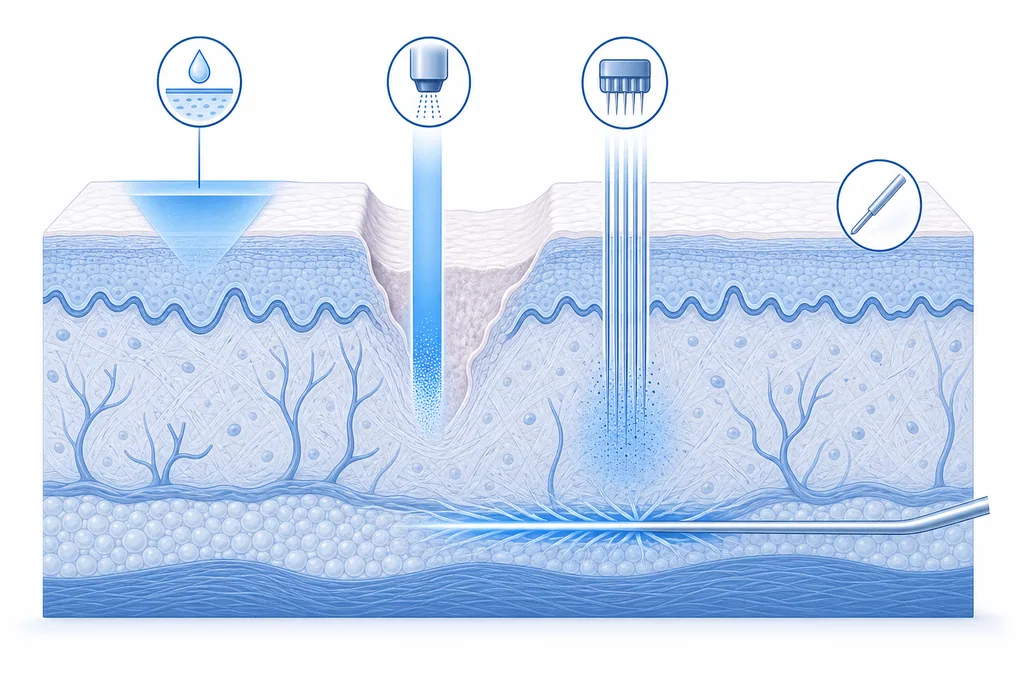 Acne Scar Science
Acne Scar Treatment Comparison: CO₂ Laser, RF Microneedling, Subcision & Peels
There is no single 'best' acne scar treatment — only the right tool for a specific scar at a specific depth. This guide compares the four main options on the dimensions that actually decide outcomes.