
DrPlus Skin Education · Acne Scars
Which Acne Scar Treatment Is Right for You?
Faced with subcision, laser, RF microneedling, peels and fillers, how do you choose? This guide walks the decision the way a doctor would.
Quick answer
Choosing an acne scar treatment is not about finding the strongest machine — it is about matching tools to your specific scars, skin tone and life. Get those three inputs right and the plan almost designs itself; ignore them and even an expensive treatment can disappoint.
This guide walks the decision the way a doctor would: first identify the scar types, then weigh skin tone and downtime, then assemble a sequence. The honest conclusion for most people is a combination, because mixed scarring rarely yields to a single tool.
Step 1 — identify your scar types
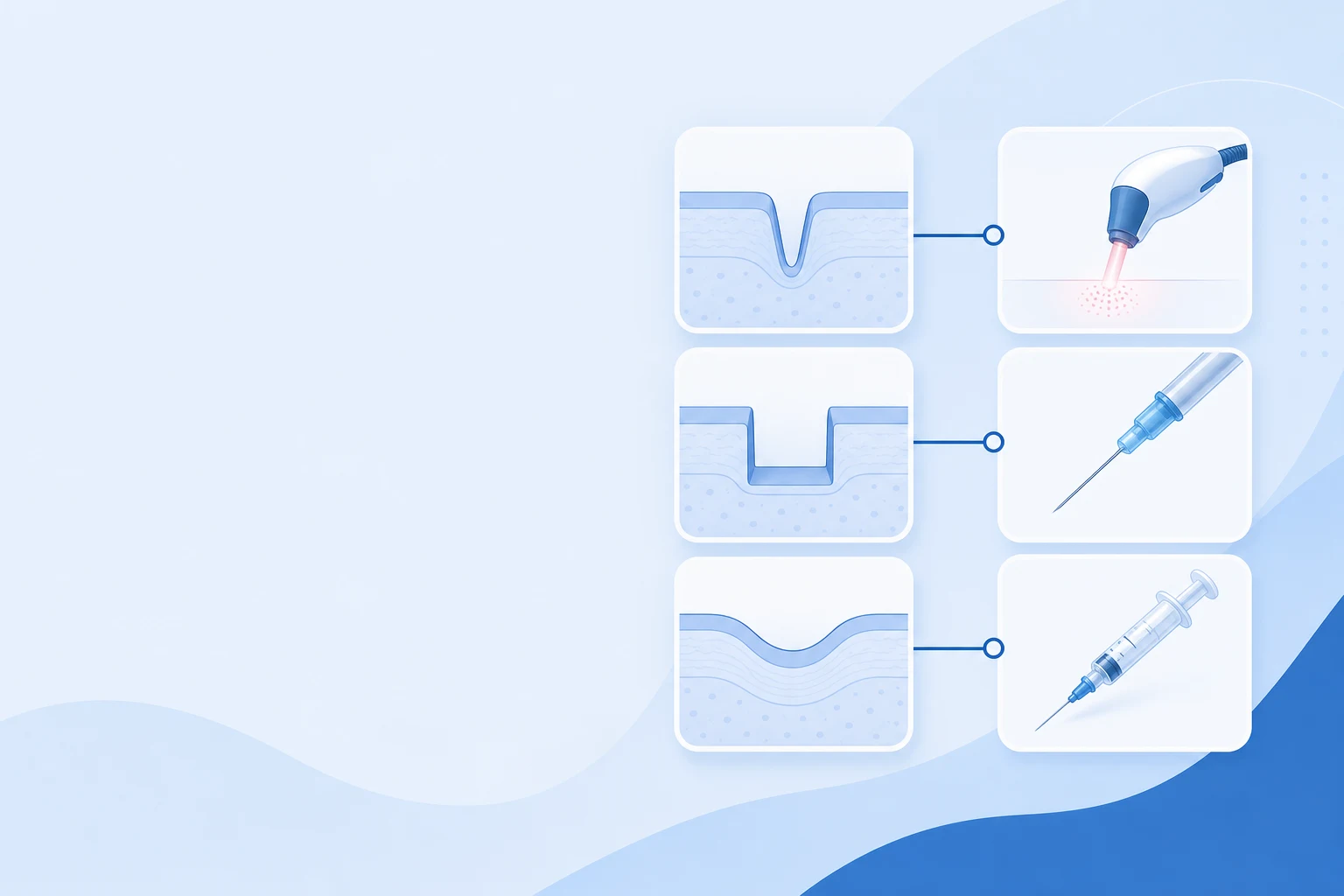
Start with shape. Ice pick scars are narrow and deep, like a tiny puncture. Boxcar scars are round or oval with sharp, defined walls. Rolling scars are broad with sloping edges and a tethered floor that gives the skin a wavy look. Most people have a mix, and the proportions guide the plan.
If you are unsure whether you are even looking at scars or at flat marks that will fade, that distinction comes first — treating marks is a different, simpler path than treating contour.
Ice pick
Narrow, deep channels that extend down into the dermis — like a small puncture wound.
Depth-first treatments usually needed
Boxcar
Wider, shallow-to-medium depressions with clearly defined, punched-out edges.
Often responsive to fractional resurfacing
Rolling
Wave-like undulations caused by fibrous bands tethering the skin downward.
Structural release commonly needed first
Pitted / marks
Includes deeper pits and flat post-inflammatory marks left after acne heals.
Pigment marks often respond to topicals + peels
Step 2 — match treatment to scar
Each scar shape has tools that suit it. Use the matrix below as a starting map: it shows why a single tool rarely covers a mixed face and how the pieces fit together.
— Suitability matrix
Common fits for atrophic scar types
A teaching guide, not a prescription. Your doctor will confirm what is appropriate for your skin at consultation.
| Scar type | CO₂ Laser | Subcision | RF Microneedling | Chemical Peel |
|---|---|---|---|---|
| Ice pick | ||||
| Boxcar | ||||
| Rolling | ||||
| Pitted / marks |
Step 3 — weigh skin tone and downtime
Two practical filters refine the choice. Skin tone: in deeper Asian skin, surface-sparing options like RF microneedling and conservative settings reduce post-inflammatory hyperpigmentation risk, which can make them preferable to aggressive ablative resurfacing. Downtime: stronger resurfacing means more recovery, so your schedule and tolerance shape what is realistic.
Neither filter changes which tool suits which scar — it changes the intensity and sequencing. A doctor balances effectiveness against safety and lifestyle rather than simply reaching for the strongest setting.
— Comparison
Choosing by skin tone and downtime
| Priority | Lean toward | Why |
|---|---|---|
| Deeper skin tone | RF microneedling, conservative settings | Lower pigmentation risk than aggressive ablative laser. |
| Minimal downtime | Microneedling, pico, peels | Gentler tools with shorter recovery. |
| Maximum resurfacing | Fractional CO₂ | Strongest texture change, but more downtime and PIH risk. |
| Tethered rolling scars | Subcision first | No resurfacing lifts a tether — it must be released. |
Deeper skin tone
- Lean toward
- RF microneedling, conservative settings
- Why
- Lower pigmentation risk than aggressive ablative laser.
Minimal downtime
- Lean toward
- Microneedling, pico, peels
- Why
- Gentler tools with shorter recovery.
Maximum resurfacing
- Lean toward
- Fractional CO₂
- Why
- Strongest texture change, but more downtime and PIH risk.
Tethered rolling scars
- Lean toward
- Subcision first
- Why
- No resurfacing lifts a tether — it must be released.
Step 4 — build the sequence
With scar types, skin tone and downtime in hand, the plan becomes an ordered sequence rather than a single booking. A common logic: release tethers first, then rebuild collagen and resurface, then refine residual texture and marks — spaced to respect collagen biology.
This staging is why patience matters and why progress is reviewed between sessions. The plan should adapt to how your skin actually responds, not run on autopilot.
— Pathway
From assessment to result
- 1
Map
Identify scar types, skin tone and goals.
- 2
Release
Subcision frees tethered rolling scars.
- 3
Rebuild
Laser or RF microneedling stimulates collagen.
- 4
Refine
Peels, pico or focal work polish texture and marks.
- 1
Map
Identify scar types, skin tone and goals.
- 2
Release
Subcision frees tethered rolling scars.
- 3
Rebuild
Laser or RF microneedling stimulates collagen.
- 4
Refine
Peels, pico or focal work polish texture and marks.
Turning the guide into your plan
These rules of thumb get you most of the way, but the final step is an assessment of your actual face. A doctor confirms the scar mix, gauges pigmentation risk for your skin tone, and proposes a realistic sequence and session count — including where to start for the best return.
At DrPlus in Johor Bahru, that conversation is honest about both potential and limits, with no pressure to proceed on the day.
— Frequently asked
Common questions
Match the treatment to three things: your scar types (ice pick, boxcar, rolling), your skin tone (pigmentation risk), and the downtime you can manage. Because most people have mixed scarring, the best plan is usually a sequenced combination, decided at a doctor-led assessment.
Rolling scars are tethered, so subcision to release the bands is usually the foundation, followed by collagen-building treatments such as RF microneedling or laser, and sometimes filler for an immediate lift.
Narrow, deep ice pick scars usually respond best to focal techniques such as TCA CROSS, because broad resurfacing cannot reach the base of a tight channel. They are often combined with resurfacing for surrounding texture.
Surface-sparing options like RF microneedling and conservative settings generally carry lower post-inflammatory hyperpigmentation risk in deeper skin, alongside strict sun protection. A doctor will tailor intensity to your skin tone.
Rarely. Different scar shapes need different tools, so a single treatment usually leaves part of the problem untouched. Combination plans, sequenced over months, give the most complete improvement.
— Related treatments
Continue with the relevant DrPlus treatment pages
Each page goes deeper into mechanism, suitability and recovery — your final plan is confirmed at consultation.
— Continue reading
 Acne Scar Science
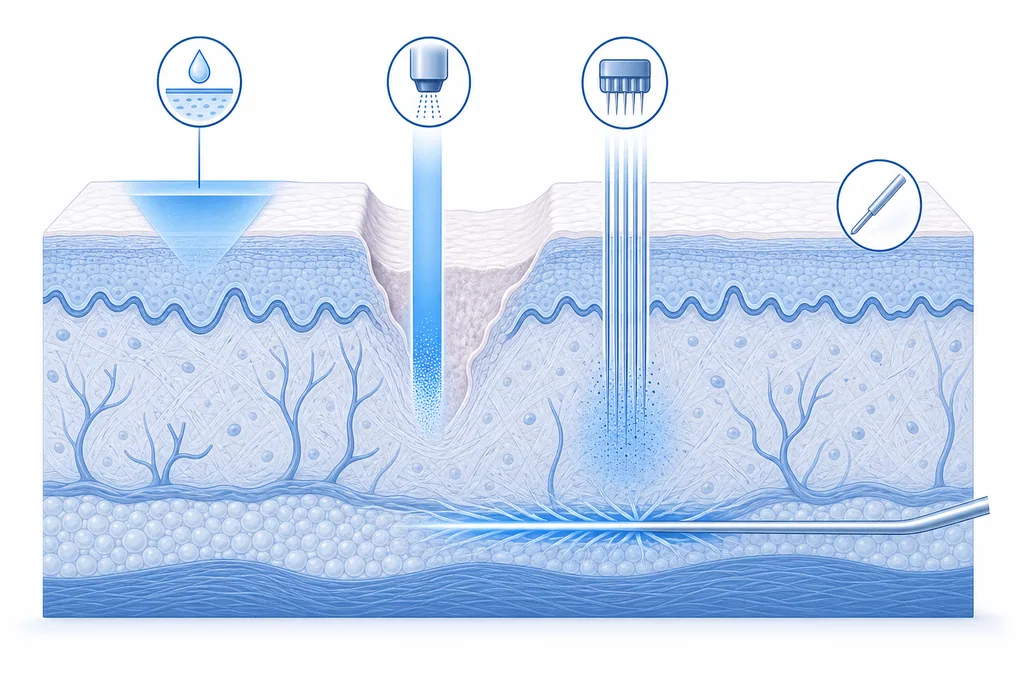
Acne Scar Treatment Comparison: CO₂ Laser, RF Microneedling, Subcision & Peels
There is no single 'best' acne scar treatment — only the right tool for a specific scar at a specific depth. This guide compares the four main options on the dimensions that actually decide outcomes.
 Acne Scars
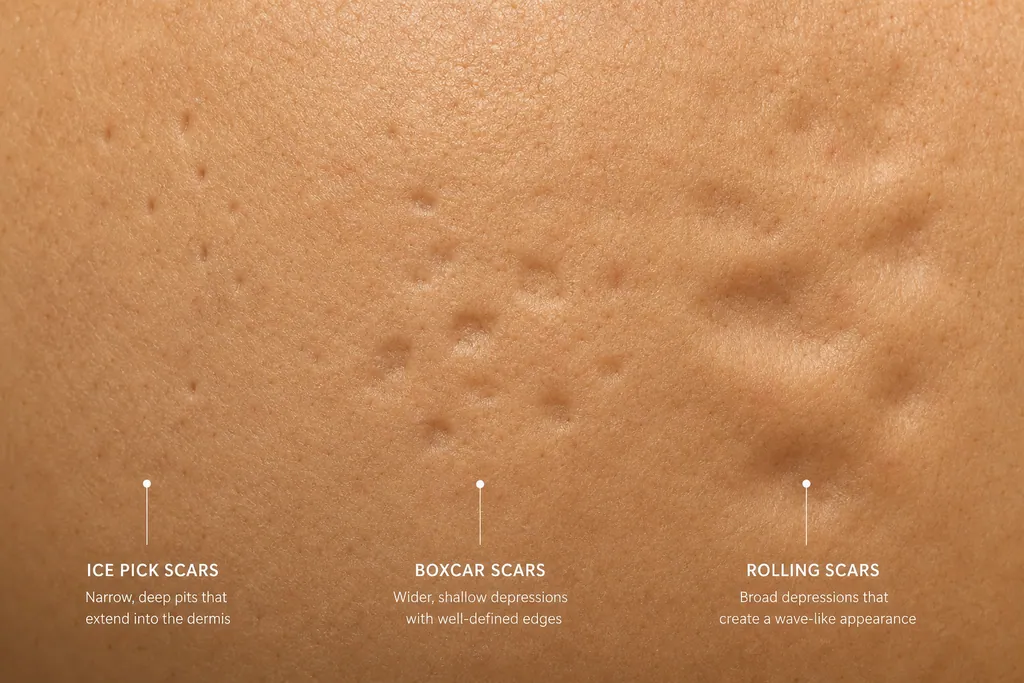
Types of Acne Scars: Ice Pick, Boxcar, Rolling and Pitted Scars
Atrophic acne scars come in distinct shapes — and the shape often determines what treatment may actually help.
 Acne Scars
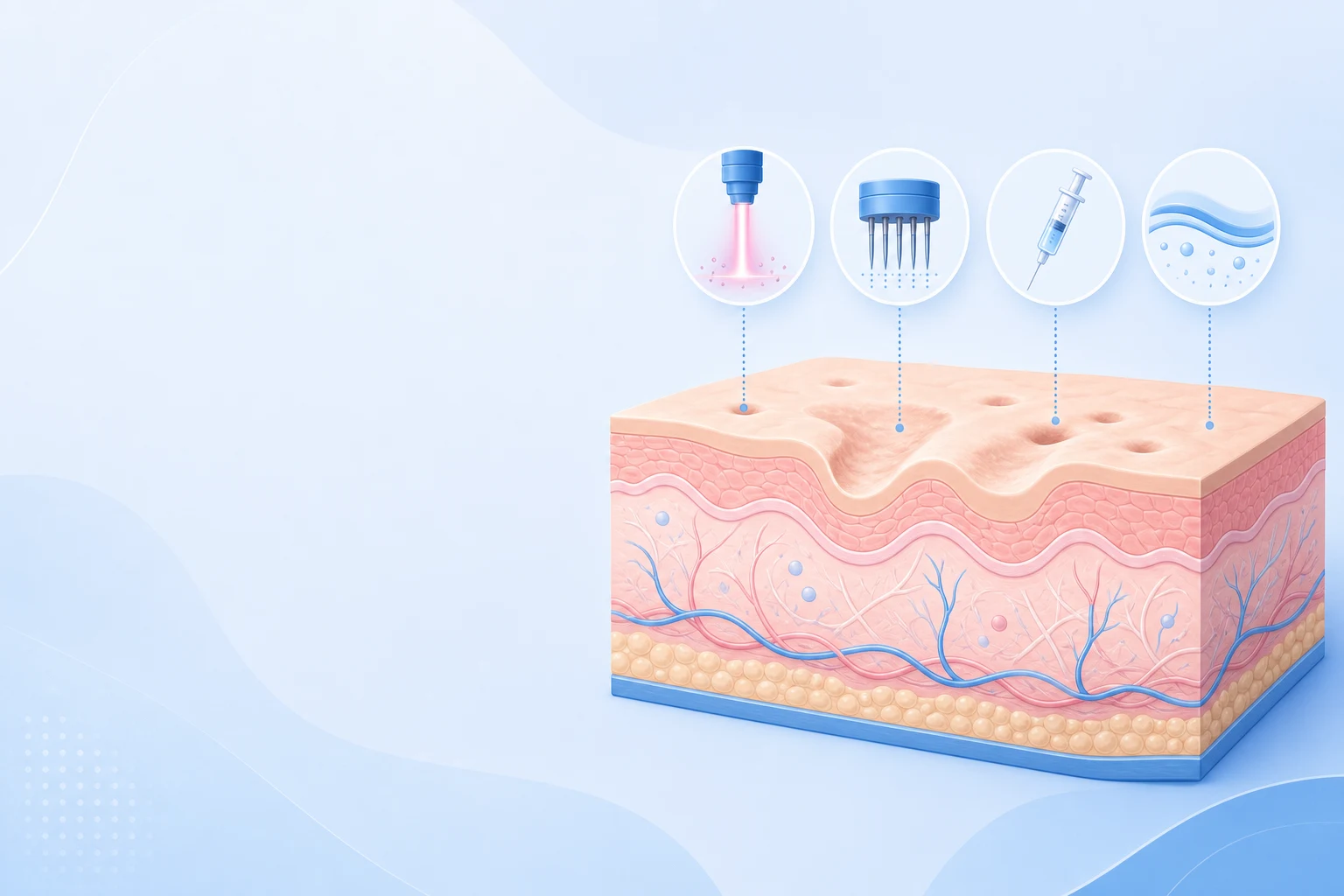
Acne Scar Treatment Services in Johor Bahru: The Complete Menu
There is no single 'acne scar treatment' — there is a toolkit, and the skill is matching the right tools to your scar types. Here is the full menu, in plain language.