
DrPlus Skin Education · Acne Scars
Acne Scar Treatment Services in Johor Bahru: The Complete Menu
There is no single 'acne scar treatment' — there is a toolkit, and the skill is matching the right tools to your scar types. Here is the full menu, in plain language.
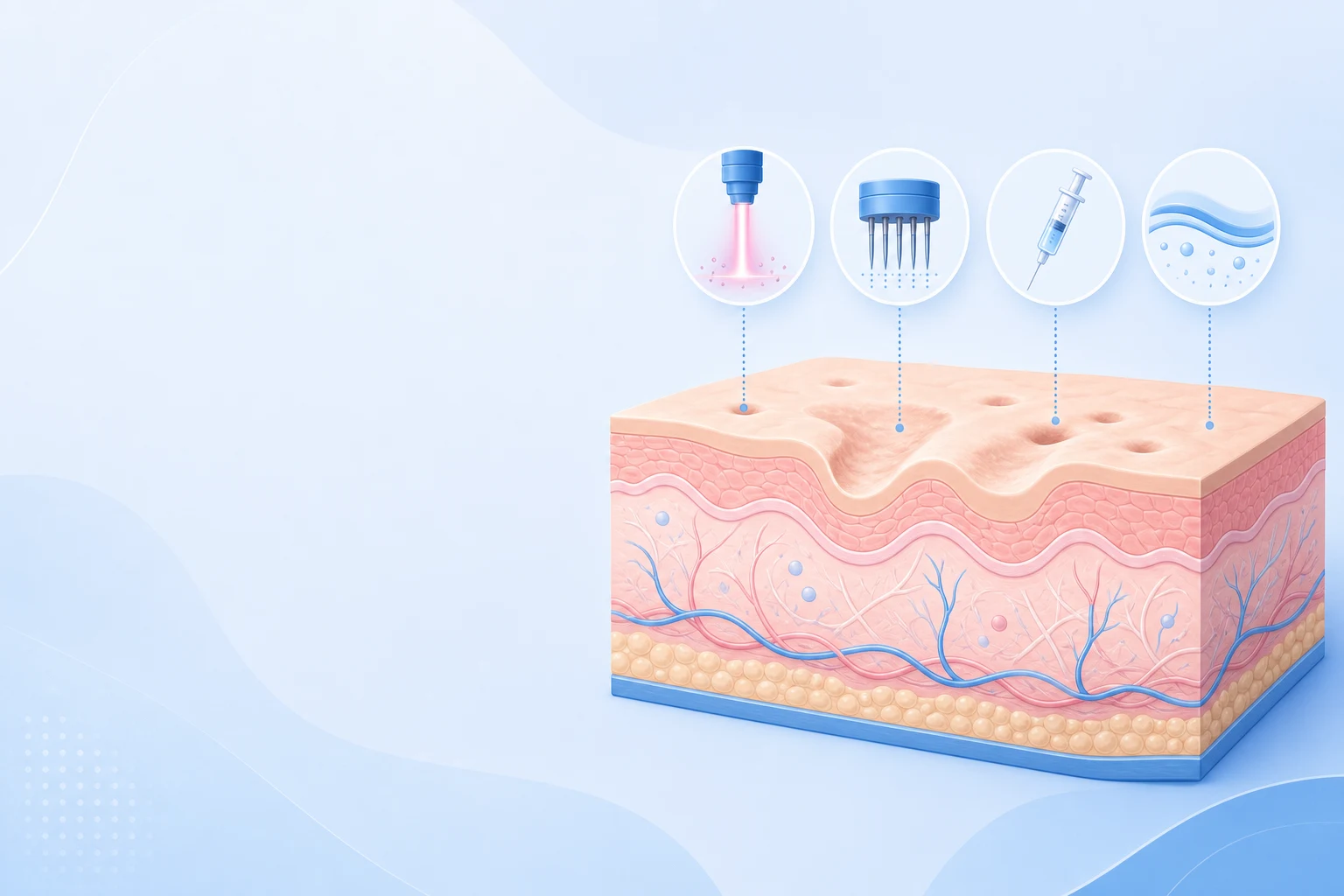
Quick answer
There is no single best acne scar treatment, because acne scars are not one thing. Ice pick, boxcar and rolling scars each have a different shape and a different cause, so each responds to different tools. A good clinic does not sell you one machine — it assesses your scar mix and combines the right techniques.
This guide walks through every service used for acne scars in Johor Bahru, what each one actually does, and which scar types it suits. Think of it as the menu and the reasoning behind it, so your consultation is a conversation rather than a sales pitch.
First, understand what you are treating
Atrophic (depressed) scars are by far the most common after acne, and they come in three shapes: narrow and deep (ice pick), sharp-walled and round or oval (boxcar), and broad with sloping, tethered edges (rolling). Less commonly, acne leaves raised scars (hypertrophic or keloid). Flat red or brown marks are usually not scars at all — they fade, which changes the plan entirely.
This matters because the treatment follows the shape. A tool that lifts a tethered rolling scar does little for a deep ice pick scar, and vice versa. Identifying your scar mix is the single most important step — everything below is chosen to fit it.
Ice pick
Narrow, deep channels that extend down into the dermis — like a small puncture wound.
Depth-first treatments usually needed
Boxcar
Wider, shallow-to-medium depressions with clearly defined, punched-out edges.
Often responsive to fractional resurfacing
Rolling
Wave-like undulations caused by fibrous bands tethering the skin downward.
Structural release commonly needed first
Pitted / marks
Includes deeper pits and flat post-inflammatory marks left after acne heals.
Pigment marks often respond to topicals + peels
Why depth decides the tool
A useful way to picture the menu is by how deep each treatment works. Peels act mostly near the surface; lasers and RF microneedling reach into the dermis to rebuild collagen; subcision works deepest, releasing fibrous bands beneath the scar. Matching the depth of the tool to the depth of the problem is the core logic of a scar plan.
— Where treatments reach
Skin layers, in plain English
- Epidermis: Outer protective layer — pigmentation marks and surface texture live here.
- Dermis: Collagen and elastin layer — where atrophic scars are anchored and where most regenerative treatments work.
- Subcutis: Deeper fat / connective layer — beyond the reach of most aesthetic treatments.
A simplified illustration — actual skin layers are more nuanced. Your doctor will explain what is relevant to your case at consultation.
Which service suits which scar
The same information, organised the other way around — by scar type. Use it to see why a plan usually combines tools rather than picking one.
— Suitability matrix
Common fits for atrophic scar types
A teaching guide, not a prescription. Your doctor will confirm what is appropriate for your skin at consultation.
| Scar type | CO₂ Laser | Subcision | RF Microneedling | Chemical Peel |
|---|---|---|---|---|
| Ice pick | ||||
| Boxcar | ||||
| Rolling | ||||
| Pitted / marks |
How the options compare on downtime
Stronger resurfacing generally means more downtime. This is not a ranking of quality — a gentler tool used in the right plan can outperform an aggressive one used wrongly. It simply helps you plan around work and events.
— Relative downtime
How they compare on recovery
Chemical peel
Minimal
Mild flaking, usually a few days.
Pico laser
Light
Redness, often settles within days.
RF microneedling
Moderate
Redness and swelling for a few days.
Subcision
Moderate
Bruising and tenderness for several days.
Fractional CO₂
Higher
Redness, flaking; about a week.
Recovery profiles vary by skin, settings and aftercare. Your doctor will share what is realistic for your case.
Why combination plans win
Because most people have a mix of scar types, the strongest plans combine techniques in a deliberate sequence — for example, releasing tethered scars with subcision first, then resurfacing and stimulating collagen with laser or RF microneedling, then refining residual texture and marks over follow-up sessions.
This staged approach also respects biology: collagen remodeling takes months, so sessions are spaced to let each cycle complete. Rushing does not speed collagen; it only adds inflammation and, in deeper skin, pigmentation risk.
— Pathway
A typical scar-plan sequence
- 1
Assessment
A doctor maps your scar types and skin tone, and sets realistic goals.
- 2
Release
Subcision frees tethered rolling scars so the surface can lift.
- 3
Rebuild
Laser or RF microneedling stimulates collagen and refines texture.
- 4
Refine
Peels, pico or focal techniques polish residual texture and marks.
- 1
Assessment
A doctor maps your scar types and skin tone, and sets realistic goals.
- 2
Release
Subcision frees tethered rolling scars so the surface can lift.
- 3
Rebuild
Laser or RF microneedling stimulates collagen and refines texture.
- 4
Refine
Peels, pico or focal techniques polish residual texture and marks.
Key terms
Where to start
If your scarring is mixed or you are unsure of the type, start with a doctor-led assessment rather than booking a specific machine. The assessment is what turns this menu into a plan — confirming your scar mix, your skin's pigmentation risk, and a realistic sequence and number of sessions.
At DrPlus in Johor Bahru, this is a consultation, not a hard sell: you will hear what is realistic for your skin and where the limits are, with no pressure to proceed on the day.
— Frequently asked
Common questions
There is no single best treatment — it depends on your scar types. Most effective plans combine techniques such as subcision, laser or RF microneedling, and peels, sequenced over several sessions. A doctor-led assessment identifies your scar mix and matches the right tools.
No treatment removes acne scars completely. The realistic goal is meaningful softening — making scars shallower and less noticeable and improving overall texture. Results build over months and vary between individuals.
Most acne scar plans involve several sessions spaced over months, because collagen remodeling is gradual and mixed scarring needs more than one tool. The exact number depends on scar depth, skin response and the combination used.
Surface-sparing options such as RF microneedling, and conservative settings generally, lower the risk of post-inflammatory hyperpigmentation in deeper skin. Strict sun protection is essential. Your doctor will tailor the approach to your skin tone.
Yes. Settling active acne first protects your results — treating scars while breakouts continue can create new scars and inflammation. A doctor will usually stabilise acne before starting scar work.
— Related treatments
Continue with the relevant DrPlus treatment pages
Each page goes deeper into mechanism, suitability and recovery — your final plan is confirmed at consultation.
Primary money page
Acne Scar Treatment Hub
The doctor-led hub where all these services are sequenced into one plan.
acne scar treatment in Johor BahruSupporting
Subcision
Releases tethered rolling scars — often the first step in a plan.
subcision for rolling scarsSupporting
CO₂ Laser
Resurfaces texture and boxcar walls and stimulates collagen.
fractional CO₂ laser resurfacingSupporting
RF Microneedling
Surface-sparing collagen stimulation, favoured for deeper skin.
RF microneedling for acne scarsSupporting
Chemical Peels
Refines surface texture and post-acne marks within a plan.
chemical peels for skin texture— Continue reading
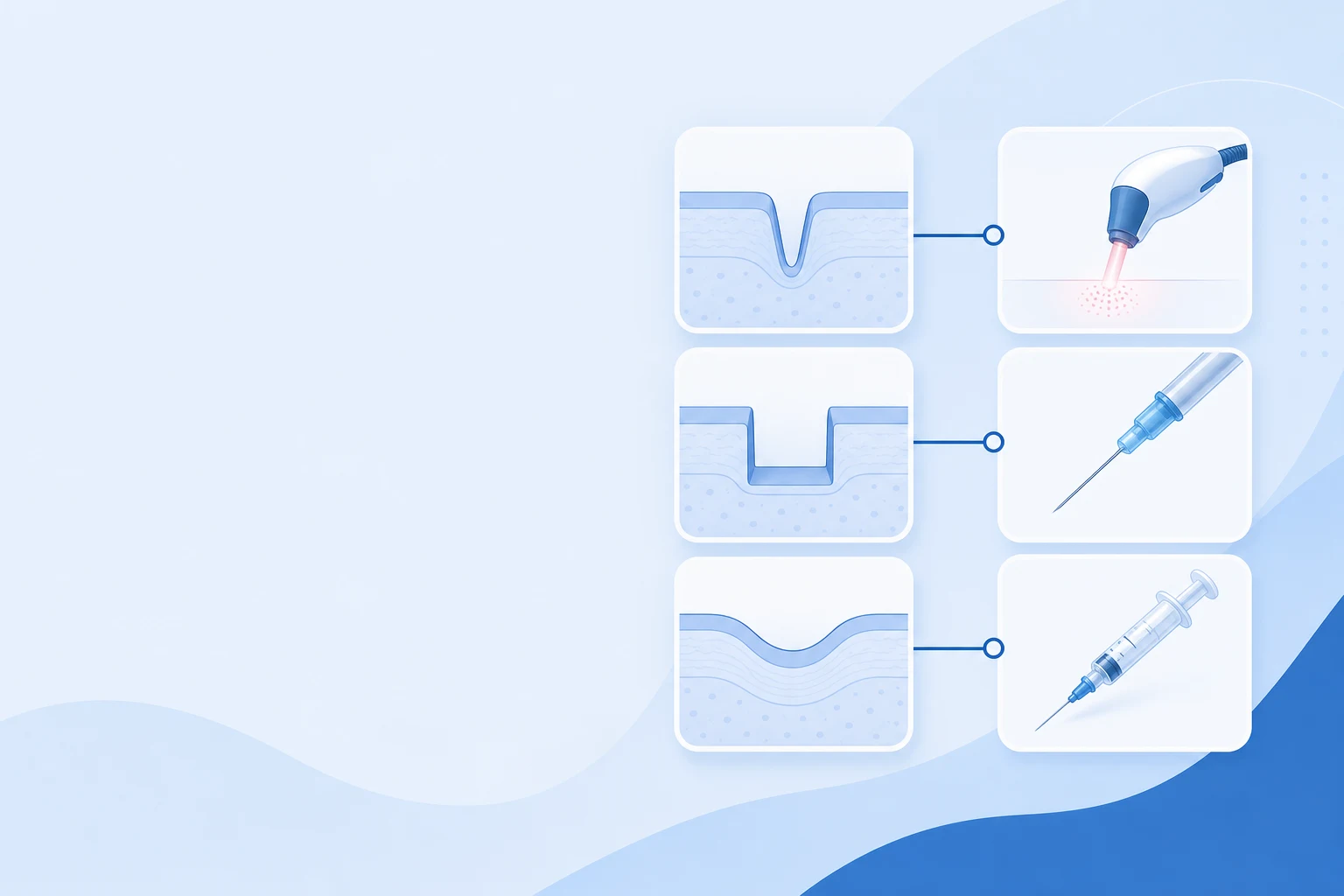 Acne Scars
Which Acne Scar Treatment Is Right for You?
Faced with subcision, laser, RF microneedling, peels and fillers, how do you choose? This guide walks the decision the way a doctor would.
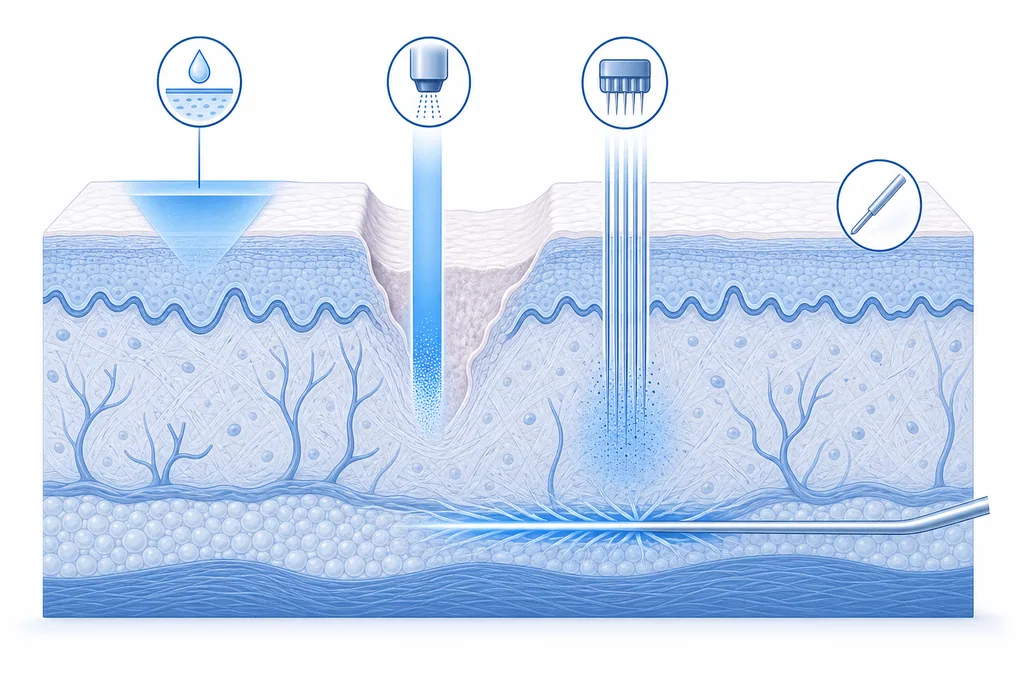 Acne Scar Science
Acne Scar Treatment Comparison: CO₂ Laser, RF Microneedling, Subcision & Peels
There is no single 'best' acne scar treatment — only the right tool for a specific scar at a specific depth. This guide compares the four main options on the dimensions that actually decide outcomes.
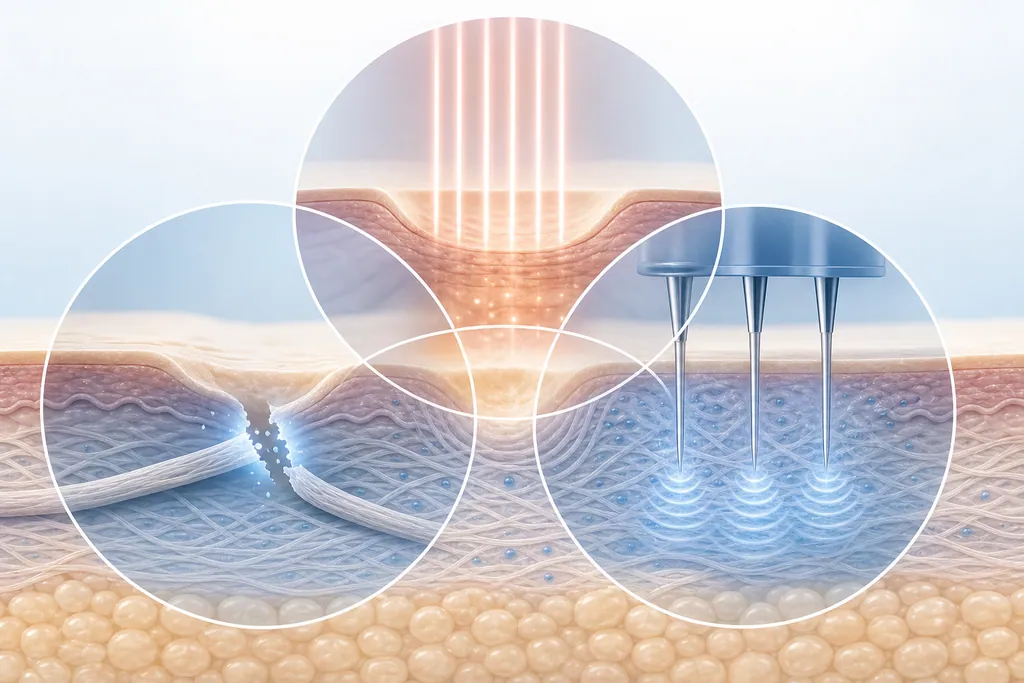 Acne Scars
Why Combination Treatment Is Often Needed for Acne Scars
Most people have more than one scar type, and each behaves differently. That is why a single treatment rarely does the whole job.