
DrPlus Skin Education · Keloid & Scars
Keloid vs Hypertrophic Scar: How to Tell — and Why It Matters
Both are raised scars — but one stays inside the wound boundary and one keeps growing beyond it. The distinction changes the entire treatment plan.
The one-line difference — and why it isn't cosmetic trivia
Both keloids and hypertrophic scars are the result of over-enthusiastic collagen production during wound healing. The dividing line is behaviour: a hypertrophic scar stays within the footprint of the original injury, while a keloid invades healthy skin beyond it — sometimes growing for years.
This is not academic. Hypertrophic scars often improve substantially on their own, so conservative treatment is usually reasonable. True keloids almost never regress and can recur aggressively after simple surgical removal — which is why keloid treatment is planned differently from the start.
— Comparison
Keloid vs hypertrophic scar
| Hypertrophic scar | Keloid | |
|---|---|---|
| Boundary | Stays within the original wound | Grows beyond the wound into healthy skin |
| Timing | Appears within weeks of injury | Can appear months after — even from minor trauma |
| Natural course | Often flattens and fades over 1–2 years | Rarely regresses; may keep growing |
| Symptoms | Sometimes itchy early on | Often itchy, tender or painful |
| Recurrence after removal | Lower | High if excised without follow-up treatment |
Boundary
- Hypertrophic scar
- Stays within the original wound
- Keloid
- Grows beyond the wound into healthy skin
Timing
- Hypertrophic scar
- Appears within weeks of injury
- Keloid
- Can appear months after — even from minor trauma
Natural course
- Hypertrophic scar
- Often flattens and fades over 1–2 years
- Keloid
- Rarely regresses; may keep growing
Symptoms
- Hypertrophic scar
- Sometimes itchy early on
- Keloid
- Often itchy, tender or painful
Recurrence after removal
- Hypertrophic scar
- Lower
- Keloid
- High if excised without follow-up treatment
Who gets keloids — and where
Keloid tendency runs in families and is significantly more common in Asian, African and darker skin types. High-tension and high-risk areas include the chest, shoulders, upper back, jawline and earlobes — which is why piercing-related keloids are so common.
Importantly, the trigger can be minor: acne spots, insect bites, vaccinations and small cuts can all seed a keloid in predisposed skin. If you have formed one keloid, future skin trauma (including elective procedures) deserves planning with a doctor.
How treatment differs for each
For hypertrophic scars, time is on your side. Silicone sheets or gels, pressure, and steroid injections for stubborn cases are the usual ladder — many improve substantially without procedures.
For keloids, the mainstay is intralesional injection (typically corticosteroid, sometimes combined with other agents) delivered as a planned series to soften and flatten the scar and calm itching. Laser can help redness and texture in selected cases. Surgical excision alone is generally avoided because recurrence rates are high — if excision is considered, it is paired with immediate follow-up treatment to suppress regrowth.
When to see a doctor
Raised scars are common and many need no treatment at all. See a doctor when the behaviour suggests a keloid or the scar affects your life:
— Frequently asked
Common questions
Look at the boundary: a hypertrophic scar is raised but stays within the original wound's footprint, while a keloid grows beyond it into healthy skin. Keloids also tend to appear later (sometimes months after the injury), itch or hurt more, and keep growing. A doctor can usually distinguish them on examination.
True keloids rarely regress without treatment — unlike hypertrophic scars, which often flatten and fade over one to two years. If a raised scar has been stable or growing for more than a year, it is unlikely to resolve by itself.
There is no single 'best' — the mainstay is a planned series of intralesional injections to flatten the scar and relieve itching, sometimes combined with laser for redness or other modalities. Simple surgical removal alone is usually avoided because keloids frequently grow back larger. The right plan depends on the keloid's size, location and history.
Keloids can often be substantially flattened and softened, but 'permanent removal' is not honestly guaranteed by anyone — the underlying scar tendency remains, and recurrence is possible. Treatment aims to control the keloid and its symptoms, with a plan for maintenance if needed.
Cost depends on the keloid's size, the number of injection sessions needed, and whether other modalities are combined. We quote after a doctor has examined the scar — WhatsApp us a photo and we can give you a realistic idea quickly.
— Related treatments
Continue with the relevant DrPlus treatment pages
Each page goes deeper into mechanism, suitability and recovery — your final plan is confirmed at consultation.
— Continue reading
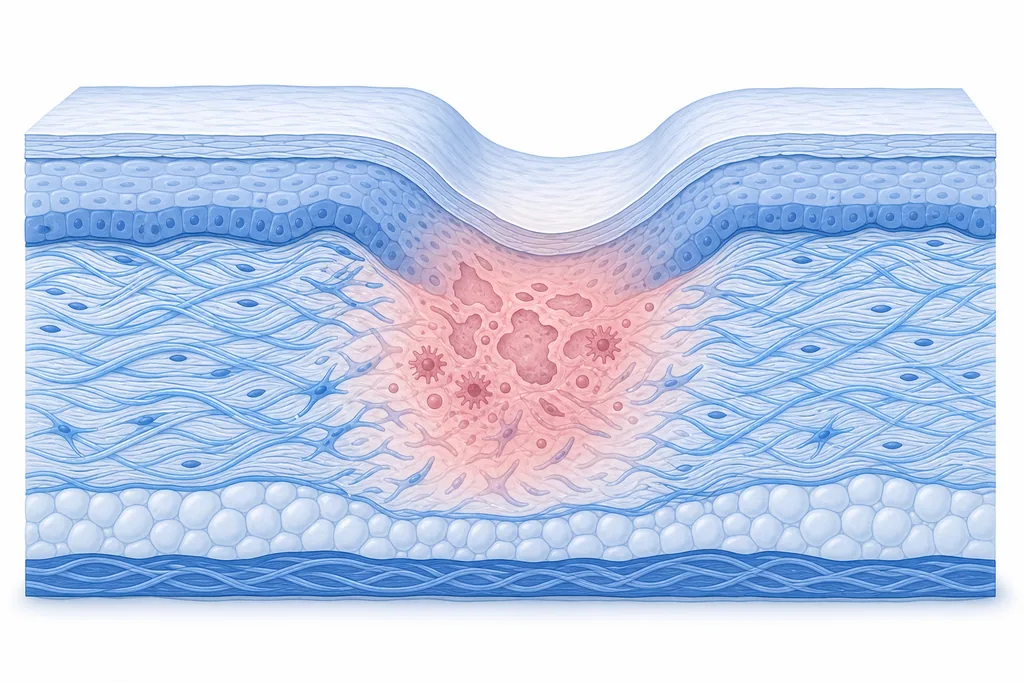 Acne Scar Science
The Complete Science of Acne Scarring
Acne scars are not a surface problem. They are the visible record of how inflammation reshaped the collagen scaffold beneath your skin. Understand that, and every treatment decision starts to make sense.
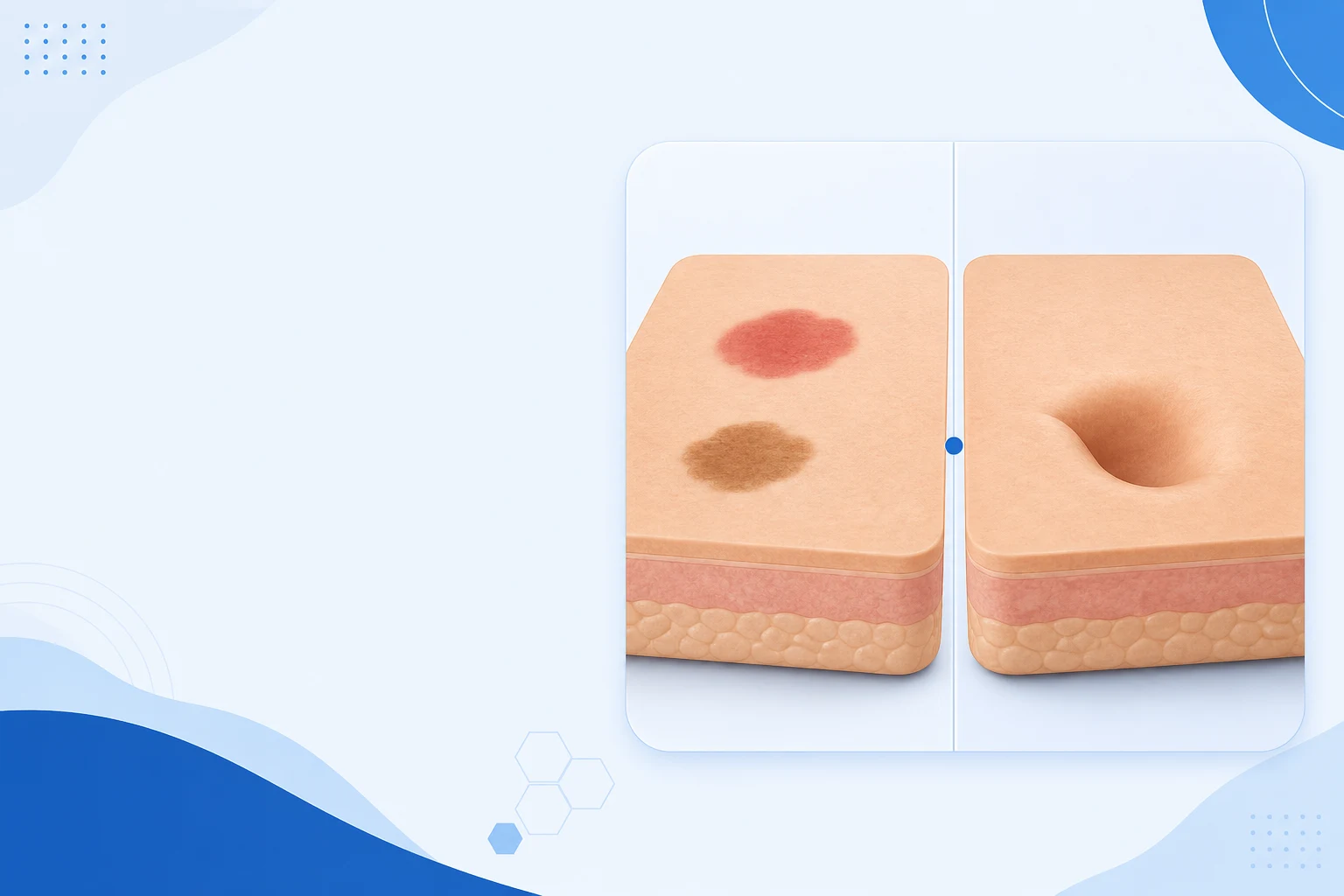 Acne Scars
Acne Marks vs Acne Scars: How to Tell the Difference
The most useful question before treating 'acne scars' is whether they are scars at all. Marks fade; scars are contour. Telling them apart changes everything.