
DrPlus Skin Education · Acne Scars
Acne Marks vs Acne Scars: How to Tell the Difference
The most useful question before treating 'acne scars' is whether they are scars at all. Marks fade; scars are contour. Telling them apart changes everything.
Quick answer
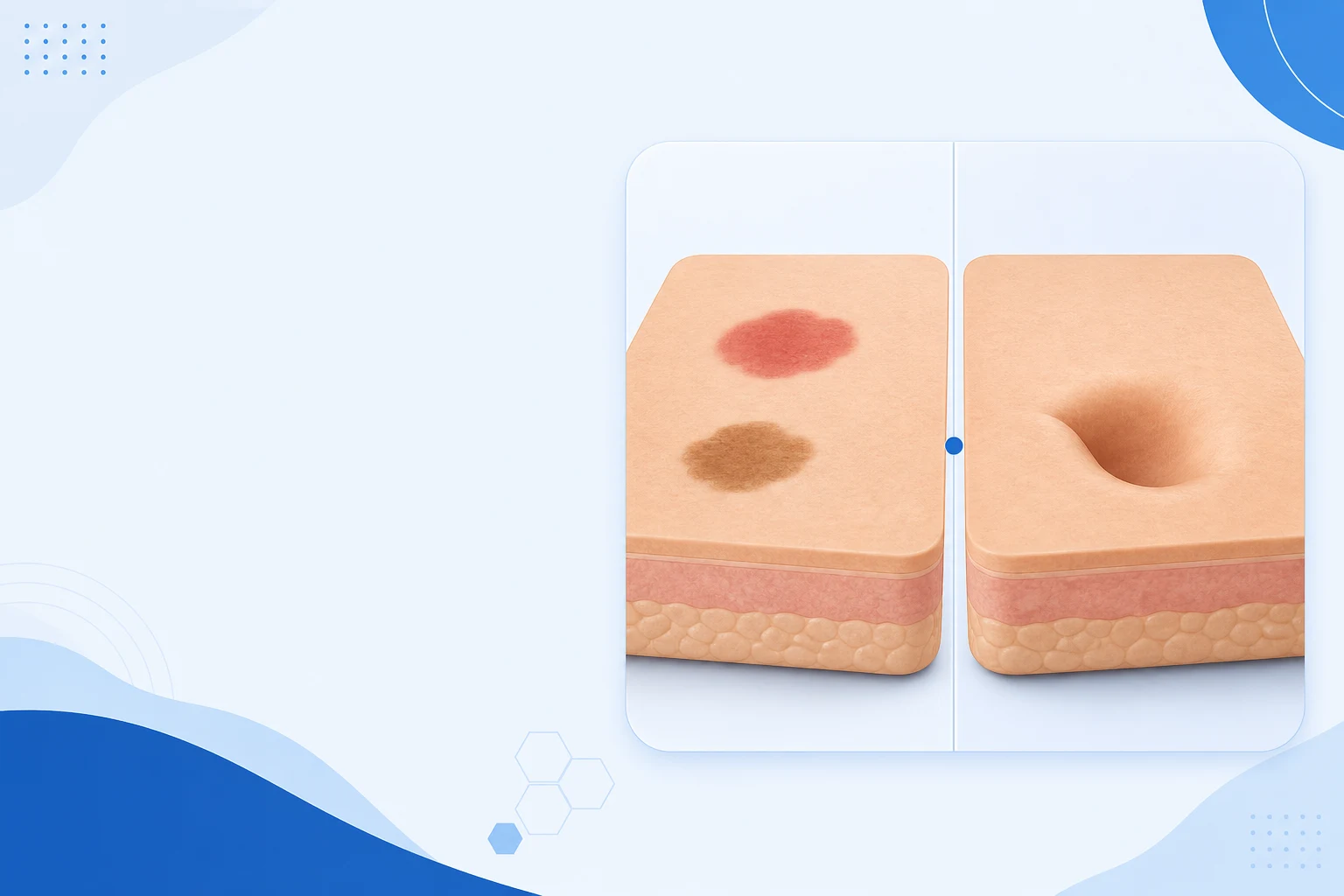
Before spending on 'acne scar' treatment, it is worth asking whether you have scars at all. A great deal of what people call scarring is actually post-acne marks — flat patches of colour left after a breakout. These fade with time and respond to pigment- or redness-focused care. True scars are different: they are changes in the skin's contour, and they do not fade on their own.
Getting this distinction right is the single most cost-saving step in treating acne aftermath. Marks and scars need different treatments, and using a scar treatment on a mark (or vice versa) wastes time and money.
The two kinds of marks
Post-acne marks come in two colours, and the colour tells you the cause. Red or pink marks are post-inflammatory erythema (PIE) — lingering dilated blood vessels from the healing process, more common in lighter skin. Brown marks are post-inflammatory hyperpigmentation (PIH) — excess melanin left behind by inflammation, more common in deeper skin tones.
Both are flat and both fade, but they respond to different care: PIE to redness- and vascular-focused approaches, PIH to pigment-focused care and, above all, sun protection (UV deepens and prolongs brown marks).
— Mechanism
How a dark mark forms after inflammation
Inflammation
Acne, heat or a treatment irritates the skin, releasing signalling molecules.
Melanocytes activate
Those signals switch pigment cells into overdrive, over-producing melanin.
Pigment deposited
Excess melanin settles in the skin as a flat dark mark — and in deeper skin can drop into the dermis, where it fades slowly.
PIH is a pigment response, not a structural scar. It often fades over months — but the right care, and avoiding fresh inflammation, speeds recovery and prevents new marks.
How to tell marks from scars
Two simple tests help at home. First, touch: run a finger over the area with your eyes closed — a mark is smooth and flat, while a scar has a dip or raised texture you can feel. Second, light and stretch: in good light, gently stretch the skin; a flat mark largely disappears, but a scar still casts a shadow because its contour has changed.
If it is flat and fading, treat it as a mark and be patient. If it dents or raises and persists, it is a scar and needs structural treatment. When in doubt, a doctor can tell them apart quickly under proper lighting.
— Comparison
Marks vs scars at a glance
| Feature | Acne marks | Acne scars |
|---|---|---|
| What it is | Flat colour change | Change in skin contour |
| Colour | Red (PIE) or brown (PIH) | Often shadowed, skin-toned |
| Touch | Smooth, flat | Dip or raised texture |
| Over time | Fades | Persists without treatment |
| Treatment | Pigment / redness care, sun protection | Collagen and structural treatments |
What it is
- Acne marks
- Flat colour change
- Acne scars
- Change in skin contour
Colour
- Acne marks
- Red (PIE) or brown (PIH)
- Acne scars
- Often shadowed, skin-toned
Touch
- Acne marks
- Smooth, flat
- Acne scars
- Dip or raised texture
Over time
- Acne marks
- Fades
- Acne scars
- Persists without treatment
Treatment
- Acne marks
- Pigment / redness care, sun protection
- Acne scars
- Collagen and structural treatments
How each is treated
Marks are treated by helping the skin clear excess pigment or calm residual redness — through sun protection, targeted skincare, and treatments such as pico laser for brown marks or vascular-focused approaches for red ones. Crucially, time is on your side: many marks fade substantially over months.
Scars are treated structurally — subcision to release tethers, laser or RF microneedling to rebuild collagen, focal techniques for ice pick scars, and filler to lift select depressions. These do not rely on fading; they change the skin's structure. Mixing the two problems in one plan is common, but only after each has been correctly identified.
When to get it checked
If you cannot tell whether you have marks or scars, or you have a mix of both, a short assessment settles it and points you to the right treatment — often saving you from buying the wrong one. It is also the moment to confirm that any active acne is controlled before treating the aftermath.
At DrPlus in Johor Bahru, a doctor will distinguish marks from scars under proper lighting and recommend the appropriate path for each, with realistic expectations.
— Frequently asked
Common questions
Acne marks are flat colour changes — red (PIE) or brown (PIH) — that fade over time. Acne scars are changes in the skin's contour (depressions or raised tissue) that do not fade on their own. Marks need pigment or redness care; scars need structural treatment.
Use touch and light. A mark is smooth and flat and largely disappears when you stretch the skin in good light; a scar has a dip or raised texture you can feel and still casts a shadow when stretched.
Usually yes, though it can take months. Brown marks (PIH) fade faster with sun protection and pigment-focused care; red marks (PIE) settle as the healing redness resolves.
With sun protection, targeted skincare and treatments such as pico laser that help clear excess pigment. Controlling any active acne first prevents new marks from forming.
Often yes, within one plan — but only after each has been correctly identified, since they need different treatments. A doctor can sequence pigment care and structural scar treatment appropriately.
— Related treatments
Continue with the relevant DrPlus treatment pages
Each page goes deeper into mechanism, suitability and recovery — your final plan is confirmed at consultation.
— Continue reading
Post-Inflammatory Hyperpigmentation After Acne Scar Treatment
The most common disappointment after scar treatment in darker skin is not a scar that didn't improve — it's a new dark mark. Here's why PIH happens, who is at risk, and how it is prevented and managed.
 Acne Scars
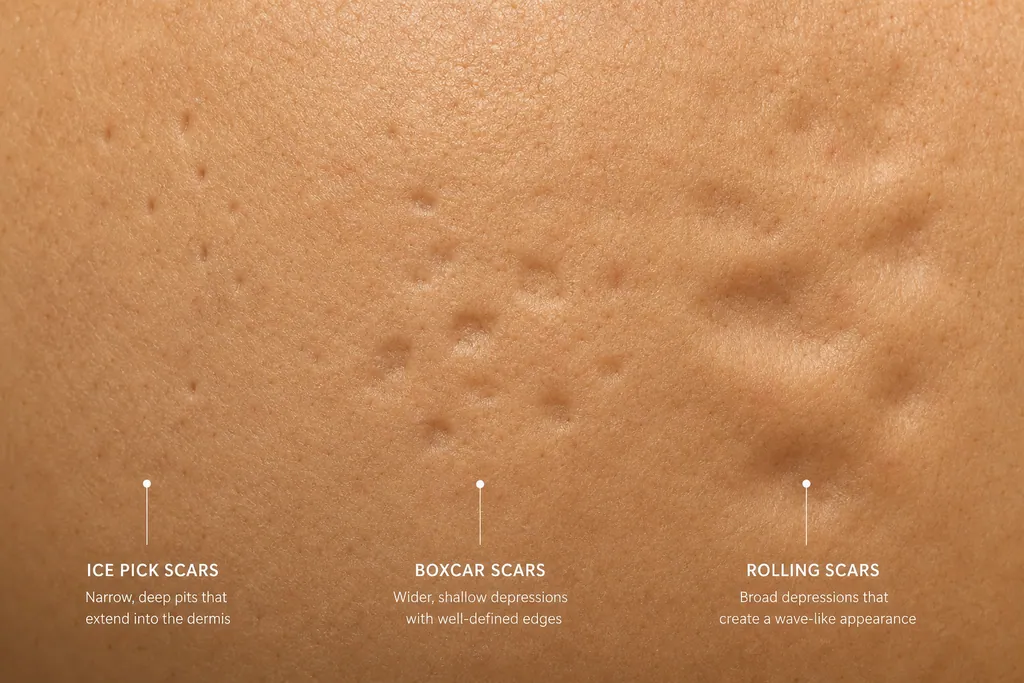
Types of Acne Scars: Ice Pick, Boxcar, Rolling and Pitted Scars
Atrophic acne scars come in distinct shapes — and the shape often determines what treatment may actually help.
 Pigmentation
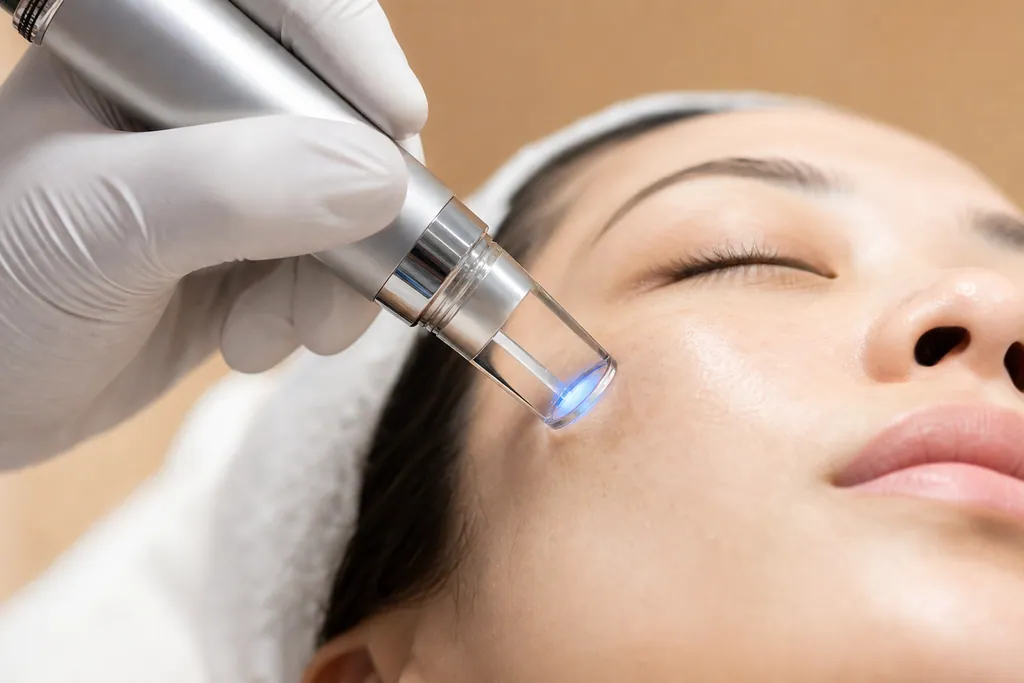
Pico Laser Treatment for Pigmentation: What It Does and Who It May Suit
Pico laser is one of the most discussed pigment treatments — and one of the most over-promised. Here is how to think about it.