
DrPlus Skin Education · Hair Removal
What Determines Laser Hair Removal Cost in Malaysia
Area size, hair colour and density, your skin tone, and the number of sessions — a doctor explains what actually drives the cost of laser hair removal.
How laser hair removal pricing actually works
Clinics price laser hair removal by treatment area (underarms, lower legs, brazilian, face, back) and by session or package. That structure exists for a physiological reason: hair grows in cycles, and the laser only disables follicles that are actively growing at the time of treatment. Clearing an area properly therefore takes a series of sessions spaced several weeks apart — no single visit can catch every follicle.
This is why comparing one session's price between clinics tells you very little. The meaningful number is the cost of the full plan for your area and hair type — and how confident you are that the plan will actually deliver.
The factors that move the number
When a doctor builds your quote, these are the variables at play:
— Comparison
What changes the cost of your plan
| Factor | Why it matters |
|---|---|
| Area size | A full back or full legs takes far more time and energy coverage than underarms or upper lip. |
| Hair colour & thickness | The laser targets pigment in the hair. Coarse dark hair responds best; fine or light hair may need more sessions or respond less. |
| Your skin tone | Darker skin needs wavelengths and settings that protect skin pigment while treating hair — safe, effective treatment here is operator-dependent. |
| Hair density & hormones | Dense growth or hormonally driven hair (e.g. facial hair in PCOS) typically needs more sessions and maintenance. |
| Device & operator | Medical-grade lasers with doctor-supervised settings cost more to run than low-powered IPL — and typically need fewer sessions to reach the same result. |
Area size
- Why it matters
- A full back or full legs takes far more time and energy coverage than underarms or upper lip.
Hair colour & thickness
- Why it matters
- The laser targets pigment in the hair. Coarse dark hair responds best; fine or light hair may need more sessions or respond less.
Your skin tone
- Why it matters
- Darker skin needs wavelengths and settings that protect skin pigment while treating hair — safe, effective treatment here is operator-dependent.
Hair density & hormones
- Why it matters
- Dense growth or hormonally driven hair (e.g. facial hair in PCOS) typically needs more sessions and maintenance.
Device & operator
- Why it matters
- Medical-grade lasers with doctor-supervised settings cost more to run than low-powered IPL — and typically need fewer sessions to reach the same result.
How many sessions to budget for
Most areas need a planned series — commonly six to eight sessions spaced four to eight weeks apart, followed by occasional maintenance for hormonally active areas. Underarms and bikini tend to respond fastest; facial hair and hormonal growth usually need the most patience.
Be wary of any promise of permanent, complete hairlessness in a fixed small number of sessions. Honest framing is significant, long-lasting reduction — with the exact count depending on your hair and skin.
How to compare clinics beyond the price
Ask who performs and supervises the treatment, what device is used and whether it suits your skin tone, what the full plan (not one session) costs, and what happens if your response is slower than average. A clinic that answers those questions directly is telling you something the price list cannot.
At DrPlus, laser hair removal is doctor-supervised, and quotes are given after a quick assessment of your hair and skin — so the number you get reflects your actual plan. WhatsApp us the area you're considering and we'll give you a personalised quote in minutes.
— Frequently asked
Common questions
There is no single price — cost depends on the area treated, your hair colour and density, your skin tone, and how many sessions your plan needs. Clinics price per area and per session or package. For a realistic figure, get a quote for the full plan rather than comparing single-session prices. WhatsApp us the area you're considering for a personalised quote.
Most areas need around six to eight sessions spaced four to eight weeks apart, because the laser only disables follicles in their active growth phase. Hormonally driven hair (like some facial hair) can need more, plus occasional maintenance.
The honest term is long-lasting reduction. Treated follicles are disabled, and most people see a dramatic, durable decrease in hair. Some fine regrowth over time is normal — especially in hormonally active areas — and is usually managed with occasional maintenance sessions.
Yes, with the right wavelength and settings — this is exactly where doctor-supervised treatment matters. Darker skin contains more pigment, so the device and protocol must target hair pigment while protecting skin pigment. Done properly it is safe and effective; done carelessly it risks burns and pigmentation.
IPL uses lower-energy, broad-spectrum light and is generally less effective per session than medical laser, particularly for coarse or deeper hair. A cheaper session that needs many more visits — or never quite clears the area — is not cheaper overall.
— Related treatments
Continue with the relevant DrPlus treatment pages
Each page goes deeper into mechanism, suitability and recovery — your final plan is confirmed at consultation.
— Continue reading
Aesthetic Treatment Costs in Johor Bahru: What Determines Your Quote
Searching for a price list? Here is what actually determines what you pay for aesthetic treatment in Johor Bahru — and how to get an exact, personalised quote.
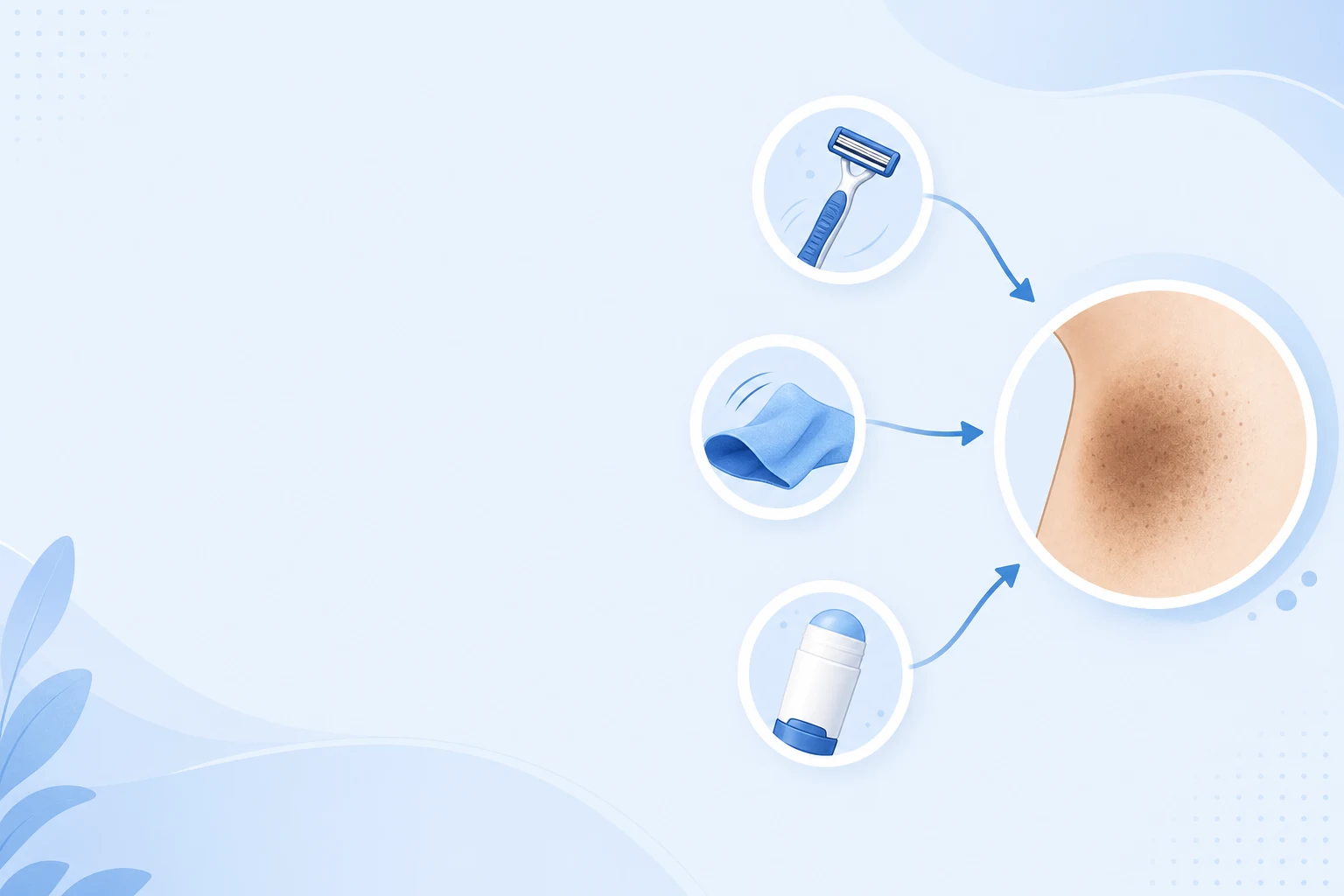 Underarm Whitening
Dark Underarms: Causes and How to Treat Them
Dark underarms are usually a pigment response to irritation, not poor hygiene. Understanding the cause is the first step to lightening them.