
DrPlus Skin Education · RF Microneedling
RF Microneedling for Acne Scars: Mechanism, Benefits and Limitations
RF microneedling rebuilds collagen deep in the dermis while leaving the skin's surface largely intact — a combination that makes it one of the most versatile and pigment-friendly scar treatments.
Quick answer
RF microneedling treats acne scars by combining two ideas: fine needles that create controlled micro-channels, and radiofrequency energy released as heat from the needle tips deep in the dermis. That heat is a precise, controlled injury that wakes up the skin's repair cells and drives them to lay down new collagen — the exact rebuild that depressed scars need.
Its defining feature is that it works at depth while largely sparing the surface. That makes it one of the more pigment-friendly options for the deeper Asian skin tones common in Johor Bahru, and a flexible partner in combination plans. It is powerful for texture and rolling scars, but it is not a surface-resurfacing tool, so it is often used alongside — not instead of — other treatments.
What RF microneedling actually is
Standard microneedling uses fine needles to create thousands of tiny channels in the skin, which triggers a mild healing response. RF microneedling adds a second, more powerful mechanism: once the needles reach the target depth, they emit radiofrequency energy that the surrounding tissue converts into heat. The result is far more collagen stimulation than needling alone, delivered precisely where scars are anchored.
Many devices use insulated needles, meaning only the tips deliver energy. This protects the epidermis (the surface, including its pigment cells) and concentrates the thermal effect in the dermis where it is needed. That design choice is the single biggest reason RF microneedling has become a workhorse treatment for scarring in skin of colour.
— Mechanism
Heat delivered at depth, surface spared
Energy is concentrated at the needle tips deep in the dermis, where collagen is remodeled. Because the surface receives far less injury, the risk of post-inflammatory pigmentation tends to be lower — a key advantage in deeper skin tones.
Key terms in this guide
How it improves a scar, step by step
The sequence is straightforward but powerful. First, the needles penetrate to a set depth in the dermis — adjustable to match scar depth. Second, RF energy is delivered from the tips, creating small, controlled zones of thermal injury in the dermis. Third, the body responds to that injury exactly as it responds to any wound: it activates fibroblasts and begins producing fresh collagen and elastin.
Over the following weeks and months, this new collagen fills in and firms the dermis beneath depressed scars, gradually lifting them toward the surrounding skin level and refining overall texture. Because the surface is largely intact, the visible recovery is comparatively short, even though the deeper remodeling continues for months.
— Where treatments reach
Skin layers, in plain English
- Epidermis: Outer protective layer — pigmentation marks and surface texture live here.
- Dermis: Collagen and elastin layer — where atrophic scars are anchored and where most regenerative treatments work.
- Subcutis: Deeper fat / connective layer — beyond the reach of most aesthetic treatments.
A simplified illustration — actual skin layers are more nuanced. Your doctor will explain what is relevant to your case at consultation.
Which scars RF microneedling suits
RF microneedling is most valuable for rolling scars and boxcar scars and for general textural irregularity, where the goal is to rebuild dermal collagen across an area. It is frequently combined with subcision: subcision releases the fibrous bands tethering a rolling scar, and RF microneedling then stimulates collagen to support the freed area — the two complement each other neatly.
It is less effective as a stand-alone treatment for deep, narrow ice pick scars, whose geometry resists area-based dermal treatments, and it does not resurface the surface the way ablative CO₂ laser does. Recognising these boundaries is what keeps a plan realistic — RF microneedling is a strong dermal-remodeling tool, not a universal eraser.
— Comparison
RF microneedling by scar type
| Scar type | Fit | Notes |
|---|---|---|
| Rolling | Strong | Excellent for dermal rebuild; pairs with subcision for tethering. |
| Boxcar | Good | Builds collagen to soften shallow-to-moderate depressions. |
| General texture | Good | Even dermal stimulation refines overall smoothness. |
| Ice pick | Limited | Narrow deep channels need focal techniques such as TCA CROSS. |
Rolling
- Fit
- Strong
- Notes
- Excellent for dermal rebuild; pairs with subcision for tethering.
Boxcar
- Fit
- Good
- Notes
- Builds collagen to soften shallow-to-moderate depressions.
General texture
- Fit
- Good
- Notes
- Even dermal stimulation refines overall smoothness.
Ice pick
- Fit
- Limited
- Notes
- Narrow deep channels need focal techniques such as TCA CROSS.
Why it is a favourite for deeper skin tones
For Fitzpatrick III–V skin — common across Malaysia — the main risk of any energy-based treatment is post-inflammatory hyperpigmentation: dark marks triggered when reactive pigment cells are provoked by surface injury or heat. Because RF microneedling concentrates its energy in the dermis and spares much of the epidermis, it disturbs those surface pigment cells far less than fully ablative resurfacing.
This does not make it risk-free — any treatment can provoke pigment if pushed too hard or aftercare is neglected — but it does give it a more forgiving safety profile in deeper skin. It is one reason a careful clinic may lead with RF microneedling, or weight it heavily in a combination plan, for patients who pigment easily.
What recovery looks like
Compared with ablative laser, downtime is relatively light. Expect redness resembling mild sunburn, some swelling and small needle marks for a few days, with most people socially presentable within a few days depending on the settings used. The deeper collagen remodeling, however, is invisible and ongoing for weeks to months afterward.
As with any treatment that heats the skin, diligent sun protection afterward is essential — particularly under strong Malaysian sun — both to protect the result and to keep pigmentation risk low.
— Healing timeline
After an RF microneedling session
Days 0–3
Redness & micro-marks
Skin looks flushed with tiny needle points and some swelling — the surface is intact, so this settles relatively quickly.
Days 3–14
Surface recovery
Redness fades and the skin looks normal again, even though the dermal rebuild is just getting started.
Weeks 4–12+
Collagen remodeling
Fibroblasts lay down and organise new collagen, gradually firming and lifting scars. This is where the real change happens.
A general guide only. Individual healing speed varies with skin type, scar depth, aftercare and the treatment used.
Honest limitations and risks
RF microneedling will not remove scars completely, and it is not the right primary tool for every scar — deep ice pick scars and heavy surface irregularity are better addressed with focal techniques or resurfacing. Results are gradual and cumulative, so a single session rarely satisfies; multiple sessions spaced over months are the norm.
Risks are generally modest when performed by a trained clinician: temporary redness, swelling and small marks, with a low but real risk of pigmentation (higher if aftercare or sun protection is neglected) and, rarely, infection or marking if hygiene or technique is poor. This is a medical procedure and benefits from proper assessment and aftercare guidance.
When to consider a medical consultation
RF microneedling rewards good matching: it is excellent for some scars and merely supportive for others. A consultation determines whether your scar mix suits it, whether it should be combined with subcision or other treatments, and how many sessions are realistic for your skin.
At DrPlus in Johor Bahru, this assessment is doctor-led and weighs your skin tone and pigmentation tendency carefully — with honest expectations and no pressure to proceed on the day.
Summary
RF microneedling rebuilds collagen where acne scars are anchored — the dermis — by combining fine needles with controlled radiofrequency heat, all while largely sparing the surface. That surface-sparing quality gives it a relatively forgiving safety profile, which is why it is so widely used for deeper skin tones and as a backbone of combination plans for rolling and boxcar scars.
It is not a resurfacing tool and not the answer for deep ice pick scars, and like every credible scar treatment it improves rather than removes scars over a planned series. Matched to the right scars and skin, it is one of the most versatile tools available — which a proper assessment can confirm for your case.
— Frequently asked
Common questions
Fine needles reach the dermis and release radiofrequency energy as controlled heat, which activates fibroblasts to produce new collagen. Over months, that collagen firms and lifts depressed scars while the skin surface is largely spared.
Neither is universally better — they do different jobs. RF microneedling remodels the dermis with less surface injury (often safer for deeper skin), while CO₂ laser resurfaces the surface more aggressively. They are frequently combined rather than ranked.
It is generally considered one of the more pigment-friendly energy treatments because it spares much of the epidermis, reducing the chance of post-inflammatory hyperpigmentation. Careful settings, technique and aftercare still matter.
Usually multiple sessions spaced over months, because collagen remodeling is gradual. The exact number depends on scar type and severity and whether it is combined with other treatments — your doctor will give a realistic range.
Typically a few days of redness, mild swelling and small needle marks, with the surface intact so recovery is comparatively short. Strict sun protection afterward is important to protect the result and limit pigmentation risk.
It is not ideal for deep, narrow ice pick scars, whose geometry resists area-based dermal treatments. Those usually need focal techniques such as TCA CROSS, sometimes alongside RF microneedling for the surrounding skin.
— Related treatments
Continue with the relevant DrPlus treatment pages
Each page goes deeper into mechanism, suitability and recovery — your final plan is confirmed at consultation.
Primary money page
RF Microneedling at DrPlus
Doctor-led RF microneedling — assessment, suitable depth and settings, and aftercare.
RF microneedling for acne scars in Johor BahruSupporting
Acne Scar Treatment Hub
The category hub where RF microneedling is sequenced within a full scar plan.
acne scar treatment in Johor BahruSupporting
Subcision
Often paired with RF microneedling — release the tether, then rebuild collagen.
subcision for rolling scarsSupporting
CO₂ Laser
A resurfacing partner when surface texture needs more than dermal remodeling.
fractional CO₂ laser for acne scars— Continue reading
 Acne Scars
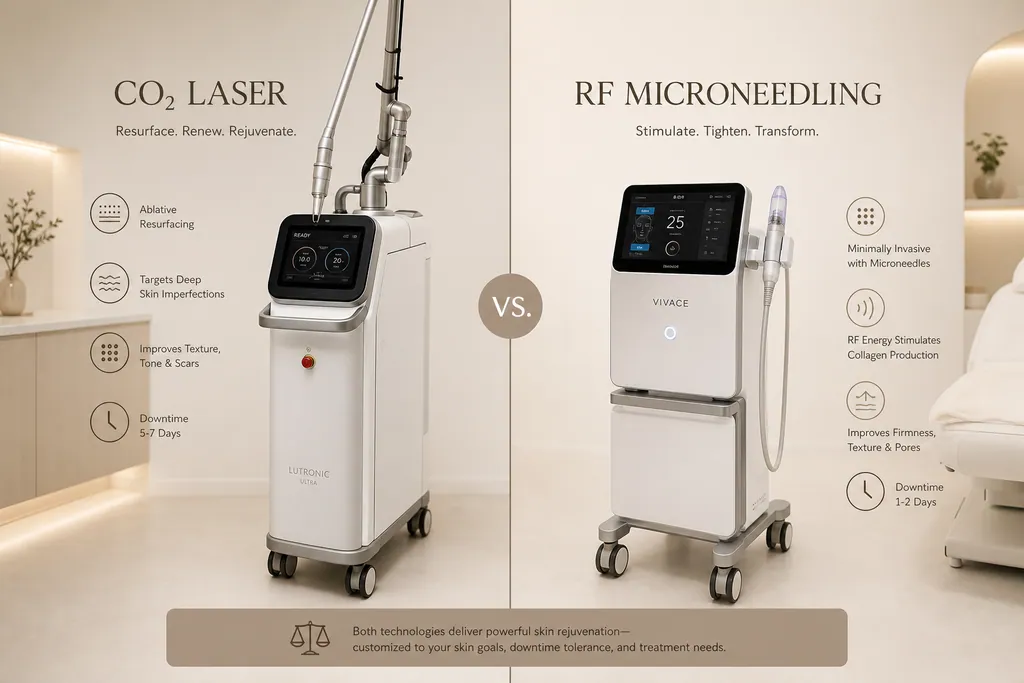
CO₂ Laser vs RF Microneedling for Acne Scars
Two of the most common acne scar treatments — and they work in genuinely different ways. Here is how to think about them.
Why RF Microneedling Is Popular for Asian Skin Types
For deeper skin tones, the biggest treatment risk is not the scar — it is the dark mark a treatment can leave behind. Understanding that risk explains why RF microneedling has become a go-to for Asian skin.
 Acne Scar Science
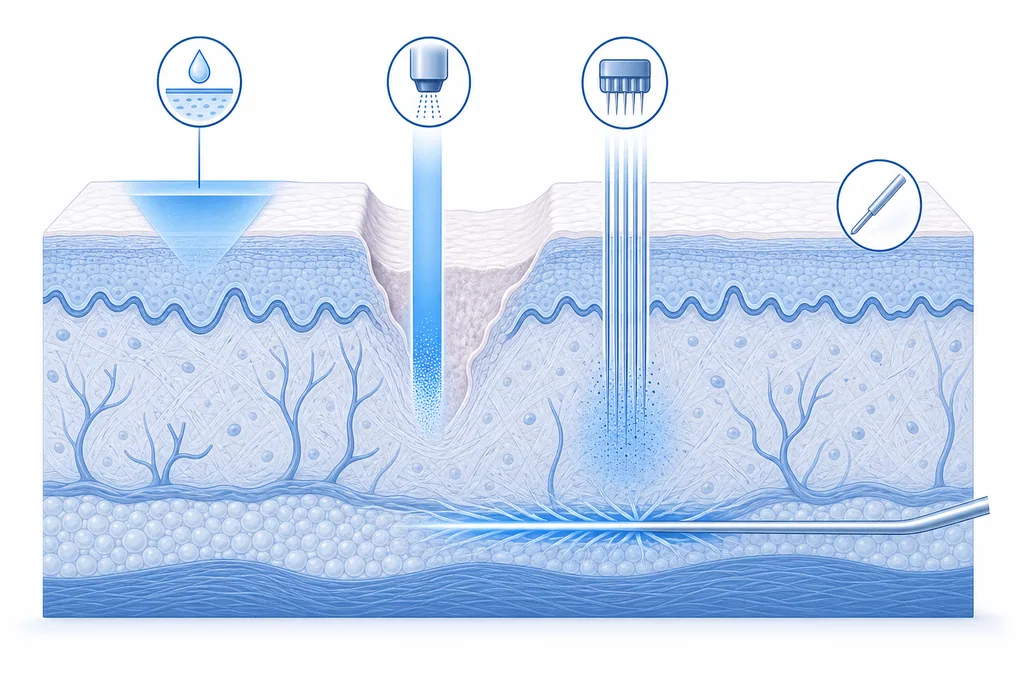
Acne Scar Treatment Comparison: CO₂ Laser, RF Microneedling, Subcision & Peels
There is no single 'best' acne scar treatment — only the right tool for a specific scar at a specific depth. This guide compares the four main options on the dimensions that actually decide outcomes.