
DrPlus Skin Education · Asian Skin & PIH
Why RF Microneedling Is Popular for Asian Skin Types
For deeper skin tones, the biggest treatment risk is not the scar — it is the dark mark a treatment can leave behind. Understanding that risk explains why RF microneedling has become a go-to for Asian skin.
Quick answer
For deeper skin tones — the Fitzpatrick III–V range common across Malaysia and much of Asia — the dominant concern with any energy-based treatment is not whether it can improve the scar, but whether it will leave a dark mark behind. Higher-melanin skin has more reactive pigment cells, so heat or surface injury can switch them into overdrive and produce post-inflammatory hyperpigmentation (PIH).
RF microneedling earns its popularity here because of where it puts its energy. By delivering radiofrequency heat from insulated needle tips deep in the dermis while largely sparing the surface, it disturbs the pigment-rich epidermis far less than fully ablative resurfacing. Less surface provocation generally means a lower PIH risk — a trade-off that matters enormously in deeper skin.
Fitzpatrick skin types, briefly
The Fitzpatrick scale grades skin by how it responds to sun, from type I (very fair, always burns) to type VI (deeply pigmented, rarely burns). Much of the Malaysian population sits in the III–V range: skin with substantial melanin that tans readily and is well protected against sunburn — but is also more prone to pigmentary responses after inflammation or injury.
This is not a flaw; it is simply a different biology that treatment must respect. The same melanocytes that give deeper skin its beautiful, photoprotective tone are quick to react to insult. Good aesthetic care in this context is built around not provoking them unnecessarily.
— Comparison
Why skin type changes the plan
| Consideration | Lighter skin (I–II) | Deeper skin (III–V) |
|---|---|---|
| Sunburn tendency | Higher | Lower |
| Pigmentation after injury | Lower | Higher — main risk to manage |
| Preferred energy approach | Wider latitude | Gentler, surface-sparing, staged |
Sunburn tendency
- Lighter skin (I–II)
- Higher
- Deeper skin (III–V)
- Lower
Pigmentation after injury
- Lighter skin (I–II)
- Lower
- Deeper skin (III–V)
- Higher — main risk to manage
Preferred energy approach
- Lighter skin (I–II)
- Wider latitude
- Deeper skin (III–V)
- Gentler, surface-sparing, staged
What post-inflammatory hyperpigmentation is
Post-inflammatory hyperpigmentation is a flat darkening of the skin that appears after inflammation — whether from acne itself, from picking, or from an over-aggressive treatment. The chain is simple: inflammation releases signalling molecules, those signals tell melanocytes to over-produce melanin, and the excess pigment settles in the skin as a dark mark. In deeper skin, some of that pigment can drop into the dermis, where it fades only slowly.
Crucially, PIH is a pigment problem, not a structural scar — but it can be just as distressing and longer-lasting than the original spot. For anyone treating acne scars in deeper skin, avoiding new PIH is a primary goal, not an afterthought.
— Mechanism
How a dark mark forms after inflammation
Inflammation
Acne, heat or a treatment irritates the skin, releasing signalling molecules.
Melanocytes activate
Those signals switch pigment cells into overdrive, over-producing melanin.
Pigment deposited
Excess melanin settles in the skin as a flat dark mark — and in deeper skin can drop into the dermis, where it fades slowly.
PIH is a pigment response, not a structural scar. It often fades over months — but the right care, and avoiding fresh inflammation, speeds recovery and prevents new marks.
Epidermal preservation: the key advantage
The melanocytes responsible for PIH live mainly at the base of the epidermis — the surface layer. Treatments that remove or heavily heat that surface, like fully ablative laser, inevitably disturb those cells. RF microneedling takes a different route: insulated needles pass through the epidermis and release their energy from the tips, concentrating the thermal effect down in the dermis where scars are anchored.
Because the epidermis is largely left intact, the pigment cells are far less provoked. This is the central reason RF microneedling is described as 'epidermis-sparing' and why it is so often chosen as the workhorse for scar and texture treatment in skin of colour — it delivers meaningful dermal remodeling while keeping the main PIH trigger to a minimum.
— Mechanism
Heat delivered at depth, surface spared
Energy is concentrated at the needle tips deep in the dermis, where collagen is remodeled. Because the surface receives far less injury, the risk of post-inflammatory pigmentation tends to be lower — a key advantage in deeper skin tones.
Why controlled dermal heating helps
It is not only where the energy goes, but how controlled it is. RF microneedling delivers heat in small, defined zones at set depths, which the clinician can tune to the patient's skin and scars. Controlled, contained injury produces a clean collagen-remodeling response without the broad surface trauma that tends to drive pigmentation.
This tunability is part of the safety story in deeper skin: settings can be kept conservative, sessions spaced sensibly, and response reviewed before pushing further. The aim is steady, cumulative improvement with the lowest reasonable pigmentation risk — rather than dramatic single-session change that gambles with PIH.
Lower risk is not no risk
It is important to be honest: RF microneedling is more forgiving in deeper skin, but it is not immune to causing pigmentation. Settings that are too aggressive, poor technique, or neglected aftercare can still provoke marks. The advantage is a wider safety margin, not a guarantee.
That margin is preserved by good practice on both sides. The clinician chooses appropriate depth and energy and reviews response; the patient follows aftercare and — critically in Malaysia's strong sun — protects the skin from UV afterward. Treat 'lower risk' as a reason to be careful and consistent, not careless.
How it fits a scar plan for deeper skin
In practice, RF microneedling is often the backbone of a scar plan in skin of colour: it remodels dermal collagen for rolling and boxcar scars and general texture, and it pairs naturally with subcision for tethered scars. Ablative laser may still be used selectively, but with conservative settings and a clear understanding of the higher pigmentation stakes.
The right mix is individual. Someone who pigments easily may have RF microneedling weighted more heavily and laser used sparingly or not at all; someone with more resilient skin may tolerate a broader range. This is precisely the kind of judgement an in-person assessment exists to make.
— Pathway
A typical deeper-skin scar plan
- 1
Assess skin type & PIH tendency
Grade the skin, review how it has pigmented before, and settle any active acne first.
- 2
Release if needed
Use subcision for tethered rolling scars so the surface can lift.
- 3
Remodel with RF microneedling
Build dermal collagen with surface-sparing, tunable energy across a staged series.
- 4
Refine cautiously
Add focal techniques or conservative resurfacing where needed, always weighing PIH risk.
- 1
Assess skin type & PIH tendency
Grade the skin, review how it has pigmented before, and settle any active acne first.
- 2
Release if needed
Use subcision for tethered rolling scars so the surface can lift.
- 3
Remodel with RF microneedling
Build dermal collagen with surface-sparing, tunable energy across a staged series.
- 4
Refine cautiously
Add focal techniques or conservative resurfacing where needed, always weighing PIH risk.
When to consider a medical consultation
If you have deeper skin and have previously developed dark marks after acne or treatments, that history is exactly what should shape your plan — and it is best assessed in person. A consultation grades your skin type, reviews your pigmentation tendency, and explains how surface-sparing treatments like RF microneedling would fit.
At DrPlus in Johor Bahru, treating skin of colour is everyday work, and plans are built around protecting your tone as much as improving your scars — with honest expectations and no pressure to proceed on the day.
Summary
In deeper Asian skin, the defining treatment challenge is post-inflammatory hyperpigmentation: reactive melanocytes in the epidermis can turn a treatment into a new dark mark. RF microneedling fits this skin so well because it delivers controlled heat into the dermis from insulated needle tips while largely sparing that pigment-rich surface — meaningful collagen remodeling with a smaller PIH trigger.
It is more forgiving, not risk-free, so conservative settings, good technique and rigorous sun protection still matter. Used as the backbone of a staged, individualised plan, it lets people with skin of colour treat scars while protecting the tone that makes their skin what it is — a balance a proper assessment is designed to strike.
— Frequently asked
Common questions
Because it heats the dermis from insulated needle tips while largely sparing the pigment-rich surface, it tends to carry a lower risk of post-inflammatory hyperpigmentation than fully ablative laser — a key advantage in deeper, more pigment-reactive skin.
PIH is flat darkening of the skin after inflammation, when pigment cells over-produce melanin. It is a pigment issue rather than a structural scar, but in deeper skin it can be stubborn and long-lasting, so avoiding it is a priority.
No. It is more forgiving than ablative resurfacing, but aggressive settings, poor technique or neglected aftercare can still cause marks. The benefit is a wider safety margin, preserved by conservative treatment and sun protection.
Often yes, but with conservative settings and a clear understanding of the higher pigmentation risk. Many plans for deeper skin weight RF microneedling more heavily and use laser selectively, decided individually at assessment.
Much of the population sits around Fitzpatrick III–V — skin with substantial melanin that tans readily and burns less, but is more prone to pigmentary responses after inflammation or injury, which shapes treatment choices.
Very. UV exposure after treatment is a major trigger for post-inflammatory hyperpigmentation in deeper skin. Diligent broad-spectrum sun protection afterward is essential to protect both your result and your tone.
— Related treatments
Continue with the relevant DrPlus treatment pages
Each page goes deeper into mechanism, suitability and recovery — your final plan is confirmed at consultation.
Primary money page
RF Microneedling at DrPlus
Doctor-led RF microneedling with settings and aftercare tailored to deeper skin tones.
RF microneedling for acne scars in Johor BahruSupporting
Acne Scar Treatment Hub
The category hub where pigment-safe scar plans are built for skin of colour.
acne scar treatment in Johor BahruSupporting
Pigmentation Treatment
For existing dark marks and post-inflammatory pigmentation that need addressing.
pigmentation treatment in Johor BahruSupporting
Subcision
A pigment-friendly partner that releases tethered scars before collagen work.
subcision for rolling scars— Continue reading
RF Microneedling for Acne Scars: Mechanism, Benefits and Limitations
RF microneedling rebuilds collagen deep in the dermis while leaving the skin's surface largely intact — a combination that makes it one of the most versatile and pigment-friendly scar treatments.
Post-Inflammatory Hyperpigmentation After Acne Scar Treatment
The most common disappointment after scar treatment in darker skin is not a scar that didn't improve — it's a new dark mark. Here's why PIH happens, who is at risk, and how it is prevented and managed.
 Acne Scars
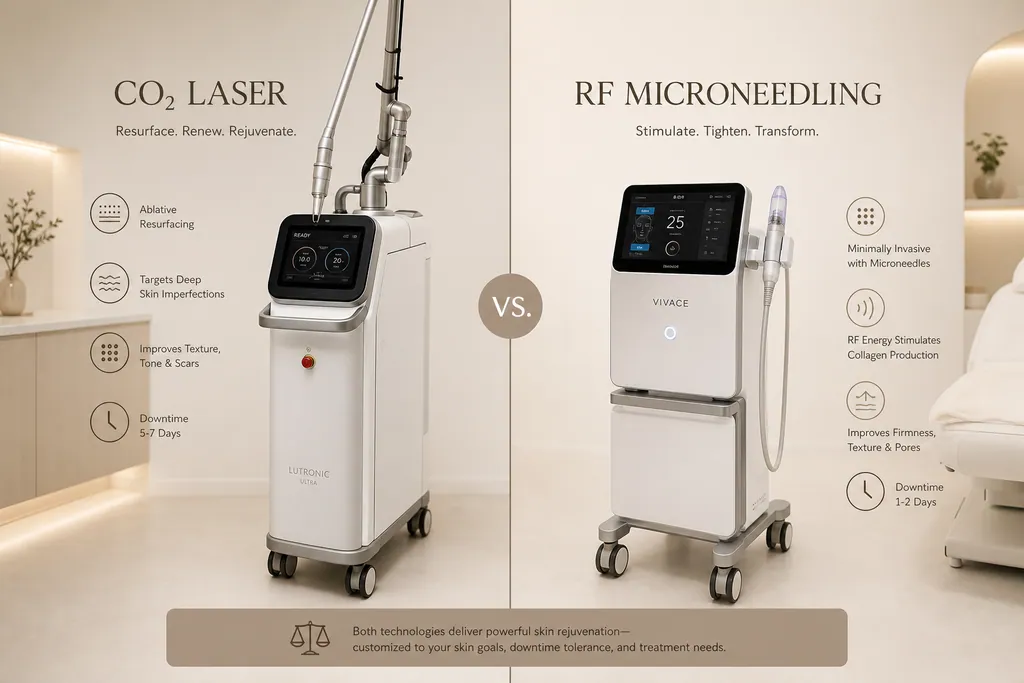
CO₂ Laser vs RF Microneedling for Acne Scars
Two of the most common acne scar treatments — and they work in genuinely different ways. Here is how to think about them.