
DrPlus Skin Education · Subcision
Subcision Healing and Recovery: A Day-by-Day Guide
Swelling and a bruise are not complications after subcision — they are part of how the treatment works. Here is the honest day-by-day recovery, and the few signs that do need a doctor.
Immediately after subcision: why swelling is the plan working
Subcision releases the fibrous bands tethering a rolling scar by sweeping a needle or blunt cannula beneath it under local anaesthetic. When a band is cut, a small amount of bleeding into the released space is not just expected — it is useful. The pocket of blood acts as a natural spacer, physically holding the freed skin away from the tissue below while healing begins, and the clot becomes scaffolding for the new collagen that will support the lifted skin.
So when you leave the clinic swollen, with firm-feeling areas under the treated scars and a bruise starting to bloom, nothing has gone wrong. The anaesthetic wears off over a few hours, after which most patients describe soreness and tightness rather than sharp pain. Your doctor will tell you what degree of swelling to expect for the number of scars treated.
The healing timeline, day by day
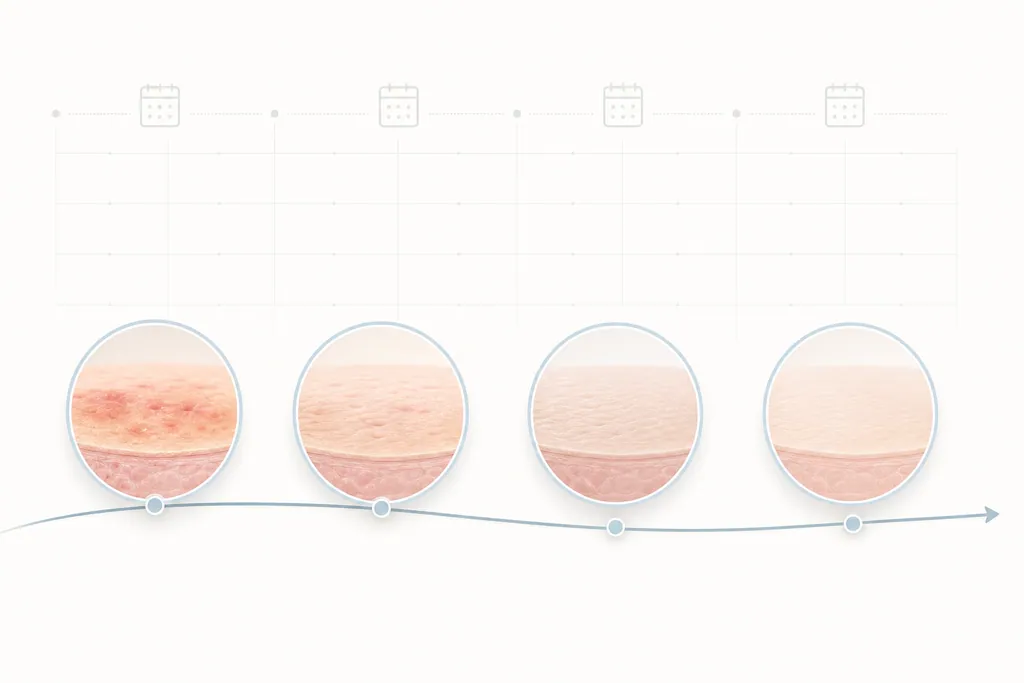
Recovery from subcision is front-loaded: the first two or three days look the worst, and improvement from there is steady. The typical course of bruising and swelling runs three to ten days, with the exact span depending on how many scars were treated, the instrument used (cannula work tends to bruise less than needle work), and how easily you bruise generally.
Underneath the settling surface, the slower and more important process is collagen remodelling in the released space — the biology that converts a mechanical release into a lasting lift. That runs on a timescale of months, not days, which is why sessions are spaced roughly four to eight weeks apart.
— Healing timeline
A typical subcision recovery
Day 0–2
Swelling and bruise onset
The treated areas are puffy, tender and firm to the touch. Bruising darkens over the first 48 hours. Soreness is usually manageable without strong painkillers.
Week 1
Bruise fades
Swelling reduces noticeably and the bruise shifts from purple towards yellow-green. Most patients are comfortable in public, with or without light concealer, by the end of this week.
Week 2–4
Settling
Residual firmness under the treated scars gradually softens. The skin's true post-release level starts to emerge as the last swelling clears.
Month 1–3
Collagen builds
New collagen matures in the released space and supports the lifted skin. This is when the durable result develops — and when your doctor reviews whether a further session is worthwhile.
A general guide only. Individual healing speed varies with skin type, scar depth, aftercare and the treatment used.
Aftercare: the short list that matters
Subcision aftercare is deliberately simple. Keep the area clean with a gentle cleanser from the day after treatment. Avoid pressing, rubbing or massaging the treated scars in the first week — the spacer under the skin is doing structural work and does not need interference. Sleep slightly elevated for the first night or two if swelling bothers you, and use a clean cold compress near (not hard against) the area for comfort in the first day.
Sun protection matters more than most patients expect: bruised, healing skin is prone to post-inflammatory hyperpigmentation, particularly in Asian skin tones, so daily sunscreen over the treated area once the entry points have sealed is part of protecting the result. Skip strenuous exercise, saunas and alcohol for the first couple of days, as all three can worsen swelling and bruising.
Your doctor will also time any follow-on treatment around healing — resurfacing treatments such as RF microneedling or fractional CO₂ are typically scheduled around four to six weeks after subcision, once the surface has fully settled.
When healing needs a doctor's eyes
Genuine complications after doctor-performed subcision are uncommon, but they exist, and the whole point of a recovery guide is knowing the difference between an ugly-but-normal bruise and a problem. Normal healing gets a little better every day after day two or three. Anything trending in the other direction deserves a message to your clinic — a photo over WhatsApp is usually enough for a first assessment.
— Frequently asked
Common questions
The visible part — swelling and bruising — typically settles over three to ten days, with most patients socially comfortable within a week. The invisible part matters more: collagen builds in the released space over one to three months, which is when the actual result develops. Most people return to work and normal routines within a day or two.
Swelling, firmness under the treated scars and a developing bruise — all expected. The small pocket of blood under the released skin is a deliberate spacer that stops the cut bands reattaching, so early puffiness means the mechanism is working. Soreness and tightness follow as the local anaesthetic wears off, usually manageable without strong painkillers.
Keep the area clean, avoid pressing or massaging the treated scars for the first week, use daily sunscreen once the entry points have sealed, and skip strenuous exercise, saunas and alcohol for a couple of days. Your clinic will give you personalised instructions and remains contactable if anything looks unusual.
Early flattening shows as the bruise and swelling clear over one to two weeks, but part of that is temporary puffiness. The durable improvement builds as new collagen matures over roughly one to three months — so results are fairly judged at the two-to-three-month review, not in week one.
Yes — bruising for several days is part of the expected course, because controlled bleeding under the released scar is how the spacer forms. Cannula-based subcision tends to bruise less than needle work. What is not normal is redness that spreads, pain that worsens after day three, or fever — those warrant contacting your doctor.
Usually yes after the first day or two, once the tiny entry points have sealed — light concealer over the fading bruise is how most patients manage the social downtime. Apply and remove it gently, without massaging the treated areas, and follow your own doctor's timing advice.
— Related treatments
Continue with the relevant DrPlus treatment pages
Each page goes deeper into mechanism, suitability and recovery — your final plan is confirmed at consultation.
Primary money page
Subcision Treatment at DrPlus
How the procedure is performed at DrPlus, with recovery guidance personalised at consultation.
doctor-performed subcision for acne scarsSupporting
Acne Scar Treatment
Where subcision sits within a broader doctor-led scar plan.
the full acne scar treatment pathwaySupporting
Acne Scar Treatment in Singapore
Subcision and the wider scar pathway at Tanjong Pagar, East Coast and Novena.
acne scar treatment at our Singapore clinicsSupporting
Fractional CO₂ Laser
Surface remodelling typically scheduled four to six weeks after release.
fractional CO₂ resurfacing after subcisionSupporting
Book a Consultation
Recovery expectations mapped to your scar count and schedule.
ask a doctor about recovery planning— Continue reading
Subcision Before and After: What Results Really Look Like
Depressions sit flatter, shadows soften under angled light — but the change is gradual and individual. A doctor describes realistic subcision results in words, not photos.
 Acne Scars
Acne Scar Treatment Recovery: What to Expect Week by Week
Recovery worries put many people off treatment. Here is an honest, practical timeline for what healing usually looks like.