
DrPlus Men's Wellness · Erectile Health
What Causes Erectile Dysfunction? Common Factors
ED is rarely about one thing. Understanding the real causes — and why it can signal wider health issues — is the first step to treating it.
Quick answer
An erection is a vascular event: it depends on healthy blood flow into the penis, intact nerves to trigger it, adequate hormones, and a relaxed psychological state. Erectile dysfunction (ED) happens when something interferes with that chain — and often more than one factor is involved at once.
This is why ED is rarely 'just in your head' or 'just ageing'. It is frequently a mix of physical and psychological contributors, and because blood flow is central, it can be an early signal of wider health issues worth checking.
How erections work
When aroused, nerve signals tell the blood vessels in the penis to relax and widen, letting blood flow in and create an erection. Anything that impairs this — narrowed or stiff vessels, blunted nerve signals, low hormones, or anxiety overriding arousal — can cause difficulty.
Seeing it as a blood-flow system explains both the causes and the treatments, and why vascular health matters so much.
— How it works
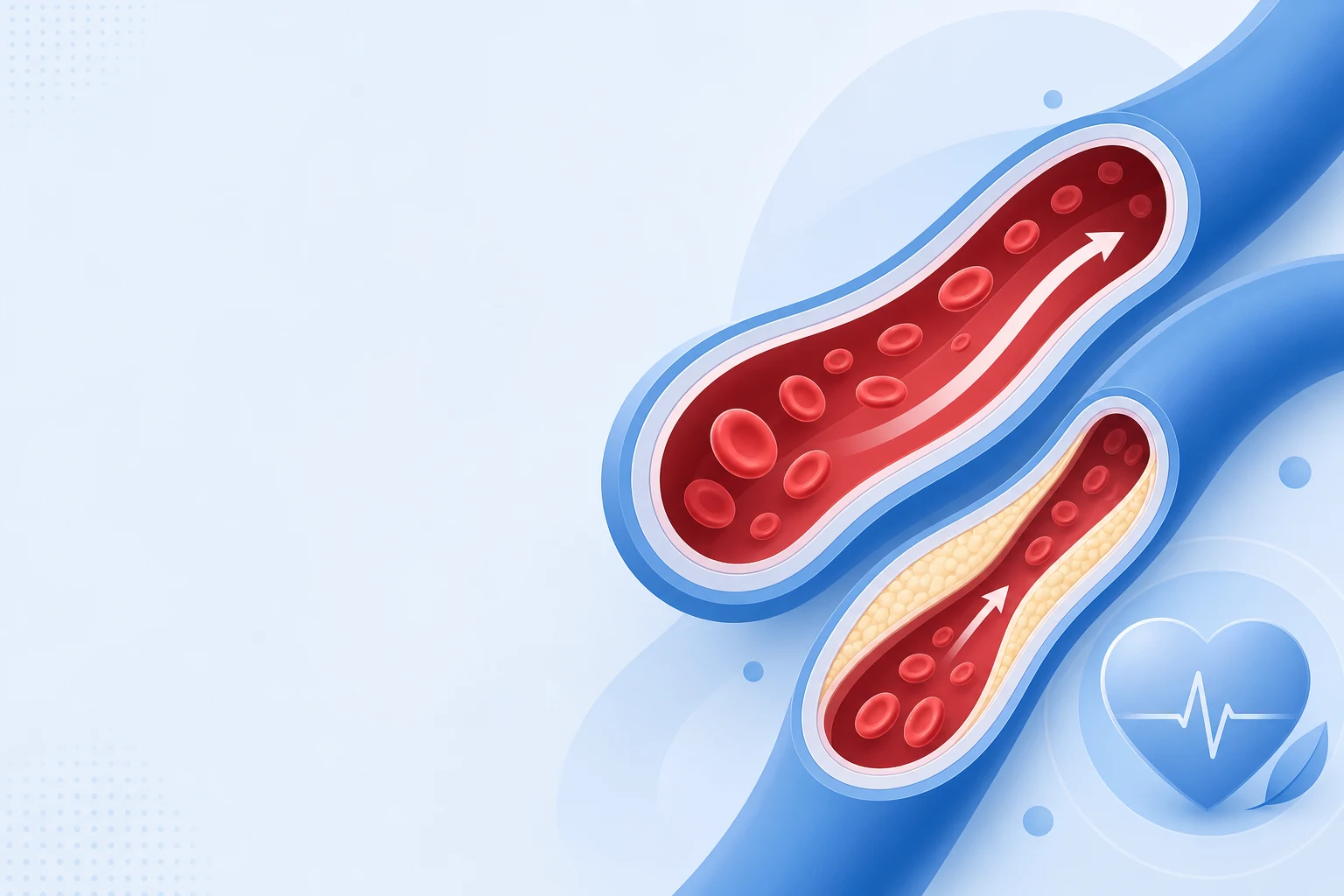
Erections depend on healthy blood flow
Healthy blood flow
Open, relaxed vessels let blood flow freely — the basis of normal function.
Restricted blood flow
Narrowed or stiff vessels reduce flow — a common physical factor in ED.
Because blood flow is central, ED is often linked to vascular health — which is why it can be an early signal of wider cardiovascular or metabolic considerations worth checking with a doctor.
The common causes
Physically, the big contributors are vascular disease (the same processes behind heart disease), diabetes (which affects vessels and nerves), hormonal issues such as low testosterone, certain medications, and neurological conditions. Lifestyle factors — smoking, excess alcohol, poor sleep, inactivity and obesity — feed directly into these.
Psychologically, stress, anxiety (including performance anxiety), depression and relationship strain are common and often interact with the physical picture. Frequently it is a combination.
Mechanism
Vascular & metabolic
Narrowed vessels, high blood pressure and diabetes reduce blood flow.
Mechanism
Hormonal & medication
Low testosterone and certain medicines can impair function.
Mechanism
Psychological & lifestyle
Stress, anxiety, sleep, smoking and alcohol all contribute.
ED as an early warning sign
Because the penile arteries are small, they can show the effects of vascular disease earlier than the larger arteries of the heart. This means new ED can sometimes be an early clue to cardiovascular or metabolic problems that are worth investigating.
Far from being only a 'bedroom issue', ED can be a useful prompt to check blood pressure, blood sugar, cholesterol and overall vascular health — which is part of why a medical assessment matters.
When to see a doctor
Persistent difficulty over weeks — rather than the occasional off night — is worth a calm, confidential assessment. A doctor reviews your history, lifestyle, medications and relevant health markers to identify what is contributing in your case.
At DrPlus in Johor Bahru, ED is approached cause-first, privately and without judgement.
— Frequently asked
Common questions
Physically, vascular issues (reduced blood flow) are among the most common, often linked to conditions like high blood pressure, diabetes and high cholesterol. ED is usually multifactorial, combining physical and psychological factors.
Sometimes. Because the penile arteries are small, ED can appear before larger-vessel heart disease becomes obvious. New ED can be an early prompt to check blood pressure, blood sugar and cholesterol.
No. It is often a combination of physical (blood flow, nerves, hormones) and psychological (stress, anxiety, mood) factors. A medical assessment helps clarify which are most relevant for you.
Yes. Smoking, excess alcohol, poor sleep, inactivity and obesity all impair blood flow and hormones and are common contributors. Addressing these is often part of treatment.
Not necessarily. Low testosterone is one possible factor, but many men with ED have normal hormones. A doctor can test where appropriate and identify the actual contributors.
— Related treatments
Continue with the relevant DrPlus treatment pages
Each page goes deeper into mechanism, suitability and recovery — your final plan is confirmed at consultation.
— Continue reading
 Men's Wellness
Erectile Dysfunction Treatment Options in Singapore & Johor Bahru
From lifestyle to medication to newer therapies, here is an honest overview of how ED is treated — and why the right plan starts with assessment.
 Men's Wellness
Erectile Dysfunction Treatment: When to See a Doctor
ED is common, treatable, and worth a calm medical conversation. Here is how to think about when to book.
 Men's Wellness
Low Testosterone in Men: Symptoms and Treatment
Tired, low drive, low mood? Low testosterone is one possible cause — but it is over-diagnosed online. Here is how it is properly assessed.