
DrPlus Skin Education · Dermal Fillers
Dermal Fillers for Pitted Acne Scars: How They Help
Filler can lift a depressed scar almost immediately — but that is only half the story. Here is what fillers do for pitted scars, and what they do not.
Quick answer
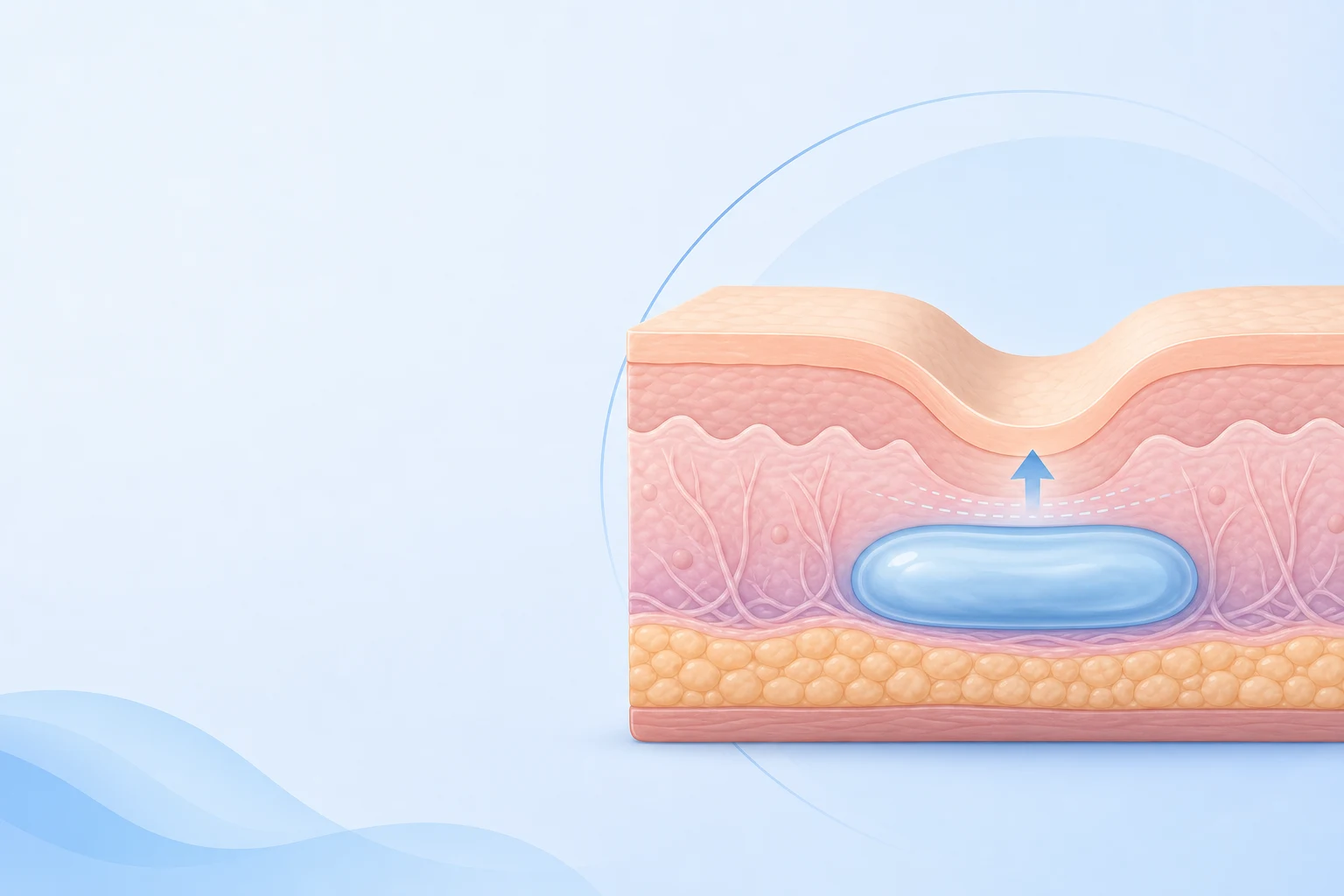
Dermal filler treats a depressed acne scar by doing something simple and immediate: it adds a small amount of volume beneath the depression so the floor lifts toward the level of the surrounding skin. Because the shadow cast by a dent is much of what makes a scar visible, lifting the floor can make the scar look noticeably softer straight away.
The catch is that hyaluronic-acid filler is gradually broken down by the body, so the effect fades over months and needs maintenance. Filler changes the contour; it does not remodel the scar tissue. That is why it is usually one piece of a plan, often paired with collagen-building treatments.
How filler lifts a depressed scar
A depressed (atrophic) scar sits below the surface because collagen was lost during healing and, in rolling scars, because fibrous bands tether it down. Filler placed beneath the depression provides physical support that pushes the floor upward, reducing the dip and the shadow that makes it stand out.
Some fillers may also offer mild stimulation of the skin's own collagen over time, but the main, reliable effect is volumising support. When a scar is tethered, filler alone fights against the band — which is why subcision to release the tether is often done first, sometimes followed by filler or collagen treatment to hold the gain.
— Mechanism
Lifting a depressed scar floor from beneath
Before
An atrophic scar sits below the surrounding skin, casting a shadow that makes it look darker.
After filler
A small amount of filler placed beneath the scar lifts the floor toward skin level, so the shadow softens.
Filler lifts; it does not remodel the scar itself. Hyaluronic-acid filler is gradually absorbed, so the effect is temporary and usually used to complement collagen-building treatments rather than replace them. Suitability is assessed at consultation.
Which scars suit filler
Filler works best on broad, soft, distensible depressions — typically rolling scars that stretch out when the skin is pulled taut. It is poorly suited to narrow ice pick scars, where there is no room to place filler usefully, and it cannot do much for sharp-walled boxcar scars on its own.
It is also not the answer for tethered scars used in isolation: the tether needs releasing first. Recognising these limits is what separates a satisfying result from a wasted treatment.
— Comparison
Filler by scar type
| Scar type | Filler fit | Why |
|---|---|---|
| Rolling (distensible) | Good | Broad depression lifts well with volume support. |
| Boxcar | Partial | Sharp walls limit lift; often needs resurfacing too. |
| Ice pick | Poor | Too narrow to place filler usefully. |
| Tethered | Release first | Subcision is needed before filler can hold. |
Rolling (distensible)
- Filler fit
- Good
- Why
- Broad depression lifts well with volume support.
Boxcar
- Filler fit
- Partial
- Why
- Sharp walls limit lift; often needs resurfacing too.
Ice pick
- Filler fit
- Poor
- Why
- Too narrow to place filler usefully.
Tethered
- Filler fit
- Release first
- Why
- Subcision is needed before filler can hold.
Why it is temporary — and how that is used
Hyaluronic-acid filler is gradually metabolised, so a scar treated with filler will slowly return toward its starting point over months unless maintained. For some people this is a downside; for others it is reassuring, because a temporary result is reversible and adjustable.
Clinically, the temporariness is often used strategically: filler provides an immediate visible improvement while slower collagen-building treatments (microneedling, laser, or subcision plus collagen support) do the durable work underneath. As those mature, reliance on filler can reduce.
When filler is the right tool
Filler is worth discussing if you have broad rolling depressions, want a visible improvement quickly (for an event, perhaps), or want to complement collagen treatments. It is a doctor-led injectable where product choice and placement are critical, so who performs it matters.
At DrPlus in Johor Bahru, a doctor will assess whether your scars are filler-suitable, whether subcision should come first, and how filler fits a longer-term plan — with realistic, honest expectations.
— Frequently asked
Common questions
No. Hyaluronic-acid filler lifts depressed scars by adding volume beneath them, but it is gradually absorbed over months, so the effect is temporary and needs maintenance. It treats the contour, not the scar tissue itself.
Broad, soft, distensible rolling depressions respond best. Narrow ice pick scars are unsuitable, and tethered scars usually need subcision to release the band before filler can help.
It varies with the product, the area and the individual, but hyaluronic-acid filler typically fades over several months to a year. Maintenance treatments are needed to sustain the effect.
Usually not — it complements them. A common approach is filler for an immediate lift while collagen-building treatments create more durable change, and subcision to release tethers first where needed.
In trained hands it is generally well tolerated, with risks such as bruising, swelling or, rarely, more serious vascular complications. Product choice and precise placement are critical, so it should be performed by a qualified doctor.
— Related treatments
Continue with the relevant DrPlus treatment pages
Each page goes deeper into mechanism, suitability and recovery — your final plan is confirmed at consultation.
— Continue reading
 Acne Scars
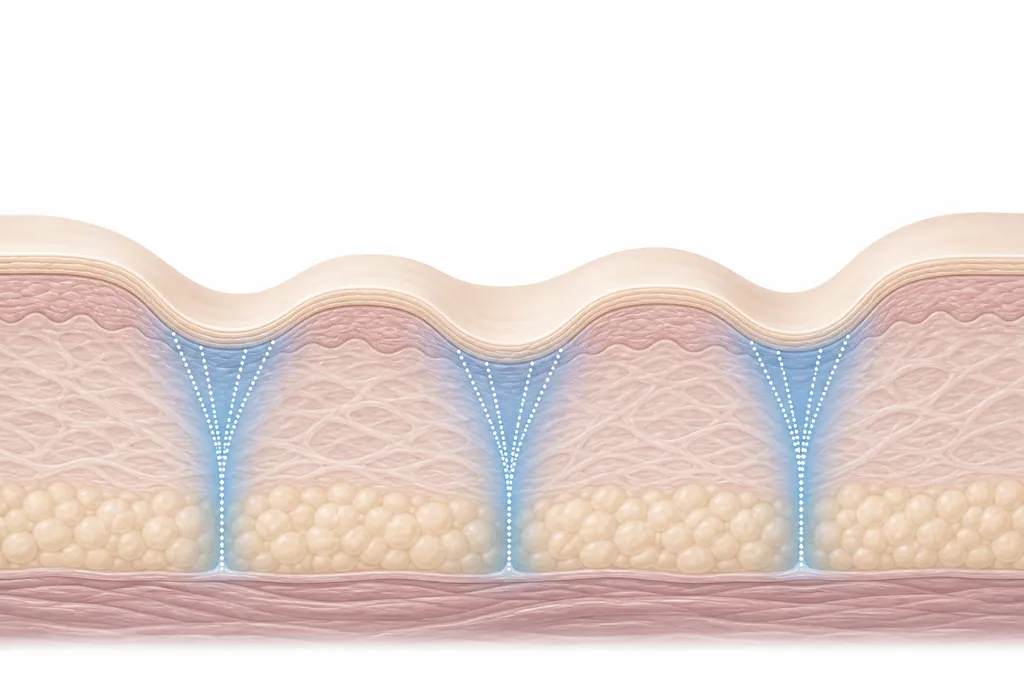
Rolling Acne Scars: Why They Form Beneath the Skin
Rolling scars are pulled down from below by fibrous bands. Until that tethering is released, surface treatments often disappoint.
 Acne Scars
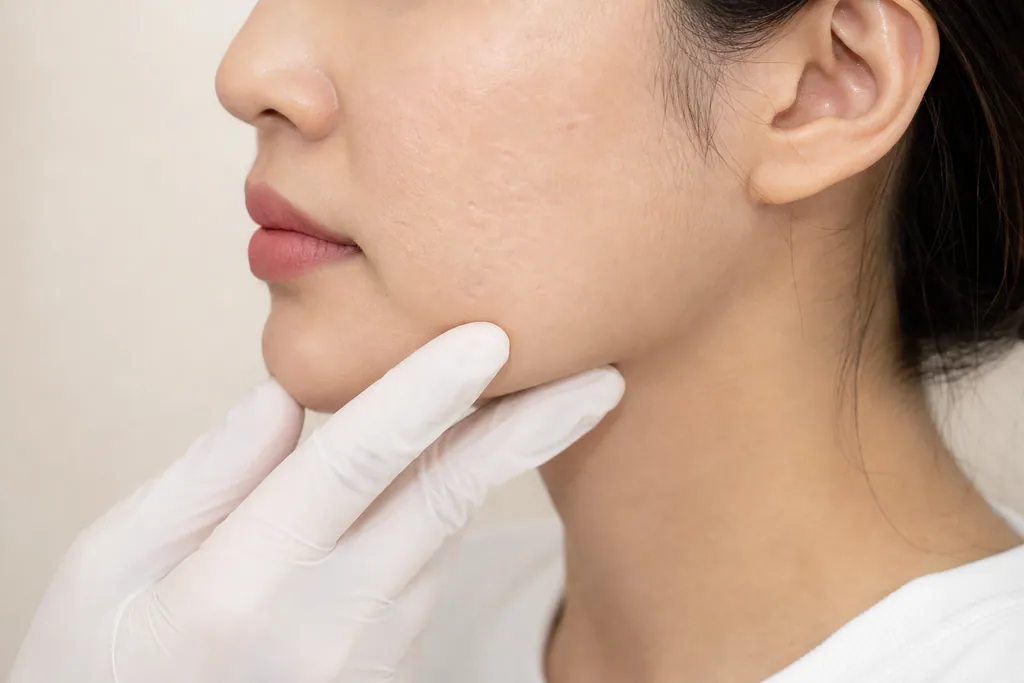
Subcision for Rolling Acne Scars: What to Know
Rolling scars are tethered from below. Until that tethering is released, surface treatments often do less than expected.
 Acne Scars
Which Acne Scar Treatment Is Right for You?
Faced with subcision, laser, RF microneedling, peels and fillers, how do you choose? This guide walks the decision the way a doctor would.