
DrPlus Skin Education · Microneedling
Microneedling and Dermapen for Acne Scars Explained
Microneedling is one of the most asked-about acne scar treatments. Here is how it actually works, where it helps, and how it differs from RF microneedling.
Quick answer
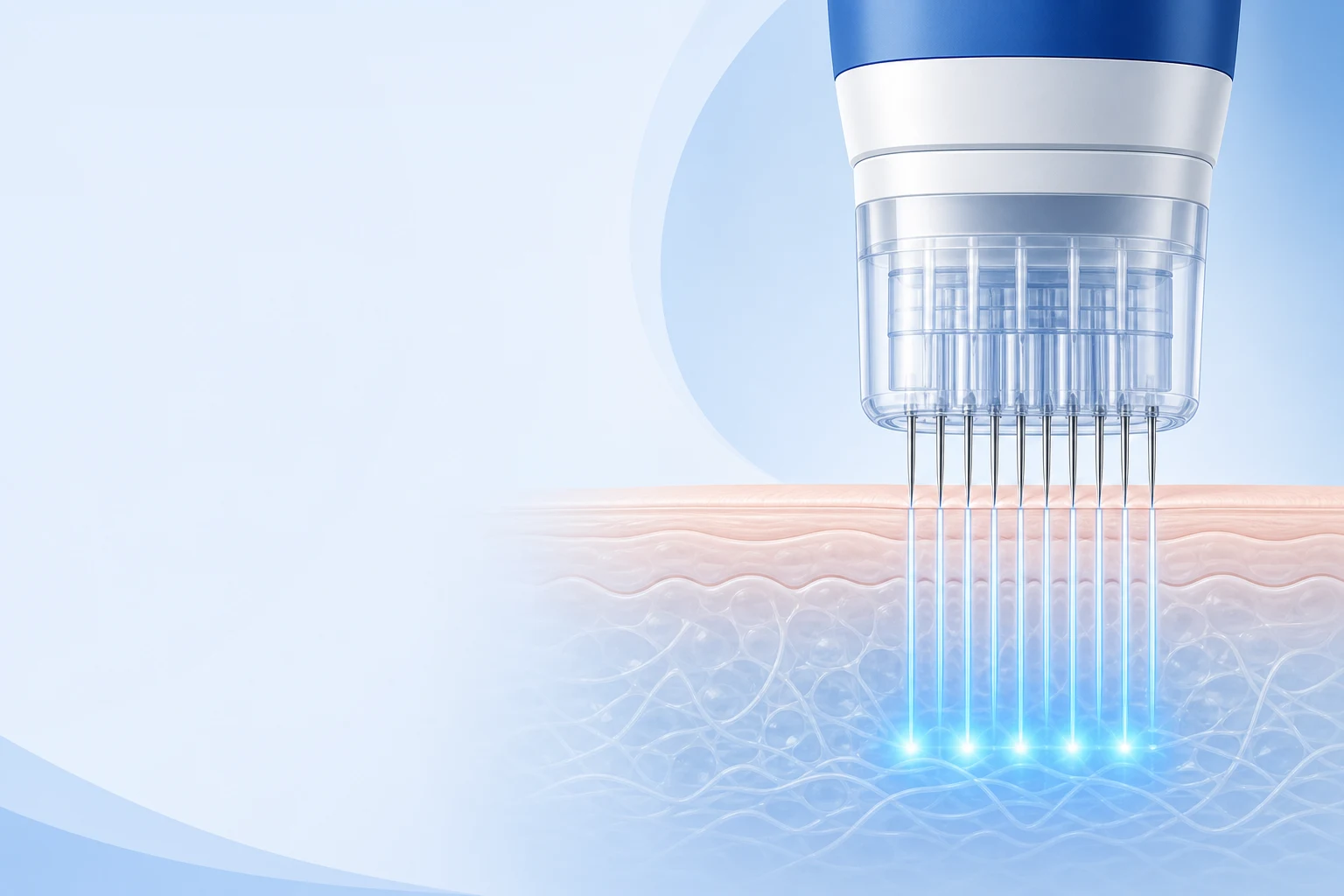
Microneedling treats acne scars by using fine needles to create a controlled field of tiny punctures in the skin. Each puncture is a micro-injury, and the skin responds by building new collagen as it repairs — gradually firming and lifting shallow depressions. A dermapen is simply a motorised pen that does this precisely and evenly.
It is a gentler, lower-downtime option than ablative laser, which makes it popular as an entry point or as part of a combination plan. It is not the most powerful tool for deep scars, but for the right scars and skin it delivers steady, natural-looking improvement.
How the micro-channels rebuild collagen
When the needles pass through the surface, they leave vertical micro-channels into the upper dermis. The body reads these as injuries and launches its normal wound-healing cascade — releasing growth factors and prompting fibroblasts to lay down fresh collagen and elastin along the treated area.
Because the channels are small and spaced, the surface re-seals quickly with minimal damage between them, which is why downtime is short. The scar improvement comes from that new collagen accumulating and reorganising over the following weeks — not from the needling itself.
— Mechanism
Micro-channels that trigger a collagen rebuild
Each fine channel is a tiny, controlled injury. The skin answers by laying down fresh collagen along the channel — and because the channels are small and spaced, the surface re-seals quickly with little downtime. Unlike RF microneedling, classic microneedling adds no heat at the tip.
Microneedling vs RF microneedling
The common point of confusion is the difference between classic microneedling and RF microneedling. Both use needles to create channels, but RF microneedling also releases radiofrequency heat from the needle tips deep in the dermis. That heat adds a stronger collagen-tightening effect and can reach a little deeper, at the cost of slightly more downtime.
Classic microneedling, with no heat, is gentler and often a sensible starting point; RF microneedling is a step up in intensity, particularly useful where more dermal remodeling or some tightening is wanted. Neither is universally better — it depends on the scar and the skin.
— Comparison
Microneedling vs RF microneedling
| Feature | Microneedling | RF microneedling |
|---|---|---|
| Mechanism | Micro-channels only | Micro-channels + dermal heat |
| Strength | Gentle–moderate | Moderate–strong |
| Downtime | Short | Short–moderate |
| Deeper skin tones | Kind | Kind (surface spared) |
| Best for | Shallow texture, marks | Deeper texture, some tightening |
Mechanism
- Microneedling
- Micro-channels only
- RF microneedling
- Micro-channels + dermal heat
Strength
- Microneedling
- Gentle–moderate
- RF microneedling
- Moderate–strong
Downtime
- Microneedling
- Short
- RF microneedling
- Short–moderate
Deeper skin tones
- Microneedling
- Kind
- RF microneedling
- Kind (surface spared)
Best for
- Microneedling
- Shallow texture, marks
- RF microneedling
- Deeper texture, some tightening
Which scars it suits
Microneedling shines on shallow-to-moderate textural irregularity and rolling scars, where stimulating broad collagen rebuild evens the surface. It is far less effective on deep, narrow ice pick scars, which need focal techniques like TCA CROSS, and it does not release the fibrous tethers under rolling scars — that is subcision's job.
This is why microneedling is frequently combined: subcision first to release tethers, then microneedling to rebuild collagen across the area. Used on its own it suits milder scarring or maintenance; used in combination it contributes to bigger transformations.
— Relative downtime
How they compare on recovery
Microneedling
Light
Redness like mild sunburn for 1–2 days.
RF microneedling
Moderate
Redness and swelling for a few days.
Fractional CO₂
Higher
Redness and flaking for about a week.
Recovery profiles vary by skin, settings and aftercare. Your doctor will share what is realistic for your case.
Sessions and what to expect
Like all collagen-based treatments, microneedling works cumulatively. A course of several sessions spaced about a month apart is typical, with improvement continuing between sessions as collagen matures. Expect gradual smoothing rather than a dramatic overnight change.
Downtime is usually a day or two of redness resembling mild sunburn. Aftercare is simple: gentle products, barrier support and sun protection. As always, the honest goal is meaningful softening of texture, with results varying between individuals.
— Healing timeline
After a microneedling session
Days 0–2
Redness
Skin looks flushed, like mild sunburn; mild swelling possible.
Days 3–7
Recovery
Redness settles; skin may feel slightly dry or tight.
Weeks 2–6
Collagen
Fresh collagen builds; texture begins to look smoother.
Across sessions
Cumulative
Improvement adds up over a spaced course of treatments.
A general guide only. Individual healing speed varies with skin type, scar depth, aftercare and the treatment used.
When microneedling is a good fit
Microneedling is a strong option if your scarring is shallow to moderate, if you have deeper skin and want a low-pigmentation-risk approach, or if you want a gentler treatment with minimal downtime. For deep or tethered scars, a consultation will usually combine it with other techniques.
At DrPlus in Johor Bahru, a doctor will assess whether classic microneedling, RF microneedling or a combination fits your scars and skin — and set realistic expectations on sessions and results.
— Frequently asked
Common questions
Yes, for shallow-to-moderate texture and rolling scars, by stimulating the skin to build new collagen. It is less effective for deep ice pick scars and does not release tethered scars on its own. Results build over several sessions and vary between individuals.
A dermapen is a motorised device used to perform microneedling precisely and evenly. The mechanism is the same — fine needles creating micro-channels that trigger collagen repair.
RF microneedling adds heat for a stronger dermal effect and some tightening; classic microneedling is gentler with slightly less downtime. The better choice depends on scar depth and skin — a doctor will advise.
No. Home dermarollers are shallow and risk uneven or unsterile injury. Clinical microneedling uses controlled depth, sterile single-use tips and medical assessment, which is safer and more effective.
Typically a course of several sessions spaced about a month apart, because collagen builds gradually. The exact number depends on scar depth and whether it is combined with other treatments.
— Related treatments
Continue with the relevant DrPlus treatment pages
Each page goes deeper into mechanism, suitability and recovery — your final plan is confirmed at consultation.
Primary money page
RF Microneedling at DrPlus
Doctor-led microneedling and RF microneedling — assessment and suitable depth.
microneedling for acne scars in Johor BahruSupporting
Acne Scar Treatment Hub
Where microneedling is sequenced with subcision and resurfacing.
acne scar treatment in Johor BahruSupporting
Subcision
Releases tethers before microneedling rebuilds collagen.
subcision for tethered rolling scarsSupporting
CO₂ Laser
A stronger resurfacing alternative for deeper texture.
CO₂ laser resurfacing— Continue reading
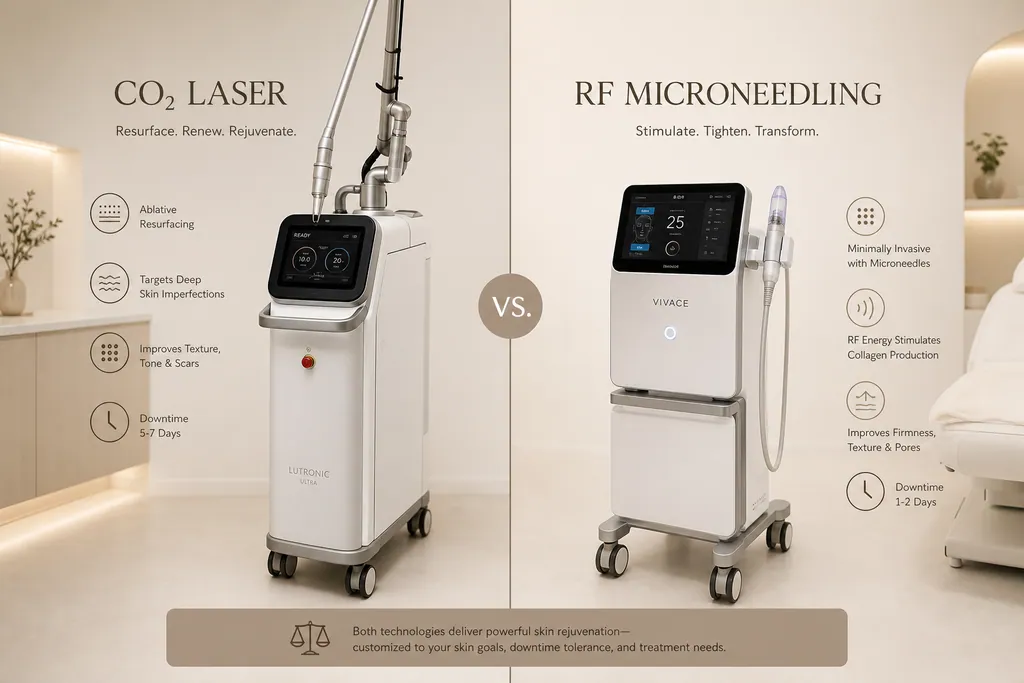
RF Microneedling for Acne Scars: Mechanism, Benefits and Limitations
RF microneedling rebuilds collagen deep in the dermis while leaving the skin's surface largely intact — a combination that makes it one of the most versatile and pigment-friendly scar treatments.
 Acne Scars
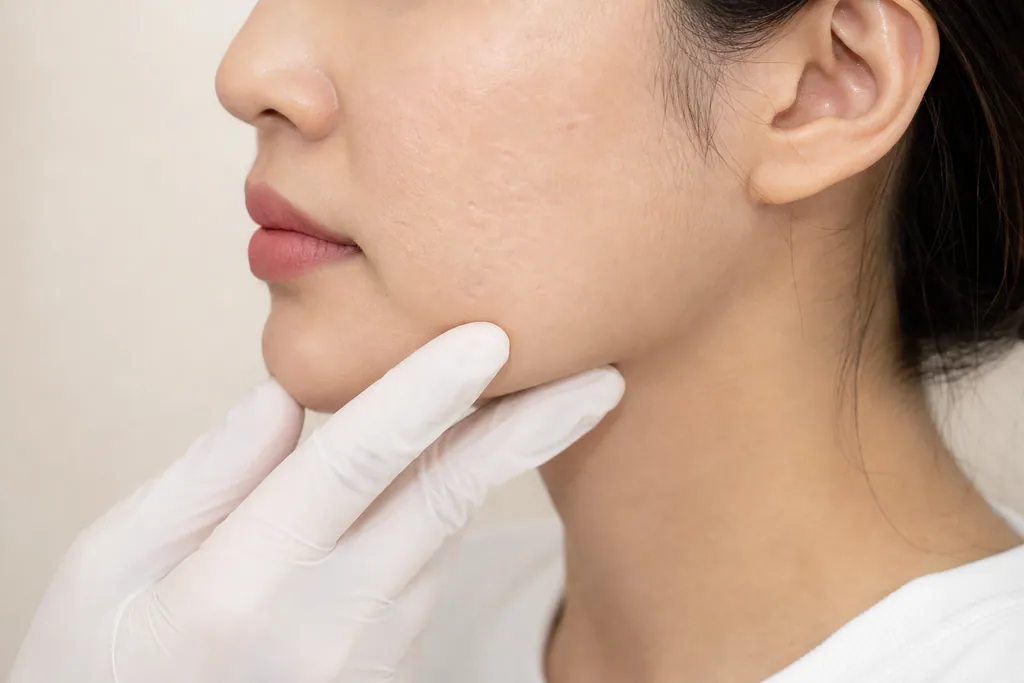
CO₂ Laser vs RF Microneedling for Acne Scars
Two of the most common acne scar treatments — and they work in genuinely different ways. Here is how to think about them.
 Acne Scars
Subcision for Rolling Acne Scars: What to Know
Rolling scars are tethered from below. Until that tethering is released, surface treatments often do less than expected.