
DrPlus Skin Education · Pico & Laser
Pico Laser vs Q-Switched Laser: A Doctor Explains
Pico vs Q-switched is one of the most common pigment-laser questions. The real difference is pulse speed — and what that means for your skin.
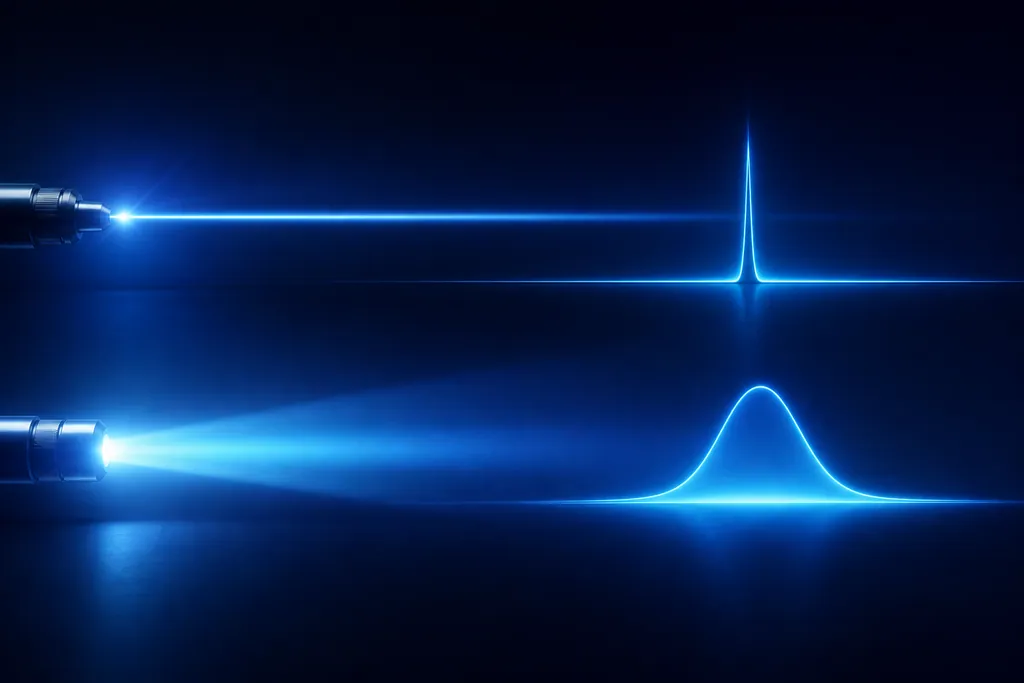
Nanosecond vs picosecond: the core difference
When people compare pico laser vs Q-switched laser, the core difference is pulse speed. Q-switched lasers were the long-standing standard for pigment work, firing in nanoseconds (billionths of a second). Pico lasers fire in picoseconds (trillionths of a second) — roughly a thousand times shorter.
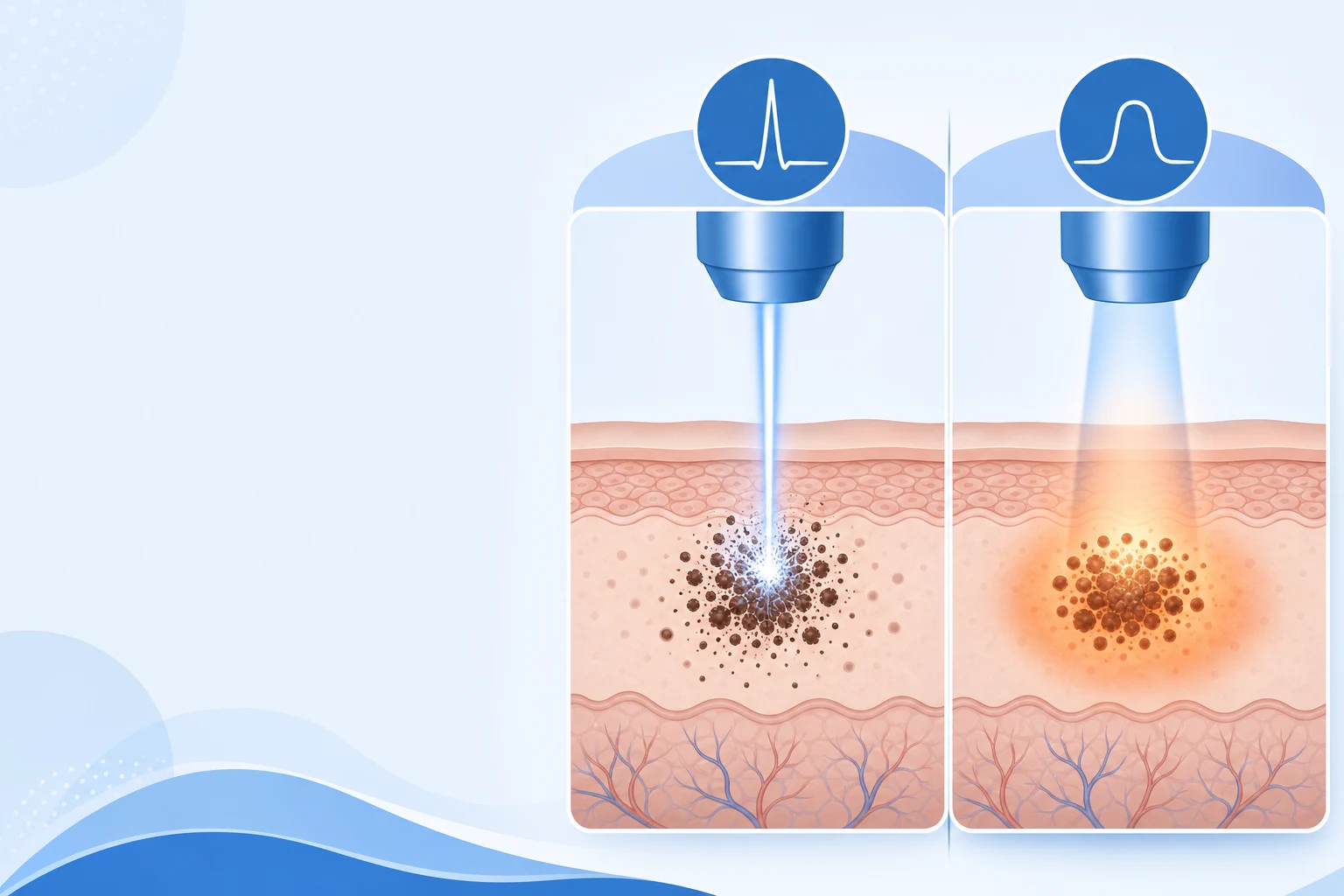
That shorter pulse shifts the balance from a mainly heat-based (photothermal) effect toward a mainly pressure-based (photoacoustic) effect, fragmenting pigment into finer particles.
— Comparison
Pico vs Q-switched at a glance
| Aspect | Pico (picosecond) | Q-switched (nanosecond) |
|---|---|---|
| Pulse duration | Trillionths of a second | Billionths of a second |
| Main effect | Photoacoustic (pressure) | More photothermal (heat) |
| Pigment fragments | Tend to be finer | Tend to be larger |
| Relative surface heat | Lower | Higher |
| Still depends on | Diagnosis, settings, skin type | Diagnosis, settings, skin type |
Pulse duration
- Pico (picosecond)
- Trillionths of a second
- Q-switched (nanosecond)
- Billionths of a second
Main effect
- Pico (picosecond)
- Photoacoustic (pressure)
- Q-switched (nanosecond)
- More photothermal (heat)
Pigment fragments
- Pico (picosecond)
- Tend to be finer
- Q-switched (nanosecond)
- Tend to be larger
Relative surface heat
- Pico (picosecond)
- Lower
- Q-switched (nanosecond)
- Higher
Still depends on
- Pico (picosecond)
- Diagnosis, settings, skin type
- Q-switched (nanosecond)
- Diagnosis, settings, skin type
Heat profile and why it matters for Asian skin
Heat is the main driver of post-inflammatory hyperpigmentation (PIH) — a common concern for the deeper skin tones found across Malaysia. Because pico pulses generally deposit less heat for a given pigment effect, they can offer a margin of caution for darker skin.
This is a tendency, not a guarantee. Inappropriate settings on any device can still trigger PIH, which is why doctor-led planning matters more than the headline technology.
Benefits of pico — and its limits
The practical benefits people notice are finer pigment clearance, often shorter recovery for pigment-toning settings, and a potentially gentler profile for sensitive skin. Fractional pico modes can also support texture.
The limits are real too: pico is not a cure, pigmentation can recur, melasma still needs caution, and some concerns are better served by other treatments entirely.
Which laser, and when
Both technologies still have a place. The right choice is decided by what the pigment is, how deep it sits, your skin tone, and how your skin tends to react — all of which are assessed at consultation rather than chosen from an advert.
— Frequently asked
Common questions
Pico lasers fire in picoseconds (trillionths of a second), while Q-switched lasers fire in nanoseconds (billionths). The shorter pico pulse fragments pigment more by pressure than heat, which can mean finer pigment clearance and relatively less surface heat. Which suits you depends on your pigment and skin type.
No — PicoPulse is a brand name for a picosecond laser platform, so 'PicoPulse vs pico laser' is really a brand-versus-category comparison. Every PicoPulse treatment IS a pico laser treatment. As with all pico brands, your result depends on the wavelength, settings, and the doctor's protocol for your skin, not the model name.
Pico can offer finer pigment shattering and a lower heat profile, which is helpful for some patients — particularly darker skin tones. However, 'better' depends on the specific pigment, its depth and your skin. Both have a role, and diagnosis decides.
Reported benefits include finer pigment clearance, often shorter recovery for pigment-toning settings, and a potentially gentler heat profile for sensitive or darker skin. Benefits vary by individual and depend on correct settings.
Its lower heat profile can offer a margin of caution against post-inflammatory pigmentation, but it is not automatically safe. Appropriate settings and an experienced doctor remain essential for darker skin.
No. Pigmentation can recur with sun exposure or hormonal factors. Pico laser is part of a maintenance picture, supported by daily sun protection, rather than a permanent fix.
— Related treatments
Continue with the relevant DrPlus treatment pages
Each page goes deeper into mechanism, suitability and recovery — your final plan is confirmed at consultation.
— Continue reading
 Pico & Laser
Pico Laser Treatment: A Doctor's Complete Guide
Pico laser is one of the most searched skin treatments — and one of the most misunderstood. Start here for a clear, doctor-led overview.
 Pico & Laser
PicoSure vs PicoWay vs Pico Laser Devices: What Actually Matters?
PicoSure, PicoWay, Discovery Pico, Pico Plus... the names matter less than most adverts suggest. Here is what really decides your result.
 Laser
LaserPico Laser vs Q-Switch Laser for Pigmentation
Two pigment lasers, one common question. Here is the real difference between pico and Q-switched lasers — and why neither is simply 'better'.