
DrPlus Skin Education · Laser
Pico Laser vs Q-Switch Laser for Pigmentation
Two pigment lasers, one common question. Here is the real difference between pico and Q-switched lasers — and why neither is simply 'better'.
Quick answer
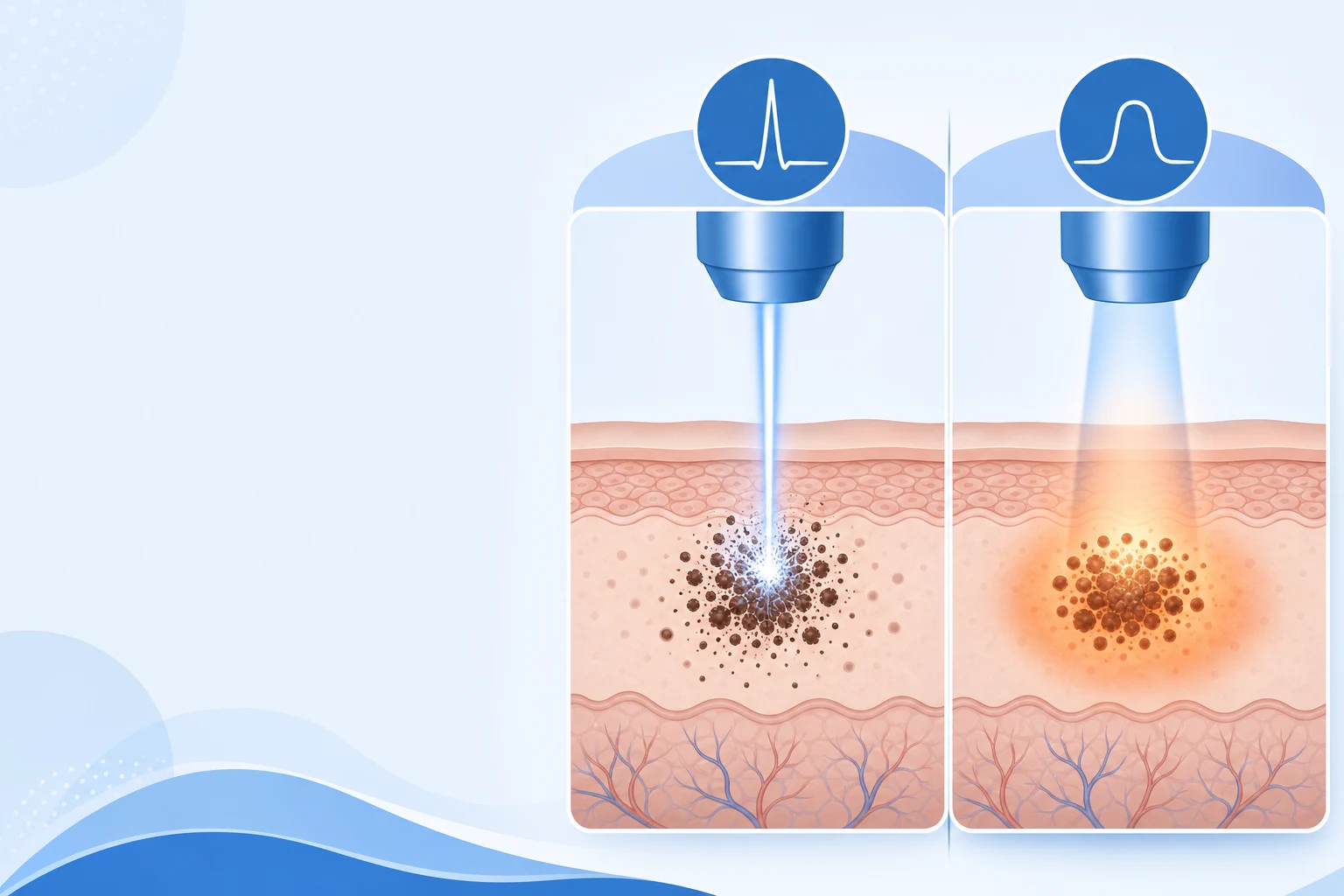
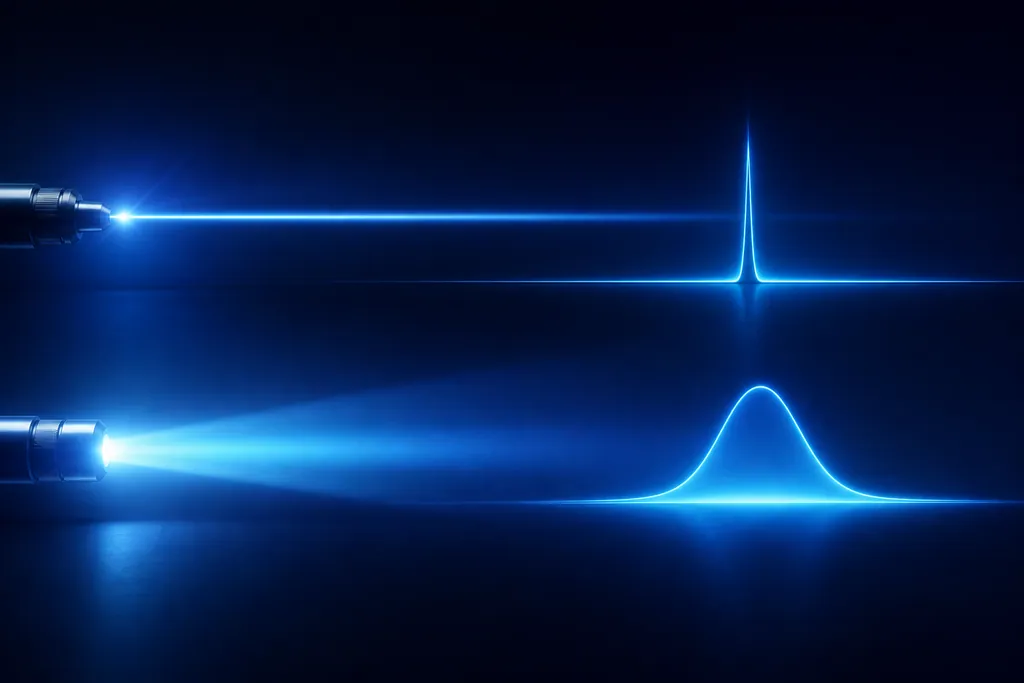
Pico and Q-switched lasers are both pigment lasers — they deliver energy that targets excess melanin so the body can clear it. The headline difference is pulse duration: Q-switched lasers fire in nanoseconds (billionths of a second), while pico lasers fire in picoseconds (trillionths). That shorter pulse changes how the energy acts on pigment.
Shorter pulses lean more on a pressure-based shattering effect and generate comparatively less heat, which tends to be gentler on surrounding skin. That is the main reason pico is often favoured in deeper skin tones — but Q-switched lasers remain effective and proven, and neither is simply better in every case.
How they actually differ
Q-switched lasers were the long-standing standard for pigment. Their nanosecond pulses break pigment largely through rapid heating (a photothermal effect). Effective — but heat carries more risk of collateral effect on surrounding skin, which matters in melanin-rich skin.
Pico lasers compress the pulse a thousand-fold shorter. At that speed, the dominant effect becomes photoacoustic — a tiny pressure wave that shatters pigment into finer particles with less heat. Finer fragments can be easier to clear, and less heat means a gentler footprint.
Mechanism
Q-switched (nanosecond)
Breaks pigment mainly by rapid heating — effective, with more heat.
Mechanism
Pico (picosecond)
Shatters pigment by a pressure wave with less heat — gentler footprint.
Mechanism
Why it matters
Less heat can mean lower pigmentation risk in deeper skin tones.
Side by side
Neither laser is a universal winner. The table summarises the practical trade-offs, but the right pick still depends on the specific pigment, its depth, and your skin tone.
— Comparison
Pico vs Q-switched laser
| Feature | Pico | Q-switched |
|---|---|---|
| Pulse duration | Picoseconds (ultra-short) | Nanoseconds (short) |
| Main effect | Photoacoustic (pressure) | Photothermal (heat) |
| Heat to skin | Lower | Higher |
| Deeper skin tones | Often favoured | Used with more caution |
| Track record | Newer, strong | Long-established |
Pulse duration
- Pico
- Picoseconds (ultra-short)
- Q-switched
- Nanoseconds (short)
Main effect
- Pico
- Photoacoustic (pressure)
- Q-switched
- Photothermal (heat)
Heat to skin
- Pico
- Lower
- Q-switched
- Higher
Deeper skin tones
- Pico
- Often favoured
- Q-switched
- Used with more caution
Track record
- Pico
- Newer, strong
- Q-switched
- Long-established
Depth and pigment type still decide
Whatever the device, the pigment itself dictates strategy. Shallow, defined pigment like sun spots responds readily to either laser. Deep dermal pigment like Hori's nevus needs a laser that reaches depth, over multiple sessions. Melasma needs caution with any laser, because aggressive energy can cause rebound.
So the question is rarely 'pico or Q-switch?' in isolation — it is 'what pigment, how deep, what skin tone, and therefore which laser and settings?' That is a clinical decision, not a marketing one.
— Why depth matters
Where the pigment sits predicts how it responds
Epidermal
Brown pigment sits high in the skin. More accessible, generally more responsive.
Dermal
Blue-grey pigment sits deep. Stubborn — e.g. Hori's nevus — and slower to clear.
Mixed
Pigment at both depths. Needs a careful, layered plan rather than one setting.
Depth is the single biggest predictor of how pigmentation behaves. Shallow brown pigment is generally more treatable; deep blue-grey pigment is far more stubborn and needs patience and the right device. Most real pigmentation is mixed, which is why a doctor assesses depth before choosing any treatment.
When to see a doctor
Rather than choosing a laser by name, start with a diagnosis of your pigment. A doctor matches the laser and settings to your pigment type, depth and skin tone — which is what actually determines results and safety.
At DrPlus in Johor Bahru, laser choice follows the diagnosis, with a strong emphasis on protecting deeper skin tones from pigmentation risk.
— Frequently asked
Common questions
Pulse duration. Q-switched lasers fire in nanoseconds and break pigment mainly with heat; pico lasers fire in picoseconds and shatter pigment with a pressure wave and less heat. The lower heat is gentler on surrounding skin.
It has advantages — less heat and often lower pigmentation risk in darker skin — but Q-switched lasers are effective and well-proven. The best choice depends on your pigment type, depth and skin tone, not a blanket ranking.
Pico's lower-heat, pressure-based action tends to be gentler on melanin-rich skin, which is why it is often favoured in deeper tones. Conservative settings and sun protection still matter with either laser.
Both can, but only cautiously — aggressive settings on melasma risk rebound pigmentation. Melasma is treated with low-intensity, layered approaches regardless of which laser is used.
You don't choose the device first — you diagnose the pigment first. A doctor matches the laser and settings to your pigment type, depth and skin tone, which is what determines results and safety.
— Related treatments
Continue with the relevant DrPlus treatment pages
Each page goes deeper into mechanism, suitability and recovery — your final plan is confirmed at consultation.
— Continue reading
 Pico & Laser
Pico Laser vs Q-Switched Laser: A Doctor Explains
Pico vs Q-switched is one of the most common pigment-laser questions. The real difference is pulse speed — and what that means for your skin.
 Pigmentation
Pico Laser Treatment for Pigmentation: What It Does and Who It May Suit
Pico laser is one of the most discussed pigment treatments — and one of the most over-promised. Here is how to think about it.
 Melasma
Melasma Treatment in Singapore & Johor Bahru: A Doctor's Guide
Melasma is the most misunderstood pigmentation of all — and the easiest to make worse. Here is how it is actually treated, and why patience beats power.