
DrPlus Skin Education · Regenerative
PRP and Exosomes for Acne Scars: A Supporting Role
PRP and exosomes are often marketed as scar cures. The honest picture is more useful: they are supporting players that help skin heal after the real work.
Quick answer
PRP and exosomes belong to the 'regenerative' end of acne scar treatment. The idea is to flood healing skin with growth factors and signals that encourage better collagen repair. PRP does this using a concentrate made from your own blood; exosomes use tiny biological messengers, often lab-derived, with a similar goal.
The important framing: these are helpers, not the main event. They are typically combined with a treatment that actually changes the scar — such as microneedling or subcision — to support recovery and collagen building. On their own, they will not lift a tethered rolling scar or resurface texture.
How PRP works
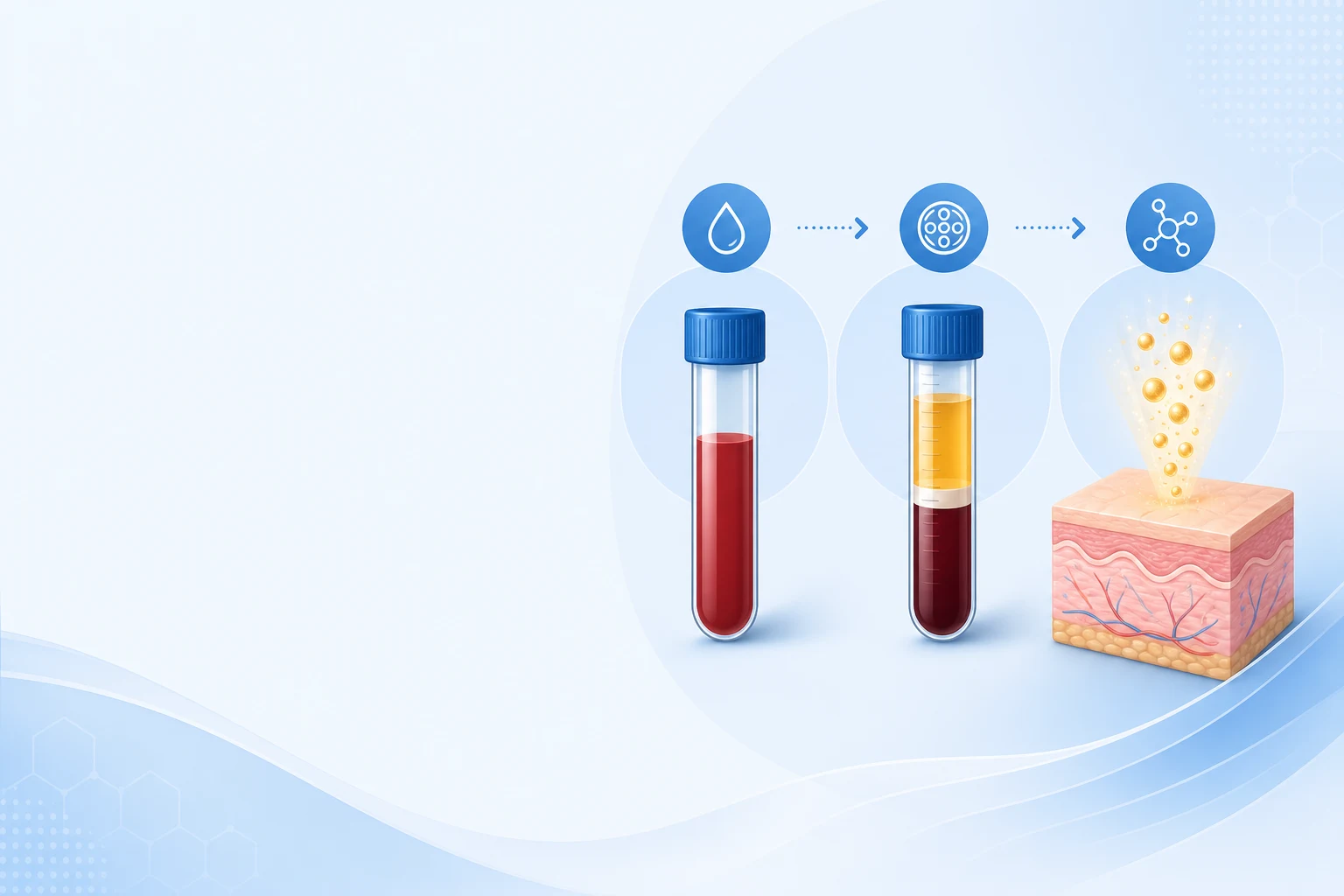
PRP starts with a small blood draw. The sample is spun in a centrifuge, which separates the blood into layers and concentrates the platelets into a plasma fraction. Platelets are rich in growth factors — the signals the body normally uses to coordinate wound healing.
That platelet-rich plasma is then applied to or injected into the skin, usually alongside microneedling or after subcision, where there is fresh micro-injury for the growth factors to support. The aim is a stronger, better-organised collagen response than the treatment would produce alone.
— Mechanism
From your own blood to concentrated growth factors
1 · Draw
A small sample of your own blood is taken.
2 · Spin
A centrifuge separates the platelet-rich plasma.
3 · Apply
Growth factors support repair after micro-injury.
PRP does not resurface or release scars by itself. It is used as a supporting layer — the concentrated growth factors are intended to help the skin recover and build collagen after treatments such as microneedling or subcision. Evidence is mixed and results vary between individuals.
PRP versus exosomes
PRP's appeal is that it comes from you — autologous, with a long track record across medicine. Its strength varies with your own blood and preparation method. Exosomes are a newer approach: ultra-small vesicles carrying signalling molecules, valued for consistency and potency, but with a shorter evidence base and important regulatory and sourcing considerations.
Neither is a magic ingredient. Both are tools to bias healing toward better collagen, and both make most sense layered onto a structural treatment. A doctor should be transparent about what is known, what is still being studied, and the source and regulatory status of any product used.
Mechanism
From your own body (PRP)
Concentrated from your blood, so it is autologous; potency varies with preparation and the individual.
Mechanism
Lab-derived signals (exosomes)
Tiny vesicles carrying growth signals; valued for consistency, but newer with evolving evidence and regulation.
Mechanism
Same goal
Both aim to support collagen repair after a treatment that actually remodels the scar.
What the evidence really says
Studies on PRP combined with microneedling or laser generally suggest it can improve outcomes and recovery compared with the treatment alone — encouraging, though study sizes and methods vary. Exosome research for scarring is earlier still, with promising signals but fewer robust trials.
The honest position is cautious optimism: these therapies may enhance a good plan, but they are not a substitute for the structural work, and results vary between individuals. Be wary of anyone presenting them as a guaranteed stand-alone cure.
When they make sense
PRP or exosomes are worth considering if you are already having a structural treatment such as microneedling or subcision and want to support recovery and collagen building. They are less logical as a first or only step, and a good clinic will say so.
At DrPlus in Johor Bahru, any regenerative add-on is discussed honestly — what it may add, what it will not do, and the source and status of the product — within a doctor-led plan.
— Frequently asked
Common questions
No. They are supporting therapies that aim to improve healing and collagen building after a structural treatment such as microneedling or subcision. They do not release or resurface scars on their own, and results vary between individuals.
PRP is concentrated from your own blood, making it autologous with potency that varies by preparation. Exosomes are usually lab-derived signalling vesicles valued for consistency, but with a newer evidence base and important sourcing and regulatory considerations.
Research generally suggests PRP combined with microneedling or laser can improve results and recovery versus the treatment alone, though study quality varies. It is best viewed as an enhancer of a good plan rather than a stand-alone cure.
Because PRP uses your own blood, allergic reaction is unlikely. As with any injection there are general risks such as bruising or infection, which is why it should be performed by a qualified medical practitioner.
Generally no. They make most sense added to a structural treatment that actually changes the scar. Used alone, they are unlikely to deliver meaningful scar improvement.
— Related treatments
Continue with the relevant DrPlus treatment pages
Each page goes deeper into mechanism, suitability and recovery — your final plan is confirmed at consultation.
Primary money page
PRP & Regenerative at DrPlus
Doctor-led PRP, discussed honestly as part of a scar plan.
PRP treatment in Johor BahruSupporting
Acne Scar Treatment Hub
Where regenerative add-ons sit within a structural plan.
acne scar treatment in Johor BahruSupporting
RF Microneedling
The structural treatment PRP most often supports.
microneedling for acne scarsSupporting
Subcision
Releases tethers; PRP can support the healing phase.
subcision for rolling scars— Continue reading
 Acne Scars
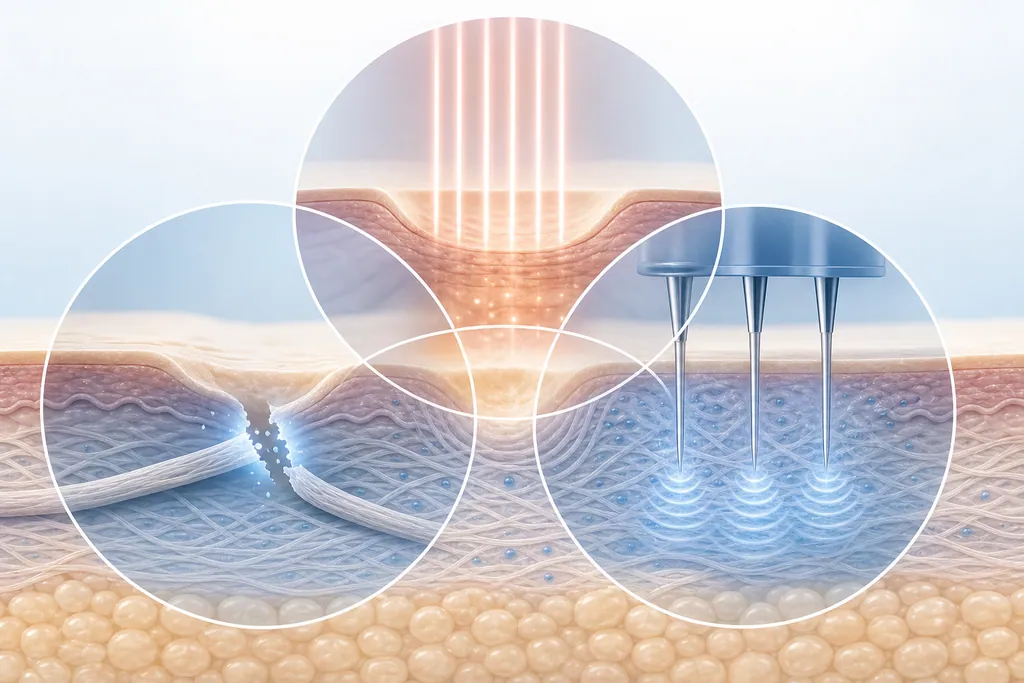
Why Combination Treatment Is Often Needed for Acne Scars
Most people have more than one scar type, and each behaves differently. That is why a single treatment rarely does the whole job.
 Acne Scars
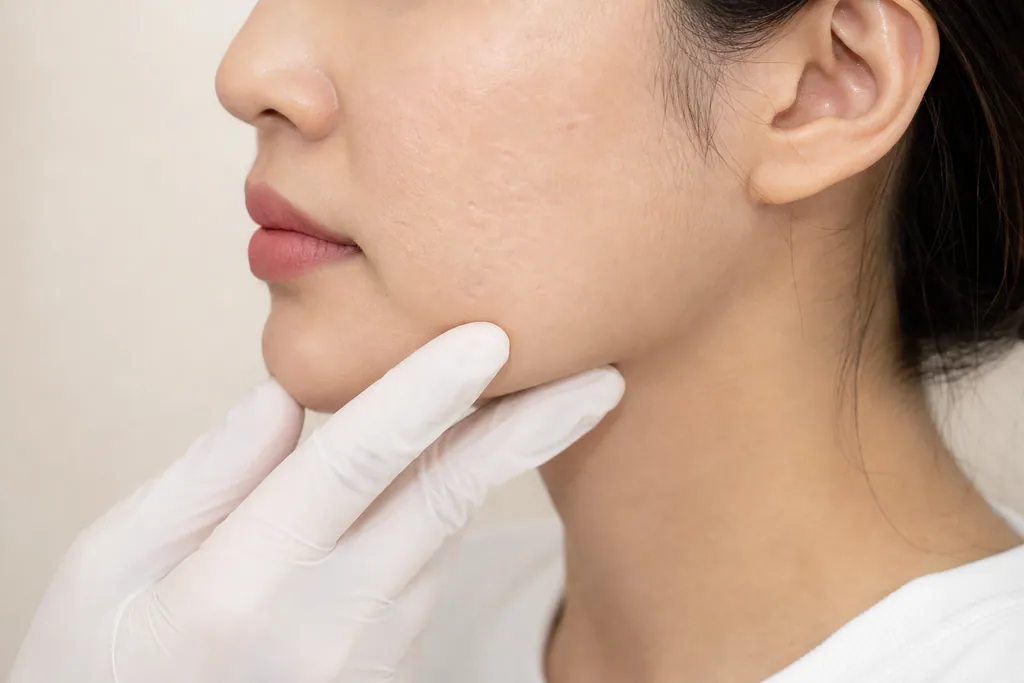
Subcision for Rolling Acne Scars: What to Know
Rolling scars are tethered from below. Until that tethering is released, surface treatments often do less than expected.
RF Microneedling for Acne Scars: Mechanism, Benefits and Limitations
RF microneedling rebuilds collagen deep in the dermis while leaving the skin's surface largely intact — a combination that makes it one of the most versatile and pigment-friendly scar treatments.