
DrPlus · Scar Care
Keloid Removal
A keloid is a scar that didn't know when to stop — and cutting it out alone usually brings it back larger. Doctor-led removal flattens, softens and fades the scar with an injection-led protocol. Clinics in Johor Bahru and Singapore.













- Doctor-led scar assessment
- Injection-led combination protocols
- Honest recurrence expectations
- Results vary by individual
— Who this page is for
Who this page is for
Keloids behave differently from ordinary scars — they grow beyond the original wound and often itch or ache. Removal works, but it is a managed process, and the right protocol depends on your scar's age, size, and site.
A raised scar that keeps growing
A scar from surgery, acne, a piercing, or a vaccination that has thickened, spread beyond the original wound, or become itchy or tender.
Earlobe keloids from piercings
One of the most common sites — and one where combined treatment, and in selected cases an excision-plus-injection pathway, matters most to prevent regrowth.
Chest and shoulder keloids from acne
Acne-prone areas with high skin tension are keloid hotspots — often multiple scars needing one coordinated removal plan rather than piecemeal treatment.
Treated before, but it came back
Keloids recur after single-method treatment more often than clinics admit — combination protocols exist for exactly this reason.
Itch and pain, not just appearance
Many keloids ache, itch, or catch on clothing. Injection therapy often relieves those symptoms early, well before the visible flattening catches up.
You searched “keloid removal” expecting surgery
Good instinct to check first: cutting a keloid out without follow-up treatment sees it return, often larger. Real removal is a protocol — this page explains what that involves.
Visiting our Johor Bahru clinic
Doctor-led keloid removal in Johor Bahru — many patients cross from Singapore for scar care. See the local page for clinic detail.
Keloid removal in Johor BahruVisiting our Singapore clinics
The same doctor-led protocols at Tanjong Pagar and on the East Coast — see the Singapore page for clinic detail.
Keloid removal in Singapore
— What this involves
What “keloid removal” actually involves
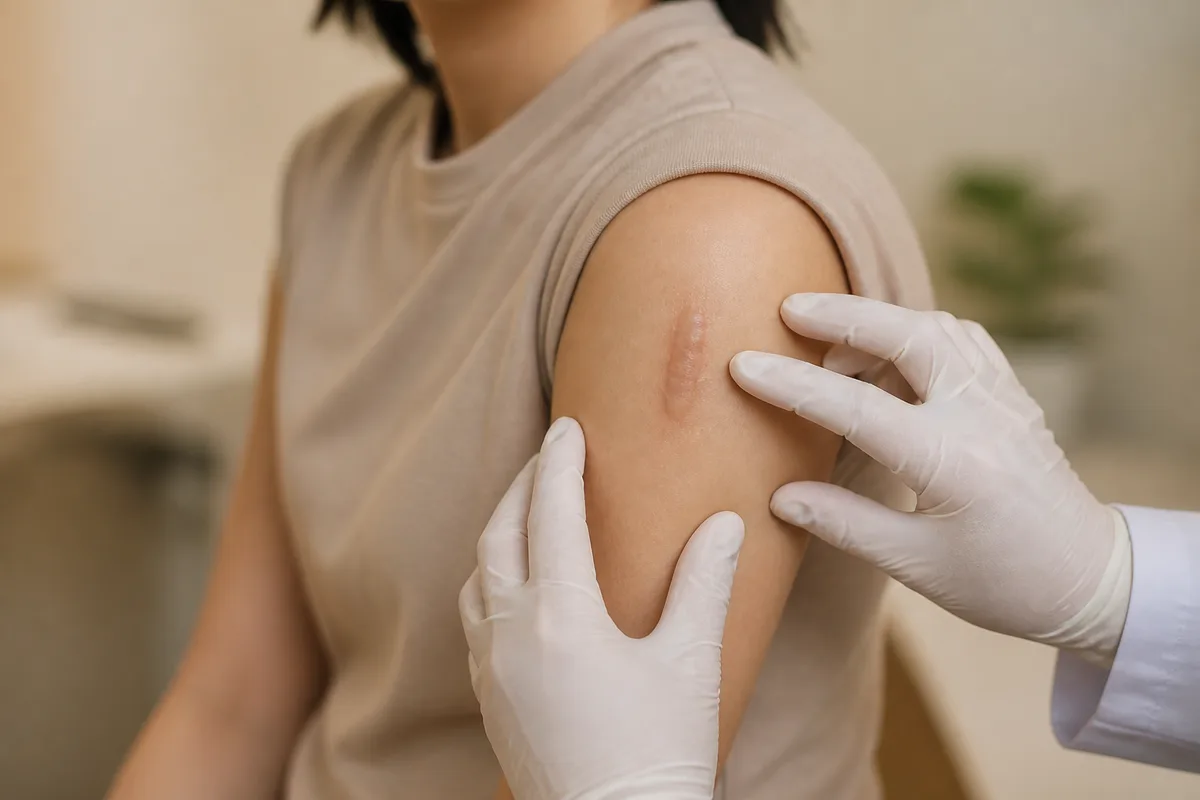
First, the honest version of “keloid removal”: a keloid is not a growth sitting on top of your skin that can simply be cut away. It is scar tissue your own healing produced — and if it is removed with a blade alone, the wound heals the same way it did the first time, frequently producing a larger keloid. Doctor-led removal therefore means a protocol that flattens, softens, and fades the scar — and keeps it from coming back — rather than a single-visit excision.
Why keloids happen: when skin heals, fibroblast cells produce collagen to close the wound — and in keloid-prone skin they keep producing it long after the wound has closed, building a raised, firm scar that spreads beyond the original injury. Genetics play a large role: keloid tendency runs in families and is more common in Asian and darker skin types, which is why prevention advice matters as much as treatment.
The workhorse of keloid removal is intralesional injection therapy: corticosteroid placed directly into the scar tissue by a doctor to slow collagen production, so the keloid gradually flattens and softens over a series of sessions, typically spaced four to six weeks apart. Itch and tenderness often improve within the first session or two — earlier than the visible change.
For redness, surface texture, and stubborn scars, injections are combined with laser treatment and, in selected cases, other modalities. Certain keloids — classically the mushroom-shaped earlobe keloid from a piercing — may suit surgical excision, but only with adjuvant injection therapy planned around the procedure, because excision alone is how keloids come back larger. Your doctor maps the realistic protocol, including maintenance, at your assessment.
What determines the cost? The number and size of keloids, the scar's age and site, the modalities your protocol needs, and the number of sessions. We do not publish prices — WhatsApp us a photo of the scar and we can usually outline what removal would involve, followed by a personalised written quote at your assessment.
— On the day
What a keloid removal session looks like
Keloid removal is a course of short clinic visits rather than one long procedure. Here is the typical sequence at any of our clinics — exact timing depends on how many scars are treated and whether laser is part of your protocol.
Step 1
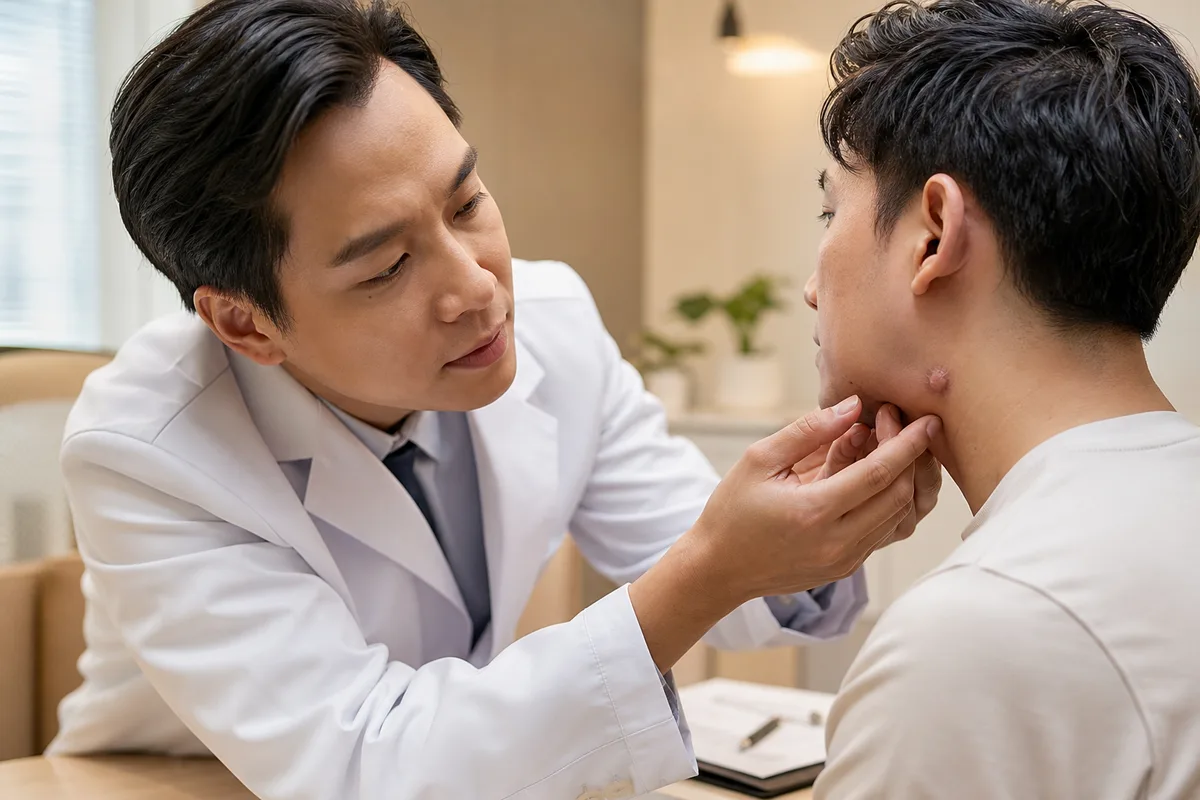
Scar assessment
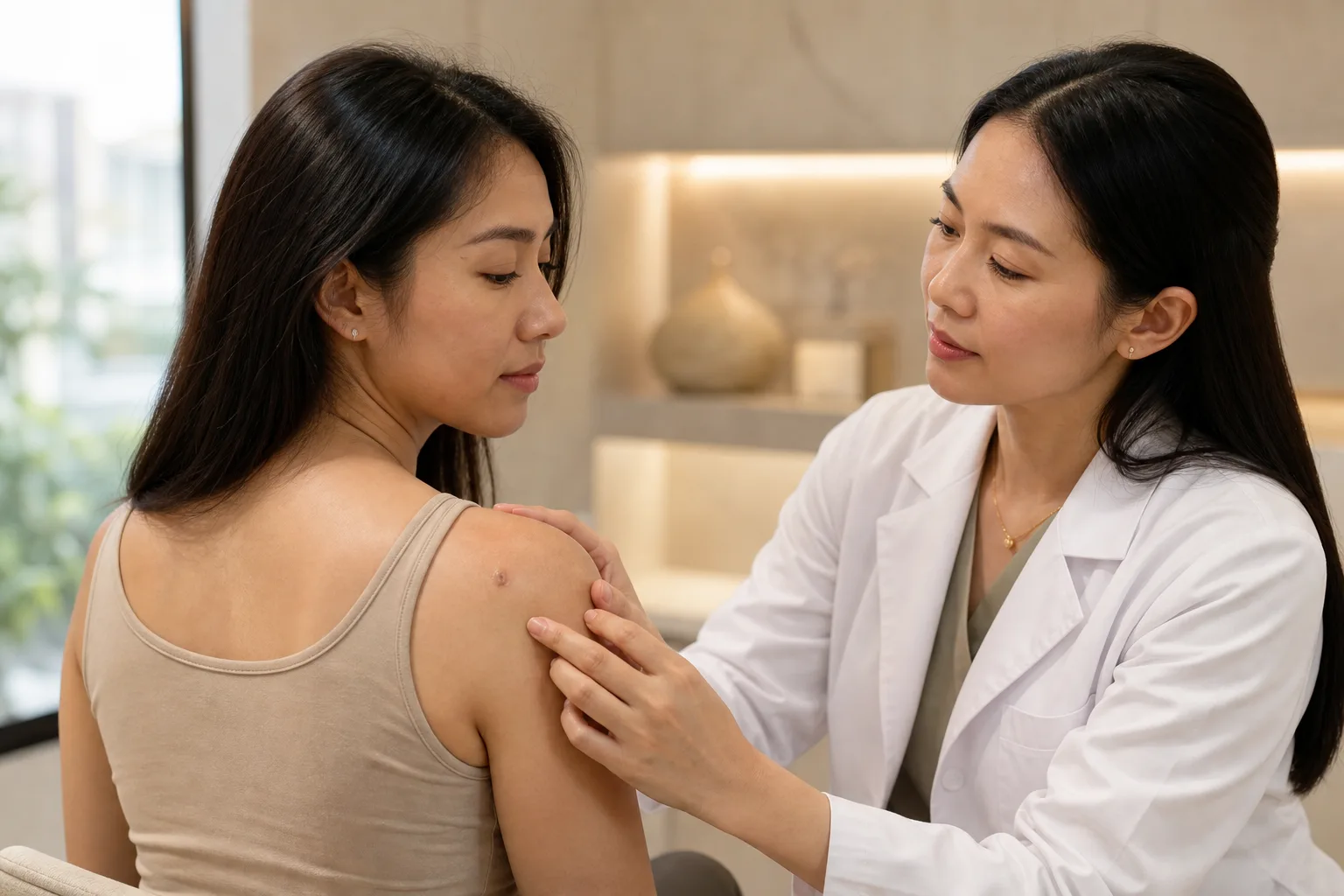
Your doctor examines the scar — its age, size, thickness, and site — confirms it is a keloid rather than a hypertrophic scar or a growth, and explains the protocol and realistic expectations before you decide anything.
- Duration:
- About 10–15 minutes
- Sensation:
- Visual and tactile examination — no discomfort
Step 2
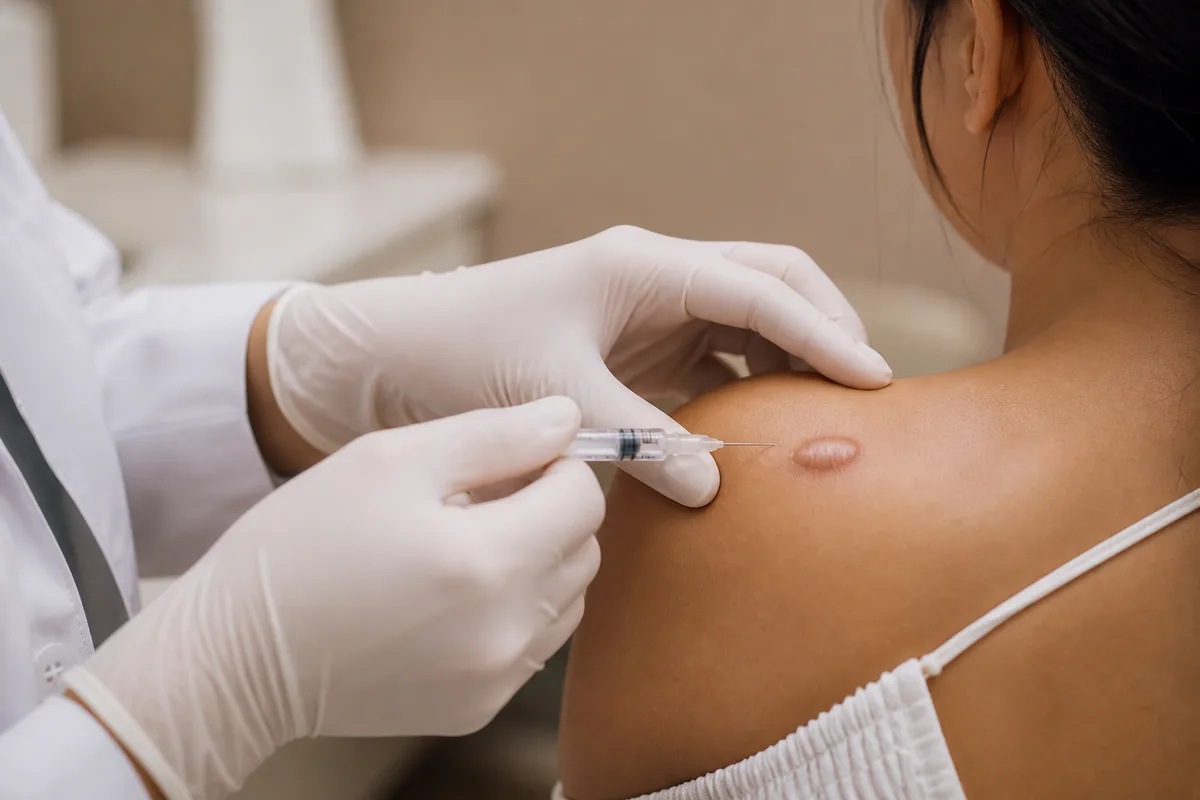
Intralesional injection
Corticosteroid is injected directly into the scar tissue with a fine needle — dosed and placed by the doctor so the keloid flattens without thinning the surrounding skin. Numbing options are available for sensitive sites.
- Duration:
- A few minutes per keloid
- Sensation:
- Brief pressure and stinging at each injection point
Step 3
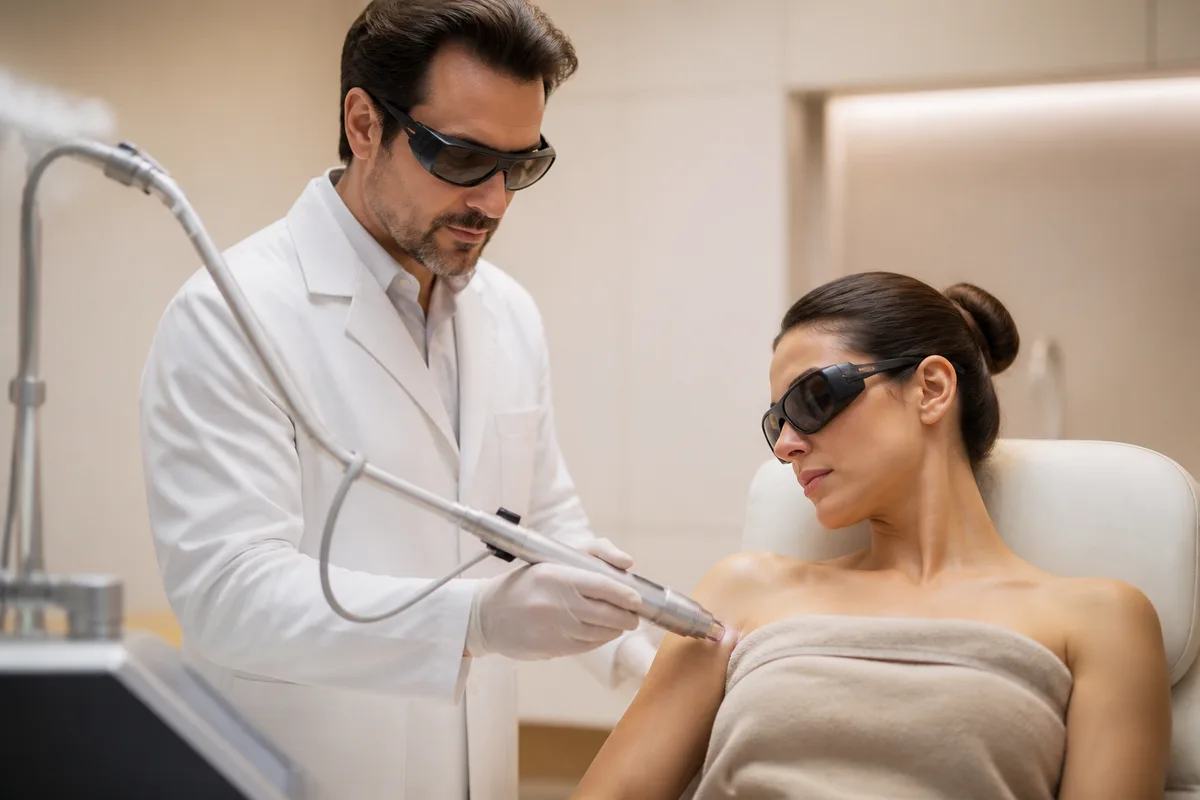
Adjunct laser, when indicated
Where redness or surface texture needs addressing, laser treatment is layered into the same protocol — commonly for older keloids or once flattening is underway. Not every scar needs it; your doctor advises based on response.
- Duration:
- Usually 10–20 minutes when included
- Sensation:
- Warm snapping sensation over the treated area

Step 4
Review & maintenance plan
You leave with aftercare guidance and a scheduled review, typically four to six weeks later. Progress is compared at each visit, and the maintenance plan guards against regrowth once flattening is achieved.
- Duration:
- About 5–10 minutes
- Sensation:
- Mild soreness at injection points as the visit ends
— What to expect
From WhatsApp photo to a flatter scar
The pathway is designed so you understand the protocol before anything is injected — and so a photo message is enough to start, whichever clinic you choose.
WhatsApp a photo
Send a clear, well-lit photo of the scar — one straight-on and one from an angle — plus how long it has been growing and whether it itches or hurts. A doctor reviews it and replies with a preliminary view, usually within minutes during clinic hours.
In-clinic scar assessment
Your doctor confirms the scar is a keloid, maps a protocol matched to its age, size, and site, sets honest expectations about flattening and recurrence, and gives you a personalised written quote before anything proceeds.
Treatment sessions
Injection sessions run four to six weeks apart, with laser layered in where indicated. Itch and tenderness usually ease first; visible flattening and softening build gradually across the course.
Maintenance & prevention
Once the scar has flattened, reviews taper off — but keloid-prone skin stays keloid-prone. You leave with a practical prevention plan for future piercings, surgery, and acne so the next keloid never forms.

What progress typically looks like
After each session
Mild soreness or slight swelling at the injection points is common for a day or two. Desk work is fine the same day; there is no wound to dress after injection-only sessions.
Weeks 1–2
Itch and tenderness are often the first things to improve — many patients notice the scar calming down before it visibly changes shape.
Sessions 2–4
Flattening and softening become visible and build with each session. Small, younger keloids respond faster; large, old scars need patience and sometimes added modalities.
Months 3–6+
Colour and texture continue settling after the scar has flattened. Maintenance reviews guard against regrowth — the step most single-visit treatments skip, and the reason they fail.
Progress varies by the keloid's age, size, thickness, site, and your skin's healing tendency. Your doctor tracks change against photographs at each review so improvement is measured, not imagined.
— Why DrPlus
Why patients choose DrPlus for keloid removal
Keloids punish shortcuts — a managed, doctor-led protocol is what actually changes them.
Intralesional therapy dosed and placed by a physician — precision matters for flattening the scar without thinning the surrounding skin.
Injection, laser, and adjunct options combined by evidence — because single-method keloid treatment recurs.
You hear the real recurrence picture and the maintenance plan upfront, not after the scar returns.
If you are keloid-prone, you learn how to manage future piercings, surgery, and acne so you never grow the next one.

Ready to discuss your skin?
Book a doctor-led assessment tailored to your concerns.
— Fees & quotes
What determines the fee — and how to get a quote

We do not publish a fixed price list because every keloid is different. The quote depends on how many scars you want treated, their size, age, and site, the modalities your protocol needs, and the number of sessions across the course.
The fastest start: WhatsApp us a clear photo of the scar. We can usually indicate what removal would involve, then confirm a personalised written quote at your assessment — at whichever of our clinics suits you — with no obligation to proceed.
- Number and size of keloids to treat
- The scar's age, thickness, and body site
- Modalities your protocol needs — injections alone or combined with laser
- Number of sessions across the course
- Whether an excision-plus-adjuvant pathway is indicated
— Related treatments
Keloid removal by location — and related treatments
Choose your market page for clinic-level detail, or explore the related scar pathways. Every option starts with the same doctor-led assessment.
Keloid Removal — Johor Bahru
Best for: JB locals & Singapore visitorsThe Johor Bahru clinic page, with cross-border planning detail for patients travelling from Singapore.
Learn MoreKeloid Removal — Singapore
Best for: Tanjong Pagar & East CoastThe Singapore clinics page, with locations, MRT directions, and local consultation detail.
Learn More
Acne Scar Treatment
Best for: Pitted & depressed scarsThe opposite scar problem — depressed acne scars need resurfacing and lifting, not flattening.
Learn More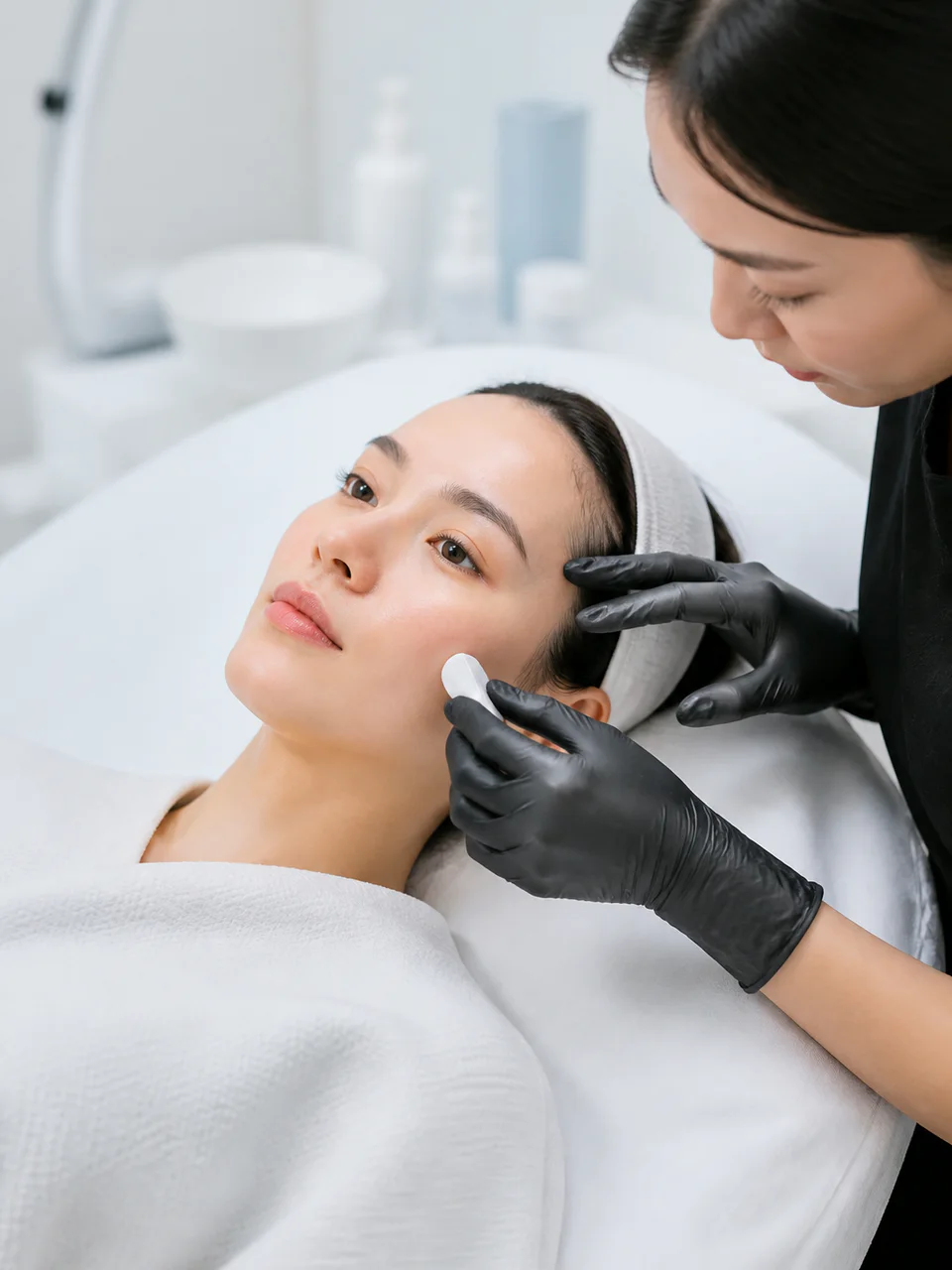
Mole & Wart Removal
Best for: Raised growthsNot every raised bump is a keloid — growths get their own doctor-checked removal pathway.
Learn More— FAQ
Common questions
Honest answer: keloids are managed and substantially improved rather than erased. Injection-led protocols can flatten, soften, and fade a keloid dramatically and relieve itch and pain — but simply cutting a keloid out without follow-up treatment sees it return, often larger. That is why removal is a protocol, not a one-off procedure.
No — and this is the most important thing to understand before booking anywhere. Excision alone re-injures keloid-prone skin, and the scar frequently regrows larger than the original. Doctor-led removal means injection-led treatment to flatten and soften the scar, with surgery reserved for selected cases — such as narrow-based earlobe keloids — and always paired with adjuvant injections.
Yes — that is the recommended first step. Send a clear, well-lit photo straight-on and one from an angle, and mention how long the scar has been growing and whether it itches or hurts. A doctor can usually give a preliminary view of what removal would involve; the definitive protocol and written quote follow your in-clinic assessment.
Injecting into firm scar tissue is briefly uncomfortable — most patients describe pressure and stinging for a few seconds per injection point. Numbing options are available for sensitive sites. Sessions are short, and many patients find the itch relief over the following weeks well worth it.
Most keloids need a series of injection sessions spaced four to six weeks apart, with visible flattening building gradually. Small, young keloids respond faster; large, old ones take longer and may need laser added. Your doctor estimates a realistic course at your assessment and reviews progress at each visit.
Symptoms usually improve first — itch and tenderness often ease within the first session or two. Visible flattening and softening typically become apparent over the following sessions and build across the course. Progress is compared against photographs at each review so change is measured, not guessed.
Earlobe keloids are among the most treatable — and the one site where surgical excision is most often appropriate, because many grow on a narrow base. Even then, excision is paired with adjuvant injection therapy around the procedure, since removal without follow-up is how earlobe keloids return larger. Re-piercing is discussed honestly as part of the plan.
A hypertrophic scar stays within the boundary of the original wound and often flattens somewhat on its own over time; a keloid grows beyond the wound's borders and keeps growing. The distinction matters because protocols and expectations differ — and it is one of the first things the doctor confirms at assessment.
Recurrence is the central challenge of keloid care, which is why single-method treatment so often disappoints. Combination protocols with a maintenance phase exist precisely to keep the scar flat once it has responded. Your doctor gives you the honest recurrence picture for your specific scar — including which sites and scar types need closer follow-up.
Largely, yes, with planning: avoiding non-essential piercings and tattoos in high-risk areas, treating acne early so lesions never scar, and telling any surgeon about your keloid tendency so wounds are managed proactively. Prevention counselling is part of the protocol, not an afterthought.
DrPlus treats keloids at our Johor Bahru clinic in Malaysia and at our Singapore clinics in Tanjong Pagar and on the East Coast. The protocol is the same doctor-led standard at every location — choose whichever is more convenient and WhatsApp a photo to start.
We do not publish prices because the plan depends on the number, size, and age of your keloids and the sessions your protocol needs. WhatsApp us a photo and we can outline what removal would involve; a personalised written quote follows your assessment at the clinic you choose.

— Request a Consultation
Start flattening that scar
WhatsApp us a photo of your keloid for a doctor's preliminary view, or book a scar assessment — you get a realistic protocol and a written quote, with no obligation to proceed.
- Doctor-led assessment and recommendations
- Reviewed personally — not auto-routed
- Discreet handling of sensitive concerns
- Reply typically within one business day
— Skin Education
Related Skin Education
Doctor-led guides written to help you understand your options before consultation. Each article links back to the relevant treatment pages.
Keloid vs Hypertrophic Scar: How to Tell — and Why It Matters
Both are raised scars — but one stays inside the wound boundary and one keeps growing beyond it. The distinction changes the entire treatment plan.
 Acne Scar Science
The Complete Science of Acne Scarring
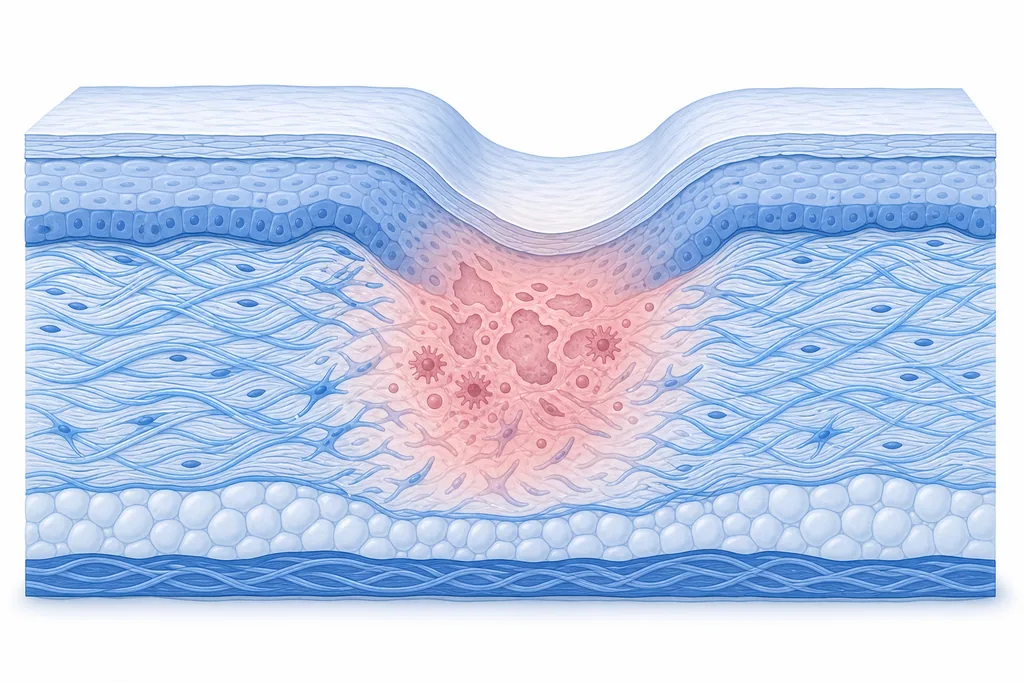
Acne scars are not a surface problem. They are the visible record of how inflammation reshaped the collagen scaffold beneath your skin. Understand that, and every treatment decision starts to make sense.
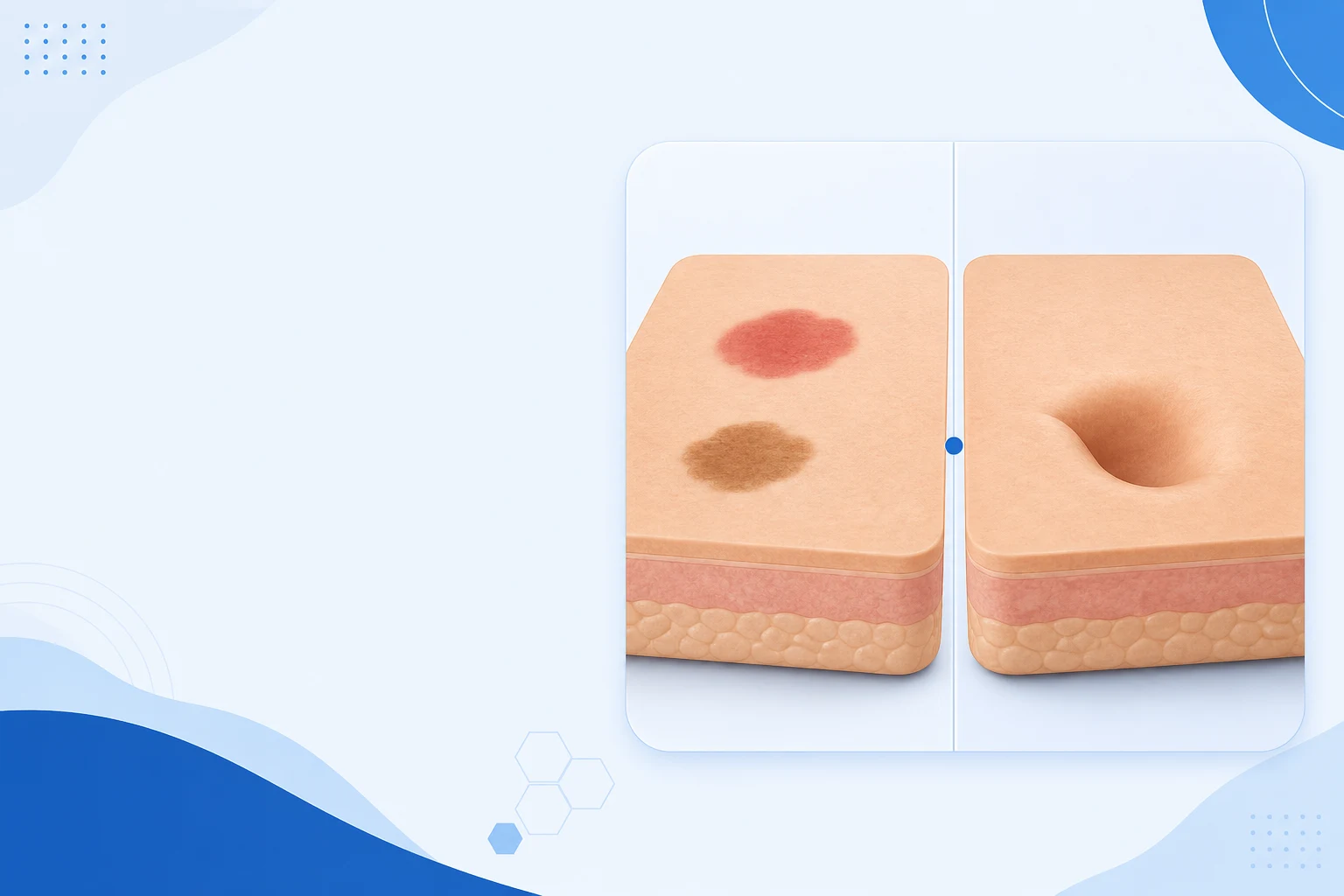 Acne Scars
Acne Marks vs Acne Scars: How to Tell the Difference
The most useful question before treating 'acne scars' is whether they are scars at all. Marks fade; scars are contour. Telling them apart changes everything.
— Methods compared
How keloids are removed — methods compared
There is no single universal keloid removal method — the scar's age, size, and site decide the protocol. These are the approaches commonly discussed at DrPlus; your doctor recommends a combination after examining the scar, not before.
First-line
Intralesional injections
Corticosteroid injected directly into the scar tissue slows collagen production so the keloid gradually flattens and softens over a course of sessions.
- Doctor-dosed and placed for precision
- Sessions typically four to six weeks apart
- Itch and pain relief often precedes visible change
- The foundation nearly every keloid protocol is built on
Redness & texture
Laser therapy
Laser treatment targets the redness and surface texture that injections alone do not address — layered into the protocol where the scar's appearance calls for it.
- Commonly combined with injection therapy
- Helps redness and surface irregularity settle
- Session count depends on the scar's response
- Added by clinical indication, not by default
Recurrence control
Combination protocols
Injection, laser, and adjunct options sequenced together — because keloids treated with a single method recur more often, and a managed course is what actually changes them.
- Protocol mapped to the scar's age, size, and site
- Progress reviewed against photographs each visit
- Maintenance phase guards against regrowth
- The honest answer to “why did my last treatment fail?”
Selected cases
Excision + adjuvant pathway
Surgical removal is considered for selected keloids — classically pedunculated earlobe keloids — and always paired with adjuvant injection therapy, because excision alone commonly triggers a larger regrowth.
- Assessed case by case, never offered as a standalone fix
- Injection therapy planned around the procedure
- Suits narrow-based earlobe keloids in particular
- Your doctor advises honestly if your scar is not a candidate
Not every raised scar is a keloid — hypertrophic scars stay within the original wound and often settle differently, and some raised bumps are growths with their own removal pathway. The assessment confirms which you have before any protocol is recommended.
Medical disclaimer
Information on this page is for general education only and does not replace a consultation with a qualified medical practitioner. Suitability, downtime, risks, and results vary by individual. Please consult your doctor before deciding on any treatment. Read the full medical disclosure.
A QUICKER SCROLL
Clinic life, in short clips
Take a breather from the detail — swipe through Facebook and TikTok moments from DrPlus, then continue when you're ready to book.