
DrPlus Skin Education · Pigmentation
Post-Inflammatory Hyperpigmentation (PIH): Treatment Guide
Those brown marks left after a spot heals are PIH — a pigment problem, not a scar. The good news: it fades, and the right care speeds it up.
Quick answer
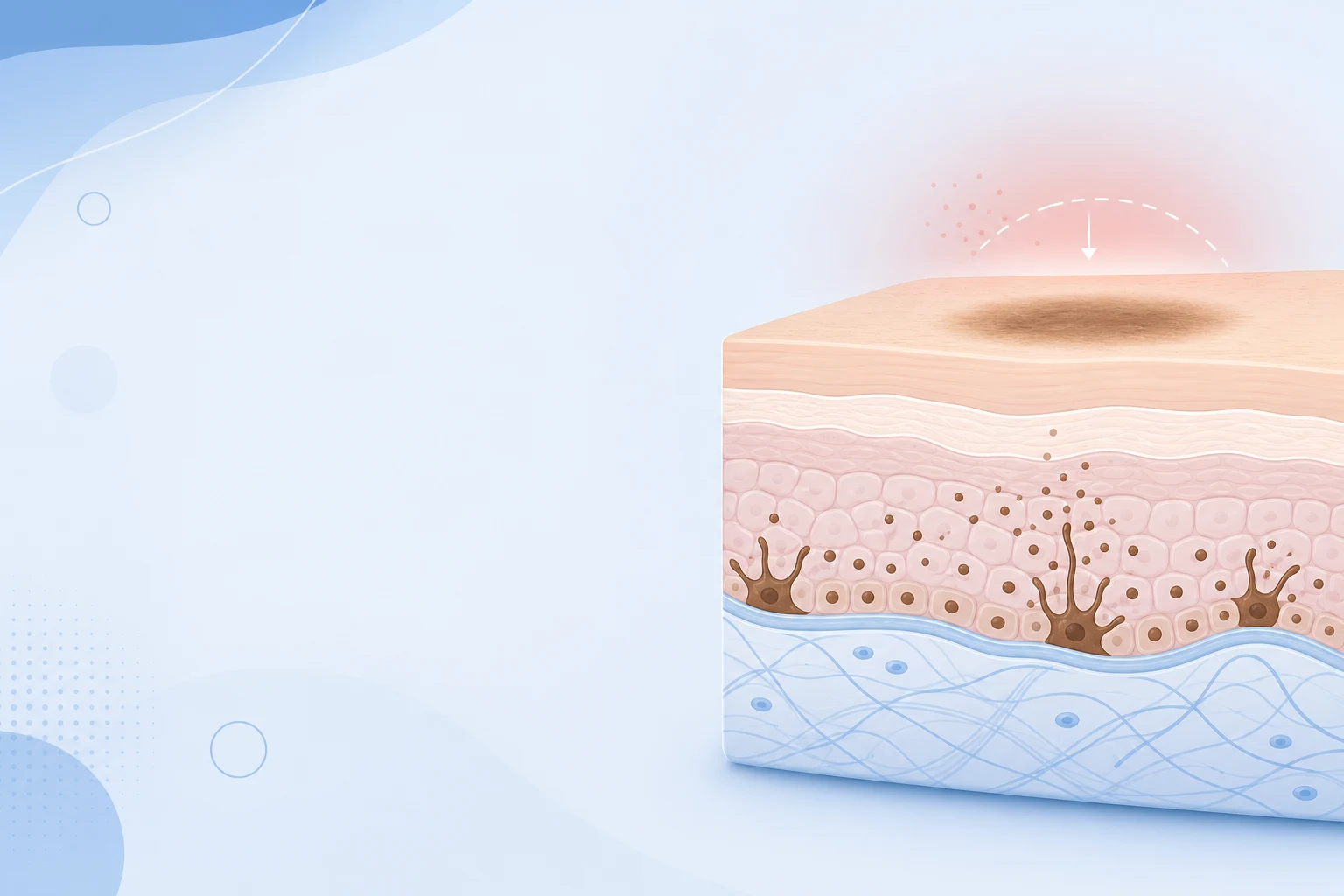
Post-inflammatory hyperpigmentation (PIH) is the flat brown or tan mark left behind after the skin has been inflamed — most familiarly after a pimple, but also after irritation, ingrown hairs or a procedure. It is crucial to understand that PIH is a pigment problem, not a scar: there is no change in the skin's contour, just colour.
That distinction is good news, because pigment fades. PIH usually clears on its own over weeks to months, and the right care — above all sun protection — speeds it up. The key is not to mistake it for a scar and over-treat it.
How PIH forms
When skin is inflamed, the inflammation signals pigment cells (melanocytes) to ramp up melanin production. That excess melanin is deposited in the area as a flat dark mark. In deeper skin tones, pigment cells are more reactive, so PIH is both more common and more persistent — and pigment can drop deeper into the skin, where it fades more slowly.
Because it is driven by inflammation, the most effective prevention is to limit inflammation in the first place — controlling acne, not picking, and avoiding harsh treatments.
— Mechanism
How a dark mark forms after inflammation
Inflammation
Acne, heat or a treatment irritates the skin, releasing signalling molecules.
Melanocytes activate
Those signals switch pigment cells into overdrive, over-producing melanin.
Pigment deposited
Excess melanin settles in the skin as a flat dark mark — and in deeper skin can drop into the dermis, where it fades slowly.
PIH is a pigment response, not a structural scar. It often fades over months — but the right care, and avoiding fresh inflammation, speeds recovery and prevents new marks.
PIH versus scars (and PIE)
Two look-alikes cause confusion. Acne scars are changes in contour (depressions or raised tissue) that do not fade on their own. PIE (post-inflammatory erythema) is the red or pink version of PIH — lingering blood-vessel redness rather than brown pigment, more common in lighter skin. Each is treated differently, so identifying which you have matters.
The simple test: PIH is flat and brown and fades; a scar dents or raises and persists; PIE is flat and red. When unsure, a doctor can tell them apart quickly.
— Comparison
PIH vs PIE vs scar
| Feature | PIH | PIE | Scar |
|---|---|---|---|
| What it is | Brown pigment | Red vessels | Contour change |
| Colour | Brown / tan | Red / pink | Often shadowed |
| Over time | Fades | Fades | Persists |
| Key treatment | Pigment care + sun protection | Vascular care | Structural treatment |
What it is
- PIH
- Brown pigment
- PIE
- Red vessels
- Scar
- Contour change
Colour
- PIH
- Brown / tan
- PIE
- Red / pink
- Scar
- Often shadowed
Over time
- PIH
- Fades
- PIE
- Fades
- Scar
- Persists
Key treatment
- PIH
- Pigment care + sun protection
- PIE
- Vascular care
- Scar
- Structural treatment
How PIH is treated
Time and sun protection do most of the work. Daily broad-spectrum sunscreen is non-negotiable, because UV deepens and prolongs PIH. Supportive topicals that calm pigment production speed fading. For stubborn marks, gentle peels or cautious pigment-aware laser can help — used carefully, since over-treatment can ironically cause more PIH.
Crucially, any active source of inflammation (such as ongoing acne) must be controlled first, or new marks keep appearing faster than old ones fade.
When to see a doctor
See a doctor if your marks are widespread, slow to fade, or you are not sure whether they are PIH, PIE or scars. An assessment confirms the diagnosis and, importantly, addresses any ongoing inflammation (like active acne) that keeps generating new marks.
At DrPlus in Johor Bahru, PIH is treated gently and patiently, with the cause controlled first.
— Frequently asked
Common questions
PIH is flat brown pigment left after skin inflammation — such as acne, irritation or ingrown hairs. It is a pigment response, not a scar, so it fades over time, especially with sun protection and supportive care.
Often weeks to several months, depending on depth and skin tone. Deeper skin tones tend to develop more persistent PIH. Sun protection significantly speeds clearing; UV slows it down.
No. PIH is a flat colour change that fades, while scars are changes in the skin's contour that persist. They need different treatments, so it is important to tell them apart.
Daily broad-spectrum sun protection, supportive pigment topicals, and controlling any active inflammation (like acne). Stubborn marks may improve with gentle peels or cautious laser, but over-treatment can cause more PIH.
Largely yes — by limiting inflammation: control acne, avoid picking and harsh treatments, and protect from the sun. Less inflammation means fewer and lighter marks.
— Related treatments
Continue with the relevant DrPlus treatment pages
Each page goes deeper into mechanism, suitability and recovery — your final plan is confirmed at consultation.
— Continue reading
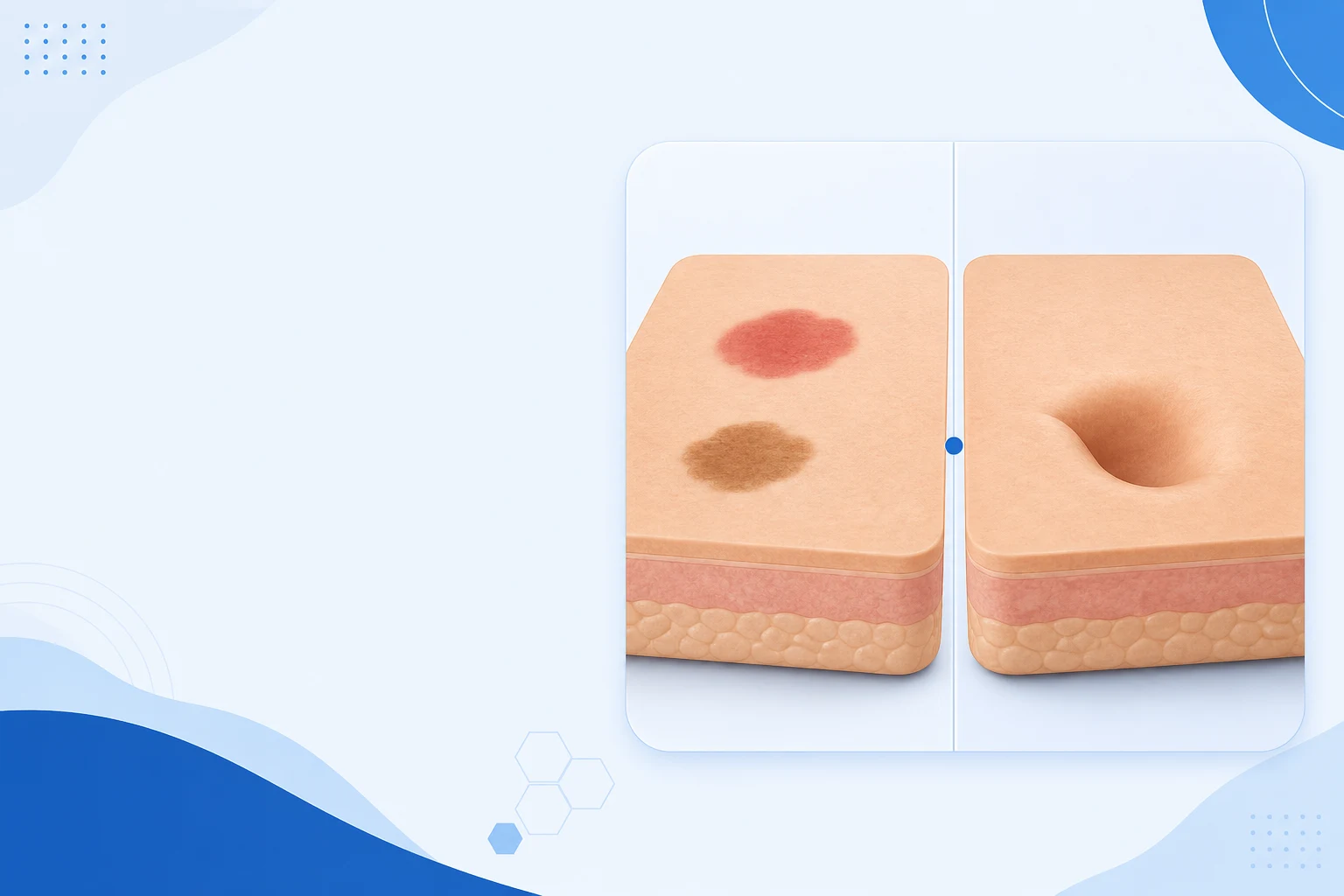 Acne Scars
Acne Marks vs Acne Scars: How to Tell the Difference
The most useful question before treating 'acne scars' is whether they are scars at all. Marks fade; scars are contour. Telling them apart changes everything.
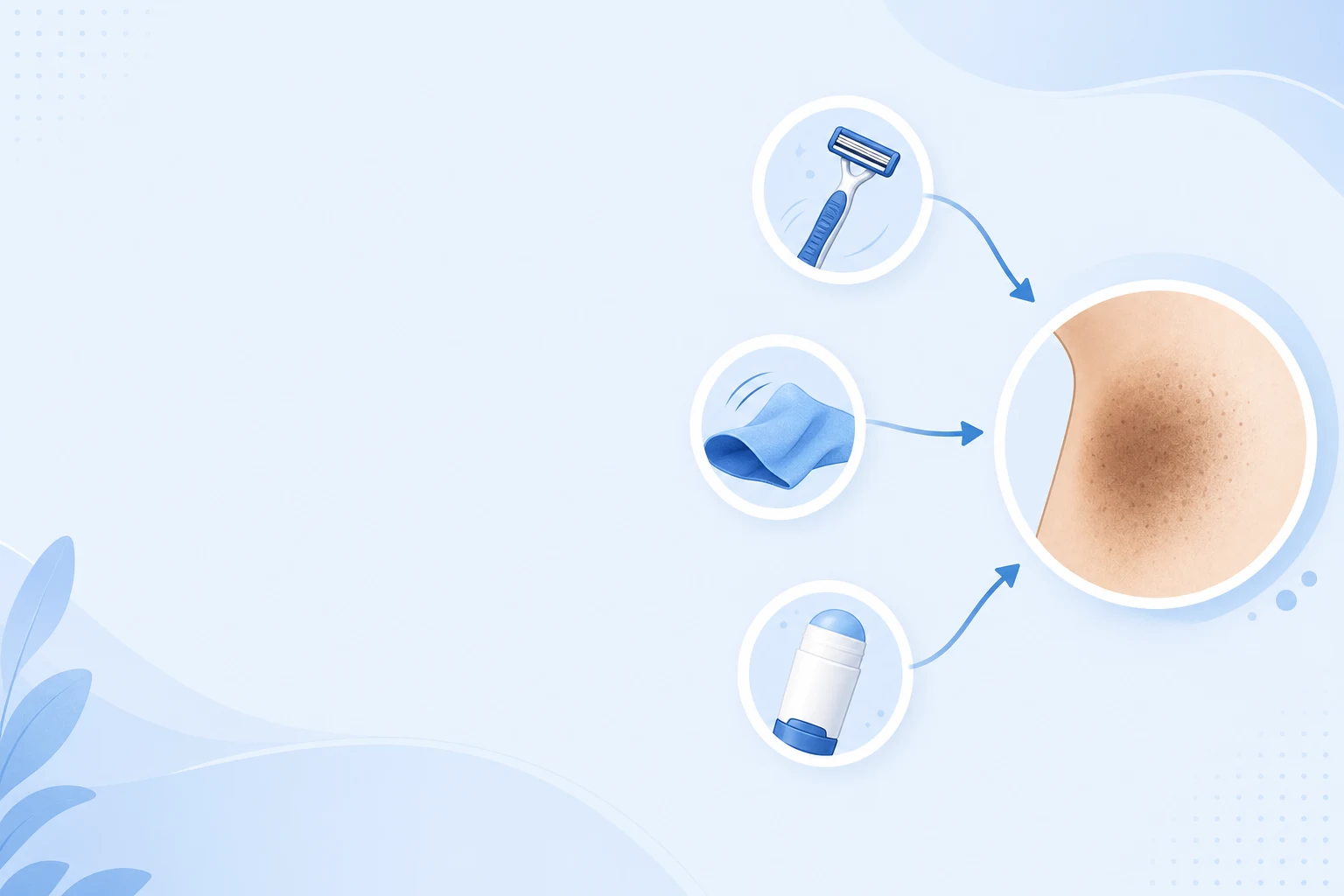 Underarm Whitening
Dark Underarms: Causes and How to Treat Them
Dark underarms are usually a pigment response to irritation, not poor hygiene. Understanding the cause is the first step to lightening them.
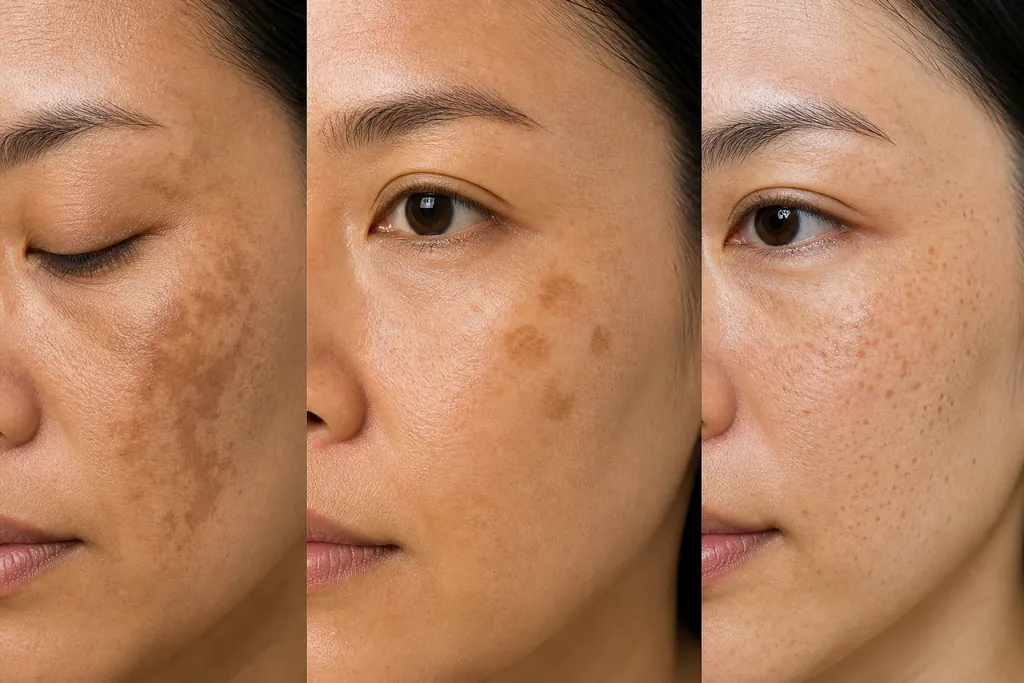 Pigmentation
Melasma vs Freckles: Photos & How to Tell Them Apart
Three of the most common pigmentation patterns — and they behave very differently in treatment.