
DrPlus Skin Education · Pigmentation
Hori's Nevus vs Melasma: Treating Deep Pigment
Greyish-brown patches that creams never touch may not be melasma at all. Hori's nevus is deep pigment — and it is treated very differently.
Quick answer
Hori's nevus — medically, acquired bilateral nevus of Ota-like macules (ABNOM) — is a pigmentation made of pigment cells sitting deep in the dermis. It usually appears as symmetrical greyish-brown or blue-brown patches on the cheeks and temples, often in adult Asian women, and is very commonly mistaken for melasma.
The distinction matters enormously, because the two are treated almost oppositely. Melasma is shallow-to-mixed and easily worsened by aggressive lasers; Hori's is deep and actually needs laser to reach and clear it. Getting the diagnosis right is the whole game.
Why depth changes everything
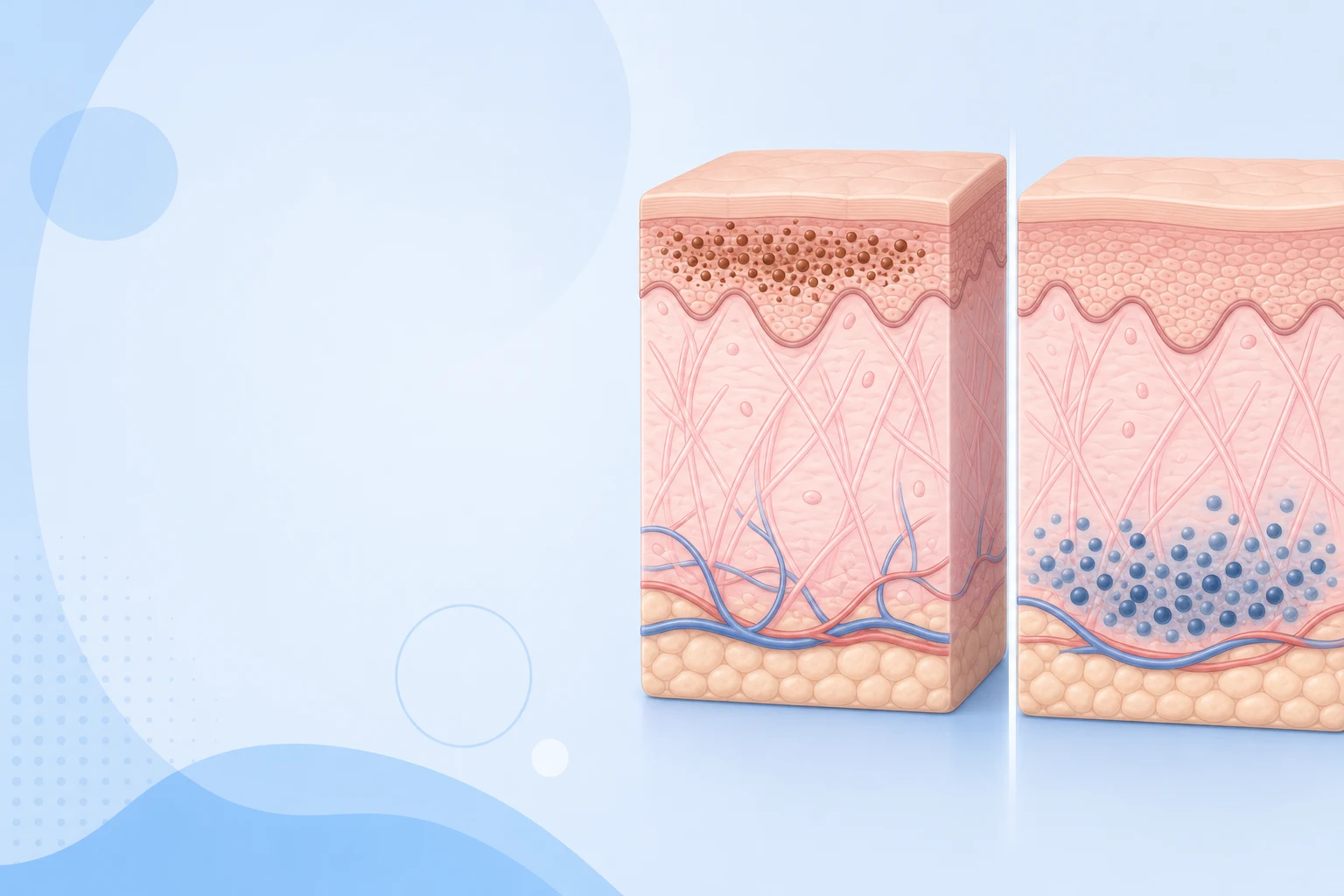
The defining feature of Hori's nevus is depth. Its pigment cells sit in the dermis, well below the surface, which gives it that characteristic grey or blue-brown tone (deep pigment reads cooler through the skin). Topicals and gentle peels work at the surface, so they simply cannot reach it — which is why creams disappoint.
Pigment lasers, by contrast, can deliver energy to that depth and break the pigment up for the body to clear. This is the reverse of melasma, where reaching deep and hard is exactly what causes trouble.
— Why depth matters
Where the pigment sits predicts how it responds
Epidermal
Brown pigment sits high in the skin. More accessible, generally more responsive.
Dermal
Blue-grey pigment sits deep. Stubborn — e.g. Hori's nevus — and slower to clear.
Mixed
Pigment at both depths. Needs a careful, layered plan rather than one setting.
Depth is the single biggest predictor of how pigmentation behaves. Shallow brown pigment is generally more treatable; deep blue-grey pigment is far more stubborn and needs patience and the right device. Most real pigmentation is mixed, which is why a doctor assesses depth before choosing any treatment.
Hori's nevus vs melasma
They overlap in appearance and location, which is why they are confused — and sometimes they coexist. But several clues help: Hori's is often greyer/bluer, tends to appear later and stay stable, and does not respond to the creams that help melasma. Melasma is browner, fluctuates with sun and hormones, and worsens with aggressive treatment.
Because misdiagnosis leads to the wrong treatment intensity, a proper assessment (sometimes with skin imaging) is the safe way to tell them apart before treating.
— Comparison
Hori's nevus vs melasma
| Feature | Hori's nevus | Melasma |
|---|---|---|
| Pigment depth | Deep (dermal) | Shallow to mixed |
| Colour | Grey / blue-brown | Brown |
| Response to creams | Little | Often helps |
| Response to laser | Good (mainstay) | Risky — cautious only |
| Course | Stable, improves with treatment | Relapsing, fluctuates |
Pigment depth
- Hori's nevus
- Deep (dermal)
- Melasma
- Shallow to mixed
Colour
- Hori's nevus
- Grey / blue-brown
- Melasma
- Brown
Response to creams
- Hori's nevus
- Little
- Melasma
- Often helps
Response to laser
- Hori's nevus
- Good (mainstay)
- Melasma
- Risky — cautious only
Course
- Hori's nevus
- Stable, improves with treatment
- Melasma
- Relapsing, fluctuates
How Hori's nevus is treated
Pigment-specific laser is the mainstay. Because the pigment is deep and dense, it takes a series of sessions spaced out over time to gradually break it down and let the body clear it. Improvement is cumulative, and results tend to hold well rather than relapse the way melasma does.
Sun protection still matters to protect the skin and avoid post-treatment pigmentation, and where melasma coexists, the plan has to balance treating the deep pigment without provoking the shallow melasma — a genuinely doctor-led balancing act.
— Healing timeline
Across a course of laser
Session 1
First pass
Laser begins breaking up deep pigment; expect gradual, not instant, change.
Between sessions
Clearing
The body removes shattered pigment over the following weeks.
Multiple sessions
Cumulative fade
Pigment lightens progressively across spaced sessions.
After
Stable result
Hori's tends to stay improved, unlike relapsing melasma.
A general guide only. Individual healing speed varies with skin type, scar depth, aftercare and the treatment used.
When to see a doctor
If greyish-brown patches have resisted creams, or you have been treated for 'melasma' without success, it is worth being assessed for Hori's nevus. Getting the diagnosis right changes the entire approach — from cautious-and-topical to laser-led.
At DrPlus in Johor Bahru, pigmentation is assessed carefully to separate deep dermal pigment from melasma before any treatment.
— Frequently asked
Common questions
Hori's nevus (ABNOM) is deep dermal pigmentation, usually greyish or blue-brown symmetrical patches on the cheeks and temples, common in adult Asian women. It is frequently mistaken for melasma but treated very differently.
Hori's pigment sits deep in the dermis, is greyer/bluer, does not respond to creams, and responds well to laser. Melasma is shallower, browner, fluctuates with sun and hormones, and can worsen with aggressive laser.
Yes — pigment laser is the mainstay, because the pigment is too deep for creams. It takes a series of sessions to break the pigment down gradually, and results tend to hold well.
If the pigment is deep dermal (as in Hori's nevus), surface creams cannot reach it. This is a strong clue that the diagnosis may be Hori's rather than melasma, and that laser is needed.
It tends to improve in one direction with treatment and stay stable, unlike melasma which relapses with triggers. Sun protection still helps protect the result.
— Related treatments
Continue with the relevant DrPlus treatment pages
Each page goes deeper into mechanism, suitability and recovery — your final plan is confirmed at consultation.
— Continue reading
 Melasma
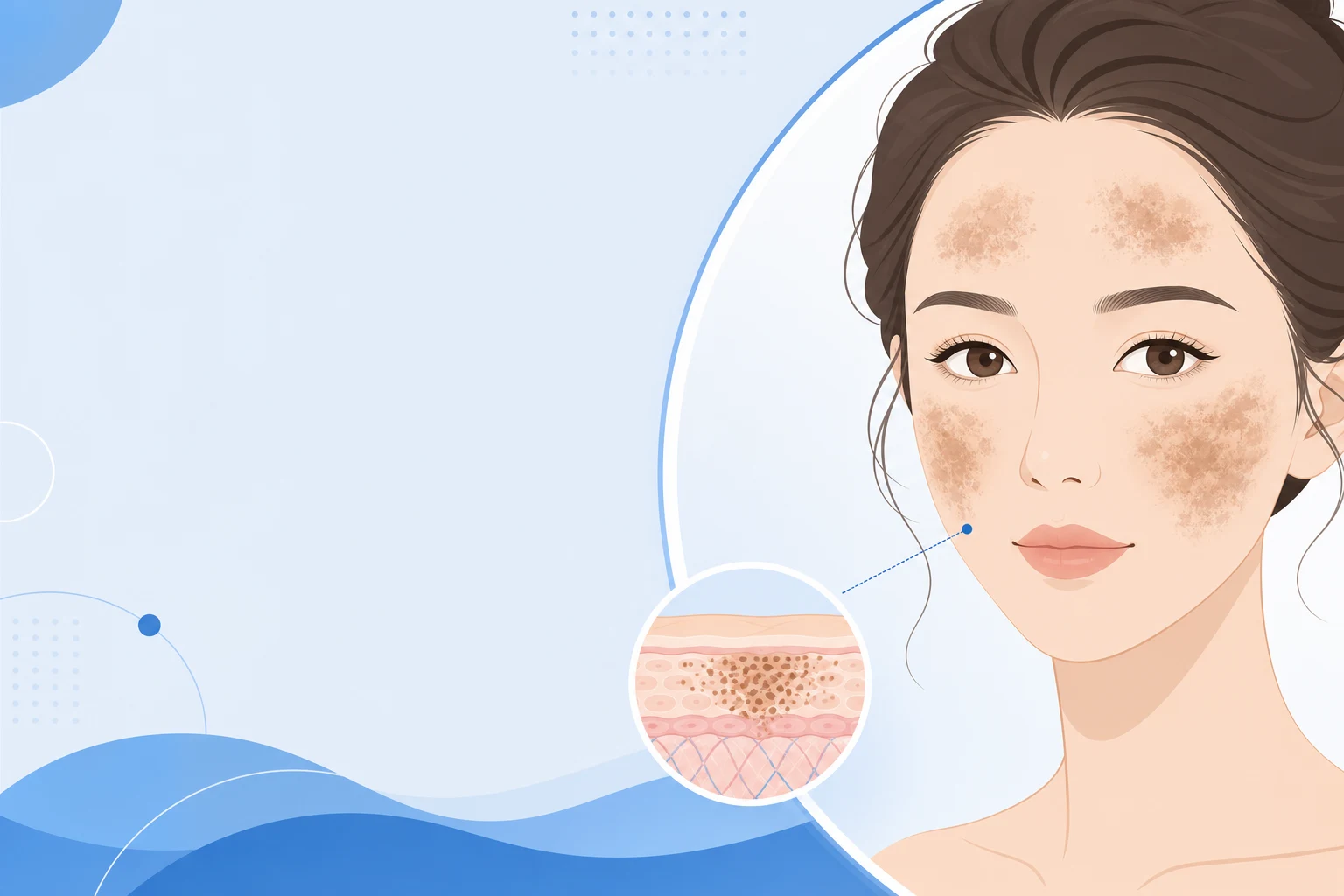
Melasma Treatment in Singapore & Johor Bahru: A Doctor's Guide
Melasma is the most misunderstood pigmentation of all — and the easiest to make worse. Here is how it is actually treated, and why patience beats power.
 Pigmentation
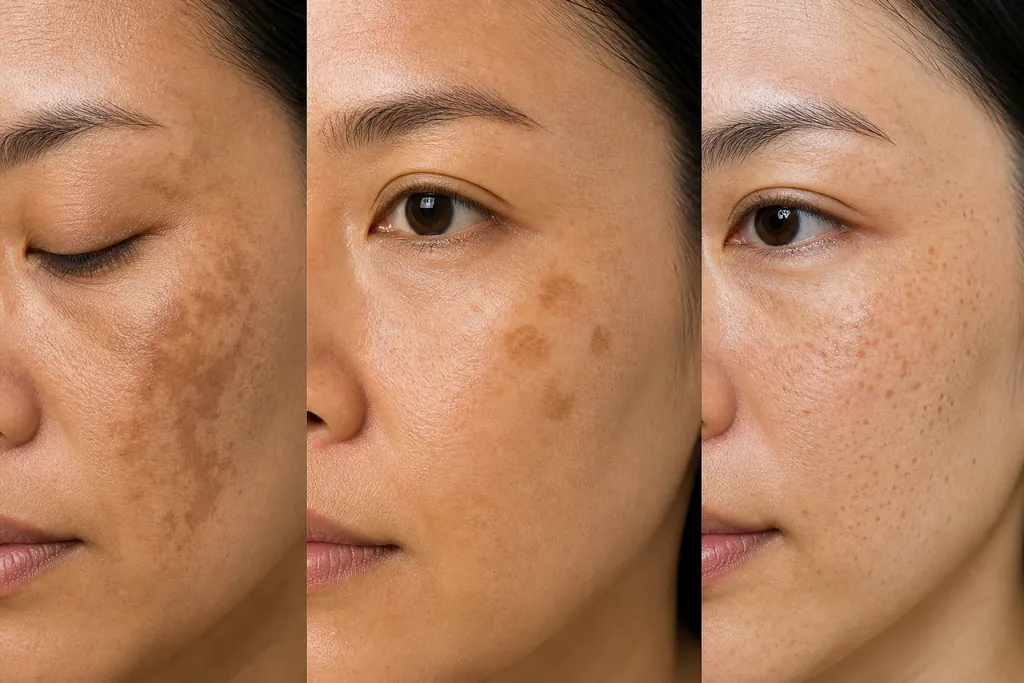
Melasma vs Freckles: Photos & How to Tell Them Apart
Three of the most common pigmentation patterns — and they behave very differently in treatment.
 Laser
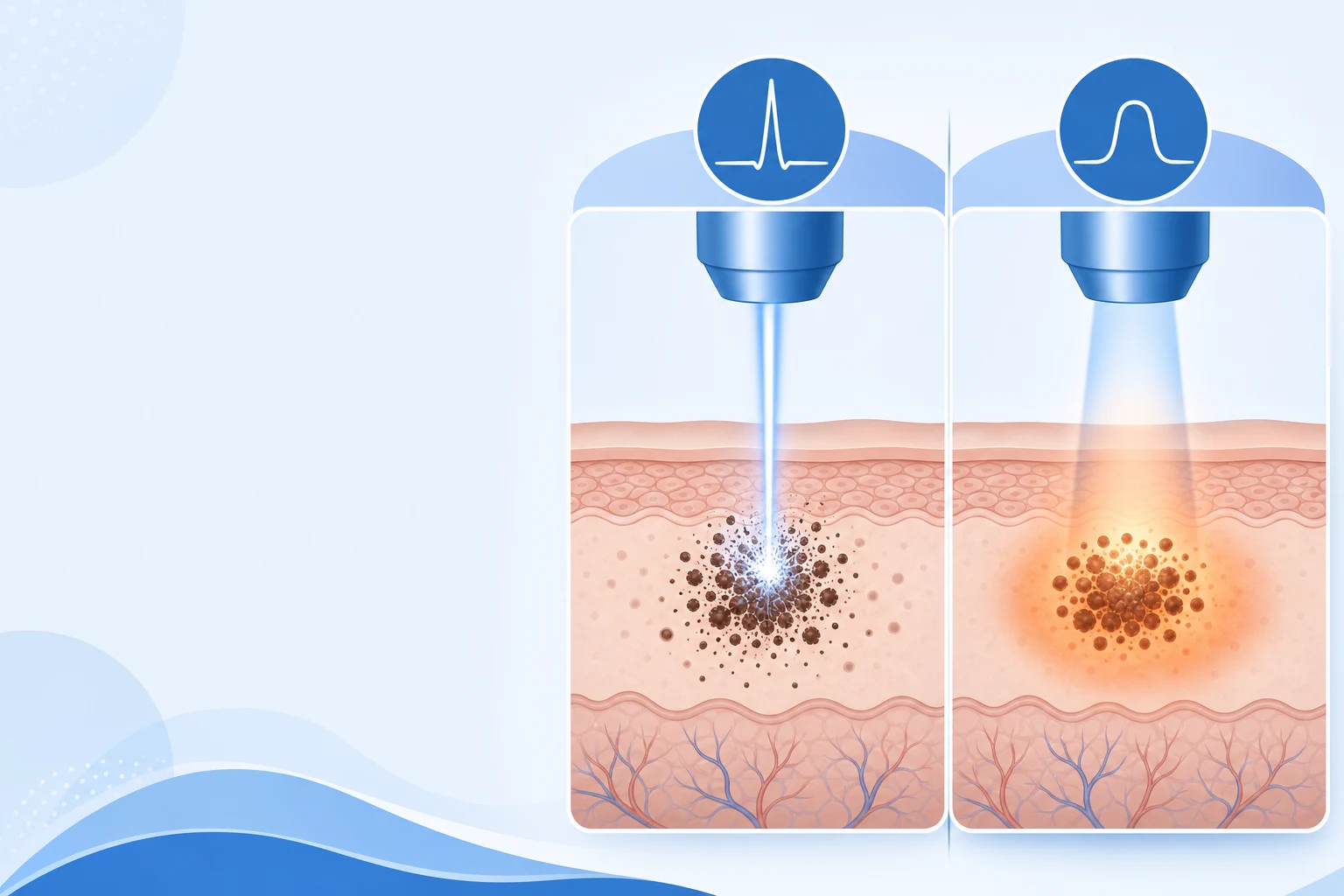
LaserPico Laser vs Q-Switch Laser for Pigmentation
Two pigment lasers, one common question. Here is the real difference between pico and Q-switched lasers — and why neither is simply 'better'.