
DrPlus Skin Education · Active Acne
Hormonal Acne: Causes and How to Treat It
Breakouts along your jaw that flare on a monthly cycle? That pattern points to hormonal acne — and it responds to a different approach than teenage acne.
Quick answer
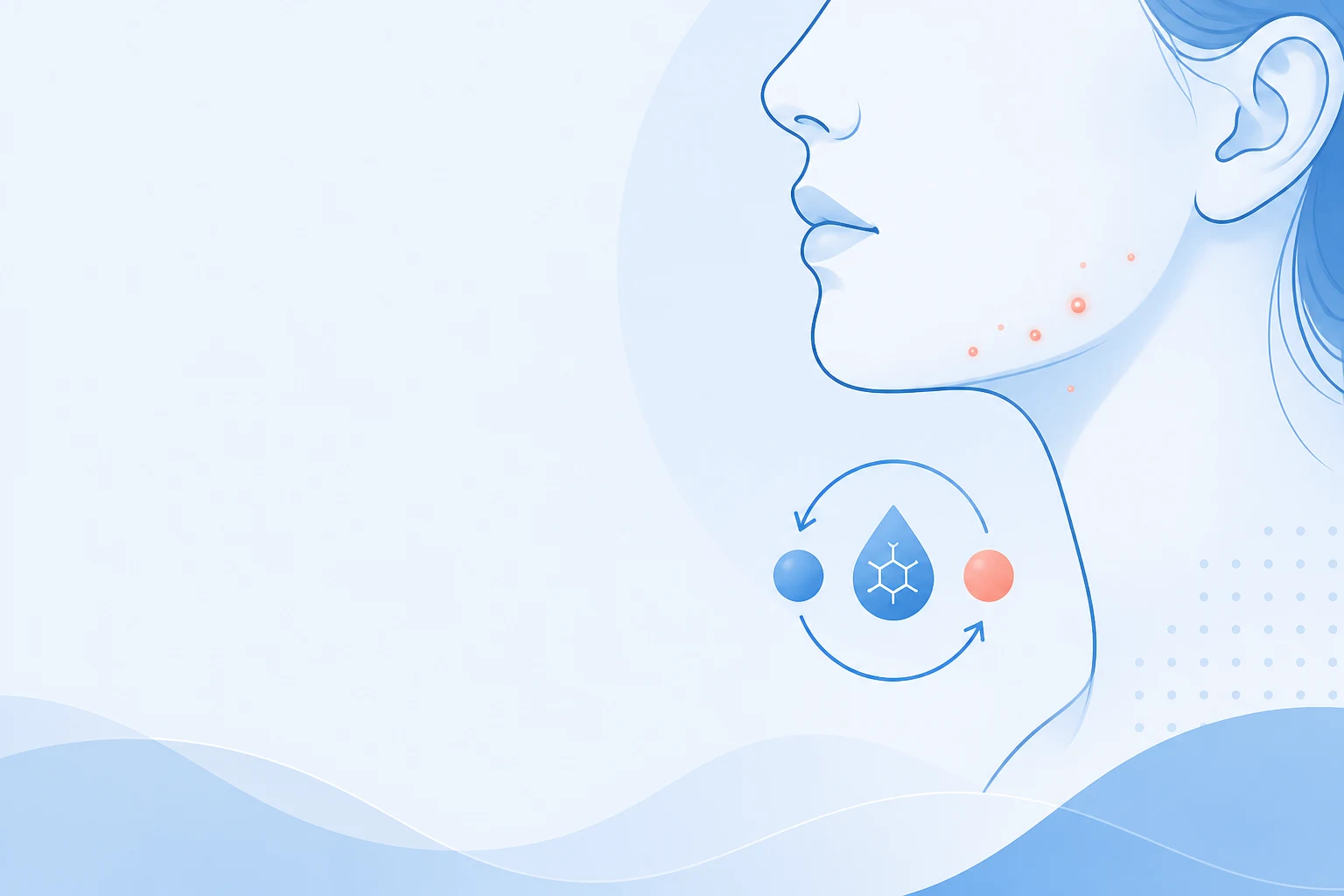
Hormonal acne is acne whose main driver is hormonal fluctuation rather than simply oily skin or clogged pores. Hormones influence how much oil the skin produces, and shifts — around the menstrual cycle, in adulthood, or with certain conditions — can tip the balance toward breakouts. That is why it often persists well beyond the teenage years.
Because the driver is partly internal, hormonal acne frequently shrugs off surface-only products. The treatments that work often address the hormonal influence alongside the skin, which is why a medical assessment is usually the turning point.
Why hormones drive breakouts
Certain hormones (androgens) stimulate the oil glands to produce more sebum. When sebum rises, pores are more likely to clog and inflame — the start of an acne lesion. Natural fluctuations in these hormones, such as across the menstrual cycle, explain why hormonal acne often flares on a predictable rhythm.
This is also why hormonal acne concentrates on the lower face — the jaw and chin are particularly responsive areas. The pattern (location plus timing) is one of the clearest clues that hormones are involved.
Mechanism
Hormonal signal
Androgens prompt oil glands to produce more sebum.
Mechanism
More oil
Excess sebum makes pores more likely to clog and inflame.
Mechanism
Cyclical flares
Natural hormone shifts cause breakouts to follow a pattern, often on the jaw and chin.
How to tell it apart
Hormonal acne has a recognisable signature: it appears predominantly on the lower third of the face, tends to be deeper and more tender (rather than surface blackheads), often flares cyclically, and persists into adulthood. Teenage acne, by contrast, is more often spread across the forehead, nose and cheeks and driven by the broad surge of puberty.
These distinctions matter because they change the treatment. Surface exfoliation alone rarely controls a hormonally driven, deeper pattern.
— Comparison
Hormonal vs typical teenage acne
| Feature | Hormonal acne | Teenage acne |
|---|---|---|
| Location | Lower face: jaw, chin | Forehead, nose, cheeks (T-zone) |
| Lesion type | Deeper, tender papules/cysts | More blackheads and whiteheads |
| Timing | Often cyclical flares | Persistent through puberty |
| Age | Adults, often women | Teens |
Location
- Hormonal acne
- Lower face: jaw, chin
- Teenage acne
- Forehead, nose, cheeks (T-zone)
Lesion type
- Hormonal acne
- Deeper, tender papules/cysts
- Teenage acne
- More blackheads and whiteheads
Timing
- Hormonal acne
- Often cyclical flares
- Teenage acne
- Persistent through puberty
Age
- Hormonal acne
- Adults, often women
- Teenage acne
- Teens
How it is treated
Treatment usually combines skin-directed therapy with, where appropriate, treatment of the hormonal driver. Topicals still play a role in keeping pores clear and calming inflammation, but the breakthrough for many people comes from addressing the internal driver under medical guidance.
Because hormonal treatment must be tailored to the individual and their health history, this is firmly a doctor-led area — not something to self-prescribe. The aim is steady control of breakouts, which also protects against the scarring that deeper lesions can cause.
When to seek help
If your breakouts cluster on the jaw and chin, flare on a cycle, persist into adulthood, or resist the products you have tried, a hormonal pattern is worth investigating. A medical assessment can confirm the pattern and open treatment options that target the actual driver.
At DrPlus in Johor Bahru, hormonal acne is assessed individually, with a plan that balances skin-directed care and, where suitable, the hormonal driver — and an eye on preventing scarring.
— Frequently asked
Common questions
Hormones called androgens stimulate the oil glands to produce more sebum, which makes pores more likely to clog and inflame. Natural fluctuations — such as around the menstrual cycle — cause the cyclical flares typical of hormonal acne.
Clues include breakouts mainly on the lower face (jaw and chin), deeper and more tender lesions, cyclical flares, and acne that persists into adulthood. A doctor can confirm the pattern.
Treatment usually combines skin-directed therapy with, where appropriate, medical treatment of the hormonal driver, tailored to the individual. Surface products alone often do not control a hormonally driven pattern.
It can usually be controlled well rather than permanently cured, because it is tied to hormonal patterns. Ongoing management keeps breakouts under control and reduces the risk of scarring.
It can, because hormonal lesions are often deeper and more inflamed. Controlling the acne early reduces that risk, which is one reason to treat it medically rather than wait.
— Related treatments
Continue with the relevant DrPlus treatment pages
Each page goes deeper into mechanism, suitability and recovery — your final plan is confirmed at consultation.
— Continue reading
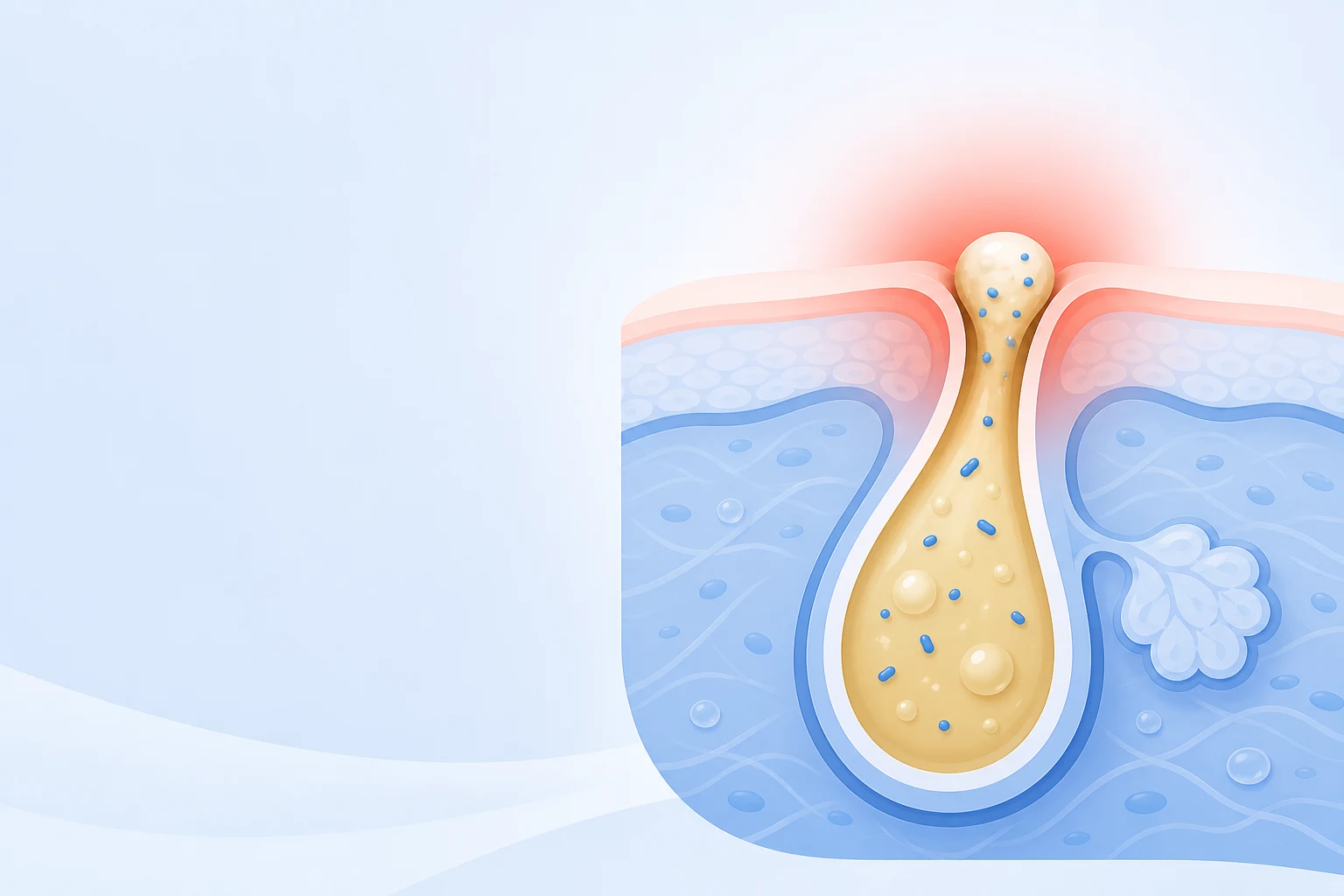 Active Acne
How to Treat Acne in Singapore & Johor Bahru: A Doctor's Guide
Most acne advice online is noise. Here is how acne actually forms and how it is treated medically — and why getting it under control early protects your skin from scars.
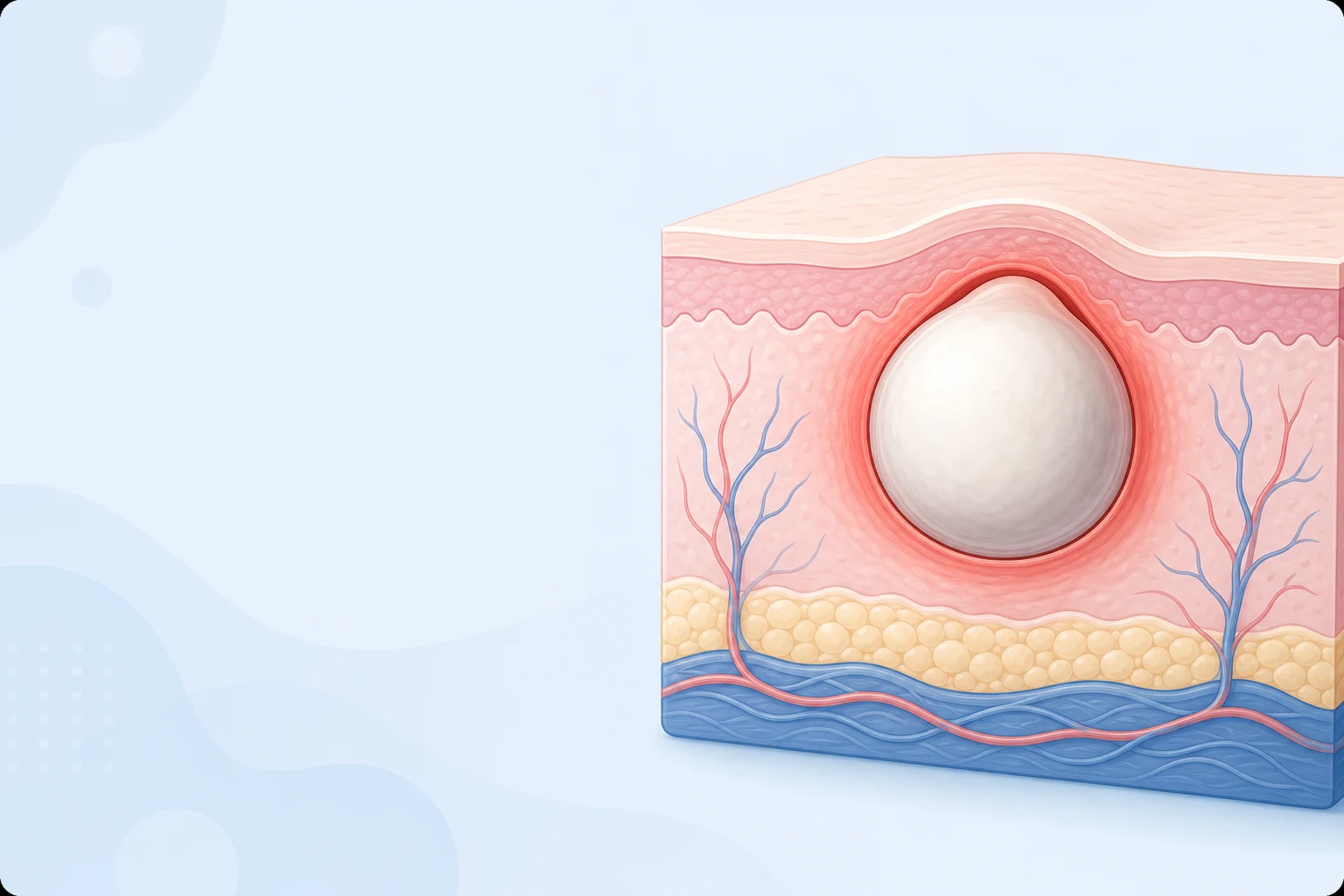 Active Acne
Cystic and Nodular Acne: Why It Scars and How to Treat It
Deep, painful lumps that never come to a head are the acne type most likely to scar — and the type that most needs a doctor, not a squeeze.
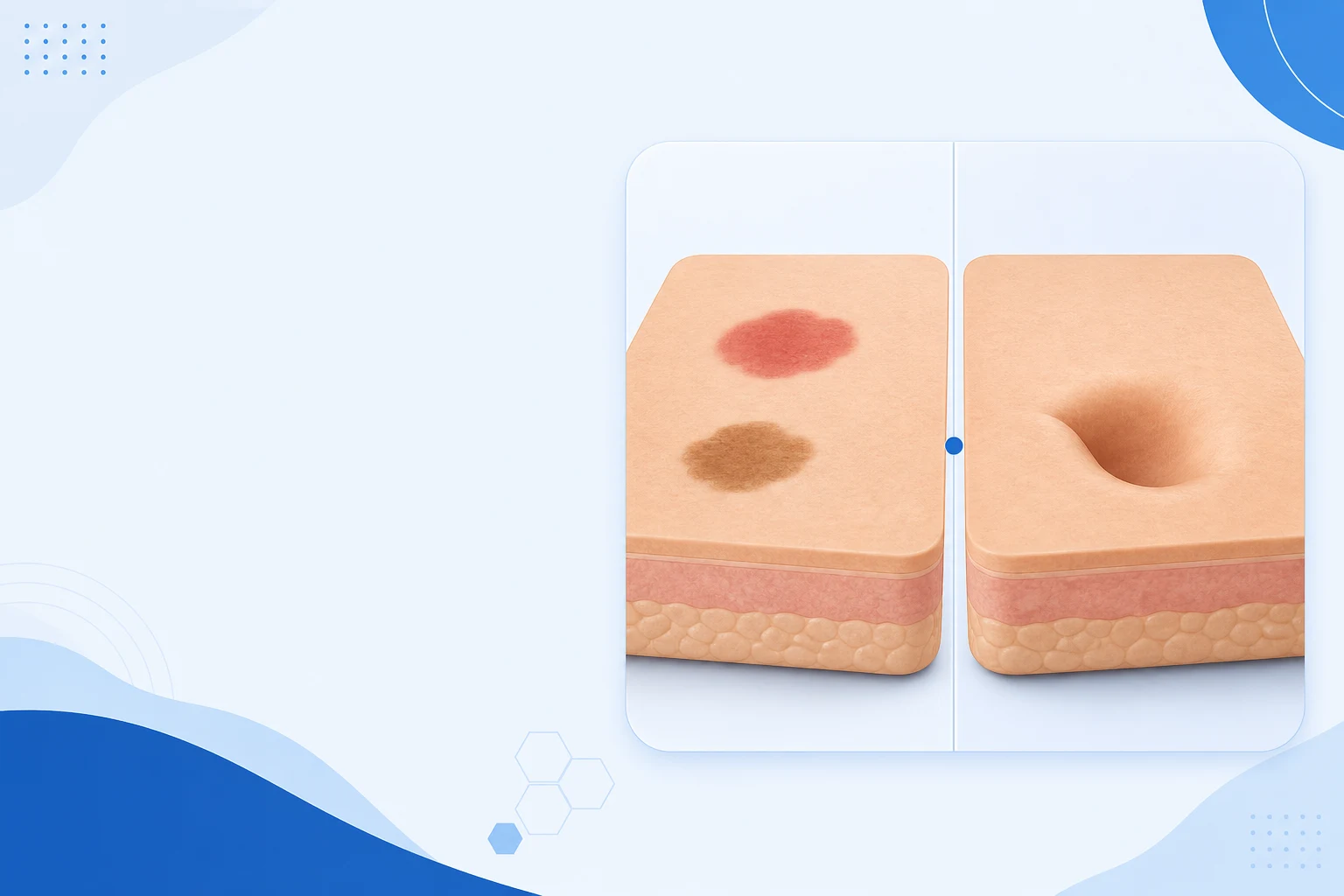 Acne Scars
Acne Marks vs Acne Scars: How to Tell the Difference
The most useful question before treating 'acne scars' is whether they are scars at all. Marks fade; scars are contour. Telling them apart changes everything.