
DrPlus Skin Education · Active Acne
How to Treat Acne in Singapore & Johor Bahru: A Doctor's Guide
Most acne advice online is noise. Here is how acne actually forms and how it is treated medically — and why getting it under control early protects your skin from scars.
Quick answer
Acne is a medical skin condition, not a hygiene failure. It happens when pores become blocked with oil and dead cells, bacteria multiply, and the skin becomes inflamed. Because several factors drive it, the treatment that works is one that targets those drivers — not whatever promises the fastest fix.
This guide explains how acne forms and the real treatment ladder, from topicals to oral medication to in-clinic options. Crucially, it also explains why getting acne under control early is the best scar-prevention strategy there is — because the inflammation that drives breakouts is the same inflammation that leaves scars.
How acne actually forms
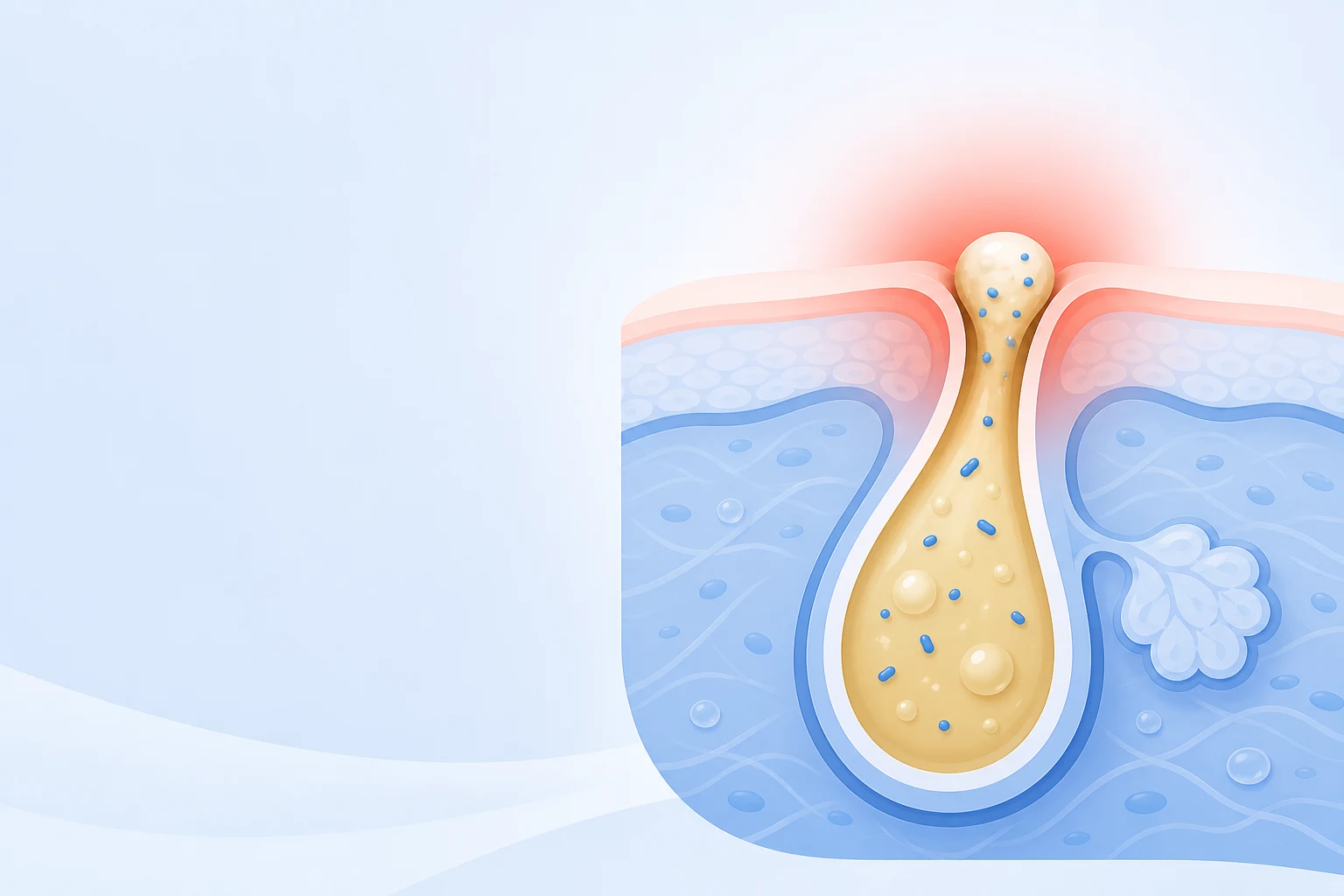
Four things combine to create a breakout. First, the pore produces too much oil (sebum), often under hormonal influence. Second, dead skin cells fail to shed cleanly and clog the opening. Third, normal skin bacteria thrive in the blocked, oily environment. Fourth, the body mounts an inflammatory response — the redness, swelling and pain of a pimple.
Understanding these four drivers explains why treatment is layered: different medicines target different steps. It also explains why a single product rarely fixes moderate acne — you often need to address more than one driver at once.
Mechanism
Excess oil
Overactive glands produce more sebum, often under hormonal influence.
Mechanism
Clogged pore
Dead skin cells fail to shed cleanly and block the pore opening.
Mechanism
Bacteria
Skin bacteria multiply in the blocked, oily environment.
Mechanism
Inflammation
The immune response creates redness, swelling and pain — and risks scarring.
The treatment ladder
Medical acne treatment usually steps up with severity. Mild acne often responds to topical treatments that unclog pores and reduce bacteria and inflammation. Moderate acne may add oral medication — for example, courses that reduce bacteria or, where appropriate, address hormonal drivers. More severe or stubborn acne may need stronger systemic treatment under close medical supervision.
Alongside medicines, in-clinic procedures such as certain peels or extractions can help manage breakouts and marks. The right rung depends on your acne type, severity and history — which is exactly what a medical assessment establishes.
— Comparison
Acne treatment by severity
| Severity | Typical approach | Goal |
|---|---|---|
| Mild | Topical treatments | Unclog pores, reduce bacteria and inflammation. |
| Moderate | Topicals + oral options | Add systemic control of bacteria or hormonal drivers. |
| Severe / scarring | Medical, supervised treatment | Control aggressively to prevent scarring. |
| Any (support) | In-clinic peels, extractions | Manage breakouts and post-acne marks. |
Mild
- Typical approach
- Topical treatments
- Goal
- Unclog pores, reduce bacteria and inflammation.
Moderate
- Typical approach
- Topicals + oral options
- Goal
- Add systemic control of bacteria or hormonal drivers.
Severe / scarring
- Typical approach
- Medical, supervised treatment
- Goal
- Control aggressively to prevent scarring.
Any (support)
- Typical approach
- In-clinic peels, extractions
- Goal
- Manage breakouts and post-acne marks.
Why early treatment prevents scars
Here is the link most people miss: the inflammation that causes acne is also what causes acne scars. When a deep, inflamed lesion damages collagen, the skin may heal with a depression or a mark. The longer significant acne continues untreated, the more chances it has to scar.
That is why doctors treat active acne as a priority before — and often instead of rushing into — scar treatment. Controlling breakouts early both clears the current acne and protects the skin's future. If you are already scarring, that is a strong signal to seek treatment now rather than wait.
What helps — and what to avoid
Sensible habits support treatment: a gentle cleanser twice daily, non-comedogenic products, daily sunscreen, and resisting the urge to pick or squeeze (which deepens inflammation and scarring). Consistency matters more than intensity — most treatments take weeks to show their full effect.
Avoid the common traps: harsh scrubbing, over-drying the skin, stacking too many active products at once, and switching treatments before they have had time to work. If breakouts are painful, persistent or already scarring, escalate to a doctor rather than cycling through more products.
When to see a doctor
Over-the-counter products can manage mild acne, but persistent, painful, widespread or scarring acne deserves a proper medical assessment. A doctor can identify your acne type, prescribe treatments not available over the counter, and prevent the long-term cost of scarring.
At DrPlus in Johor Bahru, acne is assessed medically — with a plan matched to your skin and an emphasis on controlling breakouts early to protect against scars.
— Frequently asked
Common questions
Treatment targets the drivers of acne — excess oil, clogged pores, bacteria and inflammation — using topical treatments, oral medication, or in-clinic procedures depending on severity. A doctor matches the approach to your acne type and history.
There is no instant cure; most treatments take several weeks to show their full effect. The fastest reliable route is a correct medical plan applied consistently, rather than switching products frequently. Picking or over-drying the skin tends to make things worse.
Yes. The inflammation behind acne is also what causes scars, so controlling breakouts early is the most effective way to prevent permanent scarring — especially with deep or cystic acne.
Yes. Acne is not caused by dirt, and harsh or frequent washing damages the skin barrier and can worsen breakouts. A gentle cleanser twice daily is usually enough.
See a doctor if your acne is painful or cystic, has not responded to over-the-counter products after several weeks, is leaving marks or scars, or is affecting your confidence. Early medical treatment protects against scarring.
— Related treatments
Continue with the relevant DrPlus treatment pages
Each page goes deeper into mechanism, suitability and recovery — your final plan is confirmed at consultation.
— Continue reading
 Active Acne
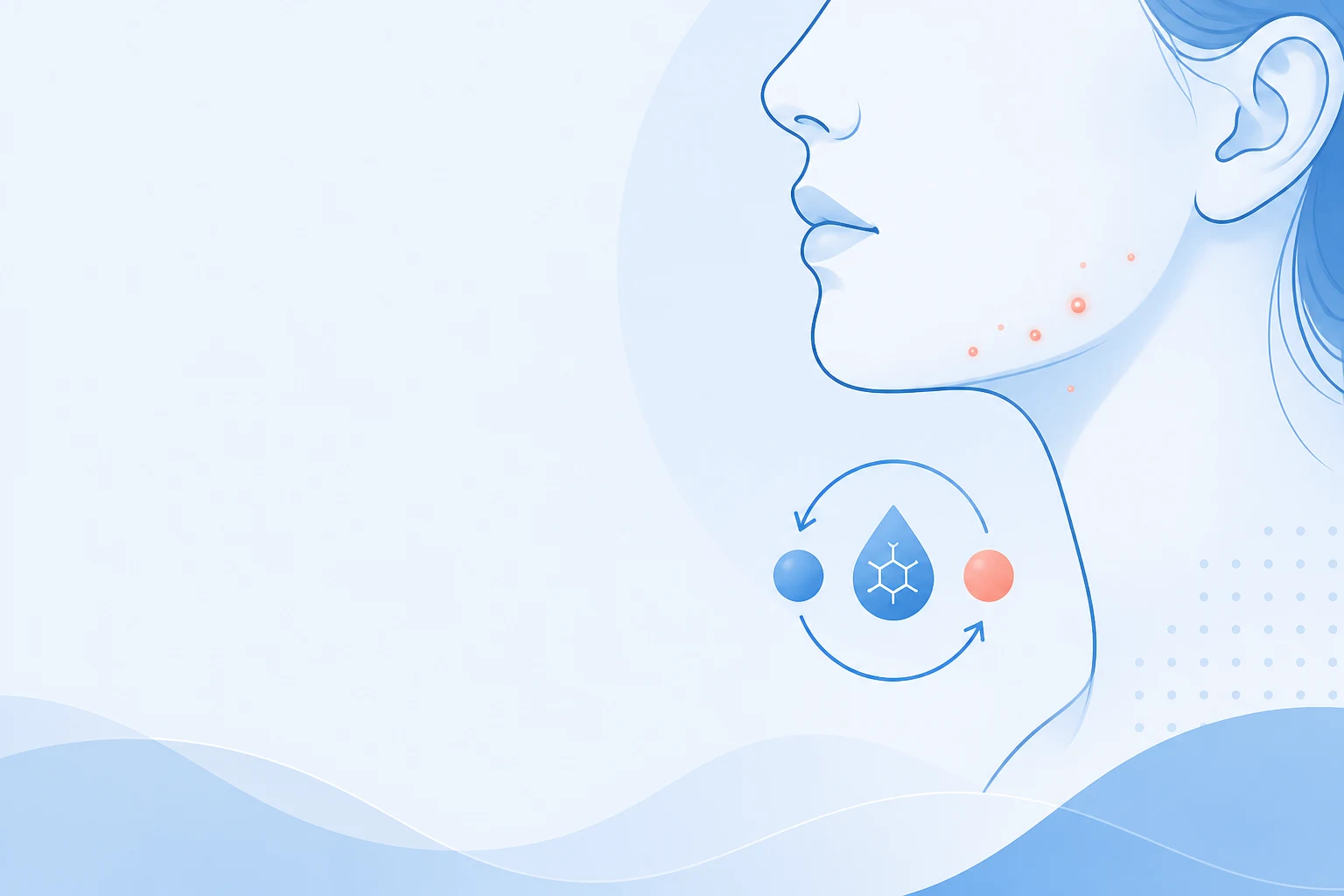
Hormonal Acne: Causes and How to Treat It
Breakouts along your jaw that flare on a monthly cycle? That pattern points to hormonal acne — and it responds to a different approach than teenage acne.
 Active Acne
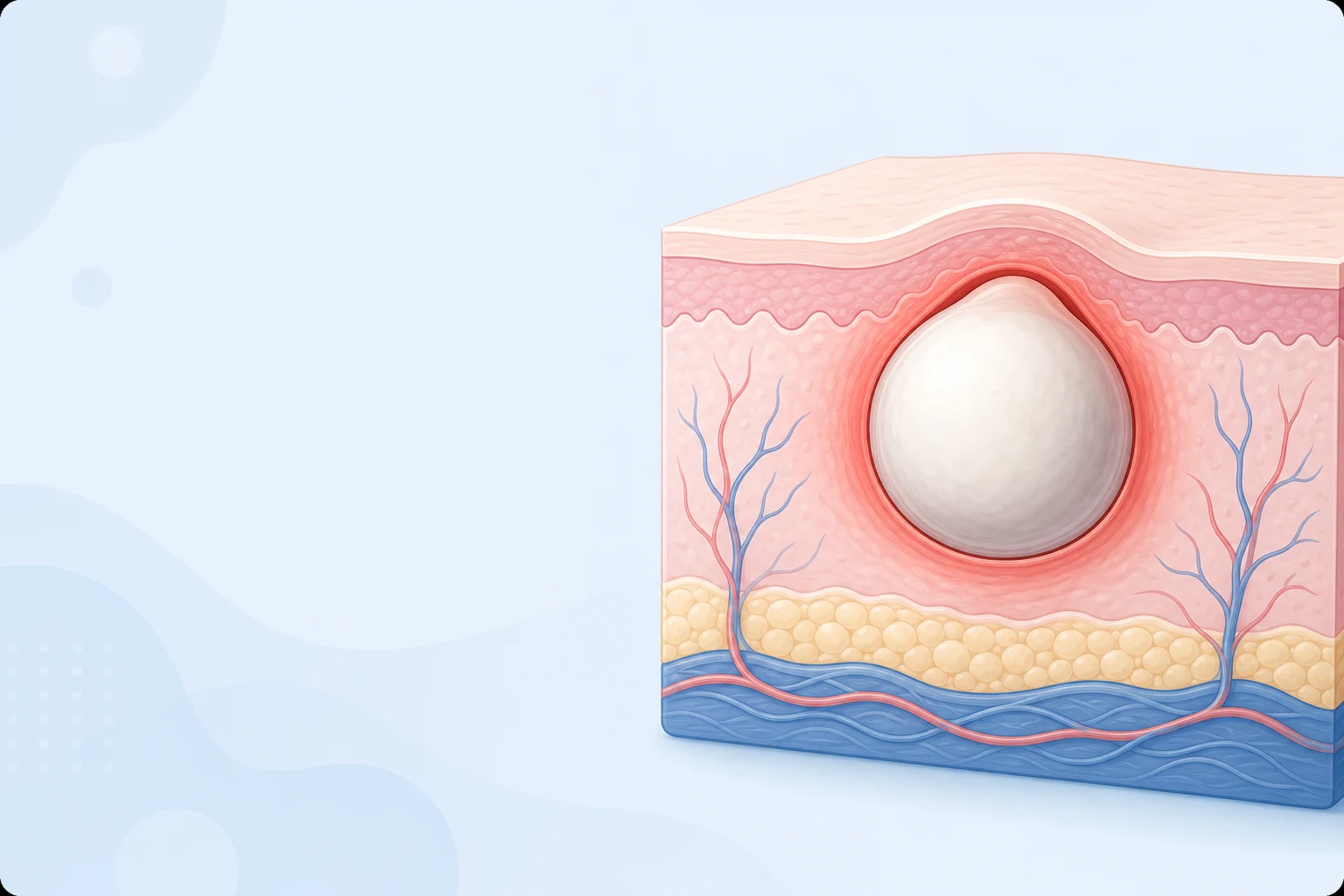
Cystic and Nodular Acne: Why It Scars and How to Treat It
Deep, painful lumps that never come to a head are the acne type most likely to scar — and the type that most needs a doctor, not a squeeze.
 Acne Scars
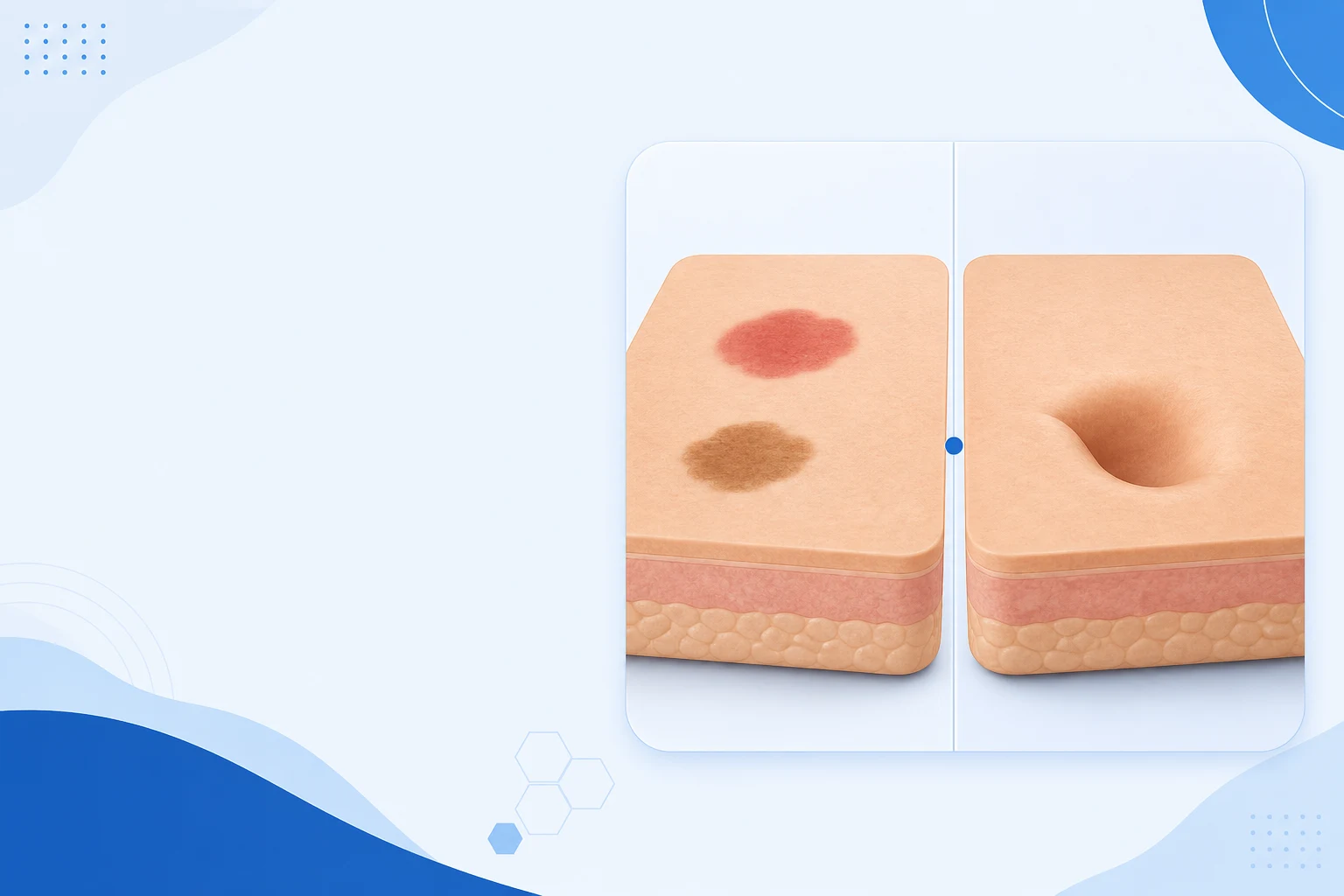
Acne Marks vs Acne Scars: How to Tell the Difference
The most useful question before treating 'acne scars' is whether they are scars at all. Marks fade; scars are contour. Telling them apart changes everything.