
DrPlus Skin Education · Acne Scars
Hypertrophic and Keloid Acne Scars: Why Some Acne Scars Are Raised, and How They Are Treated
Most acne scars are dents. A minority are lumps — hypertrophic scars and keloids — and they need the opposite treatment. Here is how to recognise them and what flattens them.
Why some acne scars are raised instead of dented
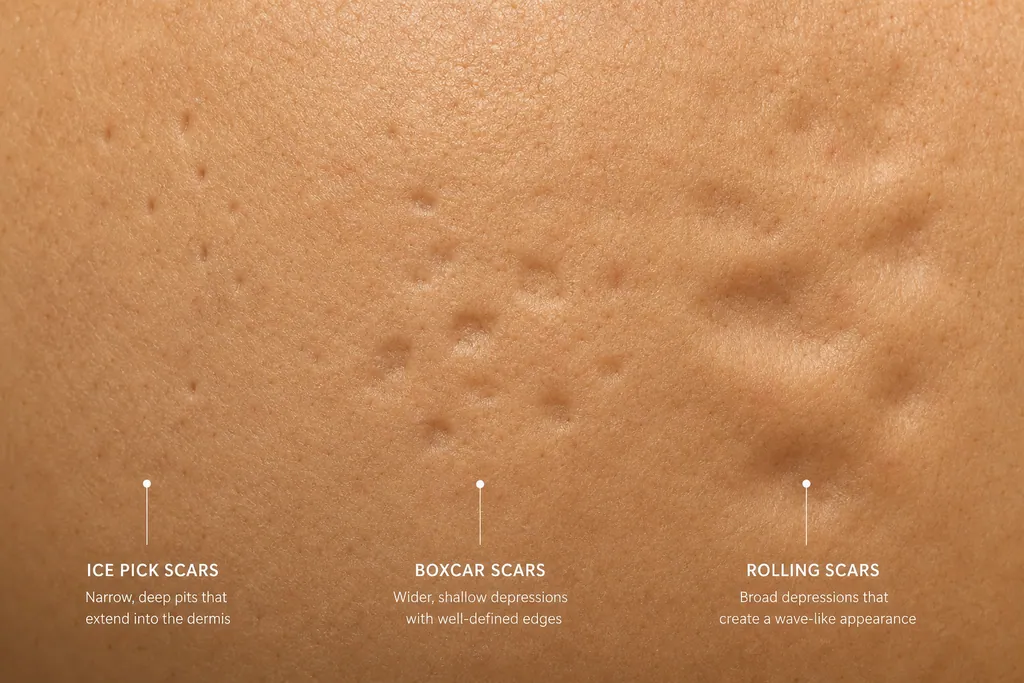
When a deep acne lesion heals, the skin lays down collagen to repair the damage. In most people on most parts of the face, the repair falls short and the surface sinks — the familiar rolling, boxcar and ice pick scars. In some people, and in some locations, the repair overshoots: fibroblasts keep producing collagen after the wound has closed, and the scar rises above the skin as a firm, often pink or darker lump. Whether a given lesion heals up or down depends on genetics, skin tone, the tension on the skin at that site, how deep and prolonged the inflammation was, and whether the lesion was picked or squeezed.
This is why raised acne scars cluster on the jawline, chest, shoulders and upper back — areas of thicker skin under constant tension, where acne tends to be nodular and deep — and why they are more common in people with medium to dark skin and in those who have formed keloids elsewhere.
Hypertrophic scar or keloid? How a doctor tells
Both are raised, firm collagen overgrowths, and the distinction matters because expectations and protocols differ. A hypertrophic scar stays within the boundary of the original lesion, tends to appear within weeks of healing, may be red and itchy at first, and often softens and flattens on its own over one to two years. A keloid grows beyond the original boundary into surrounding normal skin, may appear months after the lesion healed, keeps growing rather than regressing, and commonly itches, burns or is tender. Keloids rarely resolve without treatment and have a strong tendency to recur after it.
A doctor also looks at the number and pattern of raised lesions. Scattered firm papules across the jaw or back after nodular acne behave like hypertrophic scars; a few large, spreading, symptomatic lumps on the chest or shoulders behave like keloids. At the back of the neck, persistent firm bumps after folliculitis are a distinct condition (acne keloidalis nuchae) that needs its own approach.
— Comparison
Hypertrophic acne scar vs acne keloid
| Feature | Hypertrophic scar | Keloid |
|---|---|---|
| Boundary | Within the original lesion | Spreads beyond it into normal skin |
| Timing | Weeks after healing | Weeks to months after; may appear late |
| Course | Often softens over 1–2 years | Keeps growing; rarely regresses |
| Symptoms | Mild itch early, then settles | Persistent itch, burning, tenderness |
| Common sites | Jawline, back, shoulders | Chest, shoulders, jaw angle, earlobes |
| Recurrence after treatment | Low | High — needs maintenance phase |
Boundary
- Hypertrophic scar
- Within the original lesion
- Keloid
- Spreads beyond it into normal skin
Timing
- Hypertrophic scar
- Weeks after healing
- Keloid
- Weeks to months after; may appear late
Course
- Hypertrophic scar
- Often softens over 1–2 years
- Keloid
- Keeps growing; rarely regresses
Symptoms
- Hypertrophic scar
- Mild itch early, then settles
- Keloid
- Persistent itch, burning, tenderness
Common sites
- Hypertrophic scar
- Jawline, back, shoulders
- Keloid
- Chest, shoulders, jaw angle, earlobes
Recurrence after treatment
- Hypertrophic scar
- Low
- Keloid
- High — needs maintenance phase
How raised acne scars are treated
The core treatment for both is intralesional corticosteroid injection: a small volume delivered directly into the scar tissue, which suppresses the overactive fibroblasts, softens the collagen and relieves itch. Sessions are short and repeated every four to six weeks; small, young scars may flatten after a few, while large or old keloids need a longer course. Other agents are sometimes combined with or substituted for steroid in resistant scars. Laser is added when colour or surface texture persists after flattening — a vascular laser for redness, a fractional device for texture — and pico laser for residual pigment on darker skin.
Surgical excision is reserved for selected keloids, such as narrow-based lumps, and is always paired with injections around the procedure, because cutting a keloid out alone re-injures keloid-prone skin and the scar frequently regrows larger. Silicone gel or sheets support treatment between sessions and help young hypertrophic scars, but are not a treatment for an established keloid. Pressure, taping and avoiding further trauma to the area all help maintain the result.
— Pathway
A typical raised-scar protocol
- 1
Confirm and map
Hypertrophic or keloid; number, size, age; whether acne is still active nearby.
- 2
Inject
Intralesional corticosteroid every 4–6 weeks; itch usually eases first, flattening builds over the course.
- 3
Add laser if needed
Vascular laser for redness, fractional for texture, pico for pigment once the scar is flat.
- 4
Maintain
Silicone, protection from trauma and scheduled reviews — the phase that keeps keloids from returning.
- 1
Confirm and map
Hypertrophic or keloid; number, size, age; whether acne is still active nearby.
- 2
Inject
Intralesional corticosteroid every 4–6 weeks; itch usually eases first, flattening builds over the course.
- 3
Add laser if needed
Vascular laser for redness, fractional for texture, pico for pigment once the scar is flat.
- 4
Maintain
Silicone, protection from trauma and scheduled reviews — the phase that keeps keloids from returning.
When you have raised scars and dents
Many people with severe acne carry both: dents on the cheeks and temples, lumps along the jaw or on the back. The plans run in parallel but do not mix — the raised scars are injected and calmed, the depressed scars are released and resurfaced — and the sequencing matters, because resurfacing energy near an active keloid can provoke it. A doctor maps both populations and plans the order. The other essential is acne control: as long as deep lesions keep forming, new raised scars keep forming behind the treated ones.
Treatment option
Keloid and raised scar removal in Johor Bahru
Best for: Injection-led flattening of raised acne scarsProtocol, session cadence and the maintenance phase that prevents recurrence.
Learn moreTreatment option
Keloid removal in Singapore
Best for: The same protocol at our Singapore clinicsTanjong Pagar, East Coast and Novena.
Learn moreTreatment option
Acne scar treatment hub
Best for: The dents alongside the lumpsSubcision, resurfacing and TCA CROSS for depressed scars, planned in parallel.
Learn moreWhen to get a raised acne scar assessed
Any raised scar that is growing beyond its original spot, itching persistently, painful, or has not softened after a year is worth an assessment — early keloids respond to fewer sessions than established ones. So is a raised scar you are tempted to cut, pick or treat with an aggressive home remedy, all of which make keloids worse. DrPlus assesses and treats raised scars at the Johor Bahru clinic in Iskandar Puteri and at three Singapore clinics — Tanjong Pagar, East Coast and Novena. You can send a photo first for a preliminary view; a written plan and quote follow the in-clinic assessment, with no obligation to proceed. Results vary by individual.
— Frequently asked
Common questions
Because the skin overproduced collagen while healing rather than underproducing it. This is more likely with deep, nodular acne on tight, thick-skinned areas — jawline, chest, shoulders, back — in medium to dark skin, and in people with a personal or family tendency to keloids.
A keloid grows beyond the boundary of the original pimple into normal skin, keeps growing rather than settling, and usually itches, burns or is tender. A hypertrophic scar stays within the original footprint and often softens on its own over a year or two. A doctor confirms which at assessment.
Mainly with intralesional corticosteroid injections every four to six weeks to soften and flatten the scar, with laser added for redness, texture or pigment once it is flat. Surgery is reserved for selected keloids and always paired with injections. Silicone gel supports treatment and helps young hypertrophic scars.
Not as the first step. Resurfacing energy on an active keloid can provoke it. Lasers are added after injections have flattened the scar — a vascular laser for redness, fractional for texture, pico for pigment.
Keloids have a strong tendency to recur, which is why treatment is a protocol with a maintenance phase rather than a one-off. With injections, protection from trauma and scheduled reviews, most can be kept flat; your doctor gives you the honest recurrence picture for your specific scars.
Yes, in parallel plans — injections for the raised scars, subcision or resurfacing for the dents — with the sequence planned so resurfacing energy does not provoke an active keloid. Controlling ongoing acne is essential, or new raised scars form behind the treated ones.
— Related treatments
Continue with the relevant DrPlus treatment pages
Each page goes deeper into mechanism, suitability and recovery — your final plan is confirmed at consultation.
Primary money page
Keloid & Raised Scar Removal in Johor Bahru
Protocol, cadence and the maintenance phase that keeps raised scars flat.
injection-led keloid and raised scar removal in Johor BahruSupporting
Keloid Removal in Singapore
The same injection-led protocol at Tanjong Pagar, East Coast and Novena.
keloid and hypertrophic scar treatment in SingaporeSupporting
Acne Scar Treatment Hub
For the dents, planned in parallel with the raised-scar protocol.
treatment for depressed acne scars alongside raised onesSupporting
Acne Scar Treatment in Singapore
Mixed raised and depressed scarring at our Singapore clinics.
acne scar treatment by scar type in Singapore— Continue reading
Keloid vs Hypertrophic Scar: How to Tell — and Why It Matters
Both are raised scars — but one stays inside the wound boundary and one keeps growing beyond it. The distinction changes the entire treatment plan.
Do Dermatix and Hiruscar Work on Acne Scars? What Silicone Gels Can and Cannot Do
Dermatix and Hiruscar are the two scar gels on every Malaysian pharmacy shelf. Whether they help your acne scars depends entirely on what kind of scar you have — and most people buy them for the kind they cannot treat.
Back and Body Acne Scars: Why They Behave Differently From Facial Scars, and How They Are Treated
Acne scars on the back, chest and shoulders are not facial scars in a bigger area. Thicker skin, more pigment and a tendency to raised scars change the plan — here is how.
 Acne Scars
Types of Acne Scars: Ice Pick, Boxcar, Rolling and Pitted Scars
Atrophic acne scars come in distinct shapes — and the shape often determines what treatment may actually help.