
DrPlus Skin Education · Pico Laser
Pico Laser for Acne Scars and Marks: How It Works
Pico laser is best known for pigment, but it also has a role in acne scarring. Here is what it can and cannot do — and why its ultra-short pulses matter for Asian skin.
Quick answer
Pico laser delivers extremely short bursts of energy that break up pigment into dust-fine particles the body can clear, with relatively little heat. That makes it genuinely useful for the brown marks acne leaves behind, and gentler on deeper skin tones than older, heat-heavy lasers.
For the scars themselves — the dents and depressions — pico plays a supporting role. Some pico systems add a focused mode that stimulates light collagen remodeling, which helps shallow texture. But for deep ice pick scars or tethered rolling scars, pico is not the main tool. This guide separates the marketing from what it actually does.
The photoacoustic effect
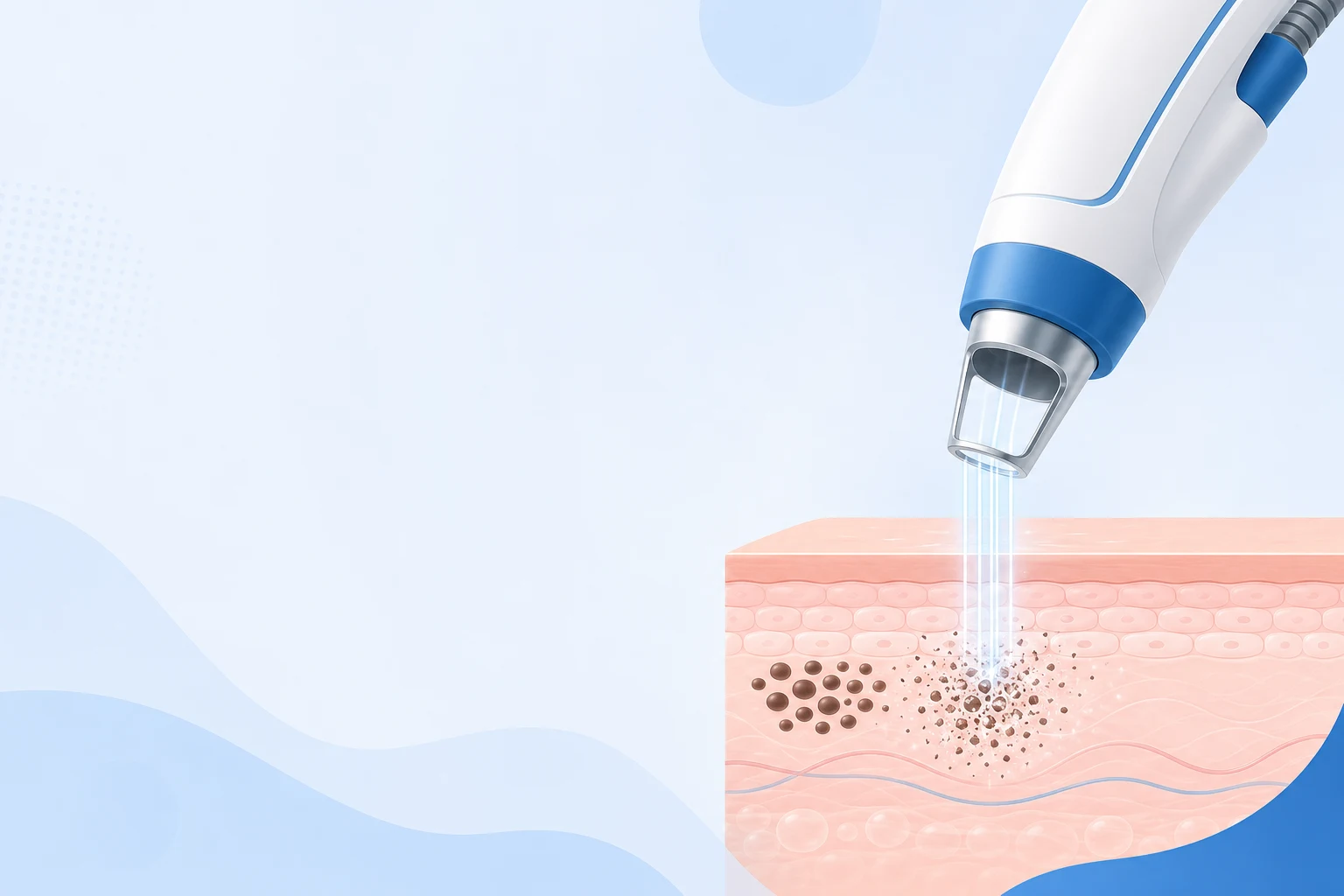
The key to pico laser is speed. Because each pulse lasts only picoseconds (trillionths of a second), the energy arrives faster than the pigment can heat up its surroundings. Instead of cooking the area, the pulse creates a tiny pressure wave that physically shatters the pigment into very fine fragments — this is the photoacoustic effect.
Smaller fragments are easier for your immune system to carry away, which is why marks fade over a series of sessions. And because the process relies less on heat, there is less collateral warming of the surrounding skin — the property that makes pico comparatively kinder to melanin-rich skin.
— Mechanism
Ultra-short pulses shatter pigment, not skin
Before
Excess pigment sits in clumps that are too large for the body to clear on its own.
After pico pulses
A photoacoustic pressure wave breaks the pigment into dust-fine particles your immune system gradually flushes away.
Because pico pulses are measured in trillionths of a second, they rely more on this shattering effect than on heat — which helps lower the pigmentation risk that older heat-based lasers carry in deeper skin tones.
Marks versus scars — pico's two jobs
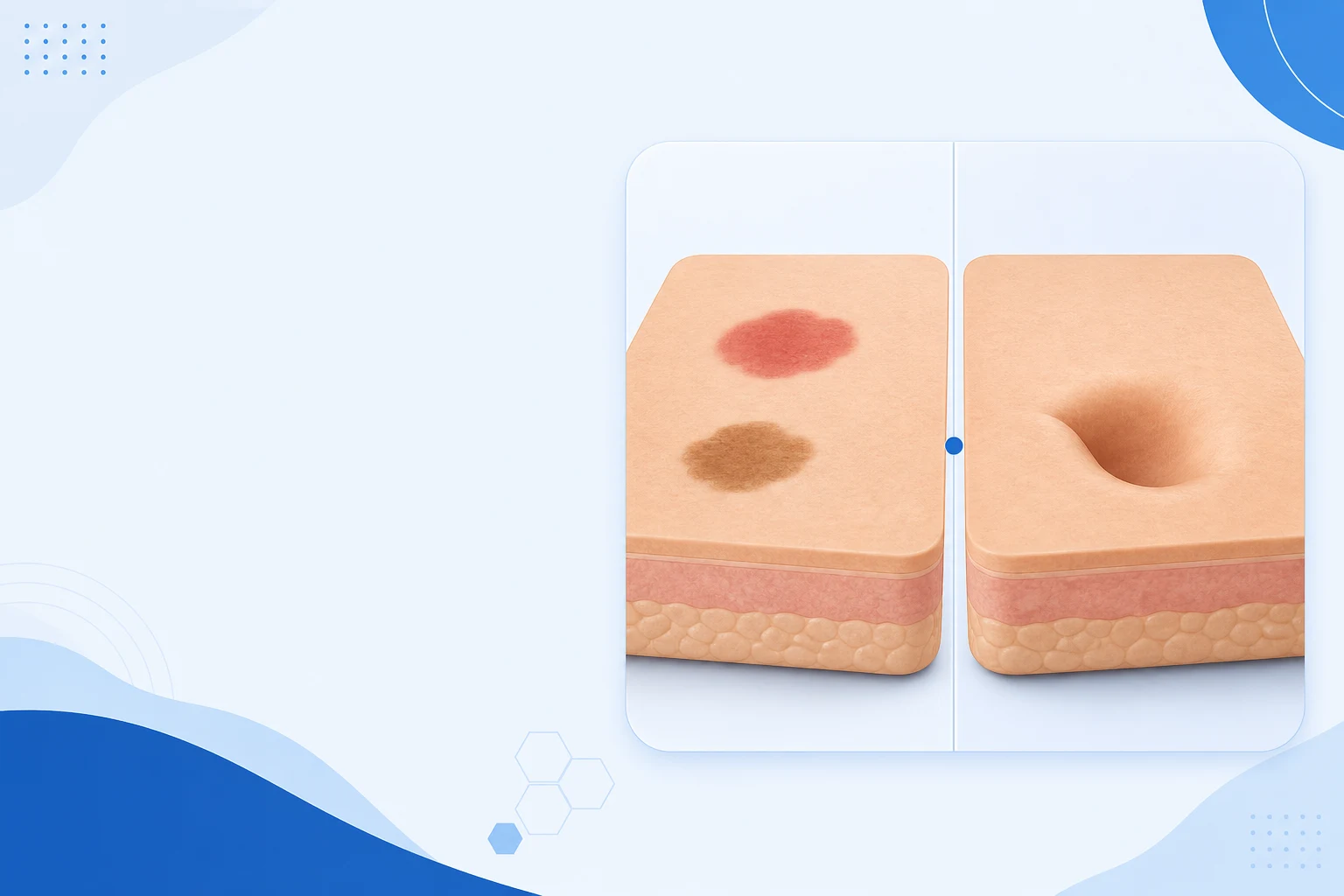
It helps to separate the two problems acne leaves behind. Post-acne marks are flat changes in colour — brown (pigment) or red (vascular). Scars are changes in the skin's contour — dents and depressions. Pico is strongest on the brown marks, useful for some red marks, and only a light contributor to contour.
This is why pico often appears in a plan to clear discolouration and even out tone, while the actual depressions are handled by subcision, RF microneedling or CO₂ laser. Used this way, pico makes the overall result look cleaner even though it is not the tool lifting the scars.
— Comparison
What pico laser does for each problem
| Problem | Pico laser fit | Why |
|---|---|---|
| Brown post-acne marks | Strong | Shatters excess pigment so marks fade. |
| Red post-acne marks | Partial | Some help; dedicated vascular settings vary by device. |
| Shallow texture | Helpful | Focused mode adds light collagen remodeling. |
| Deep ice pick / rolling | Limited | Needs subcision or resurfacing; pico is a polish only. |
Brown post-acne marks
- Pico laser fit
- Strong
- Why
- Shatters excess pigment so marks fade.
Red post-acne marks
- Pico laser fit
- Partial
- Why
- Some help; dedicated vascular settings vary by device.
Shallow texture
- Pico laser fit
- Helpful
- Why
- Focused mode adds light collagen remodeling.
Deep ice pick / rolling
- Pico laser fit
- Limited
- Why
- Needs subcision or resurfacing; pico is a polish only.
Why it suits deeper Asian skin
Across Johor Bahru and Malaysia, many patients have Fitzpatrick III–V skin, where heat-based treatments carry a higher risk of post-inflammatory hyperpigmentation. Pico's low-heat, pressure-based action reduces — though never eliminates — that risk, which is a large part of why it has become popular here for pigment.
That said, no laser is risk-free in deeper skin. Settings still need to be conservative, a test patch is sometimes sensible, and disciplined sun protection afterwards is non-negotiable under strong Malaysian sun.
Sessions, downtime and aftercare
Pico downtime is usually modest — redness and a little swelling that often settle within days, which is one of its practical attractions. But results are cumulative: marks fade and texture refines over a series of sessions spaced a few weeks apart, not in one visit.
Aftercare is simple but important: gentle skincare, barrier support, and rigorous sun protection so newly treated skin does not re-pigment. As with every pigment treatment, the marks can return if the underlying acne is not controlled.
— Healing timeline
After a pico session
Day 0
Treatment
Mild redness and warmth; sometimes tiny darkening of pigment spots that then flake.
Days 1–3
Settling
Redness fades; makeup is often possible quickly depending on intensity.
Weeks 1–4
Clearing
The immune system clears shattered pigment; marks look lighter.
Across sessions
Cumulative
Tone evens and shallow texture refines over several spaced sessions.
A general guide only. Individual healing speed varies with skin type, scar depth, aftercare and the treatment used.
When pico is the right call
Pico is a strong choice if your main concern is post-acne brown marks or uneven tone, or as the polishing layer once depressed scars have been addressed. If your main concern is deep contour scarring, a consultation will usually point you to subcision or resurfacing first, with pico added later.
At DrPlus in Johor Bahru, the assessment is doctor-led: you will get an honest read on whether your problem is mainly pigment or mainly contour, and where pico fits in your plan.
— Frequently asked
Common questions
Pico laser works best on post-acne pigment (brown marks) and can lightly refine shallow texture through collagen remodeling. It does not erase deep ice pick or rolling scars, which need subcision or resurfacing. It is usually part of a plan rather than a stand-alone scar fix.
It is comparatively safer than older heat-based lasers because it relies on a pressure effect with less heat, lowering pigmentation risk. It is still not risk-free — conservative settings and strict sun protection remain essential in deeper skin.
Several sessions spaced a few weeks apart are typical, because pigment clears gradually as the immune system removes the shattered particles. The exact number depends on how deep and widespread the marks are.
Usually mild — redness and slight swelling that often settle within a few days, sometimes with light flaking of pigment spots. Downtime is generally shorter than ablative resurfacing.
They do different jobs. Pico is better for pigment and marks with little downtime; CO₂ laser is stronger for contour and texture but with more downtime and pigmentation risk. Many plans use them for different parts of the problem.
— Related treatments
Continue with the relevant DrPlus treatment pages
Each page goes deeper into mechanism, suitability and recovery — your final plan is confirmed at consultation.
Primary money page
Pico Laser & Laser Treatment
Doctor-led pico and laser treatment — assessment of pigment versus contour first.
pico laser treatment in Johor BahruSupporting
Acne Scar Treatment Hub
Where pico is sequenced with resurfacing and subcision in a full plan.
acne scar treatment in Johor BahruSupporting
Pico Laser Sessions
Session booking and suitability for pigment and texture.
book a pico laser assessmentSupporting
CO₂ Laser
The stronger resurfacing option for contour scars.
CO₂ laser for deeper scar texture— Continue reading
 CO₂ Laser
Fractional CO₂ Laser for Acne Scars: Complete Scientific Guide
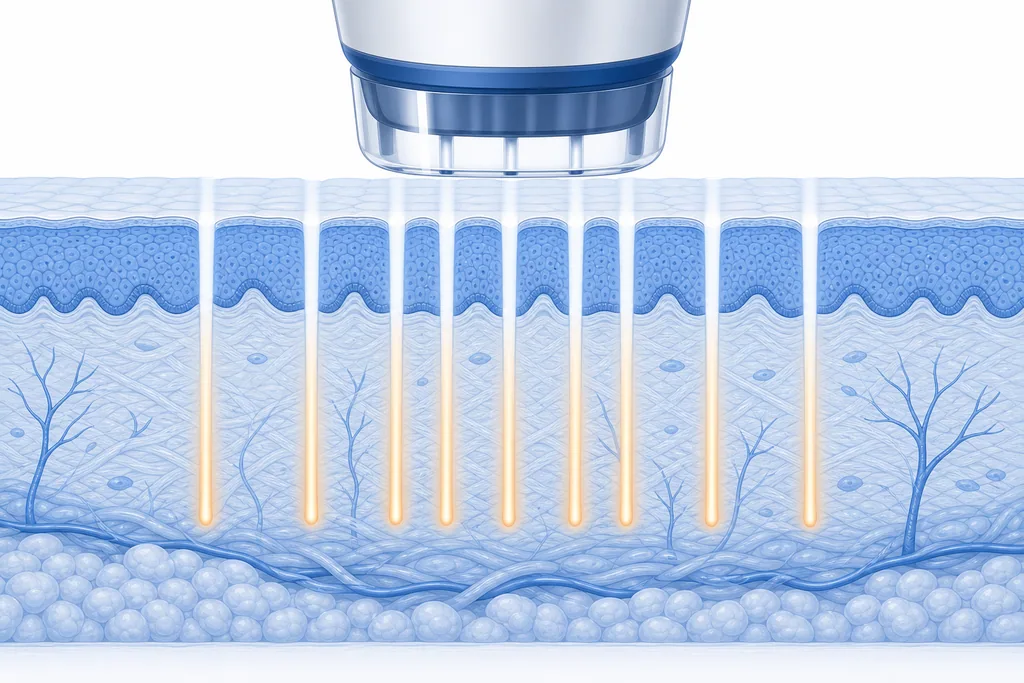
Fractional CO₂ laser is one of the most powerful resurfacing tools for acne scars — but only when the right scar, the right settings and the right skin meet. Here is the science behind how it actually works.
 Pigmentation
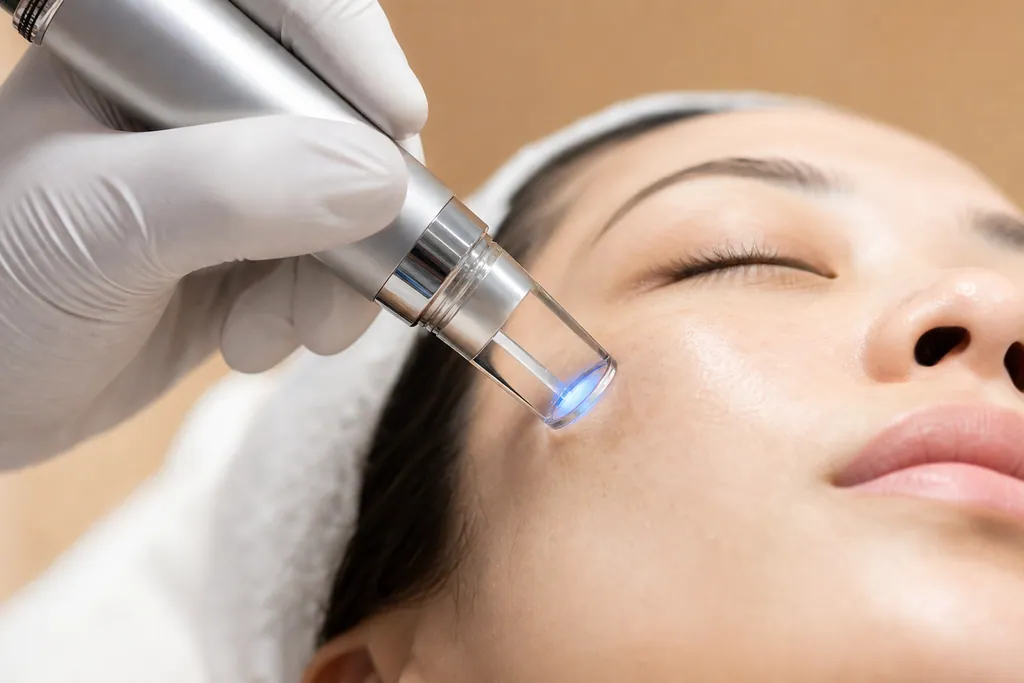
Pico Laser Treatment for Pigmentation: What It Does and Who It May Suit
Pico laser is one of the most discussed pigment treatments — and one of the most over-promised. Here is how to think about it.
 Acne Scars
Acne Marks vs Acne Scars: How to Tell the Difference
The most useful question before treating 'acne scars' is whether they are scars at all. Marks fade; scars are contour. Telling them apart changes everything.