
DrPlus Skin Education · Melasma
What Causes Melasma? Triggers and How to Manage Them
You cannot treat melasma well without understanding what feeds it. Here are the real triggers — and why managing them is half the treatment.
Quick answer
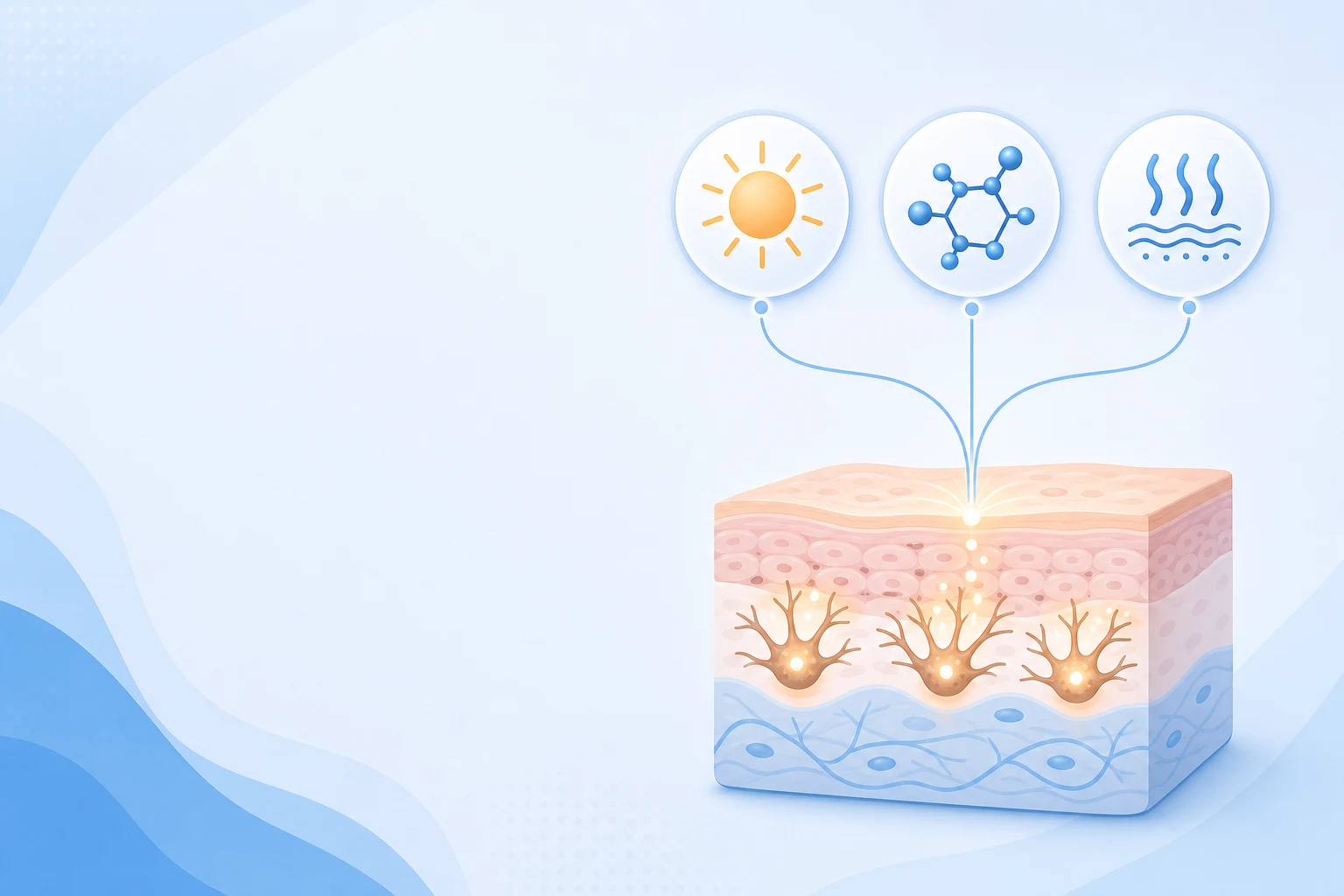
Melasma happens when pigment-producing cells become overactive and deposit excess melanin in patches. What makes them overactive is a mix of triggers — most importantly sun and light, hormones, and heat — usually on a genetically susceptible canvas. That genetic and skin-tone component is why melasma is so common in Asian skin.
Because these triggers are ongoing rather than one-off, melasma behaves like a chronic condition. Understanding which ones drive yours is the difference between a plan that holds and one that keeps relapsing.
The three main triggers
Sun and visible light are the dominant driver. UV is well known, but visible light (including from being outdoors and screens to a lesser degree) also stimulates pigment in melasma-prone skin — which is why broad-spectrum protection matters. Hormones are the second: pregnancy, hormonal contraception and natural fluctuations can switch melasma on or intensify it. Heat is the underrated third — heat alone can aggravate melasma, a real factor in a hot, humid climate.
These rarely act alone. A typical pattern is genetically susceptible skin, plus sun, plus a hormonal shift — combining to push pigment cells into overdrive.
Mechanism
Sun & visible light
Directly stimulate pigment cells; the most universal and controllable driver.
Mechanism
Hormones
Pregnancy, hormonal medication and cycles can trigger or worsen melasma.
Mechanism
Heat
Heat alone aggravates melasma — important in hot, sunny environments.
Why it favours Asian skin
Melasma is more common and often more stubborn in medium-to-deep skin tones (Fitzpatrick III–V), which are widespread across Johor Bahru and Malaysia. More active pigment cells mean a stronger pigment response to the same triggers, and a higher chance of pigment settling deep in the dermis where it is hard to clear.
This is also why aggressive treatment is risky in this group: the same reactivity that causes melasma makes the skin prone to rebound pigmentation if pushed too hard.
— Why depth matters
Where the pigment sits predicts how it responds
Epidermal
Brown pigment sits high in the skin. More accessible, generally more responsive.
Dermal
Blue-grey pigment sits deep. Stubborn — e.g. Hori's nevus — and slower to clear.
Mixed
Pigment at both depths. Needs a careful, layered plan rather than one setting.
Depth is the single biggest predictor of how pigmentation behaves. Shallow brown pigment is generally more treatable; deep blue-grey pigment is far more stubborn and needs patience and the right device. Most real pigmentation is mixed, which is why a doctor assesses depth before choosing any treatment.
Managing the triggers
Because the triggers keep firing, managing them is the foundation of every melasma plan. Daily broad-spectrum sun protection (reapplied, and ideally covering visible light) is the single highest-impact habit. Reducing avoidable heat exposure helps. Where hormones are a driver, that context is discussed with a doctor as part of the plan.
None of this is glamorous, but it is what makes in-clinic treatment work and last. Treating melasma while the triggers run unchecked is like bailing a boat without plugging the leak.
When to see a doctor
If you are not sure what is driving your pigmentation — or whether it is even melasma — an assessment is worthwhile. A doctor can confirm the diagnosis, identify your dominant triggers, and design a plan that manages them while treating the pigment safely.
At DrPlus in Johor Bahru, melasma is approached trigger-first, because controlling the drivers is what makes any treatment hold.
— Frequently asked
Common questions
Sun and visible light are the biggest single driver, stimulating overactive pigment cells. Hormones (pregnancy, hormonal medication) and heat are also major triggers, usually on genetically susceptible skin.
Medium-to-deep skin tones have more active pigment cells, so they respond more strongly to the same triggers and are more prone to deep, stubborn pigment — making melasma both more common and harder to treat.
Yes. Pregnancy, hormonal contraception and natural hormonal fluctuations can trigger or worsen melasma. This hormonal context is discussed with a doctor as part of the treatment plan.
Yes. Heat alone can aggravate melasma, independent of UV — which is relevant in hot, humid climates. Reducing avoidable heat exposure supports control.
You cannot change genetic susceptibility, but consistent broad-spectrum sun protection and managing heat and hormonal triggers significantly reduce flares and help keep it controlled.
— Related treatments
Continue with the relevant DrPlus treatment pages
Each page goes deeper into mechanism, suitability and recovery — your final plan is confirmed at consultation.
— Continue reading
 Melasma
Melasma Treatment in Singapore & Johor Bahru: A Doctor's Guide
Melasma is the most misunderstood pigmentation of all — and the easiest to make worse. Here is how it is actually treated, and why patience beats power.
 Pigmentation
Melasma vs Freckles: Photos & How to Tell Them Apart
Three of the most common pigmentation patterns — and they behave very differently in treatment.
 Pigmentation
Pigmentation Aftercare: Keeping Your Results
Clearing pigment is only half the job. Keeping it clear is the other half — and it comes down to a few disciplined habits.