















Tanjong Pagar / CBD
SBF Center
Dr Plus Aesthetics Clinic Singapore (Tanjong Pagar)
160 Robinson Road #03-10
Singapore 068914
About a three-minute walk from Tanjong Pagar MRT (East–West Line); the building has a carpark.
DrPlus Singapore · Hair · Women
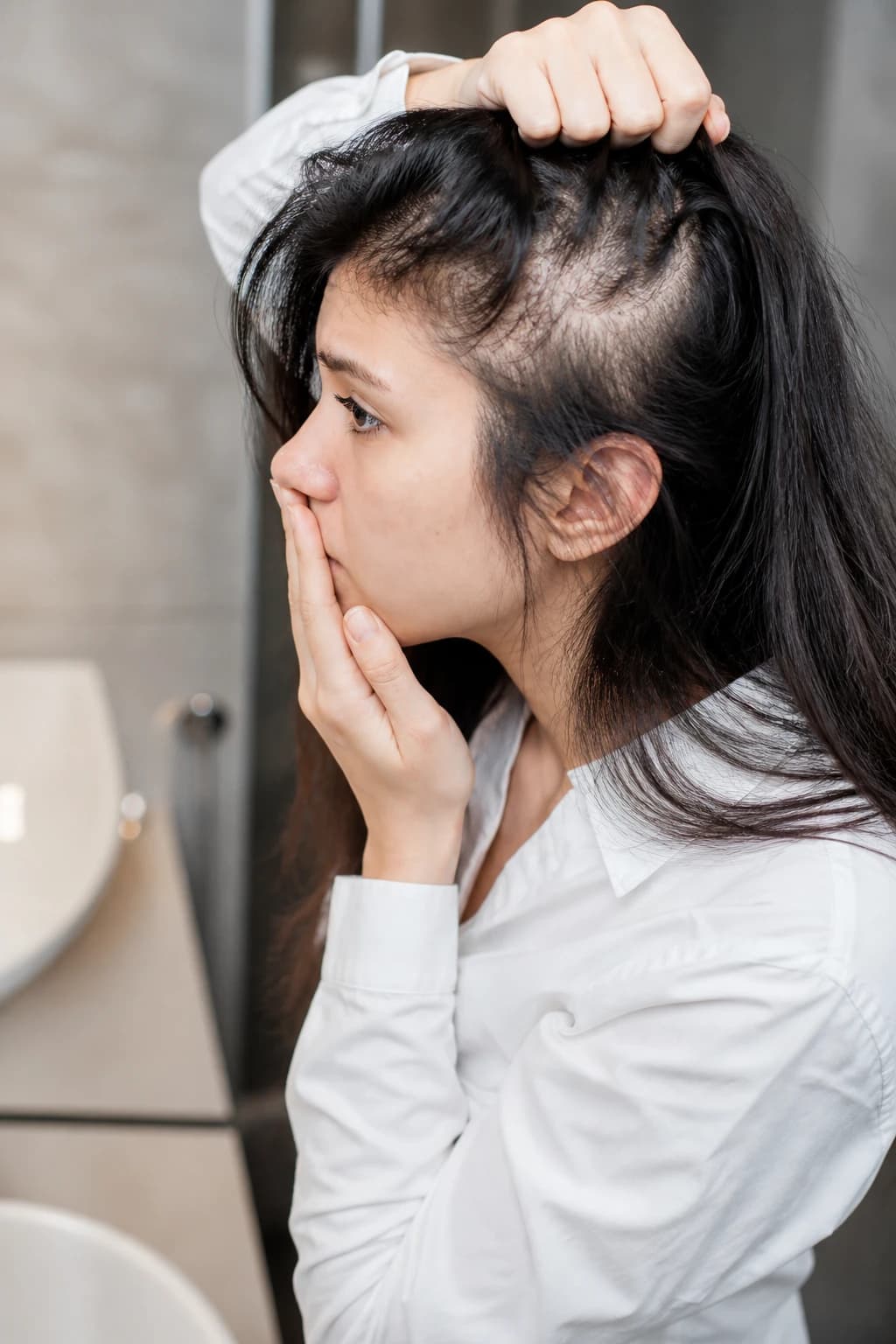
Women lose hair differently from men — a widening parting rather than a receding hairline, shedding that follows pregnancy, iron loss, thyroid change or hormonal shifts. That is why a plan built for male-pattern loss so often disappoints. Our doctors start by working out which of the female causes applies to you, then treat that.
— Who this page is for
Roughly four in ten women notice meaningful thinning at some point, and the trigger is different at each stage of life. If any of these sound like you, a scalp assessment will separate the cause from the worry.
Your hairline is where it always was, but the centre parting shows more scalp each year and the crown looks sparse in overhead photos. This is the classic female-pattern distribution.
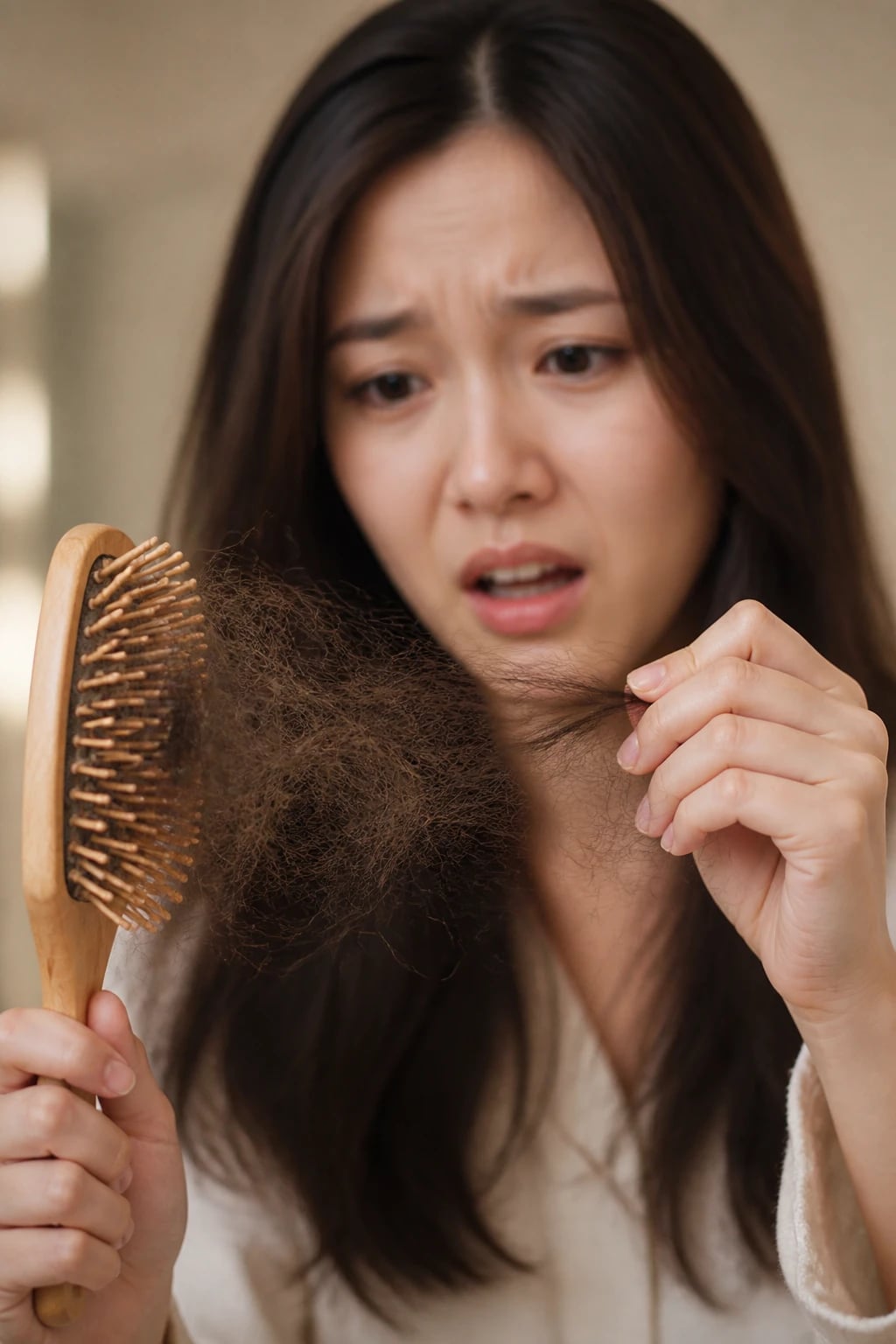
Two to four months after delivery the shower drain fills up. Postpartum shedding is common and usually temporary — but it can also unmask thinning that was already starting.
A high fever, surgery, a crash diet or a very stressful season can push a large share of hairs into the resting phase at once, with shedding that appears months later.
Falling oestrogen changes the balance of hormones acting on the follicle; many women first notice volume loss and a finer texture in their late forties and fifties.
Years of tight ponytails, buns, braids or extensions can thin the temples and front hairline — traction loss that is reversible early and permanent if ignored.
You have tried shampoos, supplements and scalp serums without a diagnosis. You want a doctor to tell you what is actually happening before you spend more.
— What this involves
Most information about hair loss is written for men, where one cause — pattern loss — explains almost everything. In women the picture is wider. Female-pattern hair loss does exist and is the most common single diagnosis, but a large share of women who shed are actually dealing with telogen effluvium (diffuse shedding after a trigger), a medical driver such as low iron stores or an under-active thyroid, a hormonal condition such as polycystic ovary syndrome, postpartum change, menopause, or a scalp condition. Several of these can be present at once, and treating the wrong one wastes the months in which follicles respond most readily.
A consultation at DrPlus therefore starts with the history a hair questionnaire cannot capture: when the shedding began, whether it followed a birth, illness, new medication, dietary change or contraceptive switch, how your cycles behave, and what your family's hair looked like with age. The doctor then examines the parting width, hairline, crown and scalp skin under good light and, where indicated, arranges blood tests — typically ferritin (iron stores), thyroid function and, when the pattern suggests it, hormone levels. Only after that does a plan make sense.
Treatment follows the diagnosis. Diffuse shedding with a clear trigger is usually supported rather than medicated — correcting iron or thyroid, nutrition and time, with a review to confirm regrowth. Female-pattern thinning is managed with doctor-prescribed topical therapy and, where appropriate for the individual, oral options chosen with the woman's age, plans for pregnancy and medical history in mind — the medicine is different from what is prescribed to men, which is one more reason the male playbook disappoints. Scalp conditions that drive shedding are treated in their own right.
We do not publish prices, because the plan depends entirely on the cause; you receive a written plan and quote after the assessment, with no obligation to proceed. Regenerative injections such as PRP are not offered at our Singapore clinics, and we will not route you into a package of 'scalp treatments' when the problem is iron, hormones or pattern loss. Results vary by individual, and we track them with standardised photographs so you can see what is changing.
— What to expect
Most women tell us they waited a year or more before asking a doctor. The visit itself is straightforward, unhurried and private.
WhatsApp our Singapore team with when the shedding started and anything you suspect — a recent birth, a diet, a new medication. We book you at Tanjong Pagar, East Coast or Novena, whichever is easier for you.
The doctor takes a detailed history — cycles, pregnancies, contraception, family hair history, diet, illnesses — then examines the parting, crown, hairline and scalp skin under good light.
If the history or examination points to it, ferritin, thyroid function and, when appropriate, hormone levels are checked. Results usually return within days and shape the plan.
You leave knowing which cause — or combination — applies, what the treatment is, what it realistically achieves, and a written quote. No treatment is started on the day unless you want it to be.
Standardised photographs at each review show whether shedding has slowed and density is recovering. The plan is adjusted, continued or — where the cause was temporary — concluded.
Weeks 2–8
Shedding often increases briefly when topical therapy begins, then settles. Corrected iron or thyroid levels begin to take effect, but hair itself has not yet changed visibly.
Months 3–4
Shedding is noticeably lower for most women. Fine new hairs may be visible along the parting under magnification; the first photographic comparison is made.
Months 6–12
Density gains, where they occur, become visible to the eye. Postpartum and trigger-related shedding has usually recovered; pattern loss needs ongoing therapy to hold the gain.
Hair grows about a centimetre a month, so patience is built into every plan. Anyone promising visible regrowth in weeks is overpromising.
— Why DrPlus
A doctor-led approach that treats female hair loss as the medical question it is — not a scalp-spa upsell.
Shedding versus pattern, iron and thyroid, hormonal and postpartum drivers, scalp conditions — the assessment is built around the causes that affect women.
Prescription options differ by sex, age and family plans. Your doctor selects therapy appropriate to you, and explains what it can and cannot do.
Private consultation rooms and female-friendly scheduling at three Singapore clinics. You will not be examined in a shop-front.
Standardised scalp photographs at baseline, three and six months, so the plan is judged on evidence rather than impressions in the mirror.
Ready to discuss your skin?
Book a doctor-led assessment tailored to your concerns.
— Cost factors
We do not publish a price list because two women with the same complaint can need completely different care. Postpartum shedding with low iron may need little more than a consultation, blood tests and a review; female-pattern loss is an ongoing monthly therapy with periodic doctor reviews; a scalp condition adds its own treatment. Quoting a number before the examination would be guessing.
When comparing clinics, look at the whole year — consultation, tests, monthly therapy and reviews — rather than the first visit, and be wary of bundles of 'scalp treatments' sold before anyone has diagnosed the cause.
— Related treatments
Hair concerns in women often sit alongside skin and wellbeing goals. Each option is assessed individually at consultation.
Our general hair loss page covers pattern loss in men, scalp conditions, patchy loss and the full diagnosis-first approach.
Learn MoreInjectable hydration for texture and glow — often asked about by women managing postpartum or hormonal skin changes at the same time.
Learn MoreMelasma and postpartum shedding frequently arrive together; the melasma pathway covers the cautious, depth-matched plan.
Learn More— Our Singapore clinics
Consultations and treatments are available at all three clinics — choose whichever is more convenient: the Tanjong Pagar CBD, Katong on the East Coast, or the Novena medical district.
Tanjong Pagar / CBD
Dr Plus Aesthetics Clinic Singapore (Tanjong Pagar)
160 Robinson Road #03-10
Singapore 068914
About a three-minute walk from Tanjong Pagar MRT (East–West Line); the building has a carpark.

East Coast / Katong
Dr Plus Aesthetics Clinic (East Coast)
66 East Coast Road #03-05
Singapore 428778
A short walk from Marine Parade MRT (Thomson–East Coast Line); The Flow Mall has a carpark.
Novena
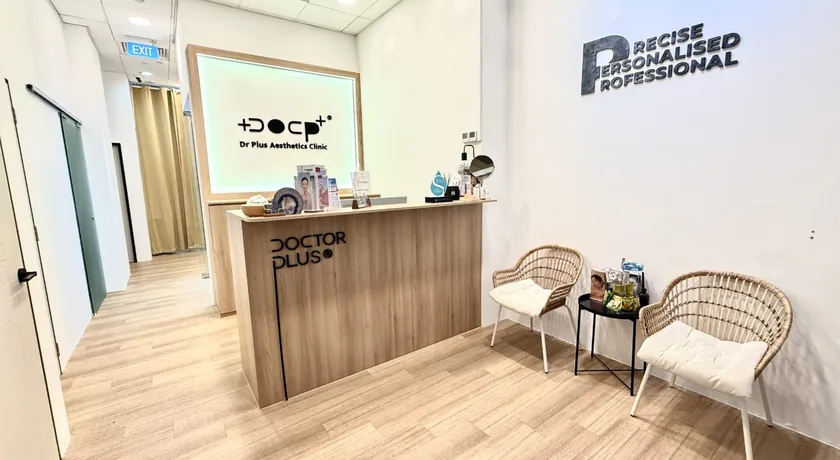
Dr Plus Aesthetics Clinic (Novena)
10 Sinaran Drive #10-30
Singapore 307506
A short sheltered walk from Novena MRT (North–South Line); Novena Medical Centre has a carpark.
— FAQ
The common causes are female-pattern hair loss (a widening parting with a kept hairline), telogen effluvium (diffuse shedding after childbirth, illness, stress, dieting or a new medication), medical drivers such as low iron stores, thyroid disease and polycystic ovary syndrome, hormonal change around menopause, traction from tight hairstyles, and inflammatory scalp conditions. More than one is often present, which is why a doctor examines the scalp and reviews the history before treating.
Postpartum shedding is very common. During pregnancy oestrogen holds hair in its growing phase; after delivery the hormones reset and the held-back hairs fall together, usually peaking three to four months after birth. For most women it recovers on its own within six to twelve months. A consultation is worthwhile if the shedding is heavy, continues beyond a year, or if the parting looks wider than before the pregnancy — that suggests an underlying pattern worth treating. Iron stores are commonly low after delivery and are checked.
Not every woman needs tests. Where the history or examination points to a medical driver, the usual checks are ferritin (iron stores), thyroid function and, when cycles are irregular or there are other signs, hormone levels relevant to polycystic ovary syndrome. Your doctor explains why each test is or is not needed in your case.
No. Men's pattern loss is treated with a fairly standard set of medicines; several of those are not appropriate for women who are, or may become, pregnant, and the distribution and drivers of female loss differ. Women are usually managed with doctor-prescribed topical therapy, with oral options considered individually, plus correction of any iron, thyroid or hormonal driver found. The medicine and the monitoring are chosen for you.
We do not publish prices because the plan depends on the cause. A consultation that ends with 'this is temporary shedding — here is how to support it' costs very differently from an ongoing female-pattern plan with reviews. After the assessment you receive a written plan and quote, with no obligation to proceed. Cosmetic hair-loss treatment is not MediSave-claimable.
Some options are appropriate and some are not, which is exactly why a doctor rather than a product label should decide. Tell us at the consultation if you are breastfeeding, pregnant or planning a pregnancy; the plan is built around that, and may focus on correcting iron and nutrition and on timing therapy for later.
A cosmetic scalp treatment can improve how the scalp feels, and over-the-counter serums vary widely, but neither addresses low iron, a thyroid problem, a hormonal driver or female-pattern loss. If an inflamed or flaky scalp is contributing, that is treated medically. We would rather diagnose first than sell you a course of sessions that cannot reach the cause.
No. Regenerative injections such as PRP and exosomes are not provided at our Singapore clinics. What we offer here is diagnosis-first medical care — history, scalp examination, blood tests where indicated, doctor-prescribed therapy and photo-tracked reviews — which is where most women's hair loss is won or lost.
Shedding usually slows within two to three months of treating the cause; visible density takes longer because hair grows about a centimetre a month. Reviews at three and six months with standardised photographs show whether the plan is working. Trigger-related shedding generally recovers within a year; pattern loss needs continued therapy to hold the improvement.
We see patients at SBF Center, 160 Robinson Road #03-10, in the Tanjong Pagar CBD (call +65 8851 9547), The Flow Mall, 66 East Coast Road #03-05, in Katong on the East Coast (call +65 8857 4917), and Novena Medical Centre, 10 Sinaran Drive #10-30, in Novena (call +65 8851 9505). All three clinics offer the same doctor-led consultations, so you can choose whichever location is more convenient.
SBF Center on Robinson Road is about a three-minute walk from Tanjong Pagar MRT (East–West Line) in the CBD, The Flow Mall on East Coast Road in Katong is a short walk from Marine Parade MRT on the Thomson–East Coast Line, and Novena Medical Centre on Sinaran Drive is a short sheltered walk from Novena MRT on the North–South Line. If you drive, all three buildings have carparks, with further public parking nearby.
— Request a Consultation
WhatsApp our Singapore team or book a scalp assessment at Tanjong Pagar, East Coast or Novena. A doctor checks the female causes in order and gives you a written plan — no hard sell, no sessions before a diagnosis.
— Skin Education
Doctor-led guides written to help you understand your options before consultation. Each article links back to the relevant treatment pages.
Women's hair loss has a longer list of causes than men's, and several usually overlap. This guide explains each one, how it is recognised, and what treating it actually involves.
Scalp treatments are the most-sold answer to hair loss in Singapore — and the least likely to address the cause. Here is what oiliness does and does not do to your hair.
Hair loss quotes in Singapore differ several-fold because clinics are quoting different things. This guide explains the variables so you can compare like with like — without a price table.
— Methods compared
Women's hair loss rarely has a single cause. These are the patterns we see most often in Singapore, how a doctor recognises each one, and what treatment honestly involves.
Pattern
Gradual thinning over the crown and a widening centre parting while the front hairline is largely kept. Often runs in the family and can begin in the twenties or after menopause.
Shedding
Diffuse shedding from the whole scalp two to four months after a trigger — childbirth, illness, surgery, crash dieting, severe stress or a new medication.
Postpartum
Oestrogen keeps hair in its growing phase during pregnancy; after delivery the hormones reset and the held-back hairs fall together — alarming, but usually temporary.
Hormonal
Polycystic ovary syndrome, an under- or over-active thyroid and low ferritin are the medical drivers most often behind thinning in women — and all are treatable.
Menopause
Falling oestrogen shifts the hormonal balance acting on the follicle, so volume drops and strands become finer. Frequently combines with underlying female-pattern loss.
Traction & scalp
Thinning at the temples and front from tight hairstyles or extensions, or shedding driven by an inflamed, flaky or itchy scalp — seborrhoeic dermatitis in particular.
The cause determines the plan. Several patterns can coexist, which is why your doctor examines the scalp and reviews your history and blood results before recommending anything.
Medical disclaimer
Information on this page is for general education only and does not replace a consultation with a qualified medical practitioner. Suitability, downtime, risks, and results vary by individual. Please consult your doctor before deciding on any treatment. Read the full medical disclosure.
A QUICKER SCROLL
Clinic life, in short clips
Take a breather from the detail — swipe through Facebook and TikTok moments from DrPlus, then continue when you're ready to book.