

Acne & Acne Scars · Resurfacing
Fractional CO₂ Laser for Acne Scars & Skin Resurfacing in Singapore
Texture your makeup can't hide, resurfaced layer by layer. Doctor-performed fractional CO₂ laser in Singapore — at our Tanjong Pagar, East Coast and Novena clinics — with honest guidance on downtime before you commit. WhatsApp us a photo of your skin for a doctor's take, no obligation.
- Suitable for
- Atrophic and textural acne scars, enlarged pores
- Downtime
- Several days of redness and peeling
- Usually with
- Subcision first when scars are tethered
- Performed by
- Dr Kenneth
Peeling runs its course over several days — plan the session around your calendar, not against it.















From textured to timeless.
Picture skin that no longer holds you back — smooth enough that you stop checking mirrors and start choosing confidence instead. CO₂ laser triggers deep collagen renewal, session by session reshaping how your skin feels to the touch.
- Scars soften into skin you're no longer aware of
- Months of collagen renewal beneath the surface
- Pores refine, tone evens — a quieter, clearer version of you
- Personalised settings calibrated to your skin and goals
— How CO₂ laser works
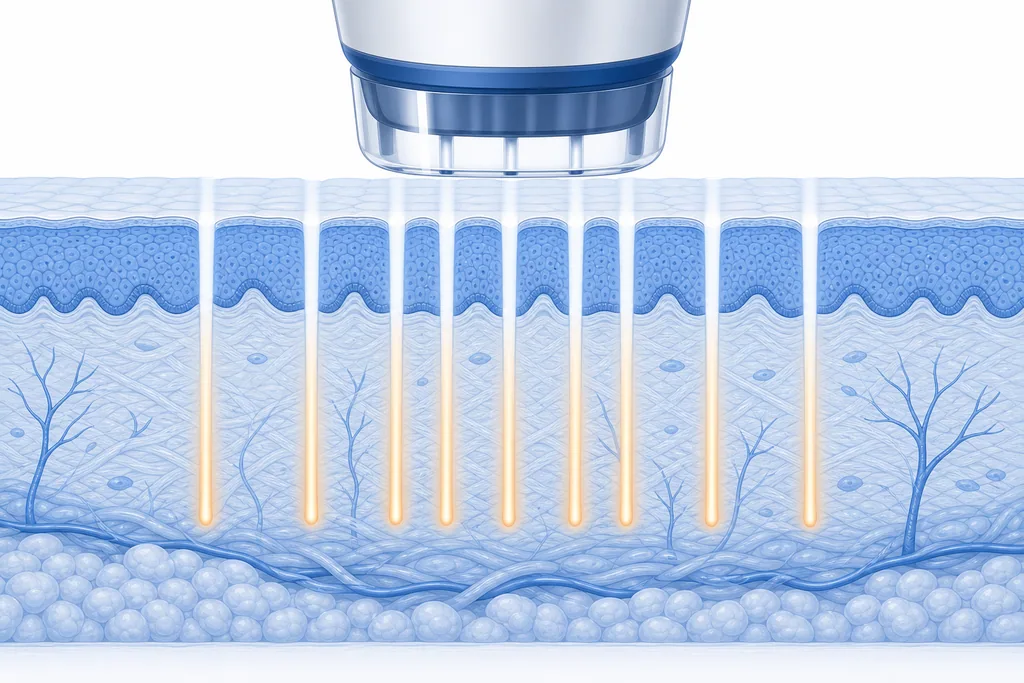
A simple way to picture the mechanism
CO₂ laser is hard to picture without a diagram. Here is a simplified view of what happens beneath the skin during and after the treatment.
- Stage 01
Laser ablation
The CO₂ laser delivers precise energy, creating microscopic columns of controlled thermal injury through the skin surface.
- Stage 02
Thermal response
Heat from each column spreads to the surrounding dermis, signalling the body to begin its natural wound-healing cascade.
- Stage 03
Collagen remodelling
As the skin heals, new collagen fibres form and existing ones restructure — gradually smoothing and tightening the treated area.
This is a simplified illustration. Your doctor will assess your skin type, scar pattern, and treatment goals before recommending an energy level and session plan suited to you.
— How it works
The treatment process
Controlled thermal injury
Laser energy creates microscopic columns of treated tissue, stimulating renewal in the scarred area.
Collagen remodelling
The healing response may help rebuild dermal structure, which can soften the appearance of scars over time.
Layered sessions
Most plans involve a series of treatments spaced weeks apart, calibrated to your recovery and goals.
— Suitability
Who CO₂ Laser suits — and who it doesn't
Surface texture and scar edges matter. CO₂ laser is most useful when the main concern is uneven skin texture, boxcar scars, enlarged pores, or rough post-acne resurfacing.
Often suitable for
- Boxcar scars with defined edges
- Uneven post-acne skin texture and rough surface
- Enlarged pores in scarred areas
- Shallow to moderate atrophic scar depth
Usually not the right choice for
- Deeply tethered rolling scars as a standalone — subcision usually comes first
- Active severe acne
- Patients unable to commit to several days of social downtime
- Pigmentation-prone skin tones without prior assessment
CO₂ laser is the flagship resurfacing step. It works hardest on visible texture and scar edges, but it is rarely the first move when scars are tethered or when active acne is unresolved. Your doctor will sequence it appropriately within a wider scar plan.
— Recovery
What to expect after CO₂ Laser
Recovery varies by individual, treatment intensity, and aftercare adherence. This is a general guide — your doctor will provide specific instructions.
Day 1–3
Redness, heat, and skin sensitivity are expected. Skin may feel tight.
Day 3–7
Peeling or bronzing as skin renews. Avoid picking or rubbing treated areas.
Week 2+
Skin gradually settles. Redness fades. Gentle skincare can resume as advised.
Month 1–3+
Collagen remodelling continues beneath the surface. Improvements develop over time.
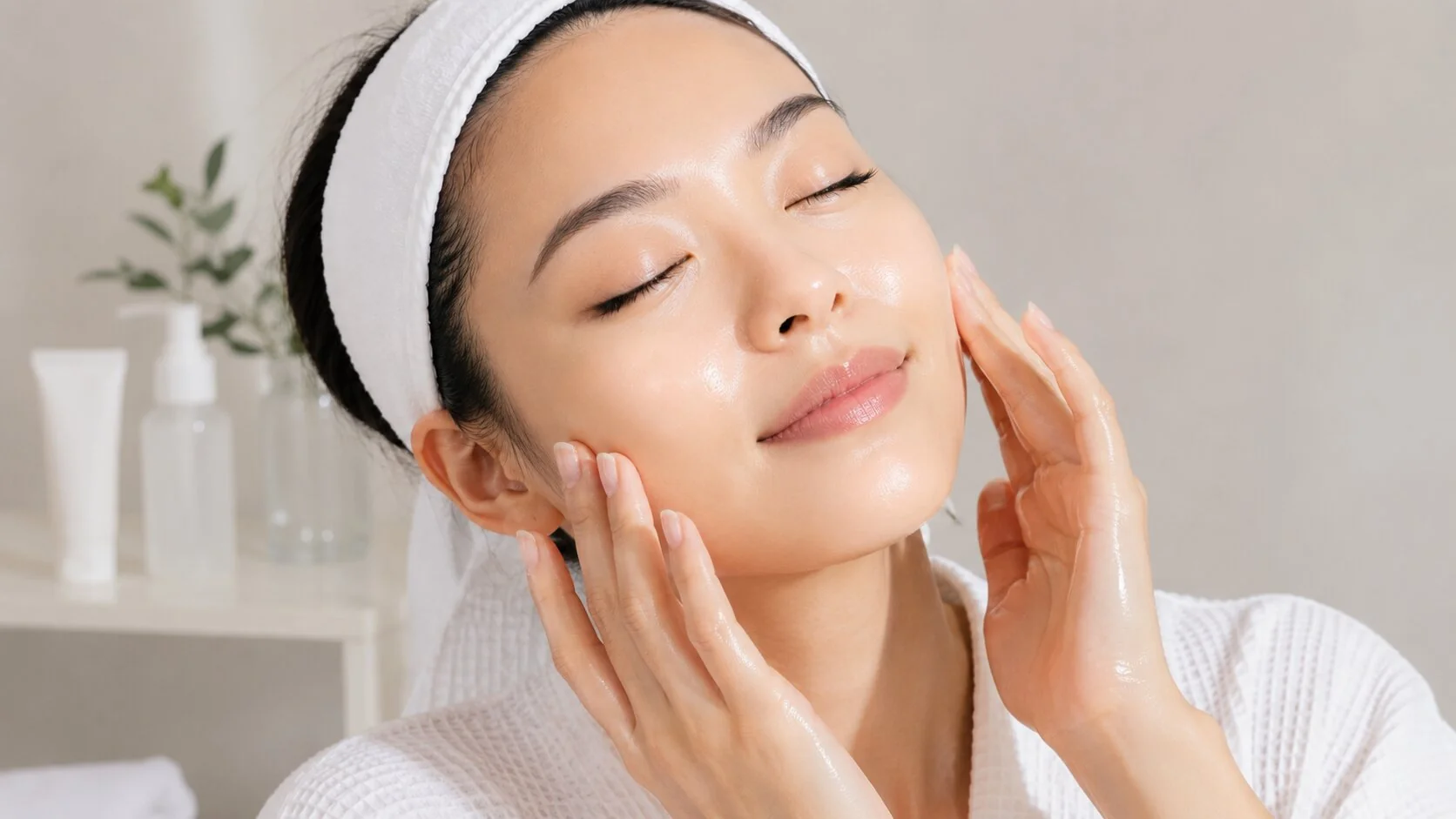
Your doctor will provide a tailored aftercare guide. If you have questions about downtime or planning around an event, ask during your consultation.
— Your plan
How your plan is built
No two plans are identical, because no two presentations are. What your CO₂ Laser plan involves — and what it costs — is set by clinical findings at assessment, not by a menu.
Assessment comes first. The doctor examines your concern in person — type, severity, and skin response all change what is appropriate.
The plan is sized by clinical need. Number of sessions, spacing between them, and whether treatments are combined are set by what the assessment finds — never by a predetermined package.
You see the plan and its cost before anything is booked. Take it home, think it over — there is no obligation to proceed on the day.
You leave the assessment knowing the plan and what it costs — nothing left to guess at home.
— Your doctor and where you're treated
One doctor, in a real clinic — not a treatment menu

Dr Kenneth Lee
Aesthetic Physician · DrPlus Aesthetics Clinic
- MBBCh · Cardiff University · UK
- GDipFP Dermatology · NUS · Singapore
- Aesthetic Medicine · AAAM · USA
- LCP Certified · Malaysia

Dr Plus Aesthetics Clinic Singapore (Tanjong Pagar)
160 Robinson Road #03-10, SBF Center
Singapore 068914
Dr Plus Aesthetics Clinic (East Coast)
66 East Coast Road #03-05, The Flow Mall
Singapore 428778
Dr Plus Aesthetics Clinic (Novena)
10 Sinaran Drive #10-30, Novena Medical Centre
Singapore 307506
Your assessment is with the doctor directly — not a consultant, not a sales room.
— Honest expectations
Risks and realistic expectations
No medical treatment is risk-free, and honest expectations matter more than impressive promises. Here is what a realistic course looks like.
What results realistically look like
- Results build gradually and vary by individual — skin type, severity, and how your body responds all shape the outcome.
- Some concerns need more than one session, and some need maintenance. If that applies to you, the doctor will say so at assessment — before you commit.
- If CO₂ Laser is unlikely to reach the result you have in mind, you will be told that plainly. An honest "this won't get you there" protects you more than an optimistic plan.
Risks, plainly stated
- Temporary redness, swelling, or sensitivity in the treated area is common and expected — the downtime section above describes the usual course.
- Less common reactions exist for every procedure. The doctor walks through the ones relevant to you at consultation, before any treatment is scheduled.
If something doesn't feel right afterwards
If anything doesn't look or feel right after treatment, contact the clinic — describe what you're seeing and the team will advise whether it is an expected part of recovery or needs the doctor to review it.
— FAQ
CO₂ Laser FAQ
We see patients at SBF Center, 160 Robinson Road #03-10, in the Tanjong Pagar CBD (call +65 8851 9547), The Flow Mall, 66 East Coast Road #03-05, in Katong on the East Coast (call +65 8857 4917), and Novena Medical Centre, 10 Sinaran Drive #10-30, in Novena (call +65 8851 9505). All three clinics offer the same doctor-led consultations, so you can choose whichever location is more convenient.
SBF Center on Robinson Road is about a three-minute walk from Tanjong Pagar MRT (East–West Line) in the CBD, The Flow Mall on East Coast Road in Katong is a short walk from Marine Parade MRT on the Thomson–East Coast Line, and Novena Medical Centre on Sinaran Drive is a short sheltered walk from Novena MRT on the North–South Line. If you drive, all three buildings have carparks, with further public parking nearby.
No. A carbon laser peel (sometimes called a carbon facial or Hollywood peel) uses a Q-switched Nd:YAG laser with a carbon lotion on the skin surface. It targets pores, oiliness, and mild texture. Fractional CO₂ laser is a deeper resurfacing treatment that creates microscopic thermal columns to stimulate collagen remodelling — it is used for acne scars, deeper texture issues, and significant skin resurfacing. The two treatments serve different purposes and depths.
Fractional CO₂ laser delivers energy in a grid of tiny columns rather than treating the entire surface at once. This allows the skin between columns to heal faster, reducing downtime compared to traditional full-surface CO₂ ablation while still stimulating deep collagen remodelling. At DrPlus, your doctor calibrates the density and energy level to match your scar type and skin tone.
Not exactly — Fraxel is a brand of fractional laser, and its most common versions are non-ablative (they heat tissue without vaporising the surface). Fractional CO₂ is an ablative fractional laser: it removes microscopic columns of tissue, which generally produces a stronger resurfacing effect per session with more downtime. When people search for 'CO₂ Fraxel', they usually mean fractional CO₂ resurfacing — which is what this page covers. Your doctor will explain which approach suits your skin and downtime tolerance.
Ablative lasers (like CO₂ and erbium) vaporise microscopic columns of skin, producing stronger resurfacing per session with several days of visible recovery. Non-ablative lasers (like most Fraxel modes and pico laser) heat or shatter targets beneath the surface without removing it — less downtime, gentler change per session, more sessions needed. Neither is universally better: the right choice depends on your concern, skin tone, and how much recovery time you can plan around.
Day 1–2: skin is red, warm, and tight — like a strong sunburn — with pinpoint grid marks. Day 3–5: bronzing and sandpaper-like roughness as the treated columns crust, then peeling begins. Day 5–7: peeling completes for most patients and fresh pink skin emerges. Week 2 onward: pinkness gradually fades; makeup is usually permitted once the surface has fully closed, as advised by your doctor. Collagen remodelling continues for months beneath the surface. Individual timelines vary with treatment intensity.
Yes. Beyond acne scars, fractional CO₂ is used for enlarged pores, rough or uneven texture, fine lines, and general resurfacing — the same collagen-remodelling mechanism refines the skin surface overall. For patients whose main concern is pores or texture rather than scarring, your doctor may recommend lighter settings or compare CO₂ against RF microneedling and pico laser at assessment.
Fractional CO₂ can improve the texture of mature stretch marks by stimulating collagen within the thinned skin, though improvement is partial and gradual rather than complete removal. Stretch marks usually respond most effectively to a combined plan. See our stretch mark removal service in Singapore for the full doctor-led approach.
Yes, with adjusted settings — the under-eye area and neck have thinner skin, so energy and density are reduced and technique matters more. Fractional CO₂ is used there for crepey texture and fine lines. These are areas where doctor-performed treatment and honest suitability assessment are especially important, as over-treatment risks are higher than on facial cheeks.
This varies by scar severity and skin response. Many patients undergo 2–4 sessions spaced weeks apart. Your doctor will recommend a plan after assessment.
Discomfort is usually manageable with topical anaesthetic. Sensation is often described as heat or prickling during treatment.
Initial texture changes may appear as skin heals over weeks. Collagen remodelling continues for months; results are gradual and individual.
It is commonly used for atrophic scars. Tethered or rolling scars may benefit from combination treatments such as subcision. Suitability is confirmed at consultation.
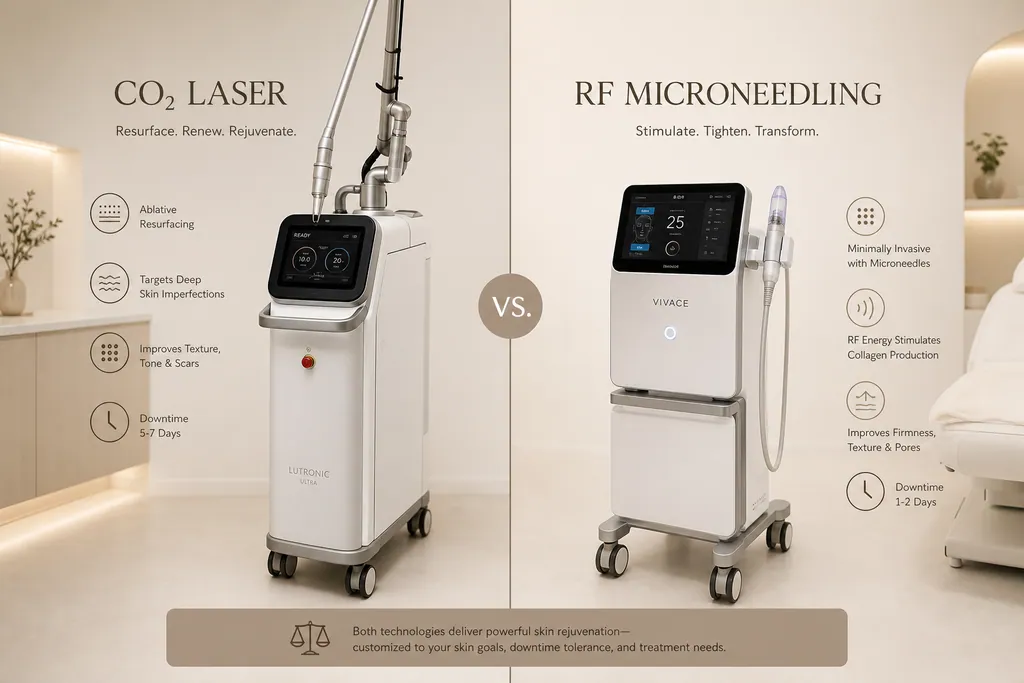
They work differently. CO₂ laser resurfaces the skin surface and can address boxcar scars and texture more aggressively. RF microneedling stimulates collagen in the dermis with less surface disruption. Your doctor may recommend one or both depending on scar type.
Fractional CO₂ can be used on Asian skin types with appropriate settings and preparation. Your doctor will assess your skin tone (Fitzpatrick type) and adjust parameters to reduce pigmentation risk.
Most acne scars can be significantly improved but complete removal is not always achievable. What is realistic depends on scar depth, type, and your skin's healing response. Your doctor will give an honest assessment.
Yes. CO₂ laser is often part of a staged plan including subcision for tethered scars, and chemical peels or RF microneedling in between sessions. Your doctor will plan the sequence appropriately.
We do not publish prices because CO₂ laser plans are personalised — the treatment area, the number of sessions, and whether it is staged with subcision or other treatments all affect the quote. After your scar assessment you receive a personalised, written quote with no obligation to proceed. WhatsApp us and we can explain what your plan would involve.

— Request a Consultation
Take the first step toward smoother skin
Your future skin starts with a private assessment — scar type, skin tone, and what's realistic for you. No pressure, just a clear path forward.
- Doctor-led assessment and recommendations
- Reviewed personally — not auto-routed
- Discreet handling of sensitive concerns
- Reply typically within one business day
— Related treatments
Other treatments sometimes used alongside CO₂ Laser
Subcision
For tethered rolling scars, subcision may be needed before resurfacing.
Learn about SubcisionRF Microneedling
For collagen remodelling with moderate downtime, RF microneedling may be considered.
Learn about RF MicroneedlingChemical Peel
For acne marks and pigmentation, chemical peels may support surface renewal.
Learn about Chemical PeelStretch Mark Treatment
Fractional CO₂ is one of the tools used in doctor-led stretch mark plans.
Learn about Stretch Mark Treatment— Skin Education
Related Skin Education
Doctor-led guides written to help you understand your options before consultation. Each article links back to the relevant treatment pages.
Which Laser Actually Fits Your Concern? Pico, CO₂, Hair & Tattoo
Clinics sell lasers by name; skin responds to mechanisms. Here is how pico, CO₂ and hair removal lasers differ — and how a doctor decides which one your concern needs.
How Doctors Match Acne Scar Treatment to Scar Type
There is no single machine that removes acne scars. What works is matching each scar type to the method built for it — here is how a doctor actually plans that.
How Much Does Acne Scar Treatment Cost in Singapore? What Sets the Price
Acne scar quotes in Singapore can differ several-fold for the same face. This guide explains the variables — scar type, procedure mix, area, sessions, doctor involvement — so you can compare like with like.
Laser Treatment for Acne Scars: Which Laser for Which Scar? CO₂ vs Pico vs Erbium vs RF Microneedling
'Laser for acne scars' covers four very different technologies. This guide matches each to the scar types it actually treats — and names the scars no laser reaches.
 CO₂ Laser
Fractional CO₂ Laser for Acne Scars: Complete Scientific Guide
Fractional CO₂ laser is one of the most powerful resurfacing tools for acne scars — but only when the right scar, the right settings and the right skin meet. Here is the science behind how it actually works.
 Acne Scars
CO₂ Laser vs RF Microneedling for Acne Scars
Two of the most common acne scar treatments — and they work in genuinely different ways. Here is how to think about them.
A QUICKER SCROLL
Clinic life, in short clips
Take a breather from the detail — swipe through Facebook and TikTok moments from DrPlus, then continue when you're ready to book.