







Tanjong Pagar / CBD
SBF Center
Dr Plus Aesthetics Clinic Singapore (Tanjong Pagar)
160 Robinson Road #03-10
Singapore 068914
About a three-minute walk from Tanjong Pagar MRT (East–West Line); the building has a carpark.

DrPlus Singapore · Hair
Losing hair is stressful — and the internet is full of miracle cures that waste your money. Start with a doctor who diagnoses why you are shedding, then builds a plan around evidence-led medical options suited to your cause. The earlier you act, the more hair there is to save.
— Who this page is for
Hair loss has many causes — androgenetic thinning, stress shedding, medical conditions, nutritional gaps — and they need different treatment. Diagnosis comes first; treatment second.
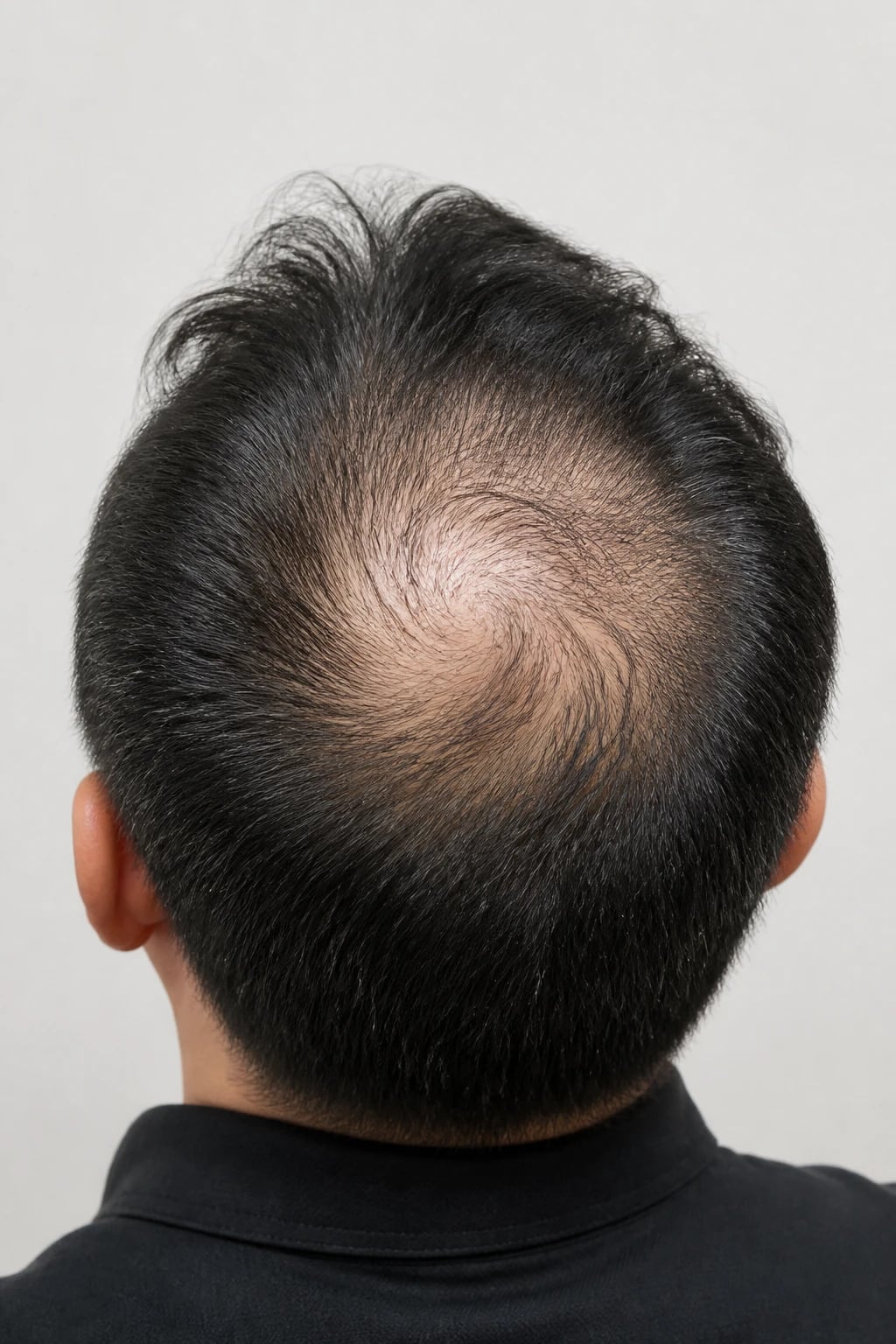
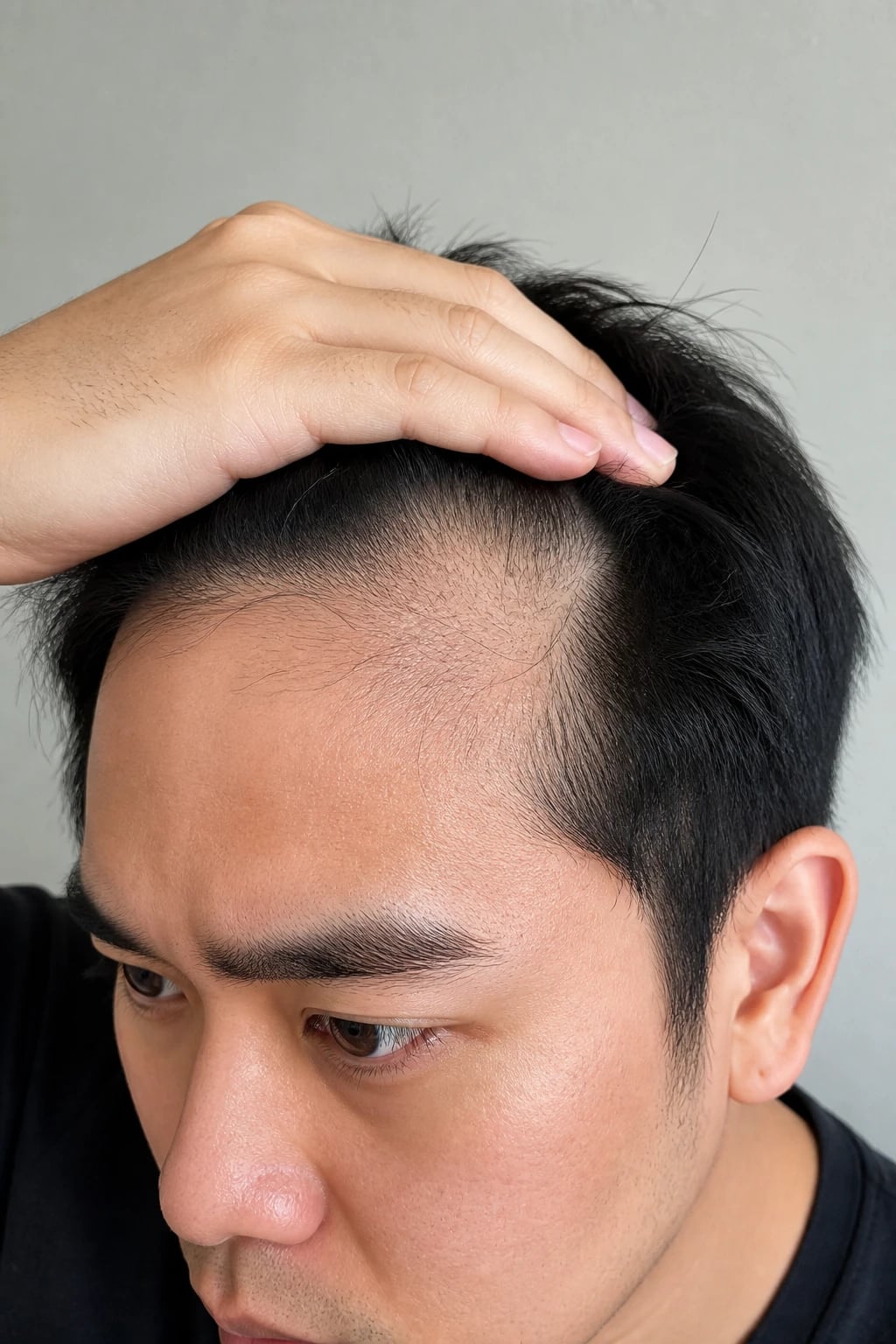
A widening part, a receding hairline, more scalp showing under bright light — the classic early pattern where intervention has the most to work with.
Handfuls in the shower or distinct patches need medical assessment — some causes are treatable conditions, not cosmetic problems.
You want a doctor to explain which evidence-led options fit your stage of thinning — and which ones will not help — before you spend money.
You are exploring non-surgical options first — or want to know honestly whether your thinning still has non-surgical answers.
— What this involves
The single most important step is the diagnosis. Androgenetic (pattern) hair loss, telogen effluvium (stress shedding), alopecia areata, thyroid issues, and iron deficiency all thin your hair — and each needs a different response. Your consultation starts with a scalp examination and history; where indicated, blood tests rule out medical drivers before any treatment plan is discussed.
For androgenetic thinning — the most common cause — the evidence-backed toolkit centres on medical therapy tailored to your stage of thinning and overall health. The honest caveat: medical options work meaningfully for early thinning where follicles are still alive; they cannot resurrect follicles that are long gone. Your doctor will tell you which side of that line you are on.
Expect the process to take months — hair grows slowly, and anyone promising visible regrowth in weeks is selling you something. We track progress with photographs so change is measured, not imagined, and review the plan as your scalp responds.
What determines the cost? The treatment pathway your diagnosis points to and any adjunct care that supports it. We do not publish prices — you receive a personalised, written plan and quote after your scalp assessment. If a transplant is genuinely your most suitable option, we will tell you that honestly instead of selling you sessions.

— What patients notice
Shedding in the brush, a widening part, a crown that looks thinner under office lights — these moments are why people finally book. Here is how a diagnosis-first visit usually unfolds.

Step 1
Hair in the brush, more scalp in photos, or a part that keeps widening — the private worry that something is changing and home remedies are not enough.
Step 2
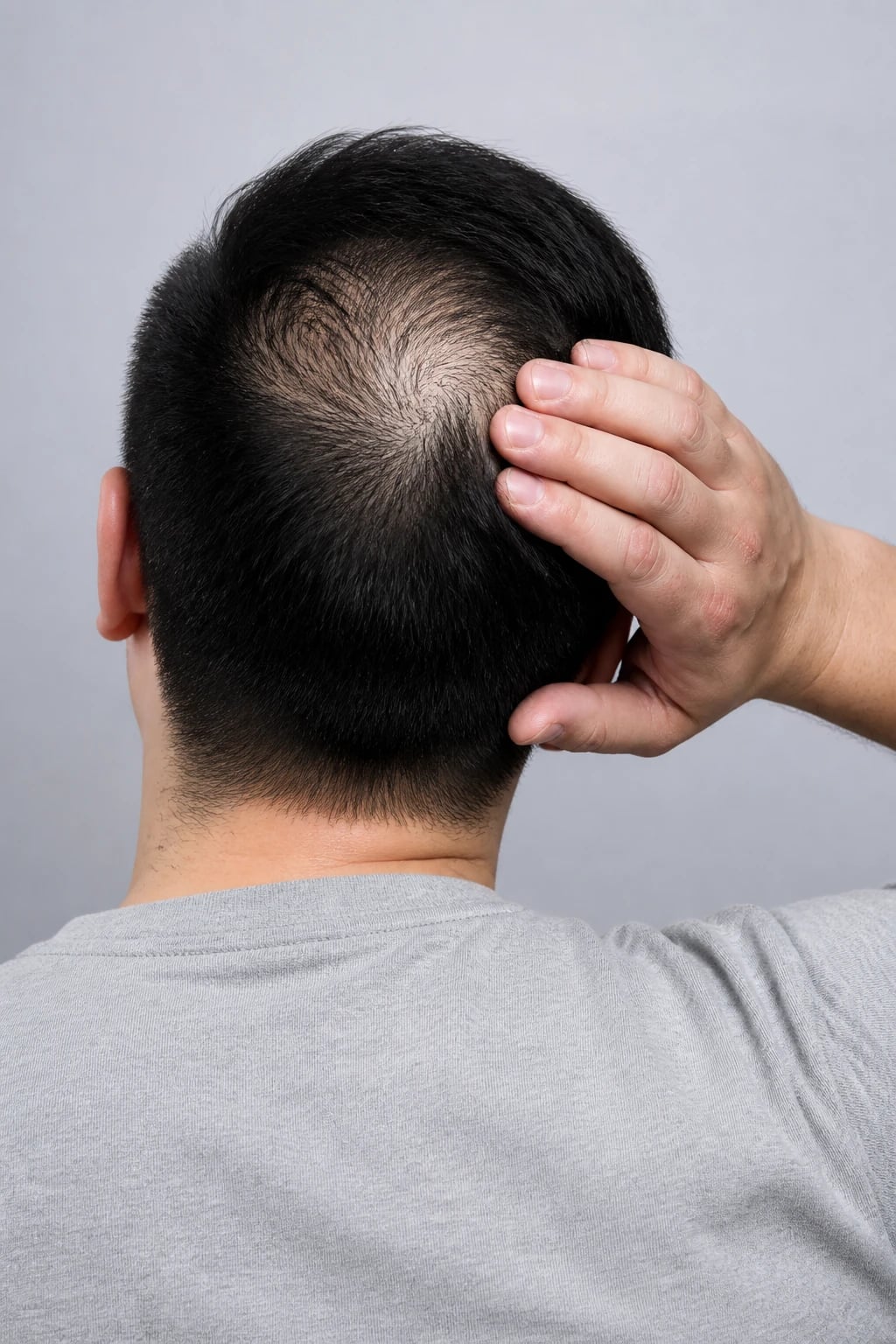
Your doctor examines the hairline, parting, and crown under good light, takes a history, and — where indicated — arranges blood tests before any treatment talk.
Step 3
You leave knowing whether follicles still have capacity to respond, which options fit your cause, and what will not help — including when a transplant conversation is more realistic.

Step 4
If treatment is suitable, you receive a written pathway and photo-tracked reviews over months — hair changes slowly, and progress should be measured, not guessed.
— What to expect
Hair changes slowly, so a credible plan is structured around reviews rather than a single visit. This is how the pathway usually runs at our Singapore clinics.
Message our Singapore team on WhatsApp with a brief description — and a photo of the parting or hairline if you are comfortable. You will be offered a consultation at Tanjong Pagar, East Coast or Novena.
The doctor takes a history (family pattern, recent illness, medicines, diet, hair practices) and examines the hairline, parting and crown under good light. Where a medical cause is suspected, blood tests are arranged.
You are told which pattern you have, whether follicles still have capacity to respond, and which options fit. If treatment is suitable you receive a written plan and quote; if it is not, you are told that too.
Medical therapy is started and explained — how to use it, what early changes to expect, and the side effects to watch for. Scalp conditions are treated alongside.
Standardised photographs are compared at each review. Reduced shedding is usually the first change; density follows. The plan is adjusted, continued or stopped based on what the photos show.
Weeks 2–8
Some patients notice a brief increase in shedding as resting hairs are replaced — expected, and it settles.
Months 3–4
Shedding usually reduces. Density change is not yet visible to the eye; the photographs are what show it.
Months 6–12
Visible density improvement where follicles were still viable. Ongoing therapy maintains it; stopping usually reverses it over time.
Timelines vary by cause and individual. Anyone promising visible regrowth in weeks is overpromising.
— Why DrPlus
Diagnosis-first hair medicine — because treating the wrong cause wastes both money and the time window where your follicles can still respond.
Scalp examination, history, and blood tests where indicated — treatable medical causes are ruled out before a treatment plan is made.
Medical therapy with honest framing of what it can achieve for your stage of thinning — and when it will not help.
Your plan is set and reviewed by a doctor, not a sales script — progress is tracked with photographs over time.
If your thinning is beyond non-surgical help, you will be told plainly — not strung along with sessions that cannot work.
Ready to discuss your skin?
Book a doctor-led assessment tailored to your concerns.
— Cost factors
We do not publish prices because the plan depends entirely on the diagnosis. A consultation that ends with 'no treatment needed yet' costs a consultation; a pattern-loss plan is an ongoing monthly commitment with periodic reviews; a scalp condition adds its own treatment. Quoting one number before the scalp has been examined would be guessing.
When you compare Singapore clinics, be cautious of packages that bundle many 'scalp sessions' upfront for a pattern that medical therapy treats. The honest comparison is the yearly picture — consultation, any blood tests, monthly therapy and review visits — not the first visit.
— Related treatments
Hair and scalp concerns often sit alongside broader men's health or skin-quality goals. Each option is assessed individually at consultation.
Women lose hair for different reasons from men. The dedicated page covers female-pattern loss, postpartum shedding, iron, thyroid and PCOS.
Learn MoreHair loss often arrives alongside other concerns — our private men's health consultations cover them discreetly.
Learn MoreInjectable hydration for skin texture and glow — useful if scalp or facial skin quality is part of the wider picture.
Learn MoreDoctor-led collagen and skin-quality pathways when hair concerns sit alongside facial ageing goals.
Learn More— Our Singapore clinics
Consultations and treatments are available at all three clinics — choose whichever is more convenient: the Tanjong Pagar CBD, Katong on the East Coast, or the Novena medical district.
Tanjong Pagar / CBD
Dr Plus Aesthetics Clinic Singapore (Tanjong Pagar)
160 Robinson Road #03-10
Singapore 068914
About a three-minute walk from Tanjong Pagar MRT (East–West Line); the building has a carpark.

East Coast / Katong
Dr Plus Aesthetics Clinic (East Coast)
66 East Coast Road #03-05
Singapore 428778
A short walk from Marine Parade MRT (Thomson–East Coast Line); The Flow Mall has a carpark.

Novena
Dr Plus Aesthetics Clinic (Novena)
10 Sinaran Drive #10-30
Singapore 307506
A short sheltered walk from Novena MRT (North–South Line); Novena Medical Centre has a carpark.
— FAQ
Care starts with diagnosis — scalp examination, history, and blood tests where indicated. For suitable early-to-moderate thinning, evidence-led medical therapy is discussed and reviewed over time. Regenerative options such as PRP are not offered at our Singapore clinics. Your doctor will explain what fits your case honestly before any plan is made.
We do not publish prices because the plan depends entirely on your diagnosis and the medical pathway that fits it. After your scalp assessment you receive a personalised, written plan and quote, with no obligation to proceed.
Hair works on slow cycles. Reduced shedding is often the first change, followed by visible density improvement over three to six months. We document progress with standardised photos so you can see real change rather than guessing in the mirror. Anyone promising regrowth in weeks is overpromising.
Yes. Female-pattern thinning and post-partum or stress-related shedding are common and treatable, and the diagnostic step matters even more for women because medical causes (thyroid, iron) are more frequent. The same diagnosis-first approach applies.
A transplant relocates follicles; it does not stop ongoing thinning — which is why many transplant patients still need medical therapy afterwards. For early-to-moderate thinning, non-surgical treatment often makes sense first or alongside. If your pattern genuinely calls for a transplant, we will tell you that honestly at consultation.
For men the usual diagnosis is pattern (androgenetic) loss — a receding hairline or thinning crown that progresses over years. After the scalp examination, treatment centres on doctor-prescribed topical and oral therapy aimed at the follicles that are thinning but still alive, reviewed with photographs at three and six months. The honest caveat is timing: medical therapy protects and thickens what remains; it does not bring back areas that have been bald for years.
An oily scalp by itself does not cause pattern hair loss, so a cosmetic 'scalp treatment' alone rarely changes thinning. What matters is whether the oiliness comes with inflammation — seborrhoeic dermatitis, folliculitis or itching — because an inflamed scalp can worsen shedding. That is treated medically for the specific condition, usually alongside therapy for the underlying pattern loss. Your doctor examines the scalp to tell which applies rather than selling a series of scalp sessions.
Postpartum shedding is a form of telogen effluvium: the hormonal shift after delivery moves many hairs into the resting phase at once, and they fall two to four months later. It usually settles within six to twelve months on its own. The consultation checks iron and thyroid where indicated, addresses nutrition, and — importantly — looks for a second, pre-existing pattern that the shedding has unmasked, which is the case that benefits from treatment.
No. Regenerative injections such as PRP and exosomes are not provided at our Singapore clinics, and we would rather say so plainly than route you into a different treatment. What we offer in Singapore is diagnosis-first medical hair care: scalp examination, blood tests where indicated, doctor-prescribed therapy and photo-tracked reviews. If your pattern is one that medical therapy cannot help, you will be told that at consultation.
Both can diagnose and treat the common causes. What matters more than the title is that the hair loss is examined and diagnosed before anything is prescribed, that medical drivers are excluded with blood tests where indicated, and that progress is reviewed with photographs rather than impressions. Extensive or rapidly progressing alopecia areata and scarring hair loss are the patterns most likely to be referred onward.
Choose whichever suits your day: SBF Center at 160 Robinson Road in Tanjong Pagar (Tanjong Pagar MRT, a four-minute walk), The Flow Mall at 66 East Coast Road in Katong (Marine Parade MRT), or Novena Medical Centre at 10 Sinaran Drive (Novena MRT, linked via Square 2). The same diagnosis-first approach applies at all three; message our Singapore WhatsApp team with your preferred location.
We see patients at SBF Center, 160 Robinson Road #03-10, in the Tanjong Pagar CBD (call +65 8851 9547), The Flow Mall, 66 East Coast Road #03-05, in Katong on the East Coast (call +65 8857 4917), and Novena Medical Centre, 10 Sinaran Drive #10-30, in Novena (call +65 8851 9505). All three clinics offer the same doctor-led consultations, so you can choose whichever location is more convenient.
SBF Center on Robinson Road is about a three-minute walk from Tanjong Pagar MRT (East–West Line) in the CBD, The Flow Mall on East Coast Road in Katong is a short walk from Marine Parade MRT on the Thomson–East Coast Line, and Novena Medical Centre on Sinaran Drive is a short sheltered walk from Novena MRT on the North–South Line. If you drive, all three buildings have carparks, with further public parking nearby.

— Request a Consultation
The earlier thinning is treated, the more there is to save. WhatsApp us or book a scalp assessment — you'll get a diagnosis-led plan and a written quote, never a hard sell.
— Skin Education
Doctor-led guides written to help you understand your options before consultation. Each article links back to the relevant treatment pages.
Hair loss quotes in Singapore differ several-fold because clinics are quoting different things. This guide explains the variables so you can compare like with like — without a price table.
A receding hairline or a thinning crown is the most common hair complaint men bring to a Singapore clinic. Here is how it is diagnosed, what treatment can and cannot do, and why timing is everything.
Scalp treatments are the most-sold answer to hair loss in Singapore — and the least likely to address the cause. Here is what oiliness does and does not do to your hair.
Women's hair loss has a longer list of causes than men's, and several usually overlap. This guide explains each one, how it is recognised, and what treating it actually involves.
— Methods compared
Hair loss is a symptom, not a diagnosis. The scalp examination and history at your first visit sort it into one of these patterns, because the plan that follows is different for each. Where a medical driver is suspected, blood tests are arranged before treatment is discussed.
Men · receding hairline, thinning crown
Hormone-sensitive follicles miniaturise over years. The most common cause in men and the one with the clearest evidence base for medical therapy.
Women · widening part, lower ponytail volume
Diffuse thinning over the crown with the hairline usually preserved. Medical causes — iron, thyroid, hormonal — are more frequent in women and are checked first.
Men & women · sudden handfuls, 2–4 months after a trigger
Illness, surgery, crash dieting, childbirth or severe stress push many follicles into the resting phase at once. Usually self-limiting once the trigger is addressed.
Oily, itchy, flaky or inflamed scalp
Seborrhoeic dermatitis, folliculitis and psoriasis inflame the scalp and can worsen shedding. An oily scalp on its own does not cause pattern loss, but an inflamed one can accelerate it.
Smooth round patches, any age
An autoimmune pattern where follicles are attacked but not destroyed. Needs medical management rather than cosmetic treatment, and sometimes specialist referral.
Honest scope
Regenerative injections such as PRP and exosomes, and hair transplant surgery, are not provided at our Singapore clinics. If your assessment points that way, you will be told plainly.
Which pathway applies — and whether any treatment is worthwhile — is decided at your scalp assessment. Results vary by individual and develop over months.
Medical disclaimer
Information on this page is for general education only and does not replace a consultation with a qualified medical practitioner. Suitability, downtime, risks, and results vary by individual. Please consult your doctor before deciding on any treatment. Read the full medical disclosure.
A QUICKER SCROLL
Clinic life, in short clips
Take a breather from the detail — swipe through Facebook and TikTok moments from DrPlus, then continue when you're ready to book.