








Tanjong Pagar / CBD
SBF Center
Dr Plus Aesthetics Clinic Singapore (Tanjong Pagar)
160 Robinson Road #03-10
Singapore 068914
About a three-minute walk from Tanjong Pagar MRT (East–West Line); the building has a carpark.
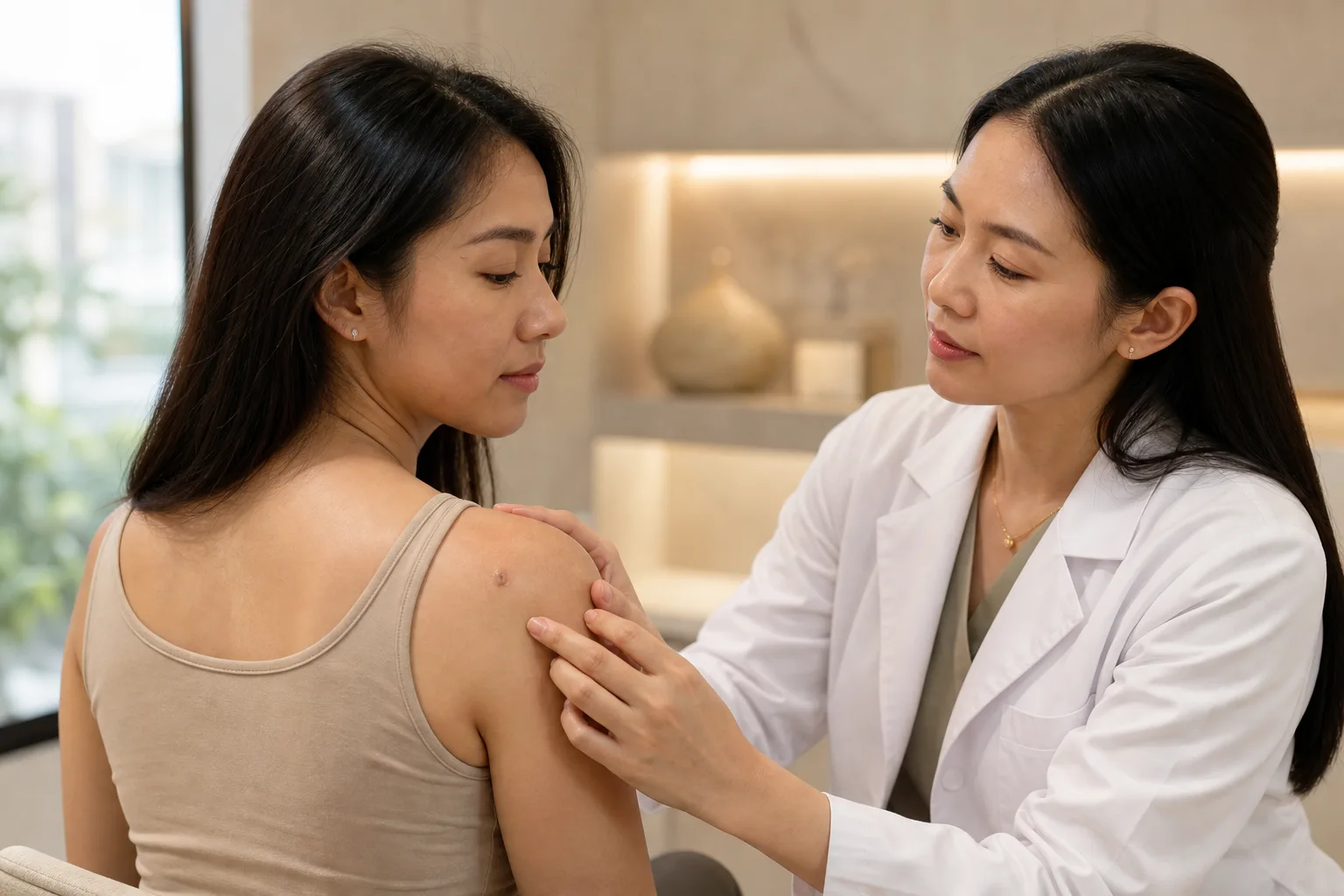
DrPlus Singapore · Scar Care
Doctor-led treatment for raised keloid scars on the earlobes, chest, shoulders and jaw. Most plans centre on steroid injections into the scar, sometimes with laser, to flatten it, ease itch and lower the chance of regrowth. Assessed at Tanjong Pagar, East Coast or Novena. Results vary by individual.
— Who this page is for
Keloids are common in Singapore, particularly in people of Asian and African descent. If one of these sounds like you, a doctor can tell you what is realistic for your scar.
A firm, growing lump on the earlobe or cartilage after a piercing, sometimes on both sides.
Thick scars on the chest, shoulders, upper back or jaw from acne, a surgical wound or a vaccination.
A scar that itches, feels tender or rubs on straps and collars, even if its appearance bothers you less.
A scar that returned after being cut out or treated once, and you want a plan that addresses regrowth.
— What this involves
A keloid forms when the skin keeps laying down collagen after a wound has closed. Unlike an ordinary scar, it grows beyond the edges of the original injury and does not settle on its own. The tendency runs in families and is more common in Asian and darker skin.
Because the scar is your own tissue, cutting it out on its own usually triggers the same over-healing, and the keloid often returns, sometimes larger. Treatment therefore aims to flatten and soften the scar and keep it from regrowing, rather than to remove it in one step.
The main treatment is a steroid (corticosteroid) injected directly into the scar every four to six weeks. It slows collagen production, and most people notice less itching and tenderness within a session or two, before the scar visibly flattens. Laser may be added for redness or an uneven surface.
For some keloids, most often a narrow-based lump on the earlobe, surgical removal can be considered, but only together with injections planned around the procedure and close follow-up. Your doctor explains whether your scar is suitable.
What determines the cost? The number and size of keloids, the scar's age and site, the treatments your plan needs, and the number of sessions. We do not publish prices — WhatsApp us a photo of the scar and we can usually outline what removal would involve, followed by a personalised written quote at your assessment.
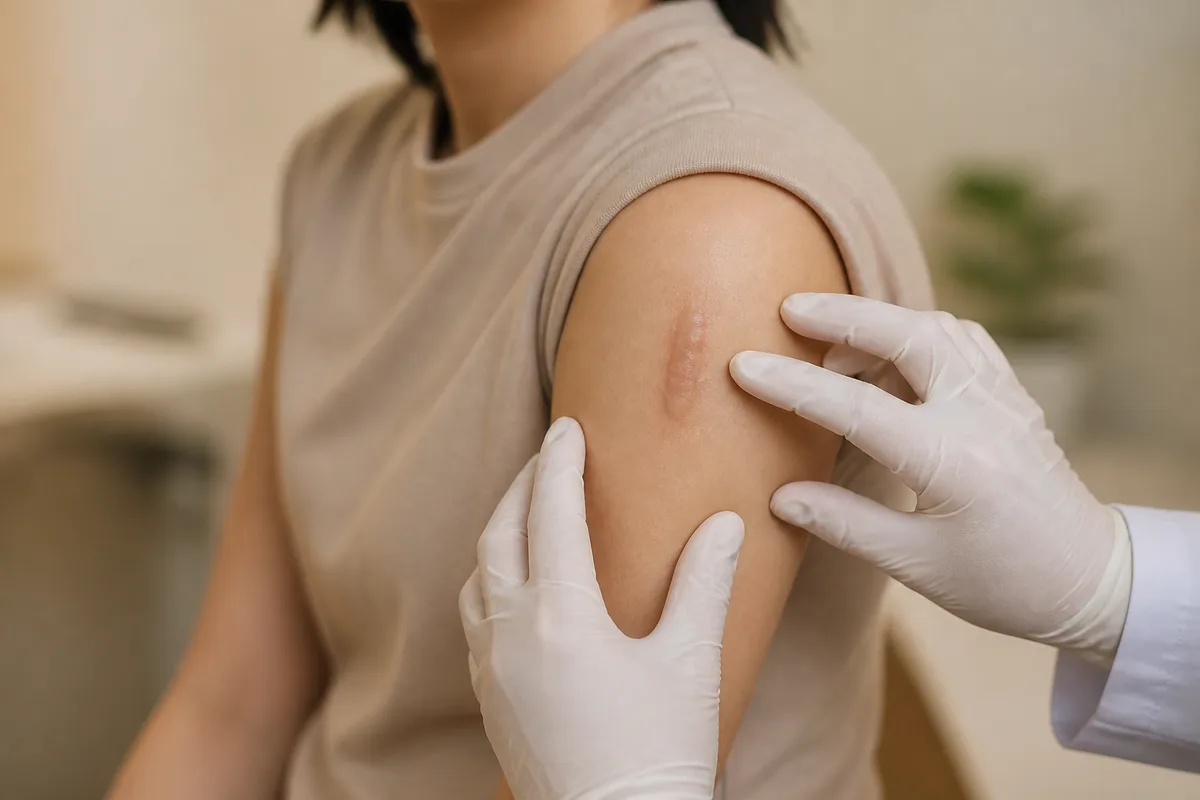
— What to expect on the day
Each visit is short. The first one includes a full assessment; later visits are mainly injections and a progress check.
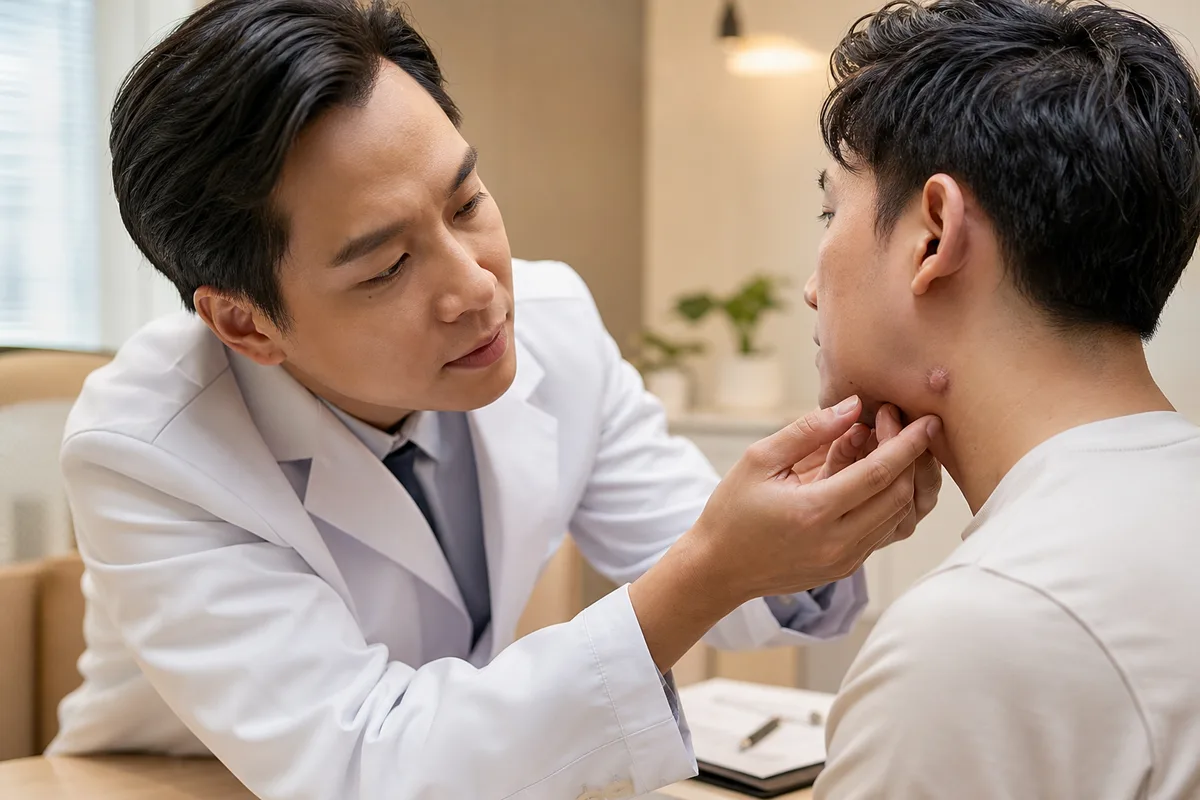
Step 1
The doctor asks when and how the scar started, examines its size, firmness and spread, checks whether it is a keloid or a hypertrophic scar, and photographs it as a baseline.
Step 2
You agree the treatment plan, how often you will come back, and the possible side effects of steroid injections.
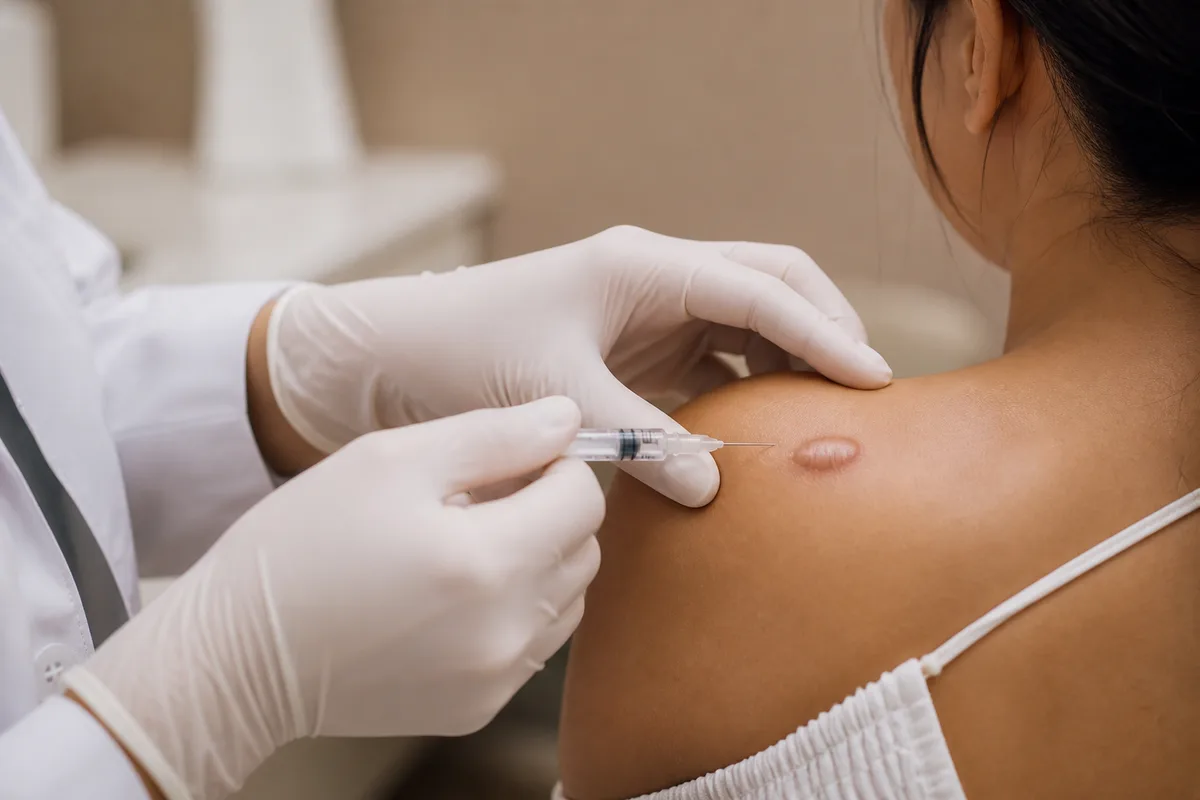
Step 3
A fine needle places small amounts of steroid into the keloid itself. Numbing cream can be used for sensitive areas such as the ear or chest.
Step 4
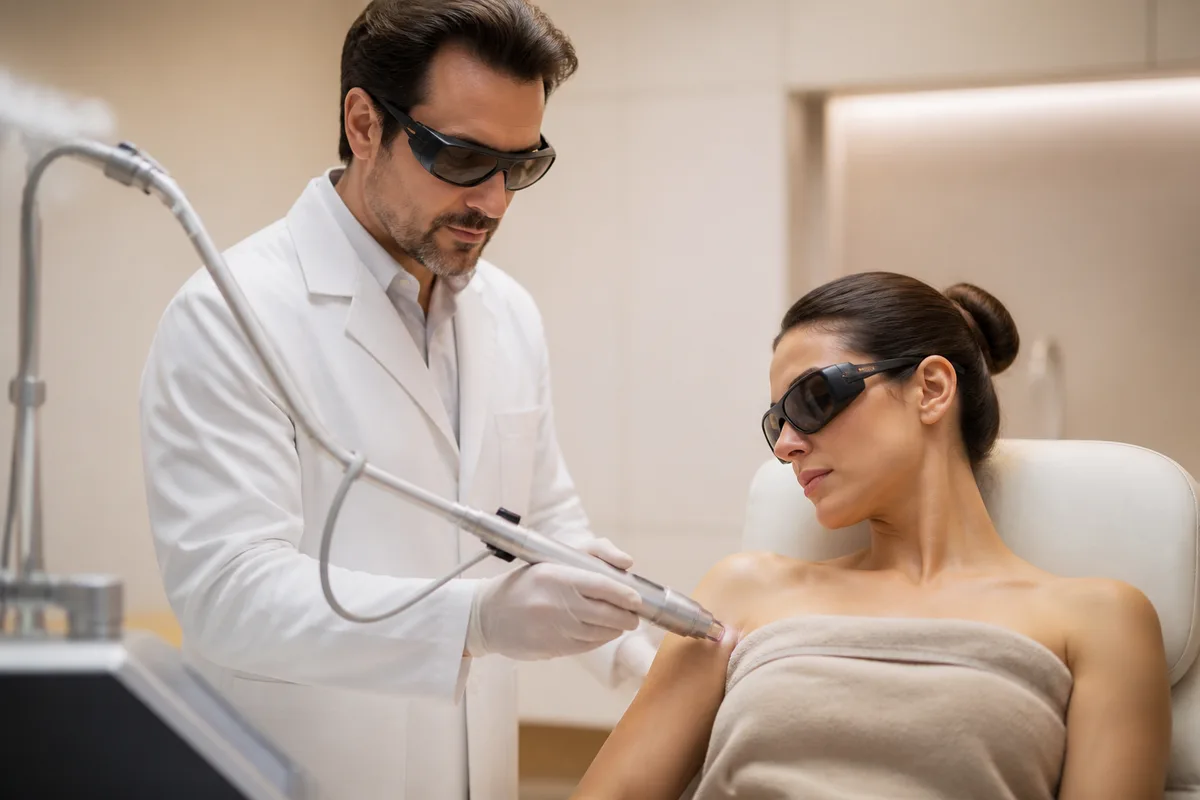
Where redness or texture is part of the concern, laser may be used in the same visit or on its own schedule.

Step 5
Your next visit is booked, usually four to six weeks later, and progress is compared against the baseline photos.
— What to expect
Injection visits have no real downtime; most people return to work straight away. Aftercare focuses on protecting the scar and preventing new ones.
Mild soreness at the injection points for a day or two. There is usually no wound to dress.
Avoid scratching, friction from tight straps, and new piercings or tattoos near the area.
Sunscreen helps the scar's colour settle, especially on the chest and shoulders.
If you are keloid-prone, mention it before any procedure so the wound can be managed from the start.

After 1–2 sessions
Itch and tenderness often ease first. The scar may feel slightly softer.
After 3–4 sessions
Flattening becomes more visible. Small, recent keloids tend to respond faster than large, old ones.
After the course
Reviews become less frequent. Colour continues to settle, and any early sign of regrowth is treated promptly.
Response varies with the keloid's size, age, site and your skin. Progress is tracked against photographs rather than memory.
— Is it a keloid?
Both are raised scars, but they behave differently and are treated with different expectations.
| Feature | Keloid | Hypertrophic scar |
|---|---|---|
| Edges | Spreads beyond the original wound | Stays within the original wound |
| Timing | Can appear months after the injury and keep growing | Appears within weeks of the injury |
| Over time | Rarely settles on its own | Often flattens gradually over a year or two |
| Common sites | Earlobes, chest, shoulders, upper back, jaw | Anywhere, often over joints or after burns |
| After surgery alone | Commonly returns | Less likely to return |
— Risks & side effects
Steroid injections are generally well tolerated when a doctor doses them carefully. Your doctor explains the risks for your scar before you start.
— Choosing a doctor
These questions are reasonable to ask at any clinic, including ours.
— Compared with alternatives
Several treatments are used for keloids, often in combination. The table describes them generally; your doctor explains which are suitable and available for your scar.
| Treatment | How it works | Points to know |
|---|---|---|
| Steroid injections | Slows collagen production inside the scar | First-line; several sessions; can thin or lighten nearby skin |
| Silicone gel or sheets | Hydrates and protects the scar surface | Used daily for months; helpful for prevention and mild scars |
| Pressure earrings | Steady pressure on the earlobe after surgery | Worn many hours a day; mainly for earlobe keloids |
| Cryotherapy (freezing) | Freezes scar tissue | Can lighten skin; usually for small keloids |
| Laser | Targets redness and surface texture | Used alongside other treatments |
| Surgery | Removes the keloid | Only with injections or other follow-up; high regrowth if done alone |
| Radiotherapy after surgery | Reduces regrowth after excision | Hospital-based; for selected, stubborn cases |
— Why DrPlus
Keloid care is a course, not a single appointment, so the plan is built around follow-up from the start.
Injections are placed and dosed by a doctor to flatten the scar while protecting the skin around it.
You hear how likely your scar is to return and what maintenance involves before you start.
Each visit is compared against baseline photographs so changes are measured.
Tanjong Pagar, East Coast and Novena, with the same doctor-led standard at each.

Ready to discuss your skin?
Book a doctor-led assessment tailored to your concerns.
— Fees & quotes
We do not publish a fixed price list because every keloid is different. The quote depends on how many scars you want treated, their size, age, and site, the modalities your protocol needs, and the number of sessions across the course.
The fastest start: WhatsApp us a clear photo of the scar. We can usually indicate what removal would involve, then confirm a personalised written quote at your assessment at Tanjong Pagar, East Coast or Novena, with no obligation to proceed.
— Related treatments
Raised scars, pitted scars and skin growths need different approaches. Each is assessed at consultation.

Depressed acne scars need collagen-building treatment rather than flattening.
Learn More
Stretch marks are a different type of scarring with their own treatment pathway.
Learn More
Not every raised bump is a scar; skin growths have their own doctor-checked pathway.
Learn MoreHow the two differ, and why it changes treatment and expectations.
Learn MoreHow raised acne scars and small keloids are treated, and how they differ from pitted scars.
Learn MoreWhy flat marks, pitted scars and raised scars each need a different approach.
Learn More— Our Singapore clinics
Consultations and treatments are available at all three clinics — choose whichever is more convenient: the Tanjong Pagar CBD, Katong on the East Coast, or the Novena medical district.
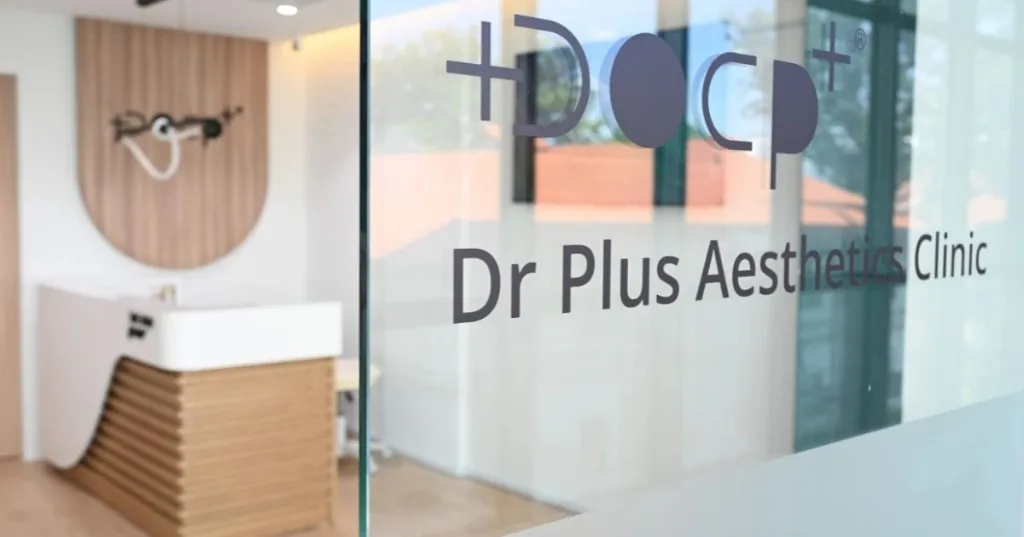
Tanjong Pagar / CBD
Dr Plus Aesthetics Clinic Singapore (Tanjong Pagar)
160 Robinson Road #03-10
Singapore 068914
About a three-minute walk from Tanjong Pagar MRT (East–West Line); the building has a carpark.
East Coast / Katong
Dr Plus Aesthetics Clinic (East Coast)
66 East Coast Road #03-05
Singapore 428778
A short walk from Marine Parade MRT (Thomson–East Coast Line); The Flow Mall has a carpark.
Novena
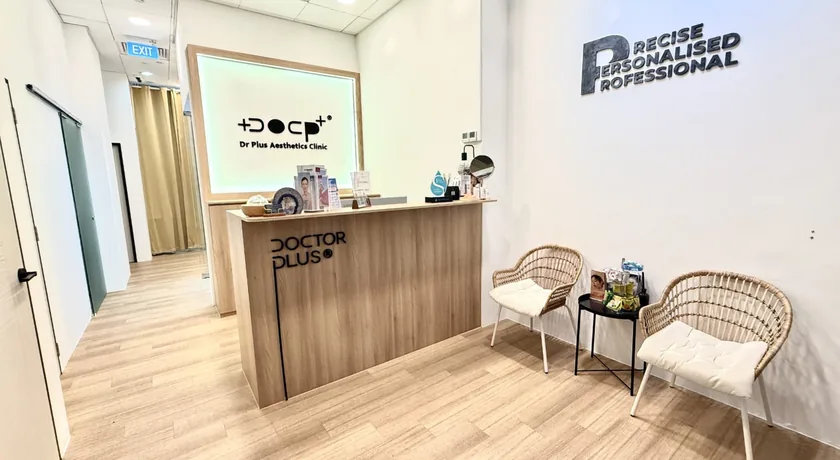
Dr Plus Aesthetics Clinic (Novena)
10 Sinaran Drive #10-30
Singapore 307506
A short sheltered walk from Novena MRT (North–South Line); Novena Medical Centre has a carpark.
— FAQ
Keloids can usually be flattened, softened and made far less noticeable, and itch and pain often improve. Complete, permanent removal cannot be promised, because keloid-prone skin can form scar tissue again. A plan with follow-up gives the most reliable long-term result.
Surgery creates a new wound, and keloid-prone skin often heals it the same way, so the keloid commonly returns, sometimes larger. Surgery is considered for selected keloids, such as a narrow-based earlobe lump, but only with injections or other treatment planned around it.
Most keloids need several sessions spaced four to six weeks apart. Small, recent keloids often respond in fewer sessions; large or long-standing ones take longer. Your doctor gives you an estimate after the first assessment and adjusts it as the scar responds.
Injecting into firm scar tissue stings for a few seconds at each point. Numbing cream can help on sensitive areas such as the ear or chest. The visit is short and most people return to work straight away.
Yes. Earlobe keloids are among the most common and often respond well. Small ones may be treated with injections alone; larger, narrow-based ones may suit removal combined with injections and, sometimes, pressure earrings. Whether to re-pierce later is discussed as part of the plan.
We do not publish prices because the plan depends on the number, size, and age of your keloids and the sessions your protocol needs. WhatsApp us a photo and we can outline what removal would involve; a personalised written quote follows your assessment.
It can. Regrowth is more likely after surgery alone, at high-tension sites such as the chest, and if treatment stops early. Regular reviews after the scar has flattened allow early signs of regrowth to be treated quickly.
Avoid non-essential piercings and tattoos, especially on the earlobes, chest and shoulders. Treat acne early to reduce scarring, and tell any doctor or surgeon about your keloid tendency before a procedure so the wound can be managed from the start.
We see patients at SBF Center, 160 Robinson Road #03-10, in the Tanjong Pagar CBD (call +65 8851 9547), The Flow Mall, 66 East Coast Road #03-05, in Katong on the East Coast (call +65 8857 4917), and Novena Medical Centre, 10 Sinaran Drive #10-30, in Novena (call +65 8851 9505). All three clinics offer the same doctor-led consultations, so you can choose whichever location is more convenient.
SBF Center on Robinson Road is about a three-minute walk from Tanjong Pagar MRT (East–West Line) in the CBD, The Flow Mall on East Coast Road in Katong is a short walk from Marine Parade MRT on the Thomson–East Coast Line, and Novena Medical Centre on Sinaran Drive is a short sheltered walk from Novena MRT on the North–South Line. If you drive, all three buildings have carparks, with further public parking nearby.

— Request a Consultation
WhatsApp us a photo of the scar for a doctor's preliminary view, or book an assessment at Tanjong Pagar, East Coast or Novena. You receive a written plan, with no obligation to proceed.
— Skin Education
Doctor-led guides written to help you understand your options before consultation. Each article links back to the relevant treatment pages.
Both are raised scars — but one stays inside the wound boundary and one keeps growing beyond it. The distinction changes the entire treatment plan.
Most acne scars are dents. A minority are lumps — hypertrophic scars and keloids — and they need the opposite treatment. Here is how to recognise them and what flattens them.
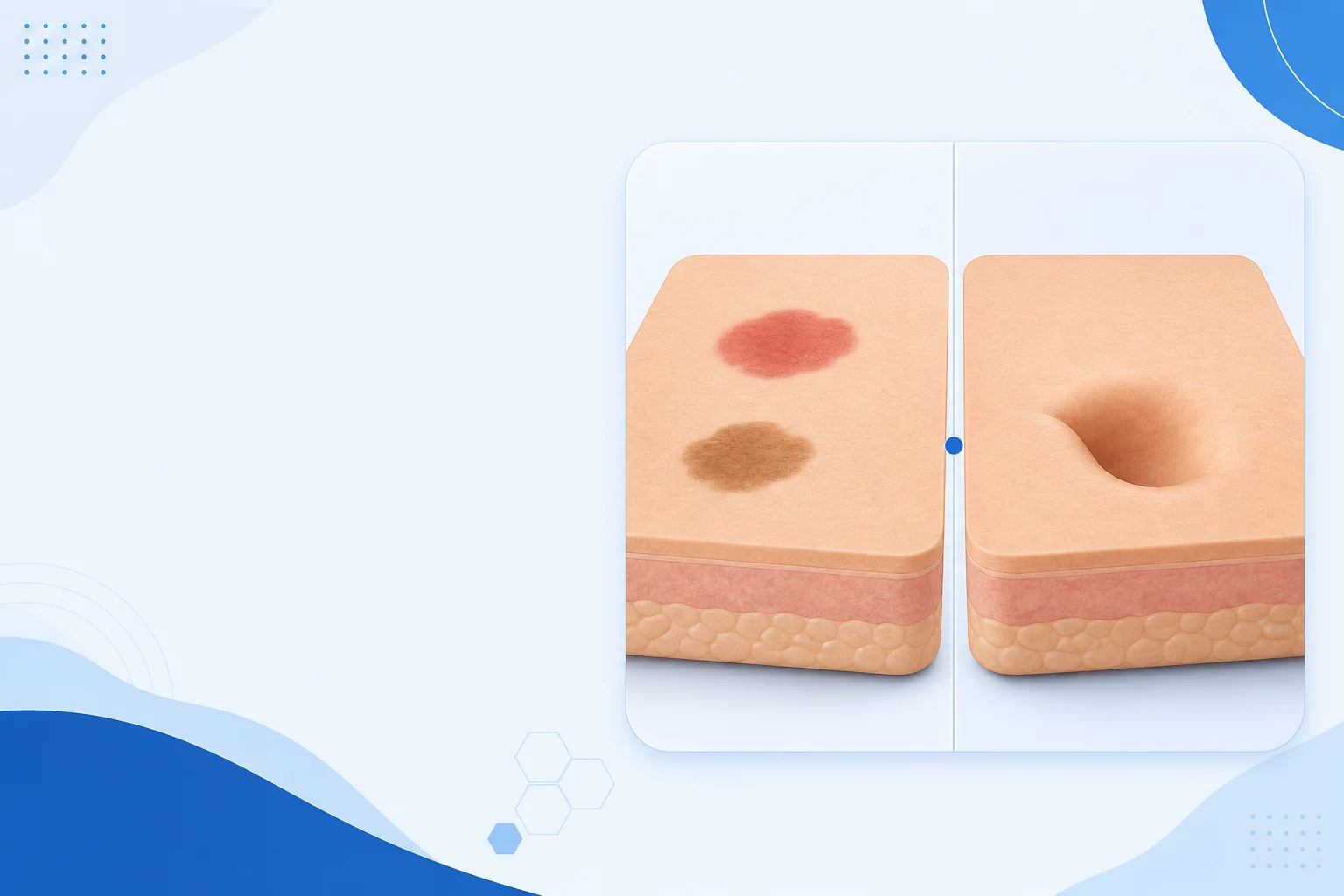 Acne Scars
The most useful question before treating 'acne scars' is whether they are scars at all. Marks fade; scars are contour. Telling them apart changes everything.
— Methods compared
Most plans start with injections and add other treatments only where the scar needs them. Your doctor recommends a plan after examining the scar.

First-line
Corticosteroid injected into the scar every four to six weeks to slow collagen production.
Redness & texture
Used alongside injections when redness or an uneven surface is part of the concern.
Selected cases
Removal of selected keloids, most often narrow-based earlobe lumps, always with injections planned around the procedure.
Preventing regrowth
Once the scar has flattened, reviews continue at longer intervals so any regrowth is treated early.
Not every raised scar is a keloid. Hypertrophic scars stay within the original wound and often improve with time; some lumps are cysts or growths with their own pathway. The doctor confirms which you have first.
Medical disclaimer
Information on this page is for general education only and does not replace a consultation with a qualified medical practitioner. Suitability, downtime, risks, and results vary by individual. Please consult your doctor before deciding on any treatment. Read the full medical disclosure.
A QUICKER SCROLL
Clinic life, in short clips
Take a breather from the detail — swipe through Facebook and TikTok moments from DrPlus, then continue when you're ready to book.